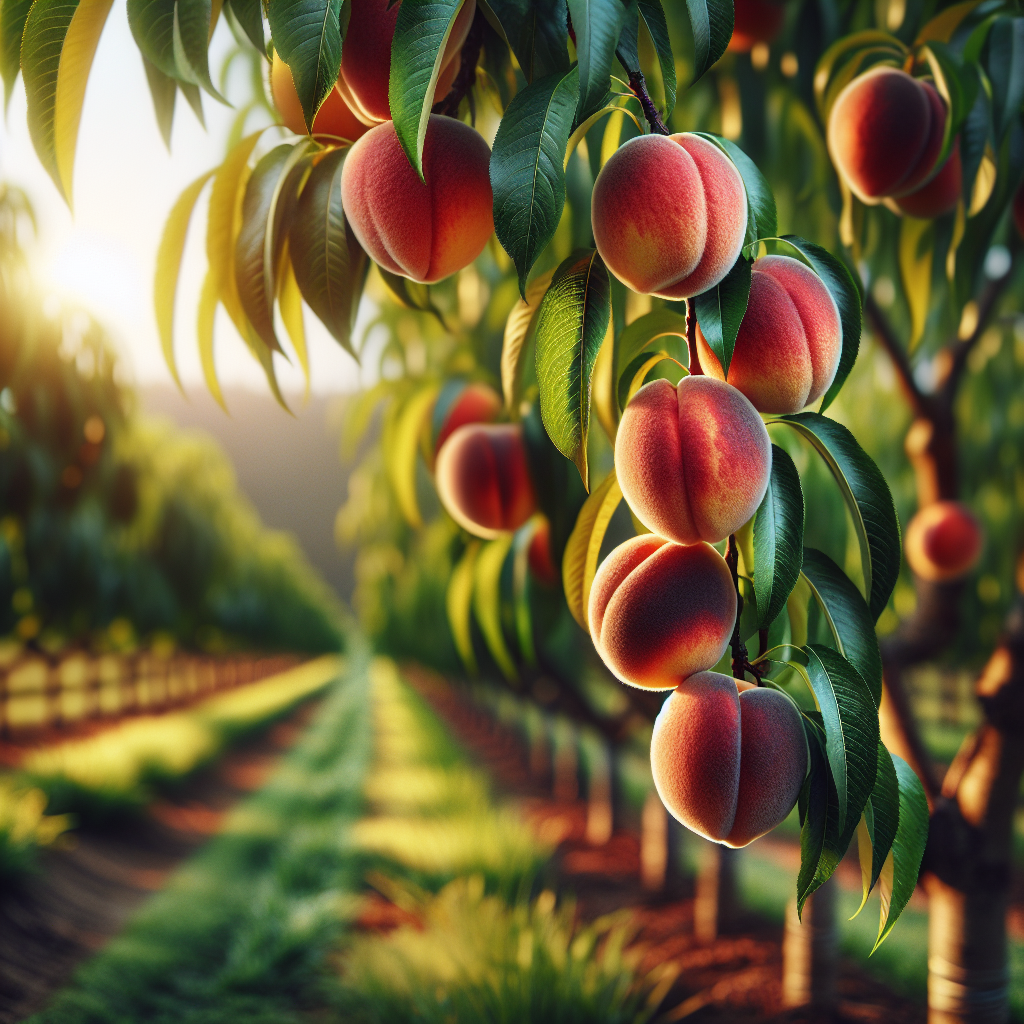
Introduction to Peach
Native to China and cultivated for more than 4,000 years, peach has become one of the defining fruits of temperate orchards worldwide. Its scientific name, Prunus persica, reflects an old misconception that the crop originated in Persia, but botanical and archaeological evidence places its domestication in China before it spread westward along trade routes. Today, peaches are grown across regions with cool winters, warm summers, and relatively low spring frost risk.
Peach trees are valued for their rapid bearing, exceptional fruit quality, and broad culinary use. Fresh eating, baking, canning, drying, and preserves all rely on cultivars selected for different flesh textures, sugar-acid balance, and harvest windows. Commercial growers also classify peaches as clingstone, freestone, or semi-freestone depending on how easily the flesh separates from the pit. White-fleshed peaches tend to be lower in acidity and more aromatic, while yellow-fleshed types often have a brighter, tangier flavor profile.
Compared with some longer-lived fruit trees, peach is relatively short-lived and physiologically active. It grows quickly, fruits young, and demands more regular pruning and crop regulation than many orchard species. In practical terms, it rewards attentive growers but punishes neglect. If you already grow other rosaceous fruit trees, compare training principles with Apple, though peach differs sharply in fruiting wood habit and pruning intensity.
Botanical Profile of Peach
Peach belongs to the family Rosaceae, genus Prunus, which also includes plum, cherry, apricot, and almond. It is a deciduous tree, usually reaching 10 to 20 feet tall in managed systems, though standard trees can grow larger if unpruned. Most orchard trees are maintained at 8 to 12 feet for easier spraying, thinning, and harvest.
The species bears simple, lanceolate leaves with finely serrated margins. Spring flowers emerge before or alongside leaves, depending on cultivar and seasonal conditions. Blooms are typically pink, occasionally deeper rose, and are borne on one-year-old wood. This point is critical: peaches fruit primarily on shoots produced the previous season. That means annual renewal pruning is essential to maintain productivity.
The fruit is a drupe, composed of skin, fleshy mesocarp, and a hard stone enclosing the seed. Fruit skin may be fuzzy, as in conventional peaches, or smooth in the case of nectarines, which are genetically peach types differing mainly by a single gene controlling pubescence. Commercial and horticultural classifications also distinguish:
- Melting-flesh vs. non-melting-flesh
- Clingstone vs. freestone
- White-flesh vs. yellow-flesh
- Low-chill vs. standard-chill cultivars
- Fresh-market vs. processing cultivars
Rootstocks strongly influence vigor, soil adaptation, disease tolerance, and tree size. Seedling rootstocks are still used in some regions, but named rootstocks are preferred for uniformity. Certain rootstocks improve tolerance to calcareous soils, nematodes, waterlogging, or peach tree short life, though none can fully compensate for poor site choice.
Peach trees are generally self-fertile, meaning a single cultivar can often set fruit without a pollinizer. Even so, bee activity is still vital because pollen must still move effectively within flowers. Cold, rainy, or windy bloom conditions can sharply reduce fruit set despite self-fertility.
Soil, pH, and Climate Requirements for Peach
Peach performs best in deep, well-drained, moderately fertile loam or sandy loam soils with good internal drainage and high oxygen availability in the root zone. Ideal soil depth is at least 3 to 4 feet free of hardpan, perched water tables, or compacted layers. The crop is notably intolerant of prolonged root-zone saturation. Even 24 to 48 hours of standing water around roots during active growth can trigger root decline, predispose trees to canker, and reduce long-term survival.
A target soil pH of 6.0 to 6.8 is generally ideal. Peach can tolerate slightly more acidic soils, but nutrient efficiency drops when pH falls too low, while alkaline soils often induce iron chlorosis, zinc deficiency, and poor vigor. In soils above pH 7.5, leaves may appear pale yellow with greener veins, especially on young growth. If planting in marginally alkaline ground, pre-plant sulfur incorporation and organic matter improvement may help, but highly calcareous sites remain difficult.
Texture matters as much as chemistry. Heavy clay can work only if it is structured, drained, and not prone to winter or spring waterlogging. Raised berms or ridges are often used in marginal soils to keep the crown above saturated layers. Avoid low pockets where cold air settles, because spring frost can kill blossoms or young fruitlets.
Climate suitability depends heavily on winter chilling. Most peach cultivars require between 500 and 1,000 chill hours, typically measured as hours between roughly 32 and 45°F (0 to 7°C), though exact models vary. Low-chill cultivars may need only 150 to 400 hours and are suitable for mild-winter regions. If chill requirements are not met, trees may leaf out unevenly, bloom erratically, and produce poor fruit set.
At the same time, peaches are highly vulnerable to late frost because they bloom early. Dormant wood may tolerate deep winter cold, but swollen buds and open flowers are much more sensitive. Approximate critical temperatures are:
- Swollen bud: about 18 to 20°F (-8 to -7°C)
- Pink bud: about 25°F (-4°C)
- Open bloom: about 27 to 28°F (-3 to -2°C)
- Young fruit: about 28°F (-2°C)
For optimal fruit quality, trees need full sun, ideally 8 or more hours daily. Shading reduces flower bud formation, weakens fruit color, and encourages disease by slowing canopy drying. Warm, dry summers generally produce sweeter fruit and lower disease pressure than humid conditions.
Wind exposure should also be managed. Moderate airflow helps dry foliage and reduce fungal disease, but strong winds damage shoots, interfere with pollination, scar fruit, and increase water demand. Shelterbelts can help if they do not create frost pockets.
For broader orchard soil improvement principles, see soil health strategies.
Step-by-Step Planting & Propagation
Start by choosing a cultivar matched to your chill zone, disease pressure, and intended use. This is the most important decision in peach production. A superb cultivar in the wrong climate will underperform no matter how well it is managed. In humid regions, prioritize bacterial spot tolerance and brown rot management. In low-chill areas, choose cultivars specifically bred for mild winters.
Purchase one-year-old bare-root or container-grown grafted trees from reputable nurseries. Grafted trees are strongly preferred over seed-grown plants because seedlings are variable and do not come true to type. Seed propagation is mainly used for breeding or rootstock production, not for reliable fruit quality.
Before planting, test soil for pH, phosphorus, potassium, calcium, magnesium, and organic matter. Correct major imbalances in advance because post-plant incorporation is difficult around established roots. Remove perennial weeds thoroughly, especially bindweed, bermudagrass, and quackgrass, which compete aggressively for water and nutrients.
Plant during dormancy in late winter or very early spring in cold climates, or during the coolest safe season in mild regions. Bare-root trees should be planted before buds break if possible.
Follow this planting sequence:
- Soak bare-root trees for 2 to 6 hours before planting, but do not leave roots submerged for a full day.
- Dig a broad planting hole only as deep as the root system and two to three times as wide. Do not dig a deep sump that can collect water.
- Trim broken or girdling roots cleanly.
- Position the tree so the graft union remains 2 to 4 inches above the final soil line.
- Spread roots naturally without forcing them upward.
- Backfill with native soil rather than highly amended pocket soil, which can discourage outward root exploration.
- Water thoroughly to settle soil and remove air pockets.
- Head the tree back to 24 to 36 inches above the ground at planting to initiate scaffold development.
Spacing depends on training system and rootstock vigor. Typical backyard spacing is 12 to 18 feet between trees. Commercial open-center systems often use 16 to 20 feet between rows and 10 to 16 feet in-row, while high-density systems may be tighter if vigor is controlled.
Peach is most often trained to an open-center or vase form. This system allows sunlight penetration, improves spray coverage, and supports renewal of one-year fruiting wood. In the first growing season, select 3 to 4 well-spaced shoots to become primary scaffolds, ideally with wide crotch angles and distribution around the trunk.
Propagation by budding or grafting is standard. T-budding in summer onto compatible rootstocks is common in nursery production. Hardwood cuttings are generally unreliable for commercial-quality trees, and air-layering is uncommon.
Care & Maintenance regimes for Peach
Irrigation should be managed to keep soil consistently moist but never saturated. The most critical periods are establishment, rapid shoot growth, bloom, fruit cell division shortly after set, and the final swell before ripening. Young trees need frequent light-to-moderate irrigation because their root systems are still limited. Mature trees need deeper, less frequent watering that wets the active root zone, typically the top 18 to 30 inches of soil.
A practical target is to maintain soil moisture at roughly 60 to 80% of field capacity during active growth. In sandy soil, this may require watering every few days in hot weather; in loam, once or twice weekly may suffice; in clay loam, intervals may be longer if drainage is good. Drip irrigation is ideal because it reduces leaf wetness and delivers water precisely.
Signs of underwatering include dull or folded leaves, slowed shoot growth, fruit drop, undersized fruit, and poor sugar accumulation. Signs of overwatering include persistently wet soil, yellowing leaves, weak soft growth, sour-smelling soil, gummosis near the crown, and reduced vigor despite adequate fertility. Chronic overwatering is often mistaken for nutrient deficiency.
Mulch helps regulate moisture and suppress weeds, but keep it 4 to 6 inches away from the trunk to prevent crown rot and rodent damage. Organic mulches such as wood chips are useful if nitrogen is monitored.
Fertilization should be guided by leaf analysis and growth observation. Overfertilizing peach, especially with nitrogen, causes excessive vegetative growth, shading, softer fruit, delayed hardening, and greater disease susceptibility. Young non-bearing trees benefit from modest nitrogen to build structure. Bearing trees require balanced nutrition based on crop load and shoot growth. As a rough guide, annual extension growth of 12 to 18 inches on mature bearing trees is often considered adequate; much more may indicate excessive vigor, while much less may suggest stress or underfeeding.
Nitrogen is usually applied in late winter to early spring, with lighter supplemental feeding after fruit set in poor soils if needed. Avoid late-summer nitrogen that stimulates tender growth before winter. Potassium is important for fruit size, color, and sugar movement. Calcium supports firmness and tissue integrity, though foliar sprays are not a cure-all if soil and water relations are poor.
Pruning is the core management task in peach culture. Because fruit forms mainly on one-year-old wood, the goal is to renew fruiting shoots every year while maintaining light distribution. Dormant pruning removes dead, diseased, crossing, shaded, and overly vigorous upright shoots. Summer pruning can improve light and reduce excess vigor but should be used carefully to avoid sunburn on suddenly exposed limbs.
In an open-center tree:
- Maintain 3 to 4 main scaffolds.
- Remove the central leader early.
- Favor outward-growing shoots.
- Thin crowded fruiting wood so branches are not layered too densely.
- Remove old gray, exhausted fruiting wood that no longer produces strong annual shoots.
Fruit thinning is essential. Peaches commonly set far more fruit than the tree can size properly. Thin by hand when fruit are about 0.75 to 1 inch in diameter, ideally within 30 to 45 days after bloom. Leave fruit about 6 to 8 inches apart along shoots, adjusting for cultivar, vigor, and desired fruit size. Proper thinning increases fruit size, improves color, reduces limb breakage, and helps prevent biennial bearing tendencies.
Weed control is especially important in the first 3 to 5 years. Keep a vegetation-free strip around the tree, ideally 3 to 4 feet wide for young trees and wider in orchard systems. Turf competition near trunks can markedly reduce growth and yield.
Pests, Diseases & Organic Management
Peach is vulnerable to a wide range of pests and diseases, especially in humid climates. Successful organic or low-spray production depends on sanitation, cultivar choice, pruning for airflow, and precise timing.
Among fungal diseases, peach leaf curl is one of the most recognizable. It causes thickened, blistered, curled leaves that often turn red or yellow before dropping. Infection occurs during cool, wet conditions around bud swell, not after symptoms appear. Organic management depends on dormant-season copper or lime sulfur applications before bud break, plus good coverage.
brown rot is often the most economically damaging disease on blossoms, shoots, and fruit. It causes blossom blight, twig dieback, and tan-gray mold on ripening fruit. Mummified fruit left in trees become major inoculum sources. Remove all mummies, prune blighted twigs, and maintain an open canopy. Avoid overhead irrigation near harvest.
bacterial spot produces angular leaf lesions, twig injury, and pitted fruit. It is especially severe on susceptible cultivars under warm, wet conditions. Excessive nitrogen worsens the problem by promoting lush, susceptible growth. Resistant cultivars, balanced fertility, and careful copper use are key tools.
Cytospora canker often enters through winter injury, pruning wounds, or stressed bark. Trees under drought, sunscald, or nutrient imbalance are more vulnerable. Prune only in dry weather, avoid trunk injury, and maintain tree vigor without excess nitrogen.
Common insect pests include:
- Oriental fruit moth: larvae tunnel into shoots and fruit.
- plum curculio: causes crescent-shaped egg scars and fruit drop.
- peach tree borer: larvae feed under bark at the crown, weakening or killing trees.
- aphids: distort young growth and produce honeydew.
- scale insects: weaken limbs and reduce vigor.
- stink bugs and tarnished plant bugs: scar fruit.
Organic management begins with monitoring. Use pheromone traps for moth pests, inspect shoot flagging, and check the crown area for borer frass mixed with gum. Beneficial habitat, mating disruption, trunk barriers, kaolin clay, horticultural oils, and Bacillus thuringiensis products may all have roles depending on the pest. Entomopathogenic nematodes can help suppress peach tree borer larvae in some systems when applied to the trunk zone under moist conditions.
Sanitation matters enormously. Remove dropped fruit weekly during the season, destroy diseased prunings, and never leave mummies hanging through winter. Good orchard hygiene often does as much as any spray program.
Organic spray schedules for peach must be preventive rather than reactive. Dormant oils, copper, sulfur-based materials, biological fungicides, and kaolin products can reduce pressure, but timing must match local pest and disease cycles. Always confirm that products are labeled for peach in your region and compatible with local climate, because sulfur and oils can cause phytotoxicity under certain temperature conditions.
Harvesting, Curing & Optimal Storage
Peach does not improve in texture after being picked too early, though it can soften somewhat off the tree. For best flavor, harvest at physiological maturity when background color shifts from green to creamy yellow or pale tone appropriate to the cultivar, the flesh near the stem loses hardness, and aroma becomes noticeable. Red blush alone is not a reliable maturity indicator because it is influenced by sun exposure.
Commercial growers may harvest in multiple passes every 2 to 4 days because fruit on the same tree rarely ripen uniformly. Handle fruit gently; peaches bruise easily due to their tender flesh and thin skin. Harvest by lifting and twisting lightly rather than pulling hard.
Firm-ripe peaches for shipping are usually picked slightly before tree-ripe softness, while local-market or home-use peaches can be harvested closer to full flavor. Overripe fruit become soft at the shoulders, bruise readily, and are more prone to brown rot.
Unlike crops that require true curing, peach mainly benefits from prompt field heat removal. Cool fruit as soon as possible after harvest. The ideal storage temperature is near 31 to 32°F (-0.5 to 0°C) with 90 to 95% relative humidity. At these conditions, many peaches can store for 1 to 3 weeks depending on cultivar and harvest maturity. Warmer storage dramatically shortens shelf life.
Be aware of chilling injury in some cultivars if fruit are held too long under suboptimal temperature regimes, particularly around 36 to 46°F (2 to 8°C), where mealiness, browning, and flavor loss can occur. Very cold, near-freezing storage is generally safer than middling cool temperatures for short-term holding.
For home storage, refrigerate ripe or nearly ripe fruit in a single layer if possible. If fruit are under-ripe, leave them at room temperature until the background aroma develops and the stem end yields slightly to pressure, then refrigerate. Do not stack deeply, and avoid sealed plastic without airflow because condensation encourages decay.
Peaches intended for canning, jam, or drying should be processed quickly after harvest because sugar and aroma quality decline rapidly at warm temperatures.
Companion Planting for Peach
Companion planting around peach should be approached as orchard-floor design rather than casual mixed planting. The main goals are pollinator support, beneficial insect habitat, weed suppression, improved soil structure, and reduced competition near the root zone.
The most useful companions are shallow-rooted, non-aggressive flowering plants placed outside the immediate trunk area. Good options include alyssum, yarrow, dill, fennel used carefully at the margin, clovers in managed alleyways, and flowering natives that support parasitoid wasps, hoverflies, lacewings, and predatory beetles. These beneficials help suppress aphids, scale crawlers, caterpillars, and other pests.
Alliums can also be useful near but not directly against the trunk because their scent may help confuse some pests while occupying little vertical space. Keep any companion planting far enough from the tree base to avoid constant humidity around the crown.
Avoid heavy feeders or dense perennial mats directly under the canopy during establishment. Mint, vigorous grasses, sprawling squash, and thirsty shrubs compete for water and nutrients and can increase rodent harborage. Vegetable beds immediately under peach trees are usually a poor choice because cultivation damages shallow feeder roots and irrigation needs may conflict.
In orchard systems, a clean mulched strip under the trees combined with flowering alleyways is often the best compromise. This preserves tree growth while still supporting biodiversity. Legume covers such as white clover can improve soil biology, but they must be managed so they do not outcompete young trees or create excessive vole habitat.
Companion species should also fit your disease climate. In humid areas, avoid creating a dense, jungle-like understory that traps moisture and slows air movement. Peach benefits from an orchard floor that is biologically active but physically open.
Well-planned diversity can improve resilience, but peach still depends first on correct pruning, sanitation, nutrition, irrigation, and cultivar adaptation. Companion planting is supportive management, not a substitute for core orchard practice.