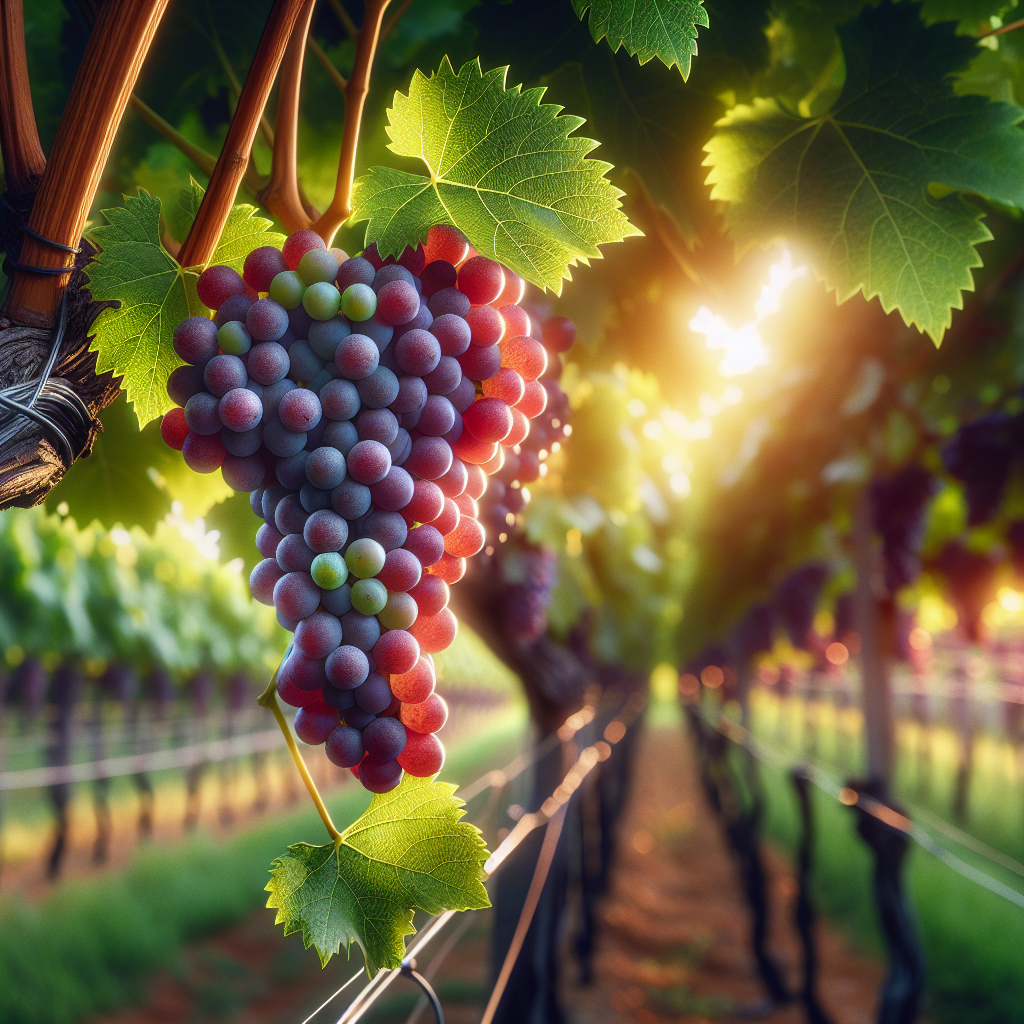
Introduction to Grapes
Few fruit crops combine as much cultural history, economic significance, and horticultural complexity as grapes. Cultivated for thousands of years across the Mediterranean, Central Asia, and later the Americas, grapes have been selected into an enormous range of table, wine, raisin, and juice types. The most widely cultivated species globally is Vitis vinifera, though many production regions also rely on American species such as Vitis labrusca, Vitis riparia, and complex hybrids for cold hardiness, disease resistance, or adaptation to difficult soils.
From a grower’s perspective, grapes are not simply “plant and harvest” fruit. A productive vine must be trained, pruned, balanced, and monitored year after year. Yield and fruit quality are heavily determined by cane maturity, sunlight interception, cluster exposure, rootstock choice, water management, and disease control timing. Unlike many annual crops, mistakes in pruning or trellis management can affect production for multiple seasons.
Grapes are also unusually responsive to site conditions. Slight differences in slope, airflow, soil depth, drainage, and heat accumulation can markedly change berry sugar, acidity, color, and disease susceptibility. That is why commercial vineyards often map blocks carefully, while home growers should pay equal attention to sun exposure and drainage before planting. If you already grow perennial fruit, compare vineyard planning principles with an orchard crop such as Apple, where canopy structure and site matching also strongly influence quality.
Well-managed vines can remain productive for decades. The key is understanding that grapes fruit on current season shoots arising from one-year-old wood, so annual pruning is the engine of future harvests. Once that principle becomes clear, the rest of grape culture—training systems, renewal strategies, crop load regulation, and canopy management—starts to make agronomic sense.
Botanical Profile of Grapes
Grapes are deciduous, climbing woody perennials in the genus Vitis, family Vitaceae. Their natural habit is to scramble over other vegetation using tendrils that arise opposite leaves. In cultivation, this climbing behavior is redirected onto trellises, wires, arbors, or pergolas so that light distribution and fruiting wood can be managed efficiently.
Leaves are alternate, simple, and usually palmately lobed, with coarse serrations and variable pubescence depending on species and cultivar. The shoot system consists of a permanent trunk and cordons or annually renewed fruiting canes/spurs, depending on the training method. Buds contain compound primordia, meaning a dormant bud may produce a primary shoot and, if damaged, secondary or tertiary shoots, though these replacement shoots are usually less fruitful.
Inflorescences are panicles borne opposite leaves on current season shoots. Most modern cultivated grapes have perfect flowers and are self-fertile, but some old cultivars and wild types may have functionally female flowers and require pollinizer presence. Fruit are botanically berries, typically borne in clusters. Berry skin contains pigments, aromatic compounds, tannins, and waxy bloom, while pulp composition drives sweetness and acidity.
The root system is typically deep and wide-spreading if soil structure permits, but in compacted or poorly drained ground it becomes shallow and more vulnerable to drought stress, nutrient imbalance, and root disease. Rootstocks are widely used in professional production to manage phylloxera, nematodes, lime tolerance, salinity tolerance, vigor, and drought adaptation.
Cultivar groups differ significantly:
- Table grapes prioritize berry size, crisp texture, thin-to-medium skin, and cluster appearance.
- Wine grapes emphasize sugar accumulation, acid retention, phenolic development, and balanced yields.
- Raisin grapes require high soluble solids, thin skins, and good drying performance.
- Juice grapes, especially American types, often have stronger “foxy” aroma and slip-skin texture.
Dormancy, chilling response, and heat requirement vary by cultivar. Budbreak occurs after winter chilling and spring warming. Flowering is highly weather-sensitive; cool, wet, or windy conditions during bloom can reduce fruit set and create shatter or uneven clusters. Veraison marks the onset of ripening, when berries soften, sugars rise, acids decline, and color develops in red or black cultivars.
Soil, pH, and Climate Requirements for Grapes
Grapes perform best in well-drained soils with moderate fertility rather than overly rich ground. Excessive fertility, especially from nitrogen-rich soils or manure-heavy amendments, often causes vigorous vegetative growth, dense canopies, delayed ripening, and elevated disease pressure. The ideal soil is a loam, sandy loam, gravelly loam, or silt loam with good internal drainage and at least 75-100 cm of penetrable rooting depth. Heavy clay can support vines if carefully drained and structured, but persistent waterlogging is one of the most damaging site problems.
Optimal soil pH is generally 5.5-7.0, with 6.0-6.8 preferred for most vineyards. Vitis vinifera often struggles in highly alkaline soils, particularly where active lime induces iron chlorosis. In calcareous sites, select tolerant rootstocks rather than trying to force the soil into an unrealistic pH range. If soil pH drops below about 5.2, aluminum and manganese toxicity may limit root growth, and lime incorporation before planting is advisable.
A preplant soil test should include pH, organic matter, cation exchange capacity, phosphorus, potassium, calcium, magnesium, sodium, and boron if available. Deep ripping or subsoiling before planting is worthwhile if compaction layers restrict drainage or root penetration. Once a vineyard is established, correcting deep physical soil problems becomes difficult and expensive.
Climate is equally important. Grapes generally prefer regions with:
- Full sun, ideally 7-8 or more hours daily
- Warm growing seasons for sugar accumulation and cane ripening
- Relatively dry weather near harvest to reduce bunch rot
- Winter cold sufficient for dormancy, but not so severe that trunks and buds are routinely killed
Most Vitis vinifera cultivars are best suited to Mediterranean, warm temperate, or semi-arid temperate climates. American and hybrid grapes extend production into colder or more humid regions. Winter injury risk rises significantly when temperatures fall below roughly -15 to -20°C for tender cultivars, though hardiness varies widely. Spring frost is particularly damaging because grape shoots are vulnerable soon after budbreak.
Water needs are moderate but timing matters more than sheer volume. Grapes dislike continuously wet soil. During active growth, soil should remain evenly moist in the root zone but never saturated. As a practical benchmark, irrigate when the top 5-8 cm of soil has dried but deeper soil still retains slight moisture. On established vines in mineral soils, this often means deep irrigation rather than frequent shallow watering. In sandy soils, irrigation frequency increases because water drains quickly.
Overwatering signs include lush dark-green shoots, long internodes, poor fruit color, diluted flavor, cracking in susceptible cultivars, yellowing from oxygen-starved roots, and a sour smell in saturated soil. Underwatering signs include slowed shoot growth, dull or folding leaves in midday heat that fail to recover by evening, small berries, poor cluster fill, cane shrivel, and premature leaf senescence.
Slope improves cold air drainage and reduces frost risk. Gentle south- or southeast-facing slopes are often ideal in cooler regions, while excessively hot climates may benefit from east-facing exposure to avoid severe late afternoon heat stress. Wind can reduce disease by drying the canopy, but persistent strong winds may damage shoots, impair bloom, and increase evapotranspiration.
For broader site fertility planning, review principles in soil health strategies, especially before establishing perennial fruit blocks.
Step-by-Step Planting & Propagation
Start with certified disease-free planting material from a reputable nursery. This is especially important for avoiding trunk diseases, viruses, crown gall contamination, and mislabeled cultivars. Choose vines appropriate for your end use: table, wine, juice, or raisin. Also decide whether the site requires grafted vines on rootstock or own-rooted plants. In regions with phylloxera risk, grafted vines are strongly preferred.
- Select the site carefully. Choose full sun, excellent air circulation, and well-drained soil. Avoid frost pockets, low basins where cold air settles, and areas with standing water after rain.
- Test and prepare the soil. Correct pH and major mineral deficiencies before planting. Incorporate lime, phosphorus, or potassium only if testing indicates need. Deeply loosen compacted soil in rows before installing trellis posts.
- Install the trellis first or immediately after planting. Common systems include vertical shoot positioning (VSP), high cordon, Geneva double curtain, and simple two-wire systems for backyard use. Grapes need support from the beginning.
- Plant during dormancy or early spring. Bare-root vines are commonly planted late winter to early spring while fully dormant. Container vines can be planted in spring after severe frost risk, though dormant planting often establishes better.
- Space correctly. Backyard spacing is often 1.8-2.4 m between vines and 2.4-3 m between rows. Commercial spacing varies by vigor, machinery, rootstock, and training system, but cramped spacing increases disease pressure.
- Prepare the planting hole. Dig wide enough to spread roots without bending. Do not create a narrow glazed pit in clay. Set the vine so roots radiate naturally downward and outward. For grafted vines, keep the graft union several centimeters above the final soil line.
- Backfill with native soil. Avoid filling the hole with overly rich compost alone, which can create a texture interface and discourage root exploration. Water thoroughly after planting to settle soil around roots.
- Head back the top. Newly planted dormant vines are often pruned to one strong cane with 2-3 buds to focus early establishment.
- Train the strongest shoot. In the first season, select one vigorous shoot to become the trunk and loosely tie it to a stake. Remove competing basal shoots as needed.
Propagation is most commonly done by hardwood cuttings, grafting, or layering. Hardwood cuttings taken during dormancy root readily in many cultivars, but own-rooted production is not suitable everywhere due to phylloxera and soil pest risks. Bench grafting onto rootstocks is standard for professional vineyard establishment. Layering is useful for replacing missing vines in small plantings because a neighboring cane can be buried, rooted, and later severed.
Do not expect a full crop immediately. Remove clusters in year 1 and usually in year 2 if vines are weak. The objective is trunk establishment, cordon formation, and healthy perennial wood. A lightly cropped vine with excellent structure is preferable to an overburdened young vine that stalls for years.
Care & Maintenance regimes for Grapes
Pruning is the central annual task in grape production. Because fruit forms on shoots growing from one-year-old wood, dormant pruning determines both crop load and vine architecture. There are two main strategies: cane pruning and spur pruning. Cane-pruned systems retain a few one-year-old canes each winter plus renewal spurs; spur-pruned systems maintain permanent cordons with short spurs distributed along the wire.
The correct method depends on cultivar fruitfulness and training system. Some cultivars bear well on basal buds and perform well with spur pruning. Others need longer canes because fruitful buds are located farther from the cane base. If pruning is too light, the vine produces too many clusters and excessive shade; berries may remain small, acidic, and poorly colored. If pruning is too severe, vigor can become excessive and fruiting wood distribution suffers.
During the growing season, canopy management refines what pruning starts. Key tasks include:
- Shoot thinning shortly after budbreak to remove weak, crowded, or non-positioned shoots
- Tucking or positioning shoots between catch wires to maintain vertical structure
- Lateral shoot control where canopies become excessively dense
- Strategic leaf removal around clusters, especially on the morning-sun side, to improve air movement and spray penetration
- Hedging overly long shoots to reduce tangling and shade
- Cluster thinning where crop load exceeds vine capacity
Irrigation should be tailored to growth stage. Young vines need more frequent watering because roots are limited. Mature vines benefit from deep, infrequent irrigation that wets the main root zone. In many climates, vines need the most water from shoot growth through fruit set and early berry sizing. Excess irrigation near ripening can dilute sugars and encourage splitting or rot, especially in table grapes.
A useful practical target is to maintain consistent moisture at 20-40 cm depth during active growth. Tensiometers or capacitance sensors can improve precision, but even small-scale growers can monitor by digging inspection holes. If soil at root depth forms a weak ball and feels cool but not sticky, moisture is usually adequate. If it smears, excludes air, and remains saturated for days, irrigation is excessive.
Fertilization must be based on testing and vine observation, not guesswork. Grapes require less fertilizer than many vegetable crops. Excess nitrogen is one of the most common management errors. It drives rampant shoot growth, delayed lignification, poor winter hardiness, and disease-prone canopies. Typical nutrient priorities are nitrogen, potassium, magnesium, zinc, and boron, depending on soil type and pH.
General nutrient management guidelines:
- Apply little or no nitrogen in the planting year unless vines are clearly weak and pale.
- Use petiole or leaf blade analysis during the season in established vineyards for precision.
- Supply potassium where tests show deficiency, especially on sandy soils or in heavy-cropping blocks.
- Foliar zinc or boron may be useful where deficiencies affect bloom and fruit set.
- Avoid heavy manure applications directly under vines unless nutrient release is understood and accounted for.
Mulching helps conserve moisture and reduce weed competition, but keep mulch several centimeters away from trunks to avoid crown moisture, rodent shelter, and disease risk. In humid climates, a clean under-vine strip often performs better than thick moisture-holding mulch.
Weed management is critical during establishment. Young vines compete poorly with grasses and aggressive perennials. Maintain a vegetation-free strip about 45-90 cm wide around the vine row for the first few years. Cover crops between rows can improve trafficability, reduce erosion, and moderate vigor if chosen carefully.
Winter protection may be necessary in cold regions. Practices include hilling soil over graft unions, using geotextile wraps for trunks, training replacement suckers as insurance, or selecting cold-hardy hybrids. In severe climates, some growers bury canes annually, though this is labor-intensive.
Pests, Diseases & Organic Management
Disease control is the make-or-break factor for many grape growers, especially in humid climates. Grapes are susceptible to a range of fungal, bacterial, viral, and insect problems, and successful organic management relies heavily on prevention through airflow, sanitation, canopy balance, and timing.
Major diseases include powdery mildew, downy mildew, black rot, Botrytis bunch rot, anthracnose, Phomopsis cane and leaf spot, Esca and other trunk diseases, crown gall, and Pierce’s disease in affected regions. powdery mildew is particularly important because it can infect leaves, shoots, and berries even without free water; dense shade and moderate temperatures encourage it. downy mildew is associated with humid, wet conditions and often appears as oil spots on leaves with downy sporulation beneath. black rot causes leaf lesions and mummified fruit. Botrytis thrives in tight clusters and wet canopies near harvest.
Organic disease management priorities:
- Plant resistant or regionally adapted cultivars where possible.
- Prune for open architecture and remove excess shoots early.
- Remove mummified fruit and diseased canes during dormancy.
- Avoid overhead irrigation if possible.
- Use sulfur preventatively for powdery mildew where temperatures are suitable and cultivar sensitivity is known.
- Use copper products judiciously for certain bacterial and fungal diseases, respecting accumulation concerns and local regulations.
- Apply biologicals and OMRI-listed protectants preventatively rather than after severe infection.
- Improve cluster exposure without causing sunburn.
Common insect pests include grape berry moth, leafhoppers, Japanese beetles, grape flea beetle, mealybugs, scale insects, thrips, spider mites, and phylloxera. In some regions, birds and yellowjackets can cause losses equal to or greater than insects. root-knot nematodes and dagger nematodes are also relevant in certain soils.
Organic insect management works best when integrated:
- Monitor weekly from budbreak through harvest.
- Use pheromone traps for grape berry moth where applicable.
- Encourage beneficial insects with flowering strips away from the vine row.
- Use kaolin clay, insecticidal soap, horticultural oils, or Bacillus thuringiensis products as targeted tools where appropriate.
- Net vines against birds before color change becomes attractive.
- Remove damaged or split clusters that attract wasps.
Physiological disorders also matter. Sunburn can occur when shaded clusters are suddenly exposed during heat waves. Berry splitting often follows erratic watering or rain after dry periods. Chlorosis in alkaline soils usually indicates iron unavailability rather than lack of total iron. Poor fruit set may result from cool bloom weather, boron deficiency, excessive vigor, or cultivar-specific sensitivity.
Sanitation should be relentless. Remove dropped clusters, prune out dead arms, disinfect pruning tools when trunk disease is suspected, and avoid pruning during wet weather if trunk pathogens are prevalent locally. Wounds made late in winter or protected with suitable materials may reduce infection risk in high-pressure regions.
Harvesting, Curing & Optimal Storage
Grapes do not continue ripening in the same way once detached, so harvest timing is critical. Unlike climacteric fruits, they should be picked at their intended eating or processing maturity. Color alone is not a reliable indicator. Use taste, soluble solids, acidity, seed color, berry softness, and cultivar-specific flavor development.
For table grapes, harvest when berries are fully colored, sweet, crisp, and characteristic in flavor. Clusters should be dry when cut. Wet fruit stores poorly and is more vulnerable to decay. Use sharp snips and handle clusters by the stem to avoid rubbing off excessive bloom, the natural waxy layer that helps protect berries and signals freshness.
For wine grapes, maturity decisions are more nuanced. Sugar concentration is often measured in °Brix, but ideal harvest also depends on titratable acidity, pH, tannin ripeness, aroma development, and intended wine style. Many white wine cultivars are harvested earlier to preserve acidity; red wine cultivars are often left longer for phenolic development, weather permitting.
Raisin grapes are usually harvested at high sugar levels and then dried on trays, on-vine, or by mechanical systems depending on climate and scale. Drying requires warm, dry conditions and good airflow to prevent mold.
Postharvest handling principles:
- Harvest in the cool morning if possible.
- Keep clusters shaded immediately after picking.
- Remove damaged, moldy, insect-damaged, or split berries before storage.
- Pre-cool promptly for fresh market use.
- Maintain high relative humidity, about 90-95%, to reduce shrivel.
- Store near 0°C if the cultivar tolerates it and fruit is intended for fresh use.
Fresh grapes store best under cold, humid conditions with minimal condensation. Home growers can often hold sound fruit for 1-3 weeks in refrigeration, while commercial cold chains with sulfur dioxide pads and strict sanitation can store some cultivars much longer. Do not wash grapes until shortly before use, as residual moisture encourages decay.
There is no true curing stage for fresh grapes in the way root crops or onions are cured. The equivalent postharvest priority is rapid cooling, careful sorting, and maintenance of the cluster stem’s freshness. Browning rachises often indicate dehydration or age even when berries still look acceptable.
Companion Planting for Grapes
Companion planting in grapes is less about crowding herbs directly under vines and more about designing a biologically useful vineyard floor. Because grapes are long-lived woody perennials with shallow feeder roots concentrated near the row, companions should support pollinators and beneficial insects, improve soil structure, or moderate vigor without creating excessive humidity or direct competition.
Good companion candidates between rows or at row ends include low-growing legumes such as white clover in suitable climates, insectary species such as yarrow, alyssum, dill, fennel used carefully at margins, buckwheat in rotation strips, and deep-rooted forbs that help soil structure. These can attract parasitoid wasps, lacewings, hoverflies, and predatory beetles that assist with vineyard pest balance. In dry regions, however, cover crops must be managed so they do not steal water from vines during key fruit development stages.
Under-vine planting should be approached cautiously. In young vineyards, keep the under-vine strip mostly free of competitors. In mature vineyards with drip irrigation and ample fertility, some growers use very low, mowable living mulches, but these require careful testing because they can reduce vine vigor, lower berry size, or interfere with nutrient uptake.
Avoid planting tall, dense, or sprawling companions that restrict airflow around clusters. High humidity around the fruiting zone sharply increases disease pressure. Also avoid species that host problematic pests or create harvest obstructions.
Useful companion strategies include:
- Flowering borders away from the fruiting zone for beneficial insects
- Winter annual cover crops for erosion control and nitrogen scavenging
- Legume-grass mixes between rows to build organic matter and improve trafficability
- Aromatic herbs at vineyard edges rather than directly beneath vines
Companion systems should be mowed or terminated before they become competitive during drought or before seed set if reseeding is unwanted. In organic vineyards, this balancing act—supporting biodiversity while preserving airflow and moisture control—is often more important than any single companion species choice.