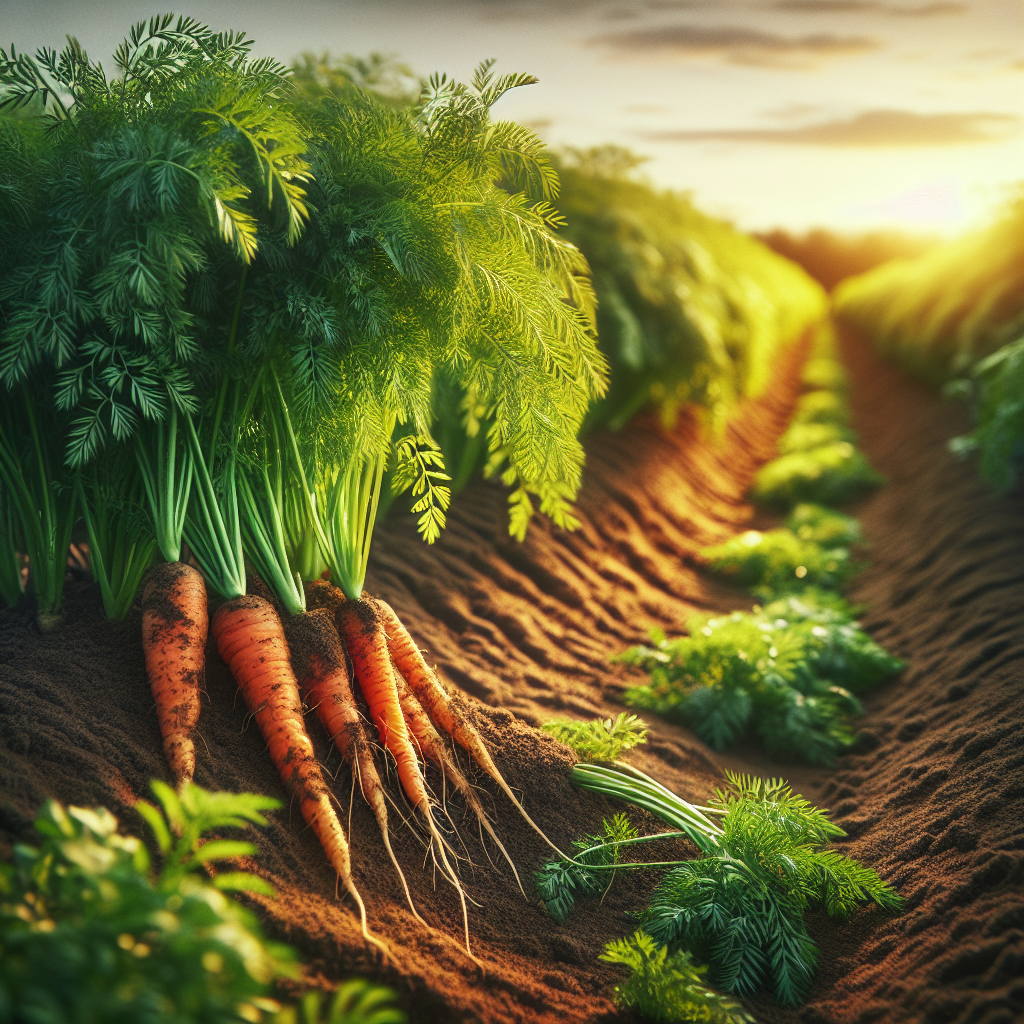
Introduction to Carrot
One of the oldest and most widely grown root vegetables, carrot has been cultivated for centuries from the wild species Daucus carota, a member of the Apiaceae family. Early domesticated forms were likely purple, yellow, and white; the now-familiar orange types were developed and popularized in Europe through selection for carotene-rich roots. Modern carrots range from small round market types to long storage roots and slender bunching cultivars, but all reward precision. Unlike many leafy vegetables, carrot quality is determined underground, where invisible stresses such as compaction, erratic watering, excessive nitrogen, fresh manure, or stones can permanently reduce marketability.
From a production standpoint, carrot is deceptively simple: it is direct-seeded, relatively cold tolerant, and not especially demanding in fertilizer. Yet premium roots require a fine, deep, stone-free seedbed, excellent germination conditions, and uninterrupted early growth. Miss the first three to five weeks, and yields, shape, color, and uniformity often suffer for the rest of the crop cycle. This is why skilled growers treat carrot as a soil-management crop first and a root crop second.
Carrots are grown for fresh bunching, mature roots, processing, juicing, dehydrating, and long-term storage. Root shape varies by market class: Nantes types are cylindrical and sweet, Imperator types are long and slender, Chantenay types are broader and better for heavier soils, Danvers types are tapered and adaptable, and Paris Market types are small and round for shallow soils or containers. Understanding your intended use is the first step in choosing the right cultivar and growing system.
Botanical Profile of Carrot
Carrot is a biennial grown as an annual for its enlarged taproot. In the first year, it forms a rosette of finely divided leaves and stores carbohydrates in the root. If exposed to sufficient cold and then warm conditions, it can bolt in the second season, sending up a flowering stalk with compound umbels typical of the parsley family. Once bolting begins, root texture rapidly declines; the root becomes woody, fibrous, and less sweet as reserves shift into reproductive growth.
The edible portion is primarily a swollen taproot consisting of two visually distinct tissues: the outer cortex, typically richer in sugars and pigments, and the inner core, often paler and woodier in oversized or overmature roots. Breeding has reduced coarse cores in many modern cultivars, especially Nantes types. Root color may be orange, yellow, white, red, or purple depending on pigment composition, including carotenoids, lycopene, and anthocyanins.
Leaves arise from a crown at the soil surface. This crown is sensitive to repeated wet-dry stress and sun exposure after root shoulders enlarge. Green shoulders form when the upper root is exposed to light, often causing bitterness. The fine feeder roots are concentrated in the upper soil profile but the main taproot penetrates deeply when soil structure permits. Any interruption from crusting, compaction, fresh organic debris, or hardpan can cause stubbing, splitting, or forking.
Botanically, carrot is closely related to celery, parsley, dill, fennel, and parsnip. This family relationship matters in rotation planning because several pests and diseases can persist across umbellifer crops. For crop rotation comparisons with another bulb-and-root system, see Onion.
Soil, pH, and Climate Requirements for Carrot
Carrot performs best in loose, friable, stone-free sandy loam or fine silt loam with excellent drainage and a uniform texture at least 20 to 30 cm deep. Heavy clay can produce acceptable crops only if deeply prepared and high in stable organic matter, but even then root smoothness and straightness are harder to achieve. The ideal seedbed is finely aggregated rather than powdery: overly pulverized soil can crust after rain or irrigation, choking emergence.
The preferred soil pH is 6.0 to 6.8, though carrots can tolerate roughly 5.5 to 7.2 if nutrient balance is sound. Strongly acidic soils may restrict calcium availability and worsen stand establishment, while excessively alkaline conditions can reduce micronutrient availability and contribute to uneven growth. Soil testing before planting is strongly recommended. Carrots are not heavy feeders, but they respond best where phosphorus and potassium are adequate and nitrogen is moderate rather than excessive.
Avoid fresh manure or unfinished compost before sowing. These can create localized zones of high ammonium, salts, and coarse undecomposed matter that fork and scar roots. If organic matter is needed, apply well-finished compost to the preceding crop or several months before planting so it is fully integrated. Raised beds are excellent where drainage is marginal, especially in spring.
Carrots are a classic cool-season crop. Ideal germination occurs when soil temperatures are about 10 to 25b0C, with best emergence often around 15 to 20b0C. They can germinate slowly in cooler soils, but emergence may take two to three weeks. At high soil temperatures above roughly 30b0C, germination becomes erratic and seedling vigor drops. For root development and sweetness, moderate daytime temperatures of 16 to 24b0C are excellent. Light frosts improve flavor by encouraging sugar accumulation in mature roots, but severe freezing can damage crowns if roots are unprotected.
Uniform moisture is essential from sowing through root enlargement. The top 1 to 2 cm of soil must remain consistently moist for germination because carrot seed is small and sown shallowly. Later, moisture should penetrate more deeply to encourage even root fill. A good target is moist but aerated soil in the upper 15 to 20 cm, never saturated for extended periods. Waterlogged conditions exclude oxygen and lead to root discoloration, stunting, and disease. Chronic overwatering often shows as pale foliage, slow growth despite wet soil, algae or moss on the bed surface, and a sour smell from poorly aerated ground. Underwatering causes slow emergence, small tops, bitter roots, and cracking when heavy irrigation follows drought.
Wind exposure matters more than many growers realize. Desiccating winds dry the seed zone rapidly and can make germination patchy. Light surface mulches such as floating row covers help retain moisture and moderate the microclimate without burying the seedlings.
For broader strategies on building root-friendly tilth, see soil health tips.
Step-by-Step Planting & Propagation
Carrot is almost always direct-seeded because transplanting disturbs the taproot and causes malformed roots. Successful planting begins well before sowing.
Prepare the bed deeply. Loosen soil to at least 20 to 30 cm, removing stones, clods, and old roots. On broadforked or deeply cultivated beds, shape a level, firm surface so seed placement is precise.
Pre-irrigate if soil is dry. The seed zone should be moist before sowing; trying to wet it thoroughly after sowing can displace fine seed.
Mark shallow rows. Sow seed about 0.5 to 1 cm deep. In cool or heavy soil, stay on the shallow end; in warmer, lighter soil, the deeper end is safer. Row spacing typically ranges from 20 to 30 cm for hand harvest and 30 to 45 cm for mechanical cultivation.
Distribute seed thinly. Aim for eventual in-row spacing of 2.5 to 5 cm depending on cultivar size. Because carrot seed is tiny, many growers mix it with dry sand for even sowing, use pelleted seed, or precision seeders. Over-seeding is common, but dense stands require timely thinning.
Firm gently. Good seed-to-soil contact is critical. Lightly tamp or press the row after sowing.
Maintain surface moisture until emergence. This is the most delicate phase. Light irrigation once or twice daily may be needed in warm, dry weather to keep the top layer from drying. Some growers lay burlap or boards over the rows temporarily and remove them as soon as seedlings begin emerging, but careful monitoring is essential.
Thin in stages. First thinning is usually done when seedlings are 2 to 4 cm tall, reducing crowded clusters. Final spacing depends on intended root size: 2.5 cm for baby carrots, 4 to 5 cm for fresh market bunching, and 5 to 7 cm for larger storage roots. Delayed thinning reduces root diameter and increases competition-induced misshaping.
Weed early and shallowly. Carrot seedlings are weak competitors. The crop benefits from stale seedbed techniques: prepare the bed, irrigate to flush weeds, lightly eliminate the first weed flush, then sow. Flame weeding just before carrot emergence is also effective in skilled hands because carrots emerge slowly.
Succession sowing every 2 to 3 weeks extends harvest. In hot climates, main sowings are often late winter, early spring, and late summer to autumn. In mild maritime climates, production can continue nearly year-round. Storage cultivars are usually sown in mid to late summer for autumn harvest.
Care & Maintenance regimes for Carrot
Once established, carrot requires steady, moderate growth. The goal is consistency rather than pushing rapid top growth.
Water management is the single most important maintenance task. During germination, the surface must not dry out. After establishment, irrigate less frequently but more deeply, generally enough to keep the root zone evenly moist to 15 or 20 cm depth. As a rule of thumb, carrots often need about 25 to 40 mm of water per week depending on soil type, temperature, wind, and canopy size. Sandy soils may need smaller, more frequent applications; heavier loams need deeper but less frequent irrigation. Uneven watering causes growth rings, splitting, and a rough texture. If soil swings from very dry to saturated, roots often crack longitudinally. A simple field check is to squeeze soil from 10 cm depth: it should feel cool and hold together lightly without smearing or dripping.
Mulching can help conserve moisture and suppress weeds, but use only a thin, fine-textured mulch after seedlings are well established. Heavy mulch at sowing can block emergence. In market gardens, woven covers or insect netting are often more valuable than organic mulches during early growth.
Nutrient management should be restrained. Excess nitrogen promotes lush foliage at the expense of root quality and can increase splitting and delayed maturity. If a soil test indicates need, a modest preplant application of balanced fertility is usually enough. Side-dressing is rarely necessary unless foliage is clearly pale and growth is slow on nutrient-poor soils. Potassium supports root quality and storability; boron deficiency, in deficient soils, can cause brittle or cracked roots and internal disorders, but boron should only be applied according to soil or tissue analysis because excess is toxic.
Hilling is sometimes overlooked. As shoulders expand, lightly pull soil over exposed crowns to prevent greening. Do this carefully so you do not damage the tops or compact the row.
Temperature management matters in shoulder seasons. Floating row covers can accelerate early growth and protect against wind, but remove or vent them during warm weather to avoid excessive heat. High temperatures can produce pale color, stronger core development, and reduced sweetness. In regions with long winters, carrots can be overwintered in the field beneath heavy mulch if soils are well drained and freezing is not too deep.
Weed control must be proactive. The first 4 to 6 weeks are critical. Once canopy closes, competition becomes less severe, but early weed pressure permanently reduces root size. Shallow hoeing is safest; deep cultivation near rows can prune roots and lower quality.
Bolting prevention depends on cultivar choice and planting date. Carrots exposed as young plants to extended cool periods may vernalize, then bolt when temperatures rise. This is most common in early sowings in climates with fluctuating spring cold. Use bolt-resistant cultivars for early planting and avoid stressing seedlings.
Pests, Diseases & Organic Management
The most economically important carrot pest in many regions is Carrot rust fly (Psila rosae). Adults lay eggs near the crown, and larvae tunnel into roots, causing rusty channels, secondary rot, and unmarketable produce. Damage is often worse in humid, sheltered sites and where carrots are grown repeatedly. Organic management includes rotation away from other Apiaceae, destruction of cull roots, delayed sowing to avoid peak flights where local timing is known, and especially the use of fine insect mesh or floating row covers applied immediately after sowing or thinning and sealed at the edges.
Aphids can colonize foliage and transmit viruses. Their feeding curls leaves and weakens plants, though economic losses are often secondary unless populations are large. Encourage beneficial insects, avoid excessive nitrogen, and use insecticidal soaps only if needed and permitted.
Wireworms, Root-knot nematodes, and Symphylans may also injure roots depending on region and field history. These pests often cause forking, pitting, or stunting that can be confused with soil problems. Rotation, soil testing, sanitation, and avoiding recently broken pasture or sod can reduce risk.
Among diseases, Alternaria leaf blight and Cercospora leaf blight are common foliar problems. They begin as dark lesions or marginal necrosis and can collapse tops, making harvest difficult and reducing root sizing. Good airflow, wider spacing in humid areas, clean seed, resistant cultivars where available, and rotation help reduce pressure. Avoid overhead irrigation late in the day if blight is established.
Cavity spot, often associated with Pythium species, causes sunken lesions on roots, especially in wet soils. Root rots from Sclerotinia, Bacterial soft rot, and other opportunists become more serious when fields are poorly drained or roots are injured during harvest. Powdery mildew may appear late in dry seasons, usually more as a foliage quality issue than a direct root disease.
Organic disease prevention relies heavily on prevention rather than rescue. Use long rotations of 3 to 4 years away from carrots, parsnips, celery, parsley, and related hosts. Start with clean seed, maintain balanced fertility, avoid over-irrigation, and harvest promptly once roots mature. Remove crop debris that can harbor inoculum. If washing roots for market, dry surfaces before cold storage to reduce bacterial and fungal spread.
Physiological disorders are also important. Forking is usually caused by compaction, stones, fresh manure, root pruning, or nematodes. Splitting results from irregular moisture or oversized roots left too long after rain. Green shoulders result from light exposure. Bitter flavor and poor color often trace back to heat stress or nutrient imbalance.
Harvesting, Curing & Optimal Storage
Harvest timing depends on market purpose rather than calendar date alone. Baby carrots may be lifted 50 to 60 days after sowing, while full-sized fresh market carrots often mature in 65 to 85 days, and storage types may take 75 to 100 days or longer depending on cultivar and climate. Diameter, color intensity, and flavor matter more than top size. Sample roots regularly by pulling from multiple spots in the bed.
For bunching carrots, harvest when roots are uniform, smooth, and tender, often at 1.5 to 2.5 cm shoulder diameter. For storage, allow roots to fully size but do not let them become overmature and woody. Cool autumn weather usually improves sweetness and storage life.
Harvest in moist but not wet soil when possible. Soil that is slightly moist allows easier lifting with less breakage. In compacted ground, undercutting with a fork or blade before pulling tops reduces snap-off. Handle roots gently; bruises and abrasions become entry points for storage rots.
After harvest, remove field heat quickly. If marketed fresh with tops, cool immediately and keep hydrated. For storage roots, trim tops to about 0.5 to 1 cm above the crown rather than twisting them off harshly, which can tear tissue. Wash only if necessary for market. Unwashed roots often store better, but if washed, use clean water and dry surface moisture before packing.
Carrots do not require true curing in the same sense as onions, garlic, or sweet potatoes. Instead, the key postharvest practice is rapid cooling and maintaining very high humidity. Ideal storage conditions are 0 to 1b0C with 95 to 98% relative humidity. Under these conditions, sound roots can store for 4 to 6 months, sometimes longer depending on cultivar. Lower humidity causes wilting and rubbery texture; higher temperatures accelerate respiration, sprouting, and disease.
Store roots in perforated plastic bags, lined crates, damp sand, or high-humidity coolers. Keep them away from ethylene-producing fruits such as apples and pears, as ethylene can increase bitterness. Inspect regularly and remove any soft or decaying roots promptly. If storing in clamps or cellars, ensure ventilation without freezing.
Companion Planting for Carrot
Companion planting with carrot works best when it is grounded in pest ecology and canopy architecture rather than folklore alone. Good companions either occupy a different rooting zone, mature quickly before carrot expands, or help confuse or suppress pests.
Alliums are classic partners. Onions, garlic, leeks, and chives may help disrupt host-finding by Carrot rust fly through their strong sulfurous odors, while carrots can in turn fit well between slower-growing allium rows. The partnership is especially practical in small-scale gardens where inter-row diversity reduces pest concentration. However, spacing must still allow airflow and access for weeding.
Lettuce, spinach, and radish are useful nurse or marker crops. Radishes emerge quickly and mark the carrot row, allowing early cultivation before carrots appear. Lettuce and spinach have shallower, faster growth habits and can be harvested before carrots need full room. Carrots also pair well with bush peas in some systems, as peas occupy vertical space lightly and may contribute modest nitrogen to the broader bed environment, though carrots should not follow excessively lush legume residue without balanced nutrient planning.
Avoid crowding carrots with aggressive, shading companions that compete for moisture in the topsoil. Large brassicas or sprawling cucurbits can reduce root sizing if planted too close. Dill, parsley, fennel, and parsnip are poor companions in rotation terms because they share pest and disease complexes. Fennel in particular is often considered inhibitory to many vegetables.
A practical intercropping pattern is alternating short rows of carrots with onions or scallions, or sowing carrots in bands with radish as a marker crop. For autumn systems, quick leafy companions can maximize space use without sacrificing root shape. The key is to preserve the loose, undisturbed soil profile that carrots need while using neighboring crops to diversify the canopy and lower pest pressure.
When managed well, companion planting can improve space efficiency, field hygiene, and beneficial insect activity, but it should never compensate for poor soil preparation. With carrot, the finest roots still come from deep tilth, precise sowing, early weed control, and steady moisture from emergence to harvest.