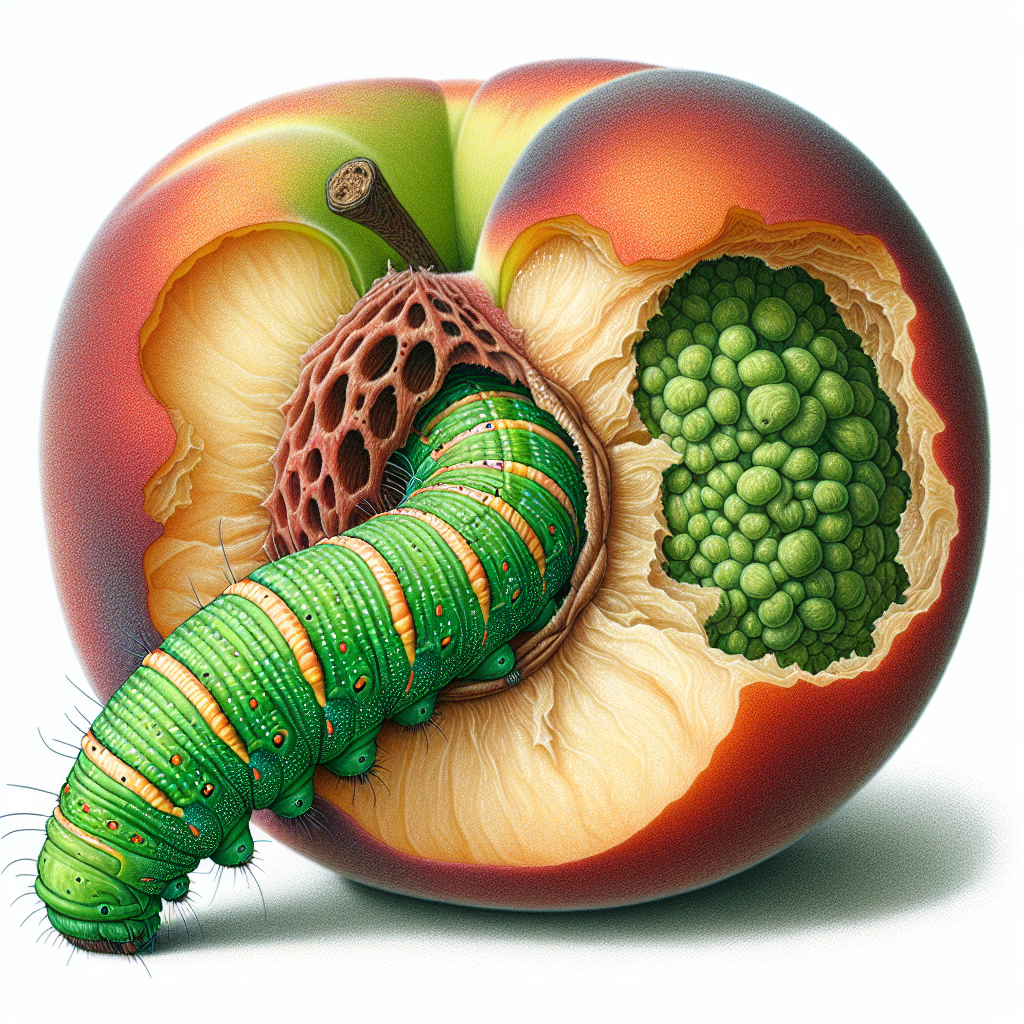
Introduction to Fruit-feeding caterpillars
Fruit-feeding caterpillars represent a diverse group of lepidopteran larvae that pose significant threats to fruit crops worldwide. Belonging primarily to families like Noctuidae, Tortricidae, and Pyralidae, these pests include notorious species such as the Corn Earworm (Helicoverpa zea), codling moth (Cydia pomonella), and oriental fruit moth (Grapholita molesta). Unlike leaf-feeding caterpillars, which primarily damage foliage, fruit-feeders specialize in penetrating developing and ripening fruits, making them particularly devastating for high-value crops like apple, mango, peach, and grapes.
These caterpillars can cause up to 50-80% yield losses in unmanaged orchards, according to agricultural extension data from regions like California and subtropical Asia. Their ability to bore deep into fruits protects them from surface sprays, complicating control efforts. Early detection and integrated pest management (IPM) are crucial, as these pests overwinter in pupal stages and migrate via adult moths. This guide provides professional-grade diagnostics, lifecycle insights, and organic strategies tailored for small farms and commercial growers. For real-time pest identification, explore Spring Pest Patrol: Organic AI Strategies to Shield Your Crops from Common Invaders.
Identifying Symptoms & Damage
Recognizing fruit-feeding caterpillar damage is essential for timely intervention. Initial signs include small entry holes on fruit surfaces, often 1-3 mm in diameter, surrounded by frass (caterpillar excrement) that appears as sawdust-like pellets or wet, greenish-black blobs. Unlike fruit borers, which create clean tunnels, fruit-feeders leave irregular chew marks and silk webbing on the exterior.
Advanced damage manifests as sunken lesions, brown rot, and secondary infections from fungi like Botrytis or bacteria entering through wounds. Fruits may drop prematurely, showing internal galleries filled with frass and live larvae. Inspect calyces (fruit bases) and stem ends first, as many species like oriental fruit moth target these areas. Differentiate from birds or slugs by the presence of silk threads and live caterpillars inside.
Use a hand lens to confirm: larvae are typically 10-40 mm long, smooth or hairy, with distinct head capsules. Colors vary—green, brown, pinkish, or striped. Sticky traps capture adults (small brown moths with wingspans of 15-30 mm). Monitor weekly during bloom to fruit-set; thresholds are 1-5% infested fruit in commercial settings. Damage severity peaks in warm, humid conditions, exacerbating anthracnose spread.
Lifecycle and Progression of Fruit-feeding caterpillars
Understanding the lifecycle enables precise timing of controls. Adult moths emerge from overwintering pupae in soil or debris in spring (March-May in temperate zones), coinciding with fruit bloom. Females lay 50-1000 eggs singly or in clusters on leaves, calyces, or young fruits. Eggs hatch in 3-7 days into tiny larvae that mine leaves before shifting to fruits.
Larval stage (3-6 instars) lasts 2-4 weeks, with peak feeding during fruit enlargement. Full-grown larvae (up to 40 mm) exit fruits to pupate in soil, leaf litter, or silken cocoons on branches. There are 2-5 generations per year, depending on climate—more in tropics. Degree-day models (base 10°C) predict flights: first at 150-200 DD, peaks aligning with Hass Avocado or Fuji Apple phenology.
Pupae overwinter 5-15 cm deep in soil. Parasitic wasps (e.g., Trichogramma spp.) and predators like birds reduce populations naturally. Disruptions like tillage bury pupae, breaking the cycle. Track with pheromone traps: 5-10 per hectare, replacing lures biweekly.
Environmental Triggers & Risk Factors
Fruit-feeding caterpillars thrive in warm (20-30°C), humid conditions with mild winters, favoring subtropical orchards. Risk spikes with consecutive warm springs, enabling extra generations. Nearby alternate hosts like corn or tomato serve as reservoirs for migratory species like armyworms (Armyworms).
Susceptible varieties include thin-skinned fruits: early peach cultivars or overripe mango. Poor pruning creates shaded, humid microclimates ideal for egg-laying. Nitrogen excess promotes lush growth, attracting moths. Drought stress weakens trees, increasing infestation. Regional outbreaks follow whiteflies or aphids booms, as they indicate broad pest complexes. Soil types with low organic matter retain fewer pupae predators. Monitor weather: >80% RH during fruit swell triples risk.
Organic Control & Treatment Plans
Organic management emphasizes IPM: monitoring, sanitation, biologicals, and targeted organics. Step 1: Sanitation—remove and destroy infested fruits weekly; deep plow post-harvest to expose pupae to predators. Step 2: Monitoring—deploy pheromone traps for adults; scout 20-50 fruits/tree at key stages.
Step 3: Biological Controls—release Trichogramma wasps (100,000/ha/week for 4 weeks) to parasitize eggs. Encourage predators like lacewings via flowering borders (nasturtium). Step 4: Organic Sprays—Bacillus thuringiensis (Bt) kurstaki at 1-2 kg/ha, applied at dusk to young larvae (<10 mm), 7-10 day intervals, 3 apps/generation. Spinosad (organic-approved) at 0.2-0.4 L/ha for larger larvae, rotate to prevent resistance.
Step 5: Barriers & Traps—Kaolin clay films deter egg-laying; mating disruption with pheromones (500-1000 dispensers/ha). Neem oil (2-5%) suppresses feeding. Threshold: Treat at 2-5% infested fruit. Integrate with cutworms controls for soil pests. Efficacy: 70-90% reduction in IPM systems.
Preventing Fruit-feeding caterpillars in the Future
Prevention builds resilient systems. Plant resistant varieties: thick-skinned Granny Smith Apple or Tommy Atkins Mango. Time planting to mismatch peak flights—e.g., late bloom cultivars. Maintain orchard hygiene: prune for light penetration, mulch to suppress soil pupae.
Diversify with trap crops like sweet corn. Use row covers during egg-lay periods. Enhance biodiversity: interplant marigold to attract beneficials. Reflective mulches confuse moths. Post-harvest, flail-mow cover crops to shred debris. Annual soil solarization in high-risk areas kills pupae. Long-term: Scout neighbors, quarantine infested stock. Combine with weather-based models for proactive sprays.
Crops Most Affected by Fruit-feeding caterpillars
Fruit-feeders devastate pome, stone, and tropical fruits. Top targets: Apple (codling moth bores cores), Peach (oriental fruit moth in shoots/fruits), Cherry (similar tortricids), Pear, Plum. Tropicals like Mango suffer from tip borers, Avocado from rind feeders (rind-feeding caterpillars), Orange and Grapes from leafrollers invading clusters.
Berries (Strawberry, Blueberry) face armyworm hordes; Tomato and Pepper get fruitworms. Lesser impacts on Pineapple, Watermelon. Global losses exceed $1B annually, worst in organic systems. Prioritize monitoring in mixed orchards.