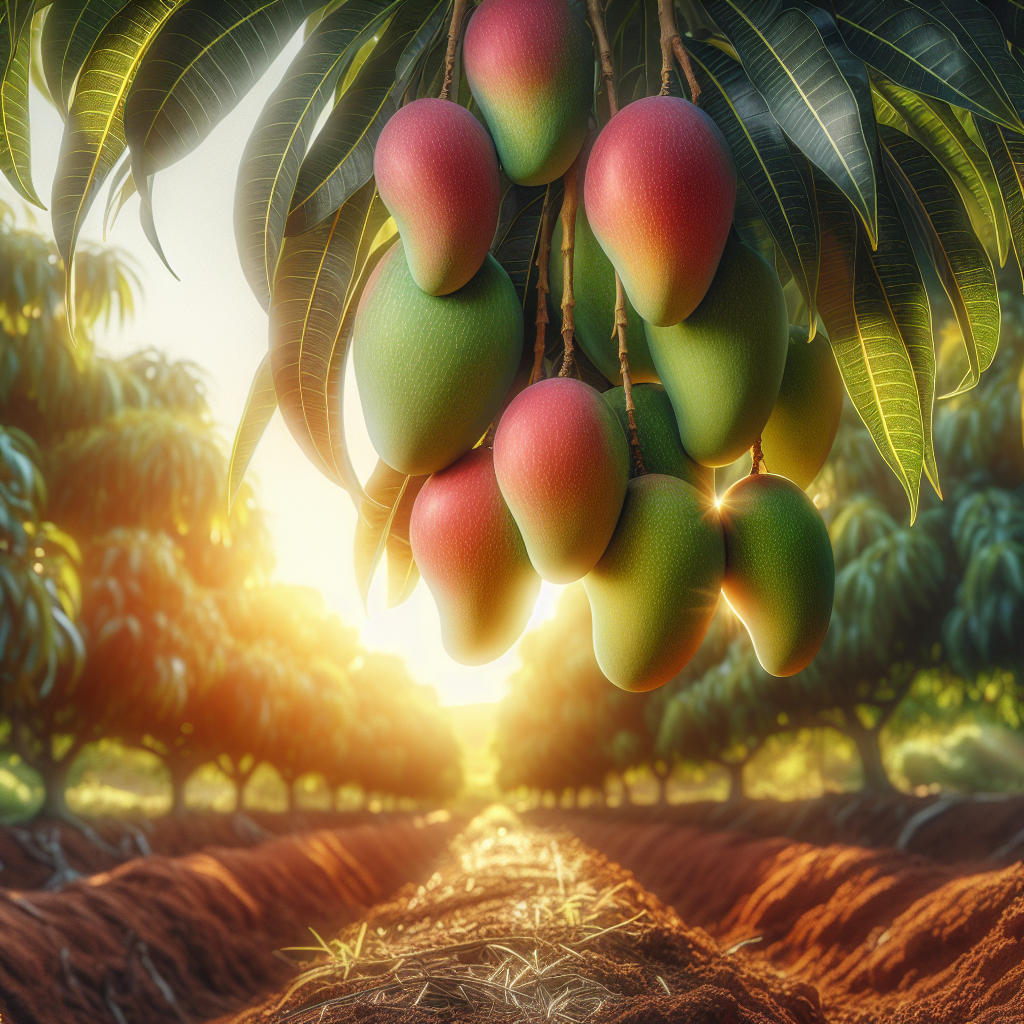
Introduction to Tommy Atkins Mango
Originating in Florida and selected in the early 20th century, this cultivar became dominant in global trade because it solves several commercial problems at once: the fruit colors attractively, resists bruising better than many softer-fleshed mangoes, and tolerates long-distance transport. That commercial success sometimes causes home growers to underestimate it, but well-grown fruit harvested at the correct maturity can be very good, with medium-firm fibered flesh, mild sweetness, and a balanced, approachable flavor. The tree itself is notably vigorous, forming a large rounded canopy if left unpruned, and it can bear heavily under warm conditions with a distinct dry period before flowering.
For growers, the key point is that this is not a delicate boutique mango. It is a durable, high-energy cultivar with strong vegetative growth, good field tolerance, and dependable cropping, but it needs disciplined canopy management to keep tree height, fruiting wood, and disease pressure under control. If you want broader context on species-level culture, see the general mango guide. For orchard floor fertility and structure, principles in soil health strategies are especially relevant to long-lived fruit trees.
Botanical Profile of Tommy Atkins Mango
This cultivar belongs to the Anacardiaceae family, the same family as cashew and pistachio. Like other mangoes, it is an evergreen tree with leathery, lanceolate leaves that emerge reddish to bronze before hardening to glossy green. New flushes are important because mango bears predominantly on mature terminal wood; flowering typically occurs from well-rested shoots after vegetative growth has hardened.
Tommy Atkins is usually classified as a mid-season mango in many production regions, though exact harvest timing shifts with latitude, winter temperature, irrigation pattern, and rootstock vigor. The fruit is medium to large, often oval to oblong, with thick skin and substantial red to dark pink blush over a yellow-orange-green background when exposed to sunlight. Internally, flesh is deep yellow to orange, moderately fibrous compared with cultivars such as Alphonso or Nam Dok Mai, and the seed is monoembryonic, meaning seedlings will not reliably come true to type. Because of that, commercial propagation is by grafting rather than seed.
The tree is vigorous and upright-spreading, often reaching 30-40 feet or more if unmanaged, though commercial systems commonly maintain it much smaller for spray coverage and harvest efficiency. Panicles are large and branched, bearing many male flowers and a much smaller proportion of hermaphroditic flowers. Fruit set is naturally low relative to total flower count, so heavy bloom does not guarantee a heavy crop if weather is poor during pollination. Leaves, stems, and immature fruit contain sap that can irritate skin in sensitive people, so gloves and eye protection are sensible during pruning and harvest.
A notable nuance of this cultivar is its commercial resilience rather than elite dessert quality. It tends to have better skin toughness, lower transit breakdown, and lower visible damage in packing chains than many softer mangoes. That matters in humid regions where postharvest losses can erase profit quickly. However, the same thick skin and firm flesh mean flavor development depends heavily on harvesting at true physiological maturity rather than too early.
Soil, pH, and Climate Requirements for Tommy Atkins Mango
This cultivar performs best in deep, well-drained soils with strong aeration in the root zone. Ideal textures are sandy loam, loam, or gravelly loam, but the more important factor is drainage speed. Mango roots require oxygen, and Tommy Atkins will decline in soils that remain saturated for more than 48-72 hours. If you dig a 12- to 18-inch test hole, fill it with water, and it still contains standing water the next day, the site is too wet without mounding, subsurface drainage, or raised berm planting.
Preferred soil pH is about 5.5 to 7.5, with the strongest nutrient balance usually seen around 6.0 to 7.0. Below pH 5.0, aluminum and manganese stress can increase and phosphorus availability may fall. Above pH 7.8, iron, zinc, and manganese deficiencies become much more common, showing up as interveinal chlorosis on young leaves, small distorted flushes, and weak canopy density. In calcareous soils, chelated micronutrients, organic matter management, and careful irrigation water quality monitoring become essential.
Tommy Atkins thrives where annual temperatures are warm, frost is rare, and there is a distinct drier period that helps induce flowering. Ideal mean growing temperatures are roughly 24-30°C (75-86°F). Mature trees can tolerate brief dips to around 0°C (32°F) with minor damage under some conditions, but young trees may be injured at 1-2°C (34-36°F), and extended freezing can kill scaffolds or the whole plant. Flowering and fruit set are highly sensitive to cold rain, fog, and persistent overcast weather. Warm dry winters and springs generally improve bloom quality, pollinator activity, and Anthracnose suppression.
Rainfall of 750-2500 mm annually can support production, but distribution matters more than total amount. Continuous rainfall during bloom often reduces fruit set and increases fungal pressure, while heavy rain near harvest can reduce sweetness and increase skin disorders. A mild water deficit before flowering often improves bloom initiation, but severe drought reduces panicle vigor and fruit retention. Wind exposure also matters: strong winds scar fruit, break panicles, and increase uneven transpiration. In cyclone-prone or hurricane-prone areas, windbreak design should be part of orchard planning.
Salinity tolerance is moderate at best. Avoid irrigation water with high sodium or chloride levels, especially in young orchards. Electrical conductivity above about 1.5-2.0 dS/m can begin to suppress performance depending on soil texture and leaching capacity. If saline water is unavoidable, use deep, infrequent irrigations in well-drained soils to push salts below the active root zone and maintain a heavy organic mulch ring that does not touch the trunk.
Step-by-Step Planting & Propagation
Use grafted nursery trees from reputable sources. Seed-grown mangoes are variable, slower to fruit, and unsuitable when you specifically want Tommy Atkins characteristics. A good planting tree is usually 2-4 feet tall, with a healthy graft union, several mature leaves, no circling roots, and no signs of Anthracnose, scale, or trunk injury.
- Choose a full-sun site with at least 8 hours of direct light daily. Yield and fruit color decline sharply in shade.
- Space trees according to management style. Traditional orchards may use 25-35 feet between trees, while high-density systems use closer spacing but require regular size control. For home culture, plan on at least 20-25 feet from buildings and other large trees.
- Prepare the site by controlling perennial weeds and checking drainage. In heavy soils, build a mound or berm 12-24 inches high and 4-8 feet wide.
- Dig a hole only as deep as the root ball and 2-3 times as wide. Deep planting is a common failure point; keep the top of the root ball slightly above surrounding grade, especially in wet climates.
- Remove the container carefully. If roots circle densely, make 3-4 shallow vertical cuts to encourage outward growth.
- Backfill mostly with native soil rather than a rich compost pocket. A sharp transition between amended hole and native soil can trap water and discourage root exploration.
- Water immediately to settle soil. Apply enough to moisten the full root ball and surrounding soil profile, typically 10-20 liters for a small nursery tree, more in sandy sites.
- Mulch with 2-4 inches of coarse organic material over a 3-5 foot diameter zone, leaving 6-8 inches clear around the trunk.
- Stake only if necessary in windy sites, and remove supports once the tree is stable to avoid weak trunk development.
Propagation is almost always by veneer grafting, cleft grafting, or side grafting onto vigorous mango rootstocks. The scion should come from healthy, mature, non-flushing wood. Graft success improves when temperatures are warm, humidity is moderate, and the rootstock is actively growing but not excessively soft. Air layering is not standard for mango because rooting is unreliable and resulting plants lack the structural advantages of seedling rootstocks.
After planting, remove flowers during the first year or two on young trees so the plant invests in roots and scaffold development rather than early fruiting. This is especially important for Tommy Atkins because its vigor can be shaped early into a lower, broader canopy that is easier to manage later.
Care & Maintenance regimes for Tommy Atkins Mango
Irrigation should be adjusted by tree age, soil type, and phenological stage. Newly planted trees need frequent but not constant moisture. In sandy soils, water 2-3 times weekly for the first month, aiming to wet the root zone to about 8-12 inches deep each time. In loam or clay loam, once or twice weekly may be enough. The goal is moist, aerated soil, not saturation. If the soil smells sour, leaves yellow uniformly, or new growth wilts despite wet ground, roots may be oxygen-starved from overwatering.
Once established, mango prefers deep, spaced irrigations rather than daily shallow watering. A mature tree in dry weather often benefits from irrigation every 7-14 days depending on soil and evapotranspiration. During active fruit sizing, avoid severe drought stress because it increases fruit drop and small fruit size. During the pre-flowering rest period, slightly reducing irrigation can help shift the tree from vegetative growth toward reproductive growth, but do not push trees into prolonged leaf wilt or canopy collapse.
Fertilization should be moderate and timed to growth stage. Young trees benefit from small, frequent applications rather than heavy doses. A balanced fertilizer with nitrogen, phosphorus, and potassium, plus magnesium and micronutrients, can be split into 3-6 annual applications. Excess nitrogen produces lush vegetative flushing, delays flowering, and can worsen disease pressure. For bearing trees, potassium demand rises during fruit development, and calcium plus micronutrient sufficiency supports fruit quality and leaf function. In many orchards, annual nutrient programs are based on leaf analysis of recently matured leaves from nonfruiting terminals.
Typical deficiency symptoms include iron chlorosis on young leaves in high-pH soils, zinc deficiency causing small narrow leaves and shortened internodes, and boron deficiency reducing flower and fruit set. Foliar micronutrient sprays are often more effective than soil applications in alkaline soils, especially for zinc and manganese.
Pruning is essential. Without it, Tommy Atkins becomes too tall, too dense, and too vegetative. Training should begin early by encouraging 3-4 well-spaced scaffold branches at a manageable height. After harvest, tip prune terminals by a few inches to stimulate lateral branching and maintain a lower fruiting shell. Remove dead, crossing, or shaded interior wood and keep the canopy open enough for light penetration and spray coverage. Commercially, many growers maintain trees between roughly 10 and 16 feet for labor efficiency.
Flowering management depends on climate. Mango bloom is triggered by a combination of mature resting shoots, cool or dry inductive conditions, and reduced nitrogen vigor. If trees keep flushing vegetatively late into the season, flowering will be uneven. That is why late-season nitrogen and excessive irrigation are often counterproductive. Fruit thinning is not always practiced in mango, but where set is excessive, limited thinning can improve size and reduce limb breakage.
Mulching improves moisture regulation, root-zone temperature stability, and weed suppression. Keep weed competition especially low within the first 3 years, because young mango roots are less competitive than many aggressive grasses. Avoid mechanical injury from string trimmers and mowers; trunk wounds invite disease and reduce vigor.
Pests, Diseases & Organic Management
The most important disease in humid mango regions is Anthracnose, caused by Colletotrichum species. It attacks flowers, young fruit, leaves, and ripening fruit, often starting invisibly during wet weather and later showing black lesions, blossom blight, or postharvest rot. Tommy Atkins can still suffer substantial Anthracnose pressure despite its shipping reputation. Organic management starts with canopy openness, dry air movement, sanitation, and avoiding overhead irrigation during flowering. Copper-based protectants are commonly used in organic-compatible programs, especially from panicle emergence through early fruit set in wet climates.
Powdery Mildew is another major bloom disease, especially in climates with cool dry nights and humid mornings. It appears as whitish powdery growth on panicles, flowers, and tiny fruit, causing abortion and fruit drop. Sulfur products can be effective preventively, but do not combine close to oil sprays or apply during extreme heat.
Bacterial Black Spot, Mango Scab, and Stem-end Rot can also damage fruit quality. These problems worsen in dense canopies, windy rain, and orchards with poor sanitation. Remove diseased twigs, destroy mummified fruit, and harvest carefully to minimize sap burn and stem-end infection.
Common insect pests include Mango Hoppers, Scale Insects, Mealybugs, Thrips, Fruit Flies, and Mites depending on region. Hoppers feed on panicles and can reduce fruit set. Scales and Mealybugs produce honeydew that supports sooty mold, reducing photosynthesis and fruit appearance. Fruit Flies are especially serious in warm regions and may require baiting, trapping, sanitation, and prompt harvest. Organic approaches include yellow traps where appropriate, protein bait traps for Fruit Flies, horticultural oils for scale during non-bloom periods, encouraging natural enemies, and strict orchard hygiene.
Do not rely on a single input. The best organic protection program is integrated: prune for airflow, keep nitrogen moderate, remove dropped fruit weekly during pest season, monitor panicles and new flushes closely, and time interventions to pest life cycles. Avoid broad-spectrum sprays during peak pollinator activity because mango pollination depends heavily on flies, bees, and other insects visiting the flowers.
Vertebrate damage may come from birds, squirrels, bats, or monkeys depending on location. Netting, bagging selected fruit, or synchronized harvest can reduce losses. In backyard trees, fruit bagging after fruit reach a safe size can also reduce fruit fly attack and sun-scorch fluctuations.
Harvesting, Curing & Optimal Storage
Tommy Atkins should be harvested at mature-green stage for shipping or when approaching full maturity for local markets. Do not judge readiness by red blush alone; sun exposure can color immature fruit. Better indicators include full shoulders near the stem end, a more filled-out beak and cheeks, a slight lightening of ground color, and internal dry matter or specific gravity tests in professional operations. Fruit harvested too early may soften but never develop good flavor.
Use clippers rather than pulling fruit by hand. Leave a short stem piece initially to reduce sap flow onto the skin, then de-stem into an absorbent collection system once latex pressure has eased. Sap burn is a major cosmetic issue in mango and can create black streaking. Harvest during cooler parts of the day and handle fruit gently even though Tommy Atkins is firmer than many cultivars.
After harvest, fruit should be sorted for defects, cleaned if necessary, and cured in a shaded, well-ventilated area. In practical terms, curing here means allowing field heat to dissipate and sap flow injuries to dry before packing. Ripening is best at about 20-25°C (68-77°F). Below about 10-13°C (50-55°F), mangoes are vulnerable to chilling injury, which may appear as uneven ripening, grayish flesh breakdown, poor aroma, pitting, or skin discoloration.
For short-term storage of mature-green fruit, temperatures around 12-13°C (54-55°F) with high relative humidity, roughly 85-95%, are commonly used to slow ripening while limiting dehydration. Once ripe, fruit is best consumed quickly, though it can be held briefly at cooler room temperatures. Avoid refrigerating unripe fruit in very cold domestic refrigerators. If fruit must be chilled after ripening, keep storage brief.
A well-managed harvest system includes frequent picking rounds rather than waiting for all fruit to color. This reduces drop losses, pest damage, and uneven maturity. Because Tommy Atkins is widely marketed, it often rewards growers who prioritize consistency: uniform maturity, minimal sap burn, and careful sorting frequently matter more than absolute sweetness in commercial channels.
Companion Planting for Tommy Atkins Mango
Companion planting around a mango tree should support pollination, soil cover, and manageable competition rather than create a crowded food forest that traps humidity. The root zone of mango needs air, and the canopy benefits from a relatively clean, mulched basin near the trunk. Use companions mainly at the dripline and beyond, or in young orchards before full canopy closure.
Thai Basil is a useful aromatic companion because it attracts pollinators and beneficial insects while staying relatively easy to manage in sunny positions. Clover works well as a living groundcover in suitable climates, helping suppress weeds, protect soil from erosion, and contribute biologically active organic matter; however, keep it cut low and do not let it compete heavily with young trees for moisture. Sunflower can support beneficial insect diversity and provide a temporary wind-filter in mixed plantings, but place it where it will not shade young mangoes. Garlic can be used in outer rings or nearby beds where its pungent presence may help diversify pest habitat, though it should not be crowded directly against the trunk zone.
Avoid dense companions that require frequent irrigation right at the base of the tree, such as thirsty vegetable beds packed into the mulch ring. Also avoid species that create heavy shade, harbor similar diseases, or make harvest access difficult. In commercial orchards, the most effective "companion planting" is often a managed alley cover crop plus a clean tree row. The principle is simple: support soil biology and beneficial insects without sacrificing airflow, root oxygen, or harvest efficiency.