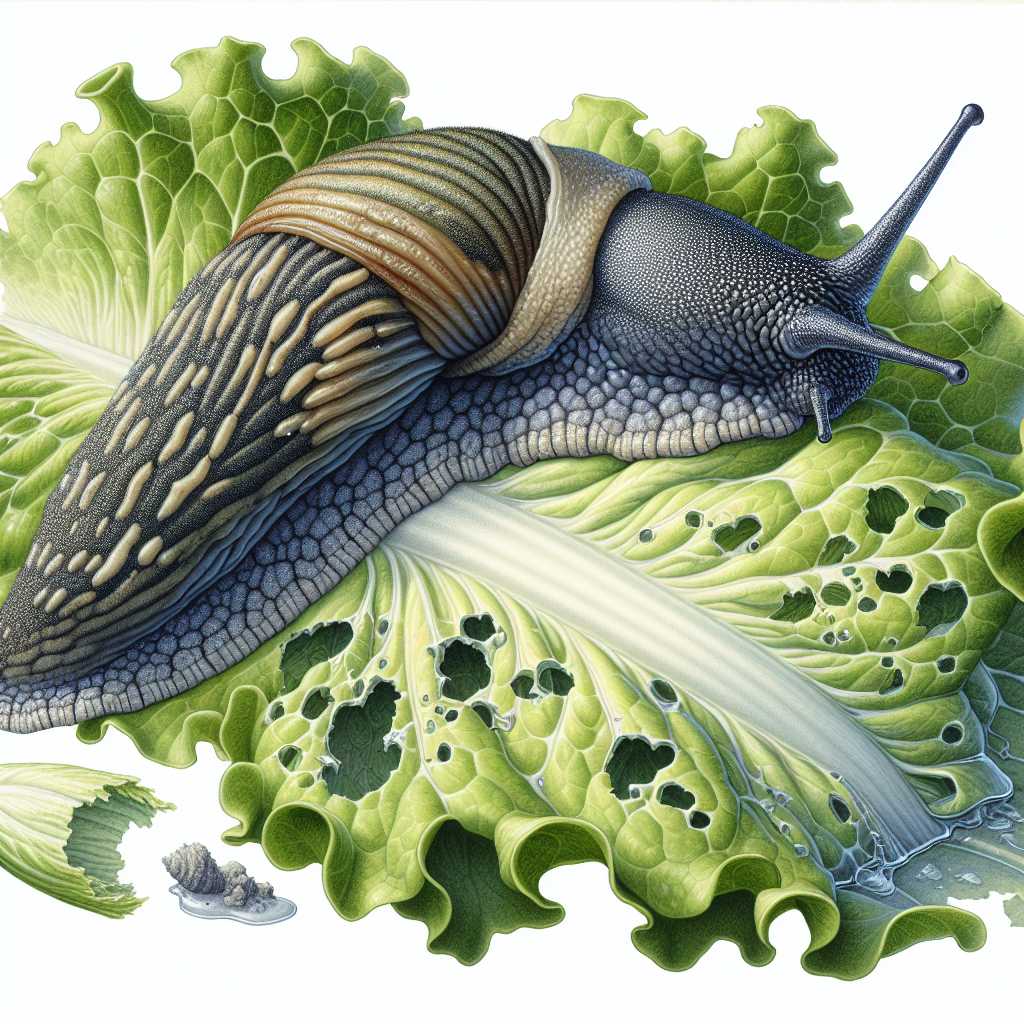
Introduction to Slugs
Slugs, belonging to the order Stylommatophora, are notorious agricultural pests that cause extensive damage to crops, particularly in temperate and humid regions. These hermaphroditic mollusks lack a distinct shell, distinguishing them from their close relative, Snails. Unlike cutworms or caterpillars, slugs feed nocturnally, rasping plant tissues with a radula—a file-like mouthpart—leaving behind slimy trails and characteristic damage. They proliferate in cool, wet conditions, posing a major threat to vegetable gardens, field crops, and orchards. In severe infestations, slugs can defoliate entire plants overnight, leading to yield losses of up to 50% in susceptible crops like lettuce and strawberries.
Understanding slug biology is crucial for effective management. Common species include the field slug (Deroceras reticulatum), garden slug (Arion hortensis), and grey field slug (Deroceras caruanae). These pests are hermaphrodites, capable of laying 30-100 eggs per clutch multiple times per season. Their resilience to many pesticides and ability to aestivate (enter dormancy) during dry periods make them challenging. For small farms, integrating cultural, physical, and biological controls is key to sustainable suppression. This guide equips you with professional-grade diagnostics and strategies, drawing from entomological and agronomic research. Check out Spring Pest Patrol: Organic AI Strategies to Shield Your Crops from Common Invaders for timely implementation tips.
Identifying Symptoms & Damage
Slug damage is unmistakable once identified early. Look for irregular, ragged holes in foliage, often starting from leaf edges and progressing inward. Unlike flea beetles, which create pinpoint shots, slugs chew large, slime-coated gashes. Seedlings may vanish entirely, severed at soil level, mimicking wireworms but distinguished by glistening mucus trails—silvery paths drying to white residue.
Inspect plants at dawn or dusk: fresh holes with wet edges indicate active feeding. Fruits like strawberry or tomato show scooped-out depressions or surface scarring. Stems bear longitudinal rasping marks. Severe cases lead to stunted growth, secondary infections from Botrytis, or plant collapse. Differentiate from earwigs by absence of jagged tears and presence of slime.
Diagnostic tools: Place wooden boards or grapefruit halves overnight as traps; check for clustered slugs underneath. Use a flashlight for nocturnal scouting. Seedling losses exceeding 20% signal high populations. In lettuce fields, edge plants suffer first, spreading inward. Early detection prevents escalation, saving crops like cabbage and potato from total loss.
Lifecycle and Progression of Slugs
Slugs complete their lifecycle in 6-12 months, with multiple generations per year in mild climates. Eggs, tiny translucent spheres (2-3mm), are laid in clutches of 20-100 in moist soil or leaf litter, hatching in 10-30 days depending on temperature (optimal 15-20°C). Juveniles resemble mini-adults, growing rapidly by molting their mantle.
Adults reach 2-10cm, feeding voraciously before laying eggs in autumn or spring. They overwinter as eggs or subadults, resuming activity post-frost. Peak activity occurs at night or in overcast weather. Reproduction is prolific: a single slug can produce 400+ offspring annually. Dormancy during dry spells sees them burrow 10cm deep.
Progression stages: Egg (clustered, soil-embedded), Juvenile (small, pale), Mature (dark, elongated), Senescence (reduced mobility). Monitor for egg masses near spinach bases. Lifecycle ties to moisture; irrigation amplifies outbreaks. Understanding this informs timed interventions, like tilling post-harvest to expose eggs to predators.
Environmental Triggers & Risk Factors
Slugs thrive in high humidity (>80%), cool temperatures (10-25°C), and organic-rich soils. Excessive mulch, overhead watering, and dense canopies create microhabitats. Poor drainage fosters breeding sites; clay soils retain moisture, exacerbating issues. No-till farming, while beneficial for soil health, harbors slugs unless mitigated.
Risk factors include mild winters reducing mortality, monsoon rains boosting populations, and proximity to woodlands. Over-fertilization with nitrogen promotes succulent growth, prime slug fodder. Crops like onion in compacted beds suffer most. Weed hosts like chickweed shelter slugs, bridging to crops.
Climate change extends activity periods, overlapping with aphids for compounded damage. Assess farm microclimates: shaded, irrigated zones are hotspots. Soil pH 6-7 favors them; liming deters mildly. Integrate Soil Health Mastery: 5 Proven Strategies for Small Farms to Build Fertile Ground Without Breaking the Bank for balanced management.
Organic Control & Treatment Plans
Organic management emphasizes integrated pest management (IPM). Cultural: Till soil to disrupt eggs; rotate with grasses. Promote drainage via raised beds. Physical: Deploy beer traps (shallow dishes sunk level, filled with yeast-sugar-yeast mix; refresh daily). Copper barriers deter via mild shock. Foot trowels or nightly patrols remove 100s manually.
Biological: Introduce nematodes (Phasmarhabditis hermaphrodita), applied as soil drench (effective 60-90 days, 15-20°C). Ducks or chickens forage effectively. Predatory beetles (Carabidae) thrive in beetle banks.
Barriers: Diatomaceous earth (DE) or sharp sand around plants; reapply post-rain. Wool pellets absorb moisture, desiccating slugs. Baits: Iron phosphate (e.g., Sluggo) safer than metaldehyde, granular-applied evenings.
Treatment plan: Scout weekly; threshold 5 slugs/m². Week 1: Barriers + traps. Week 2: Nematodes + DE. Monitor; combine with slugs and snails cultural practices. Avoid broad-spectrum sprays harming predators.
Preventing Slugs in the Future
Prevention outperforms cure. Select slug-resistant varieties: savoy kale over smooth lettuces. Plant late spring to evade peaks. Use row covers until flowering. Mulch with pine needles or bark (less hospitable than straw).
Encourage biodiversity: Plant nasturtium as trap crop, drawing slugs away from lettuce. Maintain tidy borders; mow grass short. Solarize soil pre-planting to kill eggs. Fenceline with thorny plants.
Long-term: Foster ground beetles via cover crops like clover. Time irrigation for mornings, allowing drying. Monitor with traps; intervene early. Annual audits reduce populations 70%. Pair with companion planting from Why Companion Planting Feels Like Guesswork for Small Farms - And How AI Makes It Foolproof.
Crops Most Affected by Slugs
Slugs target low-growing, succulent crops. Vegetables: Lettuce (80% damage potential), cabbage, spinach, beet seedlings. Brassicas suffer outer leaf stripping. Strawberry fruits scooped; berries unmarketable.
Roots: Potato tubers pitted, carrot tops shredded. Herbs: Thai basil bases gnawed. Field crops: Soybeans seedlings, peas. Ornamentals and seedlings universally vulnerable. In greenhouses, oyster mushroom beds infested. Prioritize protection for high-value like organic strawberry.