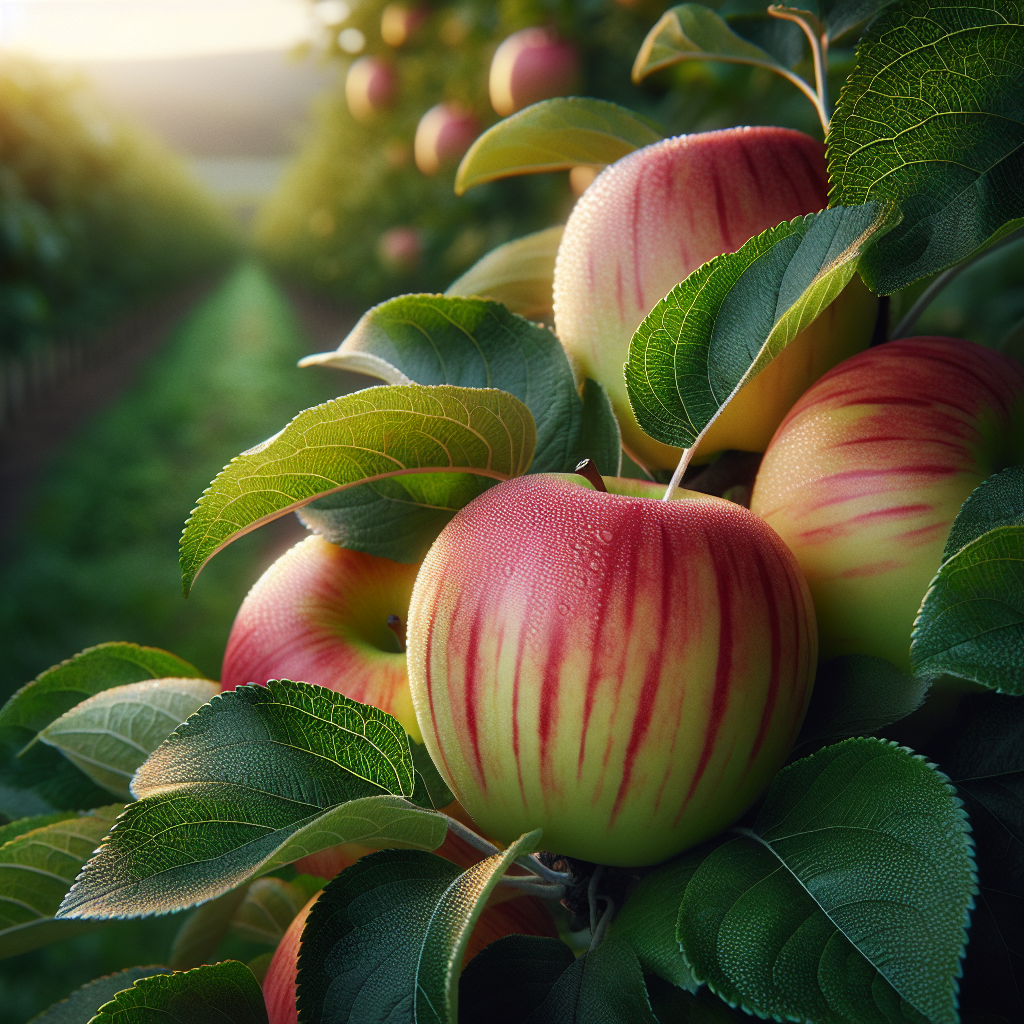
Introduction to Fuji Apple
Developed in Japan in the late 1930s and released commercially in the 1960s, Fuji quickly became one of the world’s most important fresh-eating apples because it combines dense crispness, very high sugars, balanced acidity, and extraordinary keeping quality. It was bred at the Tohoku Research Station in Morioka from a cross generally described as Red Delicious × Ralls Janet, producing a cultivar that colors best under warm days and cool nights and stores for months without losing its characteristic snap.
For growers, this variety is not just another apple; it is a high-value late-maturing cultivar with specific management needs. It tends to be vigorous, can become biennial if crop load is not managed, and often requires deliberate thinning to achieve premium fruit size and color. Compared with many early apples, Fuji rewards patience: fruit often hangs late into the season to accumulate sugars, and quality can improve significantly if harvest timing is precise.
As part of the wider Apple guide context, Fuji stands out for soluble solids that commonly reach 14–18° Brix under good conditions, flesh firmness often exceeding many supermarket cultivars at harvest, and a consumer profile strongly favoring sweetness over sharp acidity. That sweetness can be a market advantage, but it also means trees need balanced nutrition and careful canopy light management so fruit colors evenly rather than remaining pale or overly shaded.
Botanical Profile of Fuji Apple
Fuji is a deciduous pome fruit tree in the Rosaceae family. Like other cultivated apples, it is typically grown as a grafted cultivar rather than from seed because seedling offspring do not come true to type. The scion is Fuji, while tree size, vigor, anchorage, precocity, and soil adaptation depend heavily on the rootstock.
Key botanical and horticultural traits include:
- Species: Malus domestica
- Cultivar: 'Fuji'
- Family: Rosaceae
- Fruit type: Pome
- Bloom period: Mid- to late-season bloom in many temperate regions
- Harvest window: Late season, often autumn and later than Gala-type apples
- Pollination: Self-unfruitful to functionally self-sterile; requires compatible pollinizers
- Growth habit: Upright to spreading, moderately vigorous to vigorous depending on rootstock
- Bearing habit: On spurs and short shoots, with a tendency toward heavy set if unmanaged
Leaves are ovate, serrated, and medium green, emerging after dormancy breaks in spring. Flowers are borne in clusters, typically white to blush pink in bud and opening pale. As with most commercial apples, flower structure is hermaphroditic, but self-incompatibility mechanisms prevent reliable self-fertilization, so cross-pollination is essential.
Fruit is usually round to slightly oblate, with a yellow-green ground color overlaid by pink-red to deep red striping or blush depending on strain, climate, and light exposure. Numerous sports and improved color strains exist, including selections bred for more consistent red skin in regions with lower color development. Growers choosing a strain should consider local heat accumulation, light intensity, and market preference for striped versus solid-red fruit.
Fuji commonly has lower acidity than older classic apples, which is why it tastes very sweet even before fully mature starch conversion. However, harvesting too early can produce fruit that looks acceptable but lacks aroma and full textural development. Internally, the flesh is cream-white, very juicy, and notably dense. That density is one reason it stores and ships so well.
Soil, pH, and Climate Requirements for Fuji Apple
Fuji performs best in deep, well-drained loam or sandy loam with good aeration and moderate water-holding capacity. Ideal effective rooting depth is at least 75–100 cm, though more is better, especially on semi-dwarf or vigorous rootstocks. Heavy clay is not automatically disqualifying, but it must be improved with drainage, organic matter, and often raised planting positions because apples are highly sensitive to chronic root-zone saturation.
Target soil pH is 6.0-6.8, with the sweet spot often around 6.2-6.5. Below pH 5.8, calcium, magnesium, and phosphorus availability may become limiting, while excessively acidic conditions can increase aluminum and manganese issues. Above pH 7.2, iron, zinc, and manganese deficiencies become more likely, especially on calcareous soils, leading to interveinal chlorosis and reduced vigor.
Before planting, conduct a full soil test for:
- pH and buffer pH
- Organic matter percentage
- Cation exchange capacity
- Phosphorus and potassium
- Calcium and magnesium balance
- Micronutrients, especially boron and zinc
- Salinity if irrigation water is suspect
For orchard establishment, avoid sites where water remains standing for more than 24 hours after heavy rain. Apple roots need oxygen; in saturated soils, feeder roots die back, predisposing trees to weak establishment, collar disorders, and opportunistic root pathogens. A practical field test is to dig a 45-60 cm hole, fill it with water, and observe drainage. If water persists the next day, drainage improvement is needed before planting.
Fuji is best adapted to temperate climates with distinct winter dormancy. It generally requires substantial chill accumulation, often estimated in the broad range of 600-1,000 chill hours depending on local model, rootstock influence, and strain. In low-chill subtropical conditions, bud break may be uneven, bloom may be erratic, and fruit set can be poor or prolonged.
The cultivar also benefits from a long growing season because it matures late. Regions with warm sunny days and cool nights near harvest tend to produce superior color and sugar accumulation. Excessively hot nights can suppress color development, while very short seasons may leave fruit under-mature before frost pressure forces harvest.
Ideal climate parameters include:
- Winter cold sufficient for dormancy release
- Spring conditions with limited frost during bloom
- Summer warmth without chronic heat stress above 35°C
- Good light exposure for color development
- Dry air circulation or managed spray programs to limit fungal disease
Spring frost is a major risk because bloom-stage flowers can be injured even by short cold events. Tight cluster and pink stages are somewhat hardy, but open blossoms and young fruitlets are much more vulnerable. Site selection matters: slopes with cold-air drainage are safer than frost pockets in valley bottoms.
Wind exposure should also be considered. Strong wind can reduce bee activity at bloom, increase shoot breakage, scar fruit, and raise evapotranspiration. Windbreaks may help, but they should not cast excessive shade or impede air drainage.
For irrigation, Fuji trees do best with consistent, moderate soil moisture rather than extreme wet-dry cycles. As a practical target, keep the root zone moist but never saturated, especially in the upper 30-45 cm where many active feeder roots occur. During establishment, soil should feel slightly cool and friable, not sticky, sour-smelling, or waterlogged. Overwatered trees often show pale leaves, weak extension growth, premature leaf yellowing, and reduced root vigor; underwatered trees show midday leaf dullness, reduced fruit sizing, hard dry soil, and increased fruit drop under heat stress.
For broader soil management principles, see soil health strategies.
Step-by-Step Planting & Propagation
Commercial and serious home growers propagate Fuji by grafting, not seed. Seed propagation produces genetically variable offspring and is only useful for breeding or rootstock production. Purchase certified disease-free nursery trees on rootstocks matched to your soil and production system.
Common rootstock categories include:
- Dwarfing rootstocks: early bearing, smaller canopy, require permanent staking, suited to high-density orchards
- Semi-dwarf rootstocks: balance of size control, anchorage, and productivity
- Vigorous rootstocks: larger trees, slower to bear, better for low-input or marginal sites if space allows
Plant during dormancy, usually late winter to early spring before bud break, when soil is workable but not saturated. In milder climates, late autumn planting can also succeed if roots establish before severe cold.
Step 1: Select the site. Choose full sun with at least 8 hours of direct light daily. Avoid low wet spots, replant sites with unexplained apple decline, and compacted ground. Replant disease is common where old apple trees have recently grown; if replanting is unavoidable, remove old roots, improve soil aggressively, and consider tolerant rootstocks and pre-plant biofumigation or fallow strategies.
Step 2: Lay out spacing. Spacing depends on rootstock and training system. Typical ranges:
- Dwarf trees: 1-1.5 m within row, 3-4 m between rows
- Semi-dwarf trees: 3-4.5 m within row, 4.5-6 m between rows
- Standard trees: 6-9 m within row and between rows
Fuji can be vigorous, so avoid overcrowding. Poor spacing increases shade, lowers color, and raises disease pressure.
Step 3: Prepare the planting hole. Dig a hole roughly twice the width of the root spread but no deeper than the root system. The goal is to loosen lateral soil, not create a deep sump that settles. Set the tree so the graft union remains 10-15 cm above the final soil line; burying the graft can cause the scion to root, eliminating rootstock benefits.
Step 4: Inspect and position roots. Trim broken roots cleanly. Spread roots outward naturally rather than circling them. Container-grown stock with root spiraling should be corrected before planting.
Step 5: Backfill correctly. Use native soil unless it is extremely poor. Avoid heavily amending just the hole, which can create a bathtub effect or discourage roots from moving outward. Firm gently to remove air pockets.
Step 6: Water in thoroughly. Apply enough water to settle soil around roots. A newly planted tree often needs 10-20 liters immediately after planting, adjusted for soil texture and rainfall.
Step 7: Stake if necessary. Dwarf rootstocks nearly always need support. Install stakes or trellis at planting to avoid root damage later.
Step 8: Mulch wisely. Apply 5-8 cm of organic mulch over the root zone, keeping it 10-15 cm away from the trunk to prevent rodent harboring and collar rot. Mulch moderates soil temperature and moisture but should not trap excess moisture at the crown.
Step 9: Ensure pollination. Fuji requires compatible flowering partners. Good pollinizers vary by region and bloom overlap, but crabapples or other mid-season apple cultivars are often used. Place pollinizer trees within bee flight range, ideally not more than 15-20 m away in small orchards. In commercial blocks, dedicated pollinizer rows or bouquet limbs are common.
Propagation by bench grafting or whip-and-tongue grafting onto dormant rootstocks is standard for nursery production. T-budding and chip budding are also widely used in summer. Sanitation is essential to prevent virus and Fire Blight spread.
Care & Maintenance regimes for Fuji Apple
Training and pruning are fundamental. Fuji naturally sets heavily and can produce dense spur systems, so canopy architecture determines fruit color, size, and disease incidence. Central leader and tall spindle systems are common, especially on dwarfing rootstocks. The aim is a conical tree with wide lower scaffold angles, good light penetration, and renewal of fruitful wood.
During the first 3 years:
- Establish the leader and scaffold framework
- Remove narrow crotches likely to split
- Use limb spreaders or tying to widen angles to roughly 60-70°
- Avoid excessive heading cuts that stimulate unproductive vigor
For bearing trees, prune annually during dormancy to:
- Remove dead, diseased, or crossing branches
- Thin crowded spurs and weak pendant wood
- Renew aging fruiting wood
- Maintain light distribution throughout the canopy
- Prevent overcropping at branch ends
Summer pruning can help improve color in dense canopies, but avoid excessive leaf removal because fruit still needs adequate photosynthetic support. Moderate selective shoot removal around heavily shaded fruiting zones is usually safer than stripping leaves.
Thinning is especially important for Fuji. Left unthinned, the variety often sets too many fruit, resulting in small apples, poor color, limb breakage, and biennial bearing. Thin when fruitlets are about 10-20 mm in diameter. A common target is one fruit per cluster, spaced roughly 15-20 cm apart along branches, though exact load depends on tree age, vigor, and market size targets.
Water management should be precise. Mature trees generally require deep irrigation during dry periods, particularly from petal fall through fruit enlargement. The most critical periods are:
- Early establishment after planting
- Bloom to fruit set
- Cell expansion during fruit sizing
- Late summer if drought threatens next year’s flower bud formation
As a rule, the root zone should not be allowed to dry to the point that soil in the top 20-30 cm becomes powdery and hydrophobic. In sandy soils, this may mean lighter, more frequent irrigation; in loams, deeper less frequent irrigation is better. Drip systems are ideal because they maintain stable moisture without wetting foliage. Moisture swings can contribute to reduced fruit size, bitter pit risk through disrupted calcium movement, and inconsistent return bloom.
Nutrition must be balanced rather than excessive. Young non-bearing trees may benefit from modest nitrogen to establish structure, but overapplication causes rank vegetative growth, delayed fruiting, soft fruit, increased Fire Blight susceptibility, and poor red color. Tissue testing in midsummer and regular soil analysis are better than guesswork.
General nutrient priorities include:
- Nitrogen: supports growth, but too much reduces fruit quality
- Potassium: important for fruit size, sugar movement, and tree function
- Calcium: critical for firmness and storage quality
- Boron: important in flowering and fruit set, but narrow safety margin
- Zinc: supports leaf and shoot development where deficient
Calcium deserves special mention in Fuji because this cultivar can show storage disorders if fruit calcium is low. Foliar calcium sprays during the season are common in professional orchards, especially where large fruit size is targeted. Multiple low-rate sprays are generally more effective than a single heavy application.
Weed control around the tree row is essential, especially during establishment. Grass and broadleaf weeds compete aggressively for water and nitrogen. Maintain a vegetation-free strip under the canopy, but avoid trunk injury from mechanical cultivation. Organic mulches, shallow cultivation, or carefully managed cover alleys are common approaches. Some growers use Clover in alleyways or nearby strips to support beneficial insects and improve soil structure, but it should not be allowed to compete directly at the trunk line.
Fruit bagging, reflective ground covers, and careful canopy opening are sometimes used in premium fresh-market systems to improve color and reduce cosmetic damage.
Pests, Diseases & Organic Management
Fuji is susceptible to many of the standard apple pests and diseases, so successful production depends on prevention, monitoring, sanitation, and timely intervention rather than reactive spraying alone.
Major insect pests may include Codling Moth, Apple Maggot, Aphids, Leafrollers, Mites, Scale Insects, and Borers depending on region. Codling Moth is often the key direct fruit pest because larvae tunnel into the apple, making fruit unmarketable. Organic management relies on pheromone traps for monitoring, mating disruption in larger plantings, sanitation of dropped fruit, and well-timed biological or approved organic sprays.
Aphids can distort young shoots and encourage sooty mold through honeydew. Heavy infestations reduce vigor and can interfere with early tree training. Encourage natural enemies such as lacewings, hoverflies, and lady beetles. Strong water sprays, insecticidal soaps, or horticultural oils may help when populations are caught early.
Spider Mites are favored by hot dry weather and can cause bronzing, stippling, and reduced photosynthesis. Broad-spectrum insecticide use often worsens mite problems by killing predators, so integrated management is preferable.
Important diseases include Apple Scab, Powdery Mildew, Fire Blight, Cedar Apple Rust in susceptible regions, Sooty Blotch, Flyspeck, and various Cankers. Fuji’s susceptibility can vary somewhat by strain and environment, but it is not considered broadly disease-proof.
Apple Scab causes olive-brown lesions on leaves and fruit, reducing photosynthesis and marketability. It thrives in prolonged leaf wetness and spring infection periods. Key controls include:
- Pruning for airflow and faster drying
- Removing fallen infected leaves where practical
- Applying protective organic fungicides such as sulfur or copper where permitted and appropriately timed
- Avoiding overhead irrigation late in the day
Powdery Mildew appears as white fungal growth on shoots and leaves, especially in dense, vigorous canopies. Remove infected shoots during pruning and avoid excessive nitrogen.
Fire Blight is a potentially devastating bacterial disease causing blossom blight, blackened shoot tips, and Cankers that may progress rapidly in warm humid bloom periods. Fuji can be vulnerable under conducive conditions. To manage it organically and culturally:
- Avoid excessive nitrogen and lush growth
- Prune out strikes well below visible symptoms during dry weather
- Disinfect tools between cuts where disease pressure is high
- Avoid pruning during active spread conditions
- Use resistant rootstocks where possible
- Protect blossoms with approved biologicals or copper-based strategies where regionally appropriate
For orchard floor ecology, companion insectary species can help. Garlic is often valued near orchard margins for its reputed repellent effects and compact footprint, while flowering herbs can attract parasitoids and pollinators. Good sanitation remains more important than any single companion plant, however.
Organic management succeeds best when it is systems-based:
- Dormant oil for overwintering pests where appropriate
- Pheromone trapping and degree-day tracking
- Timely thinning to reduce clustered fruit pest harborage
- Removal of mummified or infested fruit
- Pruning to maintain spray penetration and airflow
- Balanced fertility to prevent overly lush growth
- Habitat for beneficial insects
Harvesting, Curing & Optimal Storage
Fuji is a late-harvest apple, and timing matters enormously. Fruit picked too early may be firm but lacks full aroma, sweetness, and background starch conversion. Picked too late, especially in warm weather, it can become greasy, more vulnerable to bruising, or more susceptible to storage issues.
Professional maturity indicators include:
- Ground color changing from green toward yellow-green
- Development of characteristic red blush or striping
- Increasing soluble solids, often 14° Brix or higher
- Declining starch index appropriate to local standards
- Seeds turning dark brown
- Fruit separating from spur with a gentle upward roll rather than a hard pull
Because external color can precede or lag internal maturity depending on climate, do not rely on blush alone. Sample fruit from multiple canopy positions. Fuji often matures unevenly where canopies are dense, so one or more selective picks may be justified in high-quality fresh-market orchards.
Harvest carefully by lifting and rolling the fruit upward so the stem stays attached. Do not yank downward. Stemless fruit stores poorly and punctures neighboring apples more easily. Handle gently; despite firmness, apples bruise internally from drops and compression.
There is no curing process in the potato or onion sense, but postharvest conditioning and rapid cooling are important. Move harvested fruit to shade immediately and pre-cool as soon as possible. Ideal storage is close to 0-1°C with relative humidity around 90-95%. Lower humidity causes shriveling; poor airflow or free moisture encourages decay.
Fuji is famous for long storage potential. Under refrigerated conditions it can keep for several months, and under controlled atmosphere storage even longer, while retaining crispness better than many cultivars. Calcium nutrition, harvest maturity, and gentle handling strongly influence storage success.
Monitor for storage disorders such as:
- Bitter pit: small sunken dark spots linked to calcium imbalance
- Internal breakdown: flesh browning or textural failure in poorly handled fruit
- Superficial scald in some storage contexts
- Blue mold and gray mold from wounds and sanitation failures
For home storage, use perforated plastic bags or humid crisper conditions and keep fruit away from ethylene-sensitive vegetables if needed. Remove damaged apples immediately because one decaying fruit can spread rot through a box.
Companion Planting for Fuji Apple
In apple systems, companion planting works best when it supports pollination, beneficial insects, soil stability, and weed suppression without creating root competition or humid disease-prone thickets around the trunk. The most useful companions are typically low-growing, shallow-rooted, or strategically placed in alleyways and orchard margins rather than directly against the tree base.
Clover is one of the strongest companions for Fuji because it acts as a living mulch in orchard alleys, supports pollinators when flowering, improves soil aggregation, and can contribute biologically fixed nitrogen in mixed systems. Keep it mowed or excluded from the immediate trunk zone to reduce rodent habitat and direct competition with young trees.
Garlic works well in small orchards and home plantings because it occupies little space, can help suppress some weeds, and is traditionally used near fruit trees as part of diversified pest-management plantings. Its greatest value is practical land use efficiency and biodiversity rather than any guaranteed standalone pest cure.
Thai Basil and Sunflower can also be useful in perimeter or nearby strips. Basil flowers attract beneficial insects, while sunflower can function as a pollinator-support plant and beneficial insect reservoir. However, sunflower should be placed thoughtfully so it does not shade young trees or intensify moisture competition.
Best practices for companion use in Fuji orchards:
- Keep a clear mulch ring around young trunks
- Use companions in alleys, borders, or outer drip-line zones
- Favor species that attract bees and predatory insects
- Avoid tall dense plantings that reduce airflow
- Do not let aggressive companions outcompete newly planted trees
- Mow or terminate flowering covers before water stress becomes severe in dry climates
The most successful companion strategy is functional zoning: tree row for root health and maintenance access, alley for living covers, and borders for insectary plants. This preserves fruit quality while improving orchard resilience.