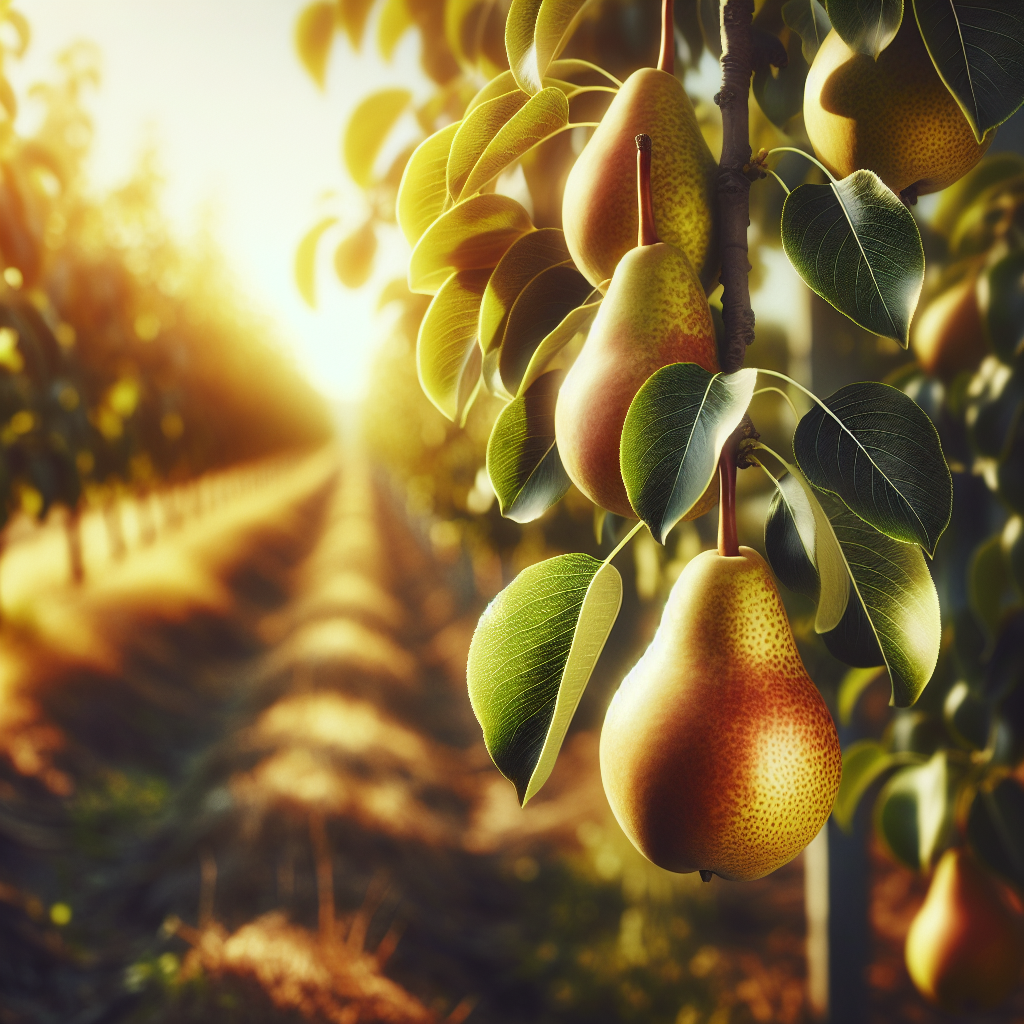
Introduction to Pear
Among the classic temperate orchard fruits, pear stands out for its longevity, elegant tree form, and ability to produce exceptional fruit with complex sweetness, floral aroma, and fine-grained texture. European pears, primarily derived from Pyrus communis, are the main commercial and home-orchard type in many regions, though Asian pears (Pyrus pyrifolia) and interspecific hybrids are also important. This guide focuses on the classic pear tree habit and management principles most growers use for European pear production, while noting where practices differ.
Pear has been cultivated for thousands of years across Europe and western Asia, with domestication tracing back to ancient civilizations. Over time, growers selected cultivars for texture, storage life, flavor, and climate adaptation. That is why modern pear culture ranges from cold winter orchards to mild temperate valleys, provided trees receive enough chill and are protected from disease pressure.
One reason pears are prized by professional growers is that they often bloom slightly later than stone fruits, helping them escape some spring frost risk. They also tend to store well, especially late-season cultivars, and fruit can be picked mature but unripe, then ripened under controlled conditions. Compared with Apple, pears are often more tolerant of heavier soils but are generally more vulnerable to Fire blight, so orchard hygiene and cultivar choice matter greatly.
A mature pear orchard can remain productive for decades if rootstock, cultivar, soil drainage, and pruning system are chosen wisely. Trees may be grown as central leader, spindle, espalier, or open forms depending on vigor and orchard density. Fruit quality is best when crops are thinned properly, sunlight reaches the canopy, and irrigation is managed to avoid both drought stress and saturated root zones.
Botanical Profile of Pear
Pear belongs to the family Rosaceae, the same large family that includes apple, quince, peach, cherry, and many ornamentals. The genus is Pyrus, and the most widely cultivated European pear species is Pyrus communis. Most orchard trees are not grown on their own roots; instead, named cultivars are grafted onto selected rootstocks to influence tree size, anchorage, precocity, and soil adaptation.
Botanically, the pear fruit is a pome, meaning the edible flesh is formed largely from expanded floral tissue surrounding the true ovary. This differs from drupes such as peaches or cherries, which have a hard stone around the seed. Pear leaves are simple, alternate, glossy to matte depending on cultivar, and usually oval with fine serration. Flowers are borne in clusters, typically white, with five petals and multiple stamens. Blossoms are attractive to pollinators, but many cultivars are self-incompatible and require cross-pollination.
European pears are generally deciduous, entering winter dormancy after leaf fall. Bud break, bloom, fruit set, shoot growth, and flower initiation for the following year are strongly shaped by temperature, carbohydrate reserves, and canopy light exposure. Flower buds usually form on short spurs, though some cultivars fruit on terminal buds of young shoots as well. Spur management is therefore a key pruning consideration.
Tree vigor varies widely. Standard rootstocks can produce large trees exceeding 6 to 8 meters if unmanaged, while dwarfing or semi-dwarfing rootstocks keep trees smaller and easier to prune, spray, and harvest. Common rootstocks include seedling pear, quince selections, and clonal pear rootstocks. Quince rootstocks often induce earlier bearing and size control but may have compatibility problems with some cultivars, requiring an interstem.
Notable cultivar distinctions matter. 'Bartlett' is highly aromatic and widely grown for fresh eating and canning; 'Bosc' is russeted, firm, and excellent for baking; 'Anjou' stores well and is productive; 'Comice' is famous for rich dessert quality but can be more demanding. Local adaptation should always outweigh reputation. A superb cultivar in one climate may perform poorly in another due to chill mismatch, disease susceptibility, or bloom timing.
Soil, pH, and Climate Requirements for Pear
Pear performs best in deep, well-drained loam to sandy loam soils with moderate water-holding capacity and good aeration. Unlike some fruit crops, pear can tolerate slightly heavier soils than peach, but it still declines rapidly in chronically waterlogged ground. If soil remains saturated for more than 48 to 72 hours during active growth, feeder roots may suffocate, root pathogens increase, and tree vigor drops sharply. In practical terms, the ideal root zone should be moist but crumbly, never sticky and airless.
The preferred soil pH is generally 6.0 to 7.0, with an acceptable range of about 5.8 to 7.5 depending on rootstock. At pH below 5.5, calcium, magnesium, and phosphorus availability can become limiting and aluminum toxicity may stress roots. At pH above 7.5, iron, zinc, and manganese deficiencies are more likely, showing as interveinal chlorosis on young leaves. Before planting, a laboratory soil test is essential. If pH is too low, agricultural lime should be incorporated months in advance. If too high, elemental sulfur, organic matter, and careful micronutrient management may be needed, though correction in alkaline soils is slower and less predictable.
Pear trees require full sun for commercial-quality fruiting. A minimum of 6 hours of direct sunlight can sustain a backyard tree, but 8 to 10 hours is preferred for strong flower bud formation, color development in blushed cultivars, and reduced disease pressure. Shade reduces spur productivity and creates a more humid canopy where fungal diseases spread more easily.
Climate suitability depends on cultivar and rootstock. Most European pears need winter chilling, commonly around 600 to 1,200 chill hours below 7.2°C, though exact needs vary. Insufficient chill leads to delayed and uneven bud break, weak flowering, and poor fruit set. Excessively mild winters can therefore reduce yields. During the growing season, pears prefer moderate summers rather than extreme heat, though many cultivars can handle warm conditions if irrigation is consistent.
Spring frost remains a major risk during bloom. Open flowers and small fruitlets are vulnerable around -2°C to -3°C, with damage severity depending on duration, humidity, and orchard airflow. For site selection, choose elevated ground with good cold-air drainage rather than frost pockets in low basins.
Annual rainfall of 700 to 1,000 mm can support pears if well distributed, but supplemental irrigation is usually needed for reliable fruit sizing. Trees generally require about 25 to 40 liters of water per young tree per irrigation event, and substantially more for mature orchard trees depending on canopy size, soil texture, and evapotranspiration. The goal is to wet the root zone 30 to 60 cm deep, then allow partial drying before the next irrigation. Tensiometers or soil moisture probes are ideal; in loam soils, keeping soil matric potential roughly in the -20 to -40 kPa range during active fruit growth often works well. Below that range, drought stress may reduce fruit size; persistently wetter than that in heavy soil can promote root disease.
Wind is another overlooked factor. Strong wind scars fruit, breaks shoots, reduces bee activity during bloom, and increases transpiration. Shelterbelts or windbreak design can improve fruit finish and orchard efficiency.
Step-by-Step Planting & Propagation
Choose certified disease-free planting stock from a reputable nursery. One-year-old feathered trees or well-formed whip trees are commonly used. Select a rootstock appropriate to your soil, desired tree size, and support system. Dwarfing trees usually need staking or trellising for life, while more vigorous rootstocks may stand independently once established.
- Plan for pollination first. Most pear cultivars need a compatible second cultivar blooming at the same time. Plant pollinizers within 15 to 30 meters, or closer in small orchards. Bee activity is essential, so avoid insecticide sprays during bloom.
- Prepare the site well in advance. Remove perennial weeds, deep-rip compacted layers if present, and incorporate compost only if organic matter is genuinely low. Excessive rich amendment in the planting hole can create a bathtub effect or encourage roots to circle in the amended zone instead of exploring native soil.
- Mark spacing according to vigor. Dwarf pears may be spaced 2.5 to 4 meters apart in-row, semi-dwarf 4 to 5 meters, and vigorous standard trees 6 to 8 meters or more. Row spacing depends on machinery, light interception goals, and training system.
- Plant during dormancy. Early spring is ideal in cold regions; late autumn to winter works in milder climates where soil is workable and not frozen.
- Dig a broad, not excessively deep hole. The hole should allow roots to spread naturally. Plant so the graft union stays 10 to 15 cm above final soil level to prevent scion rooting.
- Backfill with native soil. Firm gently to eliminate large air pockets, but do not compact heavily.
- Water in thoroughly. Apply enough water to settle soil around roots, usually 10 to 20 liters for a young tree immediately after planting.
- Mulch correctly. Use 5 to 8 cm of wood chips or other coarse organic mulch over the root zone, keeping a 10 to 15 cm gap around the trunk to prevent collar rot and rodent damage.
- Head and train at planting. Whip trees are often cut back to encourage scaffold formation. Feathered trees are pruned to preserve well-placed branches.
Propagation of pear is almost always by grafting or budding because seed-grown trees are genetically variable and usually inferior for fruit quality and bearing consistency. Bench grafting in late winter, whip-and-tongue grafting, cleft grafting, and T-budding in summer are common methods. Pear can also be top-worked onto established trees to change cultivars or add pollinizer limbs.
If you are designing an integrated orchard floor and fertility system, see soil health tips for broader soil structure and organic matter strategy.
Care & Maintenance regimes for Pear
The first three years determine the long-term architecture and productivity of the tree. Training should aim for a strong frame, wide branch angles, balanced vigor, and abundant light penetration. Narrow crotch angles are weak and more prone to splitting, especially under heavy crop loads. Limb spreaders, tying, or selective pruning can widen scaffold angles to around 45 to 60 degrees from vertical.
Pruning is usually done in dormancy, though summer pruning can help control vigor and improve light exposure in dense canopies. Remove dead, diseased, and crossing wood first. Then thin rather than shear. Pears tend to produce vigorous upright shoots, especially after hard pruning, so excessive heading cuts can worsen vegetative growth. Favor renewal of fruiting wood while preserving productive spurs.
Nutrition should be based on leaf analysis and soil testing rather than guesswork. Nitrogen is the nutrient most often overapplied in pear orchards. Too much nitrogen stimulates lush, succulent shoots highly susceptible to Fire blight and can reduce fruit firmness and storage life. Young non-bearing trees may receive modest spring nitrogen to build framework, but bearing trees should be fertilized conservatively. A rough general practice is to target annual terminal shoot growth of about 20 to 30 cm on mature bearing trees; much more may indicate excessive vigor.
Phosphorus and potassium should be applied according to test results. Potassium supports fruit size, sugar movement, and stress tolerance, while calcium is critical for cell wall integrity and storage quality. In low-calcium situations, foliar calcium programs may help some cultivars, though they do not replace balanced soil management. Micronutrients such as boron and zinc can influence flowering and fruit set, but these should be applied carefully because excess boron is toxic.
Irrigation management changes with tree age and fruit stage. Newly planted trees need frequent light-to-moderate irrigation until roots extend beyond the planting hole. Mature trees need less frequent but deeper watering. Drought stress is most damaging during cell division and fruit enlargement. Signs of under-watering include dull leaves, reduced shoot extension, smaller fruit, and premature fruit drop. Signs of overwatering include yellowing leaves despite wet soil, weak root smell, poor growth, edema-like leaf symptoms, and increased incidence of collar or root disease.
Mulching improves moisture stability and soil biology, but do not create constantly wet conditions against the trunk. Keep weeds and turf at least 60 to 90 cm away from young trunks, because grass competes aggressively for nitrogen and moisture.
Fruit thinning is often essential. Pears frequently set more fruit than the tree can size properly. Thin when fruitlets are small, leaving roughly one fruit per cluster or spacing fruit 10 to 15 cm apart depending on cultivar and desired size. Good thinning improves fruit size, reduces biennial tendencies, and lessens limb breakage.
Support heavy branches where needed, particularly in high-yielding cultivars. In dense plantings, permanent trellis systems can manage vigor and improve labor efficiency.
Pests, Diseases & Organic Management
Fire blight, caused by Erwinia amylovora, is the most serious disease of pear in many regions. It enters blossoms or tender shoots, especially during warm, wet bloom periods, and causes blackened, wilted shoot tips with a characteristic shepherd's crook. Infected wood may appear scorched. Management starts with resistant or less susceptible cultivars, restrained nitrogen use, pruning out infections well below visible symptoms during dry weather, and disinfecting tools between cuts when disease pressure is high. Dormant copper sprays and carefully timed blossom protectants are often used in integrated programs.
Pear scab causes olive to dark lesions on leaves and fruit, reducing market quality and causing cracking. Good air movement, sanitation, and resistant cultivars reduce pressure. Organic programs often rely on sulfur or copper-based materials, applied preventively according to infection risk periods.
Fabraea leaf spot, Powdery mildew, Sooty blotch, and various Canker diseases can also affect pears. Fallen leaves and mummified fruit should be removed or decomposed quickly to lower inoculum. Pruning to open the canopy is one of the most effective non-chemical disease controls because it reduces leaf wetness duration.
Codling moth and Pear psylla are key insect pests in many production zones. Codling moth larvae tunnel into fruit, while Pear psylla feeding weakens trees and leads to sticky honeydew, black sooty mold, and fruit russeting. Kaolin clay, horticultural oils, mating disruption, sticky traps, conservation of beneficial insects, and precise timing based on pest monitoring are cornerstones of low-input management. Dormant oil can suppress overwintering eggs of some pests, but coverage must be thorough.
Aphids, Scale insects, Mites, Borers, and Leafrollers may appear depending on region. Organic management is most effective when approached as a system: regular scouting, threshold-based intervention, habitat for natural enemies, trunk protection from sunscald and Borers, and sanitation. Avoid broad-spectrum sprays that disrupt predators unless absolutely necessary.
Rodents and deer can be serious in young orchards. Use trunk guards to prevent Vole and Rabbit damage, and fencing or repellents where browsing is severe.
Harvesting, Curing & Optimal Storage
Pear harvest timing is more technical than many new growers expect. Most European pears should be picked mature but still firm, then ripened off the tree. If left to ripen fully on the tree, many cultivars develop a mealy interior and poor texture. Harvest maturity is judged using a combination of days from bloom, background color shift, ease of separation when the fruit is lifted and twisted, seed color change, and firmness testing with a penetrometer.
For many cultivars, fruit is ready when it detaches with an upward lift rather than requiring a hard pull. Skin may shift from dark green to lighter green or green-yellow, depending on cultivar. However, color alone is not reliable. Commercial growers often use starch conversion and firmness data for precision.
Handle fruit gently. Pear bruising may not show immediately but becomes obvious in storage or during ripening. Harvest into padded containers during cool morning hours when possible. Avoid picking when fruit is wet, because disease spread and skin marking are more likely.
European pears typically benefit from postharvest chilling before ripening. Many cultivars ripen more evenly after being stored at 0 to 1°C with 90 to 95% relative humidity for at least several weeks, though exact duration varies by cultivar. Bartlett-type pears may need less conditioning than winter pears such as d'Anjou. Once conditioned, fruit can be brought to room temperature to ripen. The neck of the pear, near the stem end, should yield slightly to gentle thumb pressure when ready to eat.
Storage life depends heavily on cultivar, harvest maturity, calcium status, and temperature management. Early pears may keep only a few weeks, while late pears can store for several months under cold, humid conditions. Maintain high humidity to reduce shrivel, but ensure good airflow to limit decay. Do not store damaged or diseased fruit with sound fruit.
The term "curing" is not used for pear in the same way it is for onions or sweet potatoes, but a brief conditioning period after harvest is effectively the fruit's maturation and ripening preparation stage. Controlled atmosphere storage with reduced oxygen and elevated carbon dioxide can significantly extend storage life for commercial operations.
Companion Planting for Pear
Companion planting in pear systems works best when viewed as orchard ecology rather than tight vegetable-style interplanting around the trunk. The main goals are to support pollinators, attract beneficial insects, improve soil structure, suppress weeds, and reduce erosion without creating excessive competition or humidity.
Excellent companions include low-growing flowering herbs and insectary plants such as yarrow, dill, alyssum, chives, and clover in managed strips. These provide nectar and pollen for hoverflies, parasitic wasps, lacewings, and bees. Dynamic-root plants like chicory or some deep-rooted forbs can help open compacted soil over time in alleys, though they must be managed so they do not compete heavily with young trees.
Alliums can be particularly useful near, but not directly against, the tree row because their scent may confuse some pests and their growth habit is non-invasive. Groundcovers should remain short and should not trap moisture against the trunk. White clover in alleyways can improve trafficability and contribute some nitrogen, but around young trees it may increase competition if not kept back from the root zone.
Avoid planting vigorous vines, tall shading crops, or thirsty perennial competitors within the immediate drip zone of young pears. Mint, aggressive grasses, and sprawling brambles can quickly create management problems. Likewise, dense companion growth that blocks airflow may worsen scab or leaf spot pressure.
In mixed orchards, pairing pear with other temperate fruit species can improve pollinator movement through staggered bloom and diversified habitat. Thoughtful understory design can also reduce mowing and improve soil life over time. The best system is one that supports biodiversity while keeping the trunk area clean, airy, and easy to inspect.