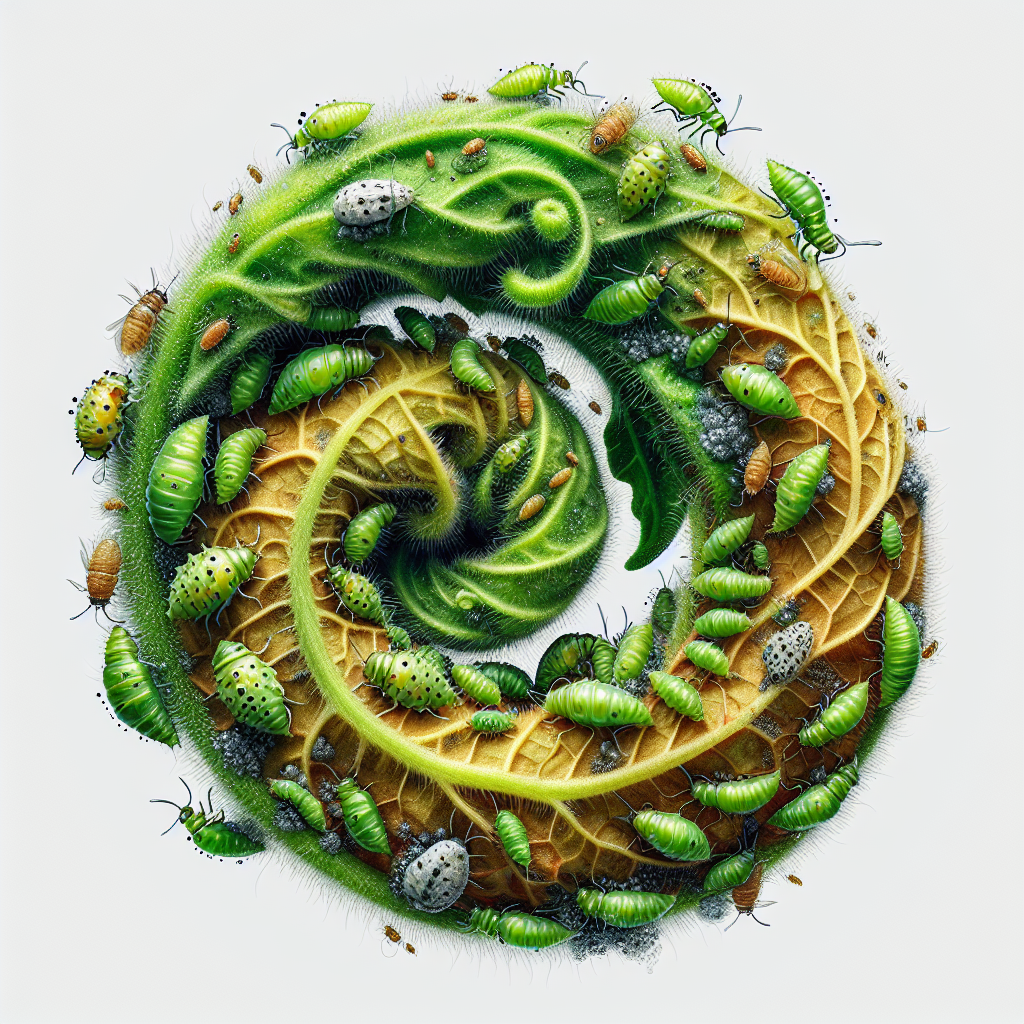
Introduction to Aphid-like sap feeders
Aphid-like sap feeders represent a broad category of piercing-sucking pests that target the phloem of plants, extracting vital sugars and nutrients. This group primarily includes Aphids, whiteflies, scale insects, and mealybugs, all belonging to the order Hemiptera. These tiny invaders, often less than 1/8 inch long, colonize the undersides of leaves, stems, and tender shoots, multiplying rapidly under favorable conditions.
Unlike chewing pests, aphid-like sap feeders insert stylets into vascular tissues, siphoning sap while injecting saliva that can distort growth or transmit pathogens. Their populations explode in warm, dry weather, making them a perennial threat in greenhouses, orchards, and field crops. Economically, they cause billions in losses annually by reducing photosynthesis, deforming produce, and fostering sooty mold from excreted honeydew—a black fungal growth that mars fruit and foliage aesthetics.
Farmers and gardeners must recognize these pests early, as chemical interventions often lag behind their reproductive cycles. Spring Pest Patrol: Organic AI Strategies to Shield Your Crops from Common Invaders offers timely insights into proactive monitoring. This guide provides diagnostic tools, lifecycle insights, and organic management plans to reclaim your yields without synthetic pesticides.
Identifying Symptoms & Damage
Spotting aphid-like sap feeders requires keen observation of subtle signs before visible infestations. Initial symptoms include clustered insects on new growth: aphids as pear-shaped green, black, or pink bodies; whiteflies as tiny white moths fluttering from leaves; scales as immobile bumps on stems; and mealybugs as cottony white masses.
Damage manifests as curled, yellowing, or bronzed leaves, stunted shoots, and sticky honeydew coating surfaces. Sooty mold thrives on this exudate, turning plants black and reducing photosynthetic efficiency by up to 30%. Severe infestations lead to wilting, defoliation, and dieback, with sooty mold exacerbating market rejection.
Differentiate from similar issues: mites cause stippling without honeydew, while thrips leave silvery scars. Use a hand lens to confirm piercing mouthparts. On tomato plants, aphids induce upward leaf cupping; whiteflies yellow entire leaflets. Economic thresholds vary: 50 aphids per leaf on soybeans warrants action, while 10 mealybugs on grapes signal intervention. Regular scouting with yellow sticky traps captures winged forms, aiding early detection.
Lifecycle and Progression of Aphid-like sap feeders
The lifecycle of aphid-like sap feeders is adapted for rapid colonization, often parthenogenetic (asexual) reproduction enabling 10-20 generations per season. Aphids alternate wingless females birthing live nymphs every 7-10 days at 70-80°F, with winged alates dispersing to new hosts. Whiteflies progress through egg, four nymphal instars (immobile scalelike), pupa, and adult in 3-4 weeks.
Scale insects feature armored or soft-bodied females that remain sessile, producing crawlers (mobile immatures) in 1-3 month cycles. Mealybugs follow similarly, with crawlers seeking crevices. Overwintering occurs as eggs, nymphs, or adults on bark; spring warmth triggers outbreaks.
Progression: Eggs hatch in 5-10 days → Nymphs/crawlers feed and molt 3-5 times → Adults reproduce. High humidity favors eggs; drought stresses plants, boosting attractiveness. In Hass Avocado, scales overwinter on fruit, peaking in summer. Understanding this allows timed interventions, like crawler sprays.
Environmental Triggers & Risk Factors
Warm temperatures (70-90°F) and low humidity (<50%) propel aphid-like sap feeders, as seen in mid-summer greenhouse surges. Over-fertilization with nitrogen produces succulent growth, ideal for feeding. Poor airflow in dense canopies traps moisture, aiding whitefly pupation.
Risk factors include nearby weeds harboring pests, ant mutualism (ants farm honeydew producers), and stressed plants from drought or root rot. Monocultures like potato fields amplify spread via winged forms. Climate change extends seasons, with earlier springs triggering migrations.
Soil imbalances, such as excess phosphorus, weaken defenses. Introduce diversity with companion plants like nasturtium to disrupt cycles. Monitor weather: prolonged dry spells post-rain correlate with 5x population booms.
Organic Control & Treatment Plans
Organic management emphasizes integrated pest management (IPM): monitor, disrupt, and bolster biology. Start with physical removal: high-pressure water blasts dislodge aphids from lettuce; prune infested tips and destroy.
Biological controls shine: Release ladybugs (Hippodamia convergens) at 1,500/acre for aphids; lacewings (Chrysoperla) devour whitefly nymphs; parasitic wasps (Encarsia formosa) mummify whiteflies. Apply weekly until populations drop 80%.
Botanicals include neem oil (0.5-2% azadirachtin), insecticidal soaps (1-2% potassium salts), and horticultural oils smothering scales. Rotate applications to prevent resistance; apply evenings to spare predators. For mealybugs on citrus, alcohol swabs target crawlers.
Cultural tactics: Reflective mulches repel whiteflies; yellow sticky traps capture 100s daily. Encourage yarrow for predator habitat. In severe cases, pyrethrum or spinosad as last resort, but prioritize prevention. Track efficacy with pre/post counts.
Preventing Aphid-like sap feeders in the Future
Prevention hinges on resilient systems. Select resistant varieties: 'Red Baron' red onion repels aphids; 'Marketmore 76 Cucumber' resists whiteflies. Maintain biodiversity via intercropping thyme and marigolds, which deter via volatiles.
Sanitation is key: Remove weeds, clean tools, quarantine newcomers. Optimize fertility: Balanced NPK avoids lush growth. Overhead irrigation washes off early infestations but avoid excess to prevent fungal issues like powdery mildew.
Boost plant immunity with compost teas, silica supplements (potassium silicate), and mycorrhizae. Ant baits (boric acid) sever mutualism. Scout weekly; use thresholds to act preemptively. Long-term, cover crops like clover enhance soil health, reducing stress susceptibility.
Crops Most Affected by Aphid-like sap feeders
Aphid-like sap feeders plague a wide array of crops, prioritizing solanaceous, brassicas, and cucurbits. Tomato suffers aphid-transmitted viruses and fruit sooty mold; cabbage sees distorted heads from cabbage aphids. Soybeans lose yields to soybean aphids vectoring viruses.
Orchard crops like apple, peach, and Hass Avocado host scales and mealybugs, scarring fruit. Grapes battle mealybugs promoting leafroll virus. Vegetables including eggplant, bell pepper, cucumber, and squash face whitefly-vectored mosaics.
Grain crops such as wheat, corn, and rice endure aphid honeydew and sooty mold. Legumes like peas, chickpeas, and ornamentals/herbs (Thai Basil) are vulnerable. Global impacts: Aphids alone cause 15-20% losses in cotton and brassicas.