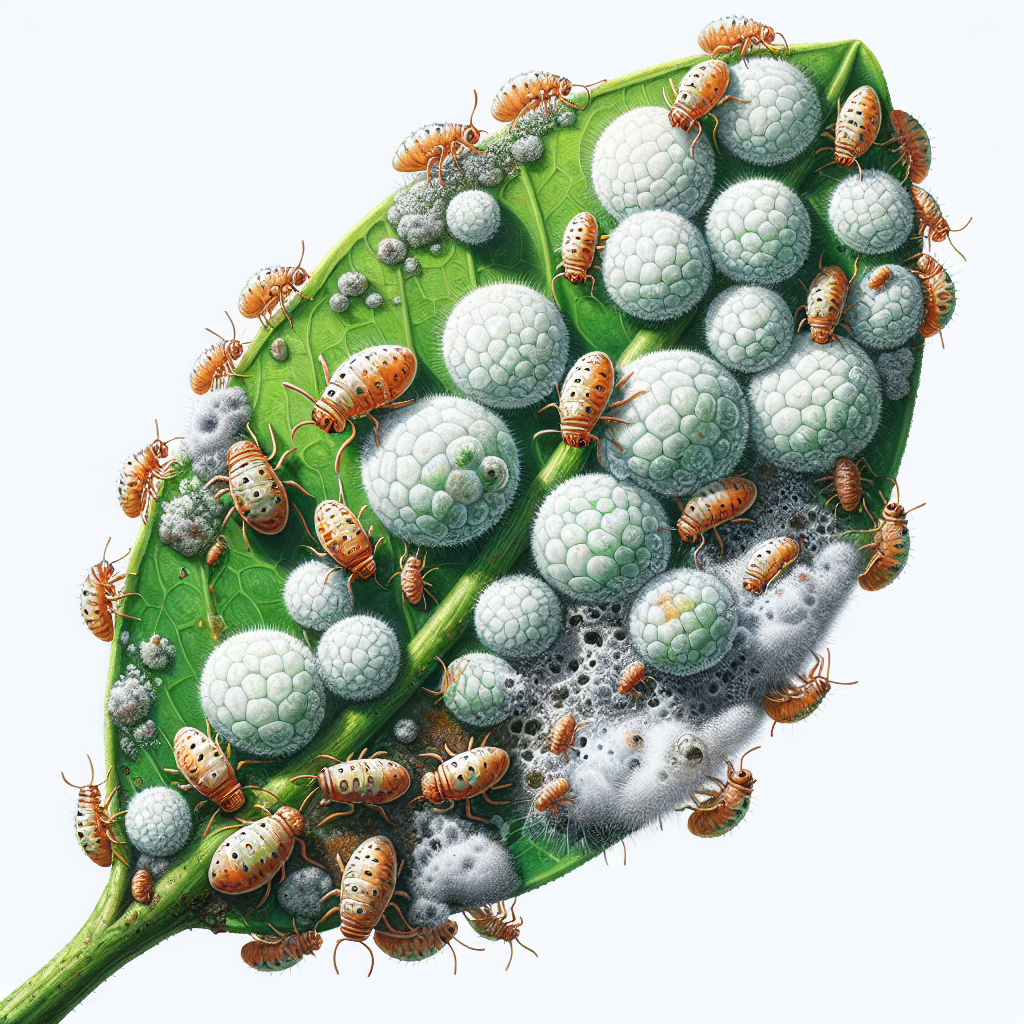
Introduction to Scale insects
Scale insects represent one of the most pervasive pests in agricultural settings worldwide, belonging to the superfamily Coccoidea within the order Hemiptera. These tiny, immobile sap-feeders, numbering over 8,000 species, pose significant threats to orchards, vineyards, greenhouses, and field crops by extracting plant sap through piercing-sucking mouthparts. Unlike more visible insects like aphids or mealybugs, scales often evade early detection due to their cryptic, waxy coverings that resemble bumps, scales, or scabs on plant tissues.
Farmers and growers encounter armored scales (Diaspididae), soft scales (Coccidae), and mealybug-like forms, each with unique impacts. Armored scales produce a hard, protective shell, while soft scales secrete honeydew, fostering black sooty mold that disfigures marketable produce. Economic losses from scale infestations exceed billions annually, particularly in subtropical regions where warm climates favor rapid population booms. Understanding scale biology is crucial for timely intervention, as unchecked outbreaks can defoliate trees, stunt growth, and reduce yields by up to 50% in severe cases.
This definitive guide equips agricultural professionals with diagnostic tools, lifecycle knowledge, and organic management protocols to combat scale insects sustainably. Whether managing Hass Avocado groves or citrus plantations, proactive strategies outlined here minimize chemical reliance while safeguarding crop health and profitability.
Identifying Symptoms & Damage
Early identification of scale insects hinges on recognizing subtle symptoms before populations explode. Initial signs include small, immobile bumps (1-5mm) clustered on twigs, branches, undersides of leaves, or fruit. Colors range from white, gray, brown, to black, often mimicking plant lenticels or bark texture. Use a magnifying glass to confirm: live scales resist removal and may exude clear honeydew when probed, while dead ones flake off easily.
Damage manifests progressively: yellowing or chlorotic leaves signal sap depletion, followed by premature leaf drop and twig dieback. Heavy infestations cause branch gumming in stone fruits and stunted growth in ornamentals. Honeydew excretion leads to shiny, sticky surfaces attracting ants and promoting sooty mold—a black fungal growth that blocks photosynthesis and reduces aesthetic value. In fruits like apple or mango, scales blemish skin, rendering produce unmarketable.
Diagnostic tips:
- Scrape test: Gently scrape suspected bumps; presence of white crawlers or orange eggs confirms infestation.
- Magnification: 10x lens reveals legless adults and tiny, mobile crawlers (first instar nymphs).
- Secondary signs: Ant trails, sooty mold, or yellow halos around feeding sites.
Differentiate from mimics like leaf spots or mites by mobility—scales remain fixed post-settlement. Regular scouting, especially undersides and crotches, prevents oversight in dense canopies.
Lifecycle and Progression of Scale insects
Scale insects exhibit complex, hemimetabolous lifecycles varying by species, typically spanning 1-3 months under optimal conditions. Females dominate damage phases: after mating or parthenogenetically, they produce 1,000-5,000 eggs beneath waxy shields. Hatching crawlers—tiny, yellow-orange, mobile nymphs—disperse via wind, animals, or tools before settling to feed and secrete protective coverings.
Progression stages:
- Eggs: Clutched under female cover, incubating 1-3 weeks.
- Crawlers: Vulnerable dispersal phase (1-2 weeks), ideal for targeted treatments.
- Nymphs/Settlers: Molts 2-3 times, developing sex-specific armor (males winged briefly).
- Adults: Females sessile lifelong; males short-lived after mating.
Generations overlap, with 2-6 per year in tropics. Winter dormancy sees armored females overwintering. Timing crawler emergence via degree-day models (base 10°C) optimizes controls. For precise phenology, consult local extension services.
Environmental Triggers & Risk Factors
Scale outbreaks surge under specific conditions favoring crawler survival and reproduction. High humidity (>70%) and temperatures (25-32°C) accelerate development, common in greenhouses or irrigated orchards. Nitrogen-rich fertilizers promote tender growth, enhancing attractiveness—avoid excess N in spring flushes.
Stress factors amplify vulnerability:
- Drought: Weakens plant defenses, increasing sap leakage.
- Poor pruning: Dense canopies trap humidity, shielding crawlers.
- Ant symbiosis: Mutualism where ants protect scales for honeydew, exacerbating spread.
- Weed hosts: Alternate plants harbor populations, infesting crops.
Global trade introduces exotic species like San Jose scale. Overcrowded nurseries and contaminated tools propagate infestations. Monitor during bloom and fruit set, when crawlers peak. Check out Spring Pest Patrol: Organic AI Strategies to Shield Your Crops from Common Invaders for timely scouting insights.
Organic Control & Treatment Plans
Organic management integrates cultural, biological, and mechanical tactics for sustainable suppression. Avoid broad-spectrum sprays harming beneficials; target crawler stage when unprotected.
Cultural Controls:
- Prune infested branches (sterilize tools with alcohol).
- Improve airflow via spacing; mulch to regulate soil moisture.
- Reflectant barriers (kaolin clay) deter settling.
Biological Controls:
- Release parasitoids (Encarsia, Aphytis) and predators (lady beetles, lacewings).
- Encourage native predators with flowering borders.
Organic Treatments:
- Horticultural Oils: Dormant or summer superior oils (1-2% solution) smother all stages; apply at crawler hatch.
- Insecticidal Soaps: Potassium salts disrupt crawler membranes; repeat weekly.
- Neem Oil: Azadirachtin disrupts molting; safe for pollinators.
- Spinosad: Targets crawlers via ingestion/contact.
Integrated Plan:
- Scout weekly; treat at 1-5% crawler presence.
- Rotate modes to prevent resistance.
- Ant baits (boric acid) disrupt symbiosis.
Efficacy monitoring: 70-90% control with consistent application. For small farms, hand-removal suffices early infestations.
Preventing Scale insects in the Future
Prevention underpins long-term success, emphasizing exclusion and resilience.
Quarantine & Inspection: Inspect nursery stock; hot-water dip (49°C/45min) for ornamentals. Resistant Varieties: Select scale-tolerant rootstocks (e.g., citrus trifoliate). Sanitation: Remove debris; rogue heavily infested plants. Monitoring Tools: Sticky traps capture crawlers; pheromone lures for males. Soil Health: Balanced nutrition bolsters defenses—see Soil Health Mastery: 5 Proven Strategies for Small Farms to Build Fertile Ground Without Breaking the Bank. Companion Planting: Nasturtium traps scales; interplant repellents like garlic.
Annual programs yield <5% infestation rates, preserving yields organically.
Crops Most Affected by Scale insects
Scale insects plague diverse crops, prioritizing woody perennials and ornamentals. Citrus (orange, lemon) suffer black scale and California red scale, causing fruit drop. Stone fruits (peach, plum) host San Jose scale, scarring fruit. Pome fruits (apple, pear) battle European fruit lecanium.
Subtropicals like avocado, mango, and banana face hemispherical and pink pit scales. Vines (grapes) endure cottony maple scale. Ornamentals, nuts (almond), and even potato foliage host minor species. Greenhouse crops like ivy amplify risks. Global hotspots: Mediterranean basins, Florida groves, California orchards. Tailor prevention to high-value targets for ROI.