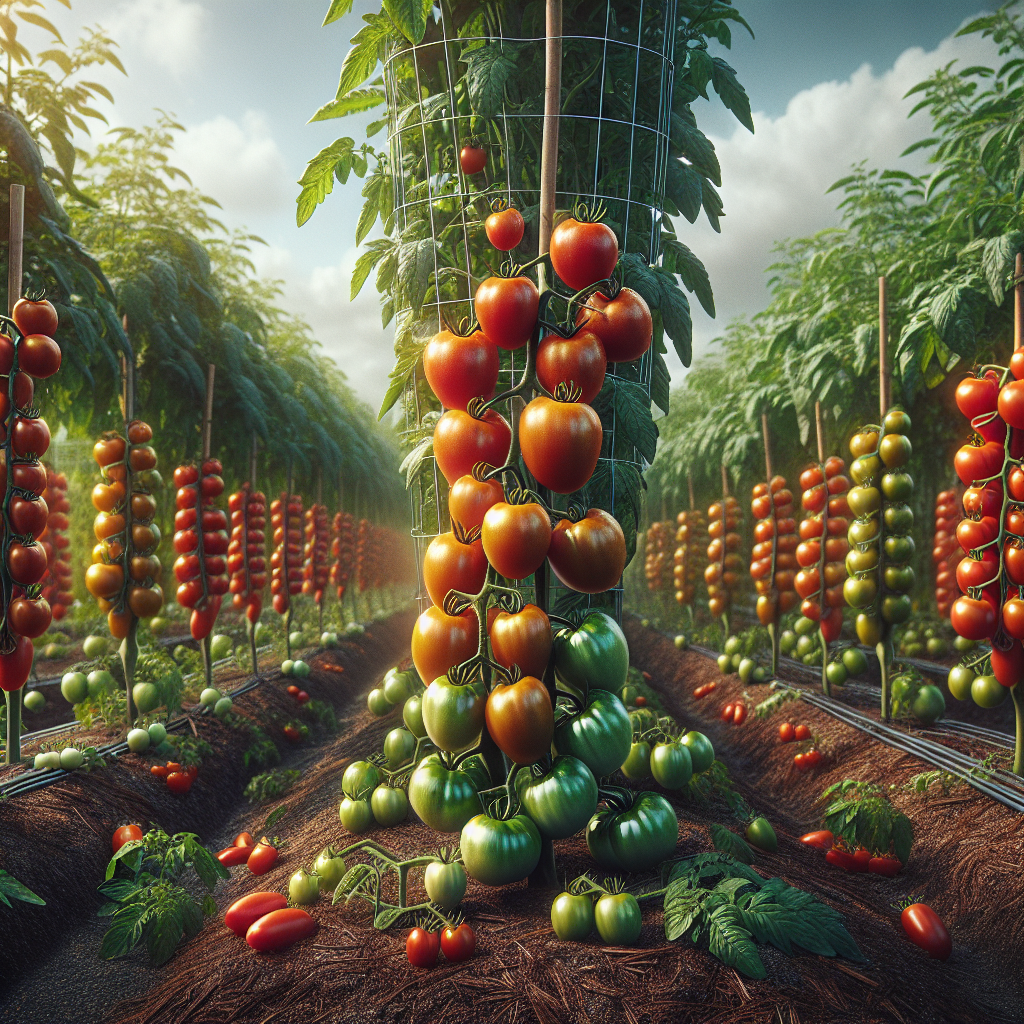
Introduction to Roma Tomato
Roma is one of the most widely recognized paste tomatoes in the world, prized less for slicing quality and more for what professionals call solids content: a high ratio of flesh to juice. That single trait explains why it has become a staple in market gardens, home food preservation, and small commercial sauce production. Compared with many round fresh-market tomatoes, Roma fruits are typically egg- or plum-shaped, moderately small, thick-walled, and meaty, with fewer seeds and less free water. When cooked, they break down into a rich, concentrated pulp faster and with less reduction time.
The name “Roma” is often used broadly, but in practice growers may encounter several related plum tomato strains and selections sold under Roma, Roma VF, or similar names. The “VF” designation historically indicates resistance to Verticillium wilt and Fusarium wilt, traits that helped drive adoption in regions where soilborne disease pressure limited older tomato lines. Roma plants are generally determinate or semi-determinate, meaning they set much of their crop in a relatively concentrated window. That growth habit makes them especially useful for batch harvesting, sauce making, and preserving.
Flavor is usually balanced rather than intensely sweet. Roma is not typically grown to compete with premium salad tomatoes in raw eating quality; its reputation rests on utility, reliability, and post-harvest kitchen performance. For growers deciding between fresh-market and processing types, see our Tomato guide. Roma excels where uniform fruit, manageable plant size, and consistent processing quality matter most.
Botanical Profile of Roma Tomato
Roma belongs to the nightshade family, Solanaceae, alongside pepper, eggplant, and potato. Botanically, the tomato is a frost-tender warm-season perennial grown as an annual in most climates. The plant produces compound leaves with a characteristic aromatic glandular surface, yellow star-shaped flowers, and true berries as fruits.
Roma-type tomatoes are distinguished by several practical morphological features. Fruits are elongated to oval, often 2 to 3 inches long, with firm pericarp walls and relatively small locular cavities. The lower gel fraction is what gives Roma its desirable dense texture. This also means that fruit cracking from sudden water uptake can be somewhat less dramatic than in some large slicers, though it still occurs under irregular irrigation.
Most Roma strains are determinate. In determinate tomatoes, the terminal growing point ends in a flower cluster, limiting vine extension and resulting in a shorter, bushier plant, typically 3 to 4 feet tall under field conditions. This compact habit is useful for cages, stakes, or even heavy-duty weave systems. It also creates a more synchronized fruit set, which is valuable for growers targeting sauce batches or single-pass harvests.
Flowering is self-fertile, and pollination is usually achieved by vibration from wind, insect activity, or manual disturbance in protected culture. Optimal pollen viability usually occurs when daytime temperatures are moderate and nighttime temperatures remain above about 55°F (13°C) but below roughly 75°F (24°C). Extended heat above 90°F (32°C), especially with warm nights, can reduce fruit set despite healthy-looking flowers.
Roma’s root system is capable of becoming extensive if plants are transplanted deeply. Adventitious roots readily form on buried stem tissue, which is a critical management advantage. Deep transplanting increases root volume, improves drought buffering, and stabilizes plants during heavy fruit load.
Soil, pH, and Climate Requirements for Roma Tomato
Roma performs best in deep, well-drained, fertile loam or sandy loam with high organic matter and a pH between 6.2 and 6.8. It tolerates a broader range, roughly 6.0 to 7.2, but nutrient uptake is most efficient in the mildly acidic zone. At low pH, calcium and magnesium availability may become limiting and aluminum toxicity can increase. At high pH, iron, manganese, and phosphorus availability often decline, leading to chlorosis and reduced vigor.
Drainage is non-negotiable. Tomatoes dislike saturated root zones because oxygen deprivation encourages root decline and soilborne disease. A good field soil for Roma should hold moisture evenly but never remain waterlogged after rain or irrigation. If you squeeze moist soil in your hand, it should form a weak ball that crumbles with slight pressure rather than smearing like clay. Raised beds 6 to 10 inches high are strongly recommended in heavier soils.
Before planting, incorporate 2 to 4 inches of mature compost or well-finished organic matter into the top 8 to 12 inches of soil. Excessive raw manure should be avoided, especially close to planting, because it can drive overly lush vegetative growth at the expense of fruiting and may contribute to nutrient imbalance.
Roma prefers full sun, meaning at least 8 hours of direct light daily. In marginal climates, the difference between 6 and 8 hours is often the difference between modest growth and a truly productive planting. Strong light improves flowering, sugar accumulation, leaf drying, and overall disease resilience.
Ideal air temperatures are about 70 to 85°F (21 to 29°C) during the day and 60 to 70°F (16 to 21°C) at night. Growth slows below 55°F (13°C), and chilling injury may occur if young plants experience prolonged exposure below 50°F (10°C). Frost kills the plant. In very hot climates, fruit set declines above 90 to 95°F (32 to 35°C), especially when nights stay warm, pollen becomes sterile, and blossoms abort.
Consistent soil moisture is particularly important for Roma because its dense fruit flesh depends on uninterrupted calcium transport and steady cell expansion. A practical target is evenly moist soil in the root zone to a depth of 6 to 8 inches, without repeated swings from drought to saturation. As a field indicator, soil 2 to 3 inches down should feel cool and slightly damp, not dusty-dry and not muddy. If the top inch is dry but deeper soil remains moist, that is usually acceptable. If leaves are wilting early in the morning, the crop is already under serious moisture stress. If leaves are yellowing from the bottom while soil remains wet and air exchange is poor, overwatering or root disease is likely.
For growers improving fertility long-term, the principles in soil health strategies are especially relevant to heavy-feeding fruit crops like Roma.
Step-by-Step Planting & Propagation
Start seed indoors 6 to 8 weeks before the last expected frost. Sow seed 1/4 inch deep in a sterile seed-starting mix at 75 to 85°F (24 to 29°C). Germination usually takes 5 to 10 days. Once seedlings emerge, provide very bright light immediately; weak light causes elongation, thin stems, and poor transplant performance. Keep seedlings at roughly 65 to 75°F (18 to 24°C) after emergence.
When the first true leaves appear, transplant seedlings into individual cells or pots if they were started densely. Potting up early prevents root tangling and encourages a sturdy root ball. A gentle air movement from a fan helps thicken stems and reduce damping-off.
Begin hardening off 7 to 10 days before field planting by gradually exposing plants to outdoor conditions. Reduce water slightly, but do not allow severe wilting. Increase sunlight and wind exposure in stages. Never transplant directly from indoor conditions into full sun and cold nights; this shock can stall growth for weeks.
Transplant only after danger of frost has passed and soil temperatures are reliably above 60°F (16°C), ideally closer to 65°F (18°C). Set plants 18 to 24 inches apart in rows 3 to 4 feet apart for caged culture, or 15 to 18 inches apart if using stakes and pruning. In small beds, 24-inch spacing gives better air circulation and simplifies disease management.
Plant deeply. Remove lower leaves and bury two-thirds of the stem if the seedling is leggy. Adventitious roots will form along the buried stem, creating a stronger, more drought-resilient plant. Water each transplant thoroughly at planting to eliminate air pockets.
Apply mulch once the soil has warmed. Organic mulches such as clean straw suppress weeds, reduce soil splash, and stabilize moisture. Plastic mulch can be useful in cool regions because it warms the soil and accelerates early growth, but drip irrigation becomes especially important underneath it.
Direct sowing is rarely preferred for Roma in temperate zones because transplanting offers earlier harvest, better stand establishment, and more uniform spacing. In long warm seasons, direct sowing is possible but requires excellent weed control and careful early irrigation.
Care & Maintenance regimes for Roma Tomato
Roma is a moderate to heavy feeder, but the timing and balance of nutrition matter more than simply applying more fertilizer. Before planting, a balanced base fertility program should provide moderate nitrogen, good phosphorus availability for root establishment, and strong potassium for fruit development. Once plants begin flowering and setting fruit, avoid pushing excessive nitrogen. Too much nitrogen creates dark green, vigorous foliage with delayed flowering, soft growth, and lower disease tolerance.
A practical feeding pattern is: moderate nitrogen at establishment, then side-dress lightly when first fruits set, and again 2 to 3 weeks later if plant color and vigor indicate need. Potassium demand rises sharply during fruit fill. Calcium must be continuously available through the root zone to reduce blossom end rot, but calcium sprays on fruit are usually less effective than maintaining steady soil moisture and proper root health.
Irrigation should be deep and regular rather than shallow and frequent. In most garden soils, established Roma plants need roughly 1 to 1.5 inches of water per week from rain plus irrigation, increasing during peak fruit load and hot weather. Sandy soils may require more frequent watering; clay loams less often but more carefully. Drip irrigation is strongly preferred because it keeps foliage dry and reduces foliar disease.
The key is moisture consistency. Drought stress followed by heavy watering can cause fruit cracking, blossom drop, uneven ripening, and blossom end rot. Overwatering causes pale foliage, reduced root oxygen, edema, poor flavor concentration, and increased disease risk. Signs of underwatering include midday wilting that persists into evening, curled leaves, dry soil below 2 inches, and reduced fruit size. Signs of overwatering include limp but not dry foliage, yellow lower leaves, fungal issues near the crown, and sour or bland fruit.
Support systems improve fruit quality and sanitation. Even determinate Roma benefits from caging or staking because fruit held off the soil suffers less rot and sunscald management becomes easier. Heavy-duty cages work well for home and market growers. Florida weave systems are efficient for row plantings. Minimal pruning is usually best for determinate types; remove only the lowest suckers and leaves touching soil, plus congested interior growth if airflow is poor. Severe pruning can reduce total yield because determinates carry a finite fruiting framework.
Mulch is one of the most valuable maintenance tools. It limits weed competition, buffers soil temperature, and prevents rain splash, which spreads early blight and Septoria spores from soil to lower leaves. Keep mulch a small distance away from the stem base to avoid crown rot.
Weed control is essential in the first 4 to 6 weeks after transplanting, when competition for nitrogen, light, and water can permanently reduce yield potential. Cultivate shallowly to avoid damaging surface roots.
In protected culture or very humid climates, gently shaking supports during bloom can improve pollination. In open fields, natural vibration is usually sufficient.
Pests, Diseases & Organic Management
Roma tomatoes face the same major pest and disease complex as other tomatoes, but their concentrated fruit set means problems can escalate quickly if not monitored early.
Common insect pests include aphids, whiteflies, hornworms, flea beetles, stink bugs, and spider mites. aphids and whiteflies feed on sap and can vector viruses. hornworms can defoliate plants rapidly. spider mites flare under hot, dusty conditions and cause stippling, bronzing, and leaf drop. stink bugs puncture fruit, leading to cloudy spots and internal damage.
Organic management starts with prevention. Maintain weed control around the crop, avoid excess nitrogen that attracts soft-bodied pests, and scout at least twice weekly. Check leaf undersides, growing tips, and fruit clusters. Hand-pick hornworms early in the morning or evening. Strong water sprays can suppress aphids on small plantings. Insecticidal soap works on soft-bodied insects when coverage is thorough. Neem-based products can help, but they must be used carefully to avoid phytotoxicity during hot weather. Bacillus thuringiensis var. kurstaki is effective on small caterpillars if applied promptly.
The most important diseases are early blight, Septoria leaf spot, bacterial spot, Fusarium wilt, Verticillium wilt, and late blight in conducive weather. Blossom end rot is a physiological disorder, not a pathogen, but it is so common that growers often mistake it for disease.
early blight typically begins on lower leaves as brown lesions with concentric rings. Septoria produces many small circular spots that cause rapid defoliation. Both worsen with leaf wetness and soil splash. late blight is more explosive, producing water-soaked lesions and fast collapse under cool, wet conditions. Fusarium and Verticillium cause yellowing and vascular wilt, often one-sided at first.
Organic disease management relies on an integrated approach:
- Rotate out of solanaceous crops for at least 3 years when possible.
- Use resistant seed or transplants, such as Roma VF lines where available.
- Mulch to reduce splash dispersal.
- Space adequately for airflow.
- Water at the base, early in the day.
- Remove lower leaves once plants are established and fruit clusters begin to develop.
- Sanitize pruning tools.
- Remove and destroy heavily infected foliage; do not compost diseased tissue unless your composting system reaches full pathogen-killing temperatures.
Blossom end rot appears as a sunken, leathery black patch on the blossom end of green or ripening fruit. The underlying cause is localized calcium deficiency in the fruit, usually triggered by uneven watering, root damage, excess ammonium nitrogen, high salinity, or sudden growth surges. The correct fix is steadier irrigation, moderate fertility, and healthy root conditions, not simply adding more calcium blindly.
Sunscald occurs when fruit suddenly becomes exposed after heavy pruning or disease-related defoliation. Maintain enough leaf cover to shade fruit, especially in high-heat regions.
Harvesting, Curing & Optimal Storage
Roma is ready to harvest when fruits reach full varietal red color, feel firm but not hard, and detach with a slight twist. For fresh use and best sauce quality, harvest at full red ripeness. For transport or short holding, fruit can be picked at the breaker to pink stage and finished indoors, though flavor will be somewhat less developed.
Because Roma is a determinate type, much of the harvest often arrives over a short period. Check plants every 2 to 3 days in peak season. Frequent harvest encourages sanitation, reduces fruit cracking after storms, and limits losses to insects and rot.
Handle fruit gently. Even though Roma is firmer than many slicers, bruising shortens storage life and invites decay. Never harvest wet fruit for storage if avoidable; surface moisture increases disease spread in containers.
Unlike onions or winter squash, tomatoes are not “cured” in the classic sense, but they do benefit from a short conditioning period after harvest. Hold mature fruit in a single layer or shallow crates at about 55 to 70°F (13 to 21°C) with good airflow. Avoid refrigeration if fruit is intended for fresh eating, because temperatures below about 50°F (10°C) damage texture and mute flavor. For processing, slightly softer fruit is acceptable so long as decay has not begun.
Ripe Roma typically stores 5 to 7 days at room-temperature conditions, sometimes longer if harvested just before full softness. Breaker-stage fruit may hold 1 to 2 weeks under careful handling. Remove damaged or diseased fruit immediately, as one decaying tomato can spread mold quickly.
For sauce, paste, roasting, or canning, process soon after harvest. Roma’s lower water content makes it ideal for reduction, oven drying, and freezing. If preserving, use only sound fruit without blossom end rot, cracks with mold, or bacterial soft spots.
Companion Planting for Roma Tomato
Companion planting is most useful with Roma when it is treated as a tool for ecological management rather than folklore. The best companions either help suppress pests, attract beneficial insects, or make efficient use of space without competing aggressively for light and nutrients.
Thai Basil is one of the strongest companions because its aromatic foliage may help confuse certain insect pests while its flowers attract pollinators and beneficial insects if allowed to bloom later. Basil also fits neatly at bed edges without strongly competing with Roma roots when spaced properly.
Onion and Garlic are valuable companions for border planting. Their upright growth habit uses little horizontal space, and their strong sulfurous odor is often used in integrated pest-conscious gardens. They also mature with minimal shading impact on tomato plants.
Carrot can share nearby space where soil is loose and deeply prepared. Because it occupies a different root zone pattern and remains relatively low, it can be interplanted in wider beds without major competition so long as tomato shading is managed.
Avoid planting Roma directly beside heavy-feeding or sprawling competitors such as corn or large cucurbits in tight spaces. Likewise, keep potatoes separated because they share significant disease pressure, especially blights.
The best companion setup is usually a central row of supported Roma, with basil and alliums around the perimeter and low-rooting crops placed where airflow remains open and harvest access is easy.