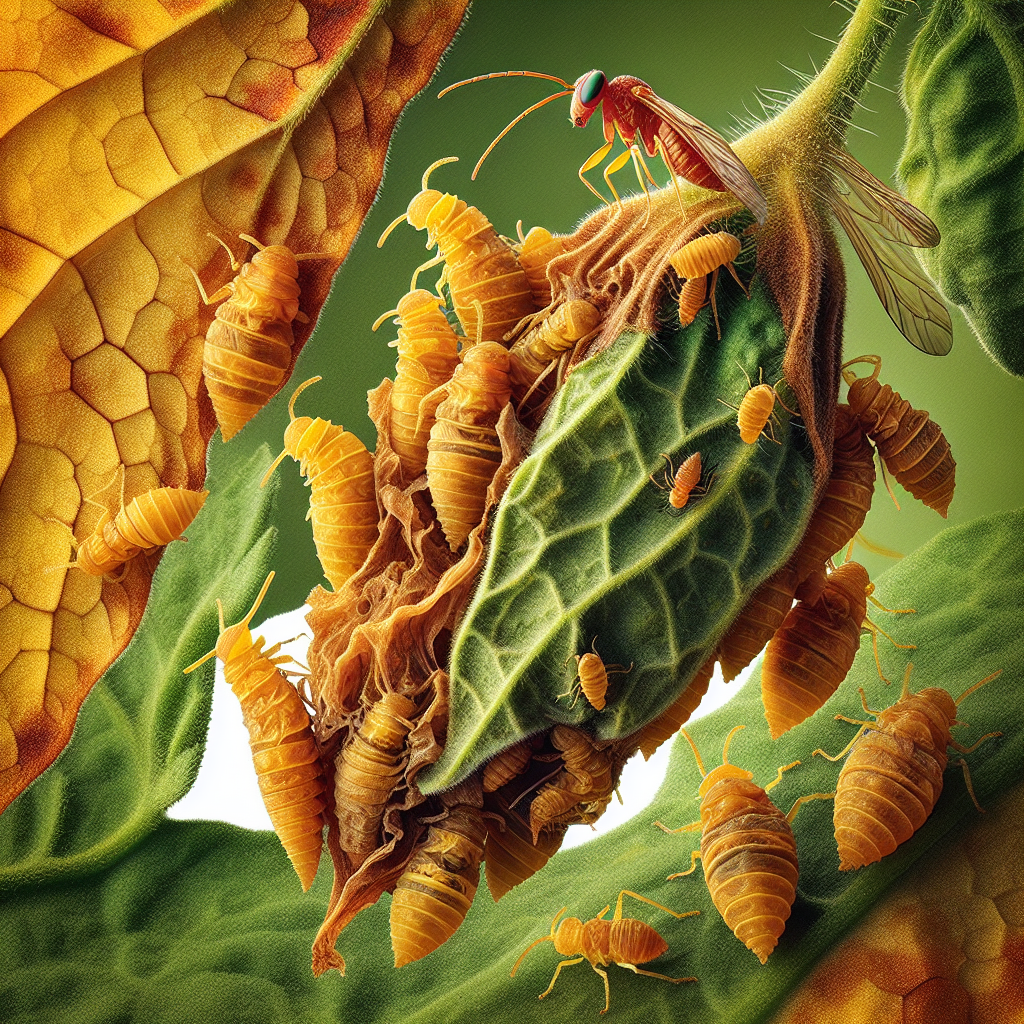
Introduction to Parasitoids
Parasitoids are a unique group of insects, primarily from the orders Hymenoptera (wasps) and Diptera (flies), that play a crucial role in biological pest control. Unlike typical parasites that weaken their hosts without killing them, parasitoids invariably cause the death of their host, making them invaluable allies in integrated pest management (IPM) programs. Farmers and growers often mistake signs of parasitoid activity for pest damage, leading to unnecessary interventions that harm these beneficial insects.
Common examples include aphids parasitoids like Aphidius colemani, which target aphid populations on crops such as tomato and cabbage, and egg parasitoids like Trichogramma species that attack caterpillars eggs on corn and soybeans. Understanding parasitoids is essential because their presence indicates natural suppression of pests like whiteflies, mites, and leafminers. This guide equips agricultural professionals with diagnostic tools, lifecycle knowledge, and organic strategies to identify, protect, and even augment parasitoid populations for sustainable farming. For more on enhancing beneficial insect activity through smart planning, check out this Spring Pest Patrol blog post.
In commercial agriculture, parasitoids contribute to reducing chemical pesticide use by up to 50% in some systems, promoting healthier soils and higher yields. However, broad-spectrum sprays can wipe out these allies, causing pest rebounds. Recognizing their work—such as mummified aphids or punctured eggs—is the first step in leveraging nature's pest control.
Identifying Symptoms & Damage
Parasitoids don't damage crops directly; instead, their 'symptoms' are evidence of pest mortality, which can be confused with disease or stress. Key diagnostic signs include:
Mummified pests: Aphids or whiteflies turn into shiny, golden-brown mummies (e.g., from Aphidius wasps). These are rigid, football-shaped, and attached to leaves. Gently squeeze one; if parasitoid larvae emerge as a white grub, confirm activity.
Punctured or blackened eggs: Trichogramma wasps drill tiny holes in caterpillars or armyworms eggs, causing them to blacken or collapse. Clusters of 20-100 eggs show 30-70% blackening in active infestations.
Lacewing or hoverfly pupae: Tiny, white cocoons on leaf undersides near thrips or mite remnants.
Emergence holes: Small (0.5-1mm) round holes in mummies where adult parasitoids exit.
To differentiate from diseases like powdery mildew or sooty mold, use a 10x hand lens: parasitoid signs are pest-specific, not fungal growths. Scout weekly: count mummies per 100 pests; >20% indicates effective control. In potato fields, mummified Colorado potato beetle larvae signal Edovum parasitoids. Misidentification leads to spraying, killing beneficials and exacerbating root-knot nematodes or spider mites.
Field diagnosis protocol: Collect 50 samples, incubate in ventilated jars at 75°F (24°C), and monitor adult emergence over 7-14 days. This confirms viable parasitoid populations versus hyperparasitism (parasitoids of parasitoids).
Lifecycle and Progression of parasitoids
Parasitoids exhibit complex, host-specific lifecycles, typically completing 10-30 generations per season depending on temperature and host availability. Take Trichogramma (egg parasitoids):
Adult stage (1-3 days): Tiny wasps (0.5mm) emerge from host eggs, mate, and females oviposit 50-300 eggs into fresh pest eggs using a needle-like ovipositor.
Egg/larval stage (2-4 days): Larvae feed internally, spinning a silken cap as they pupate.
Pupal stage (3-5 days): Meconium (red waste) excreted; adults chew out.
Diapause (optional): Some overwinter in host eggs.
For larval parasitoids like Cotesia on corn earworm:
Females paralyze host with venom, lay 20-100 eggs.
Larvae emerge synchronously, feed externally/internally for 7-10 days.
Exit host, spin white cocoons; adults emerge in 5-7 days.
Progression accelerates in warm (77-86°F/25-30°C), humid conditions; slows below 68°F (20°C). Multiple parasitoid species overlap: e.g., Diaeretiella rapae on cabbage aphids, complementing predators. Lifecycle aligns with host pests, making timing critical for augmentation.
Environmental Triggers & Risk Factors
Parasitoid efficacy hinges on microclimate and farm practices. Optimal conditions:
Temperature: 68-86°F (20-30°C); extremes (>95°F/35°C or <50°F/10°C) reduce foraging.
Humidity: 50-80% RH; low humidity desiccates mummies.
Host density: 5-20 pests/leaf maximizes attack rates.
Risk factors disrupting populations:
Broad-spectrum insecticides (pyrethroids, neonicotinoids): Kill 90-100% adults.
Tillage: Destroys pupae in soil.
Dust/poor hygiene: Clogs spiracles, reduces flight.
Weeds/monoculture: Lack of nectar/pollen starves adults.
Hyperparasitoids: Secondary parasitoids attack primaries, reducing efficacy by 20-50%.
In rice paddies, flooding drowns pupae; in wheat, drought stresses hosts, halting parasitism. Monitor with yellow sticky traps: >5 parasitoids/trap/week signals healthy populations.
Organic Control & Treatment Plans
Since parasitoids are beneficial, 'control' means conservation and augmentation. Organic plans:
Conservation:
- Avoid sprays during peak activity (scout first).
- Plant nectar-rich borders: thyme, yarrow, nasturtium.
- Reduce tillage; use mulches.
Augmentation:
- Release Trichogramma at 50,000-100,000/acre weekly for 4-6 weeks against European corn borer.
- Aphidius at 1,000-5,000/acre for aphids.
- Cost: $20-50/acre; ROI via 30% yield protection.
Monitoring & IPM Integration:
- Threshold: Treat hosts only if <20% parasitism.
- Combine with slugs barriers, row covers.
Treatment Timeline:
Week Action Target Crop 1-2 Scout & release Tomato, Corn 3-4 Nectar plants bloom Cabbage, Soybeans 5+ Evaluate (>30% control) All
Field trials show 60-80% aphid control in lettuce. For details on aphids management, see the wiki page.
Preventing parasitoids in the Future
Prevention focuses on sustaining populations year-round:
Habitat enhancement: 5-10% farm area in flowering strips (clover, dill).
Crop rotation/diversity: Alternate potato with peas to maintain host continuity.
Selective sprays: Use oils, soaps targeting soft-bodied pests only.
Winter refuges: Leave 10% crop residue for diapause.
Pesticide holidays: 4-6 weeks post-release.
Annual scouting prevents crashes: track parasitism rates >25%. In greenhouses, banker plants (infested with alternate hosts) bootstrap populations.
Crops Most Affected by parasitoids
Parasitoids protect high-value crops from key pests:
Losses from ignoring parasitoids: 20-40% yields in untreated fields. Prioritize in IPM for potato vs. cutworms.