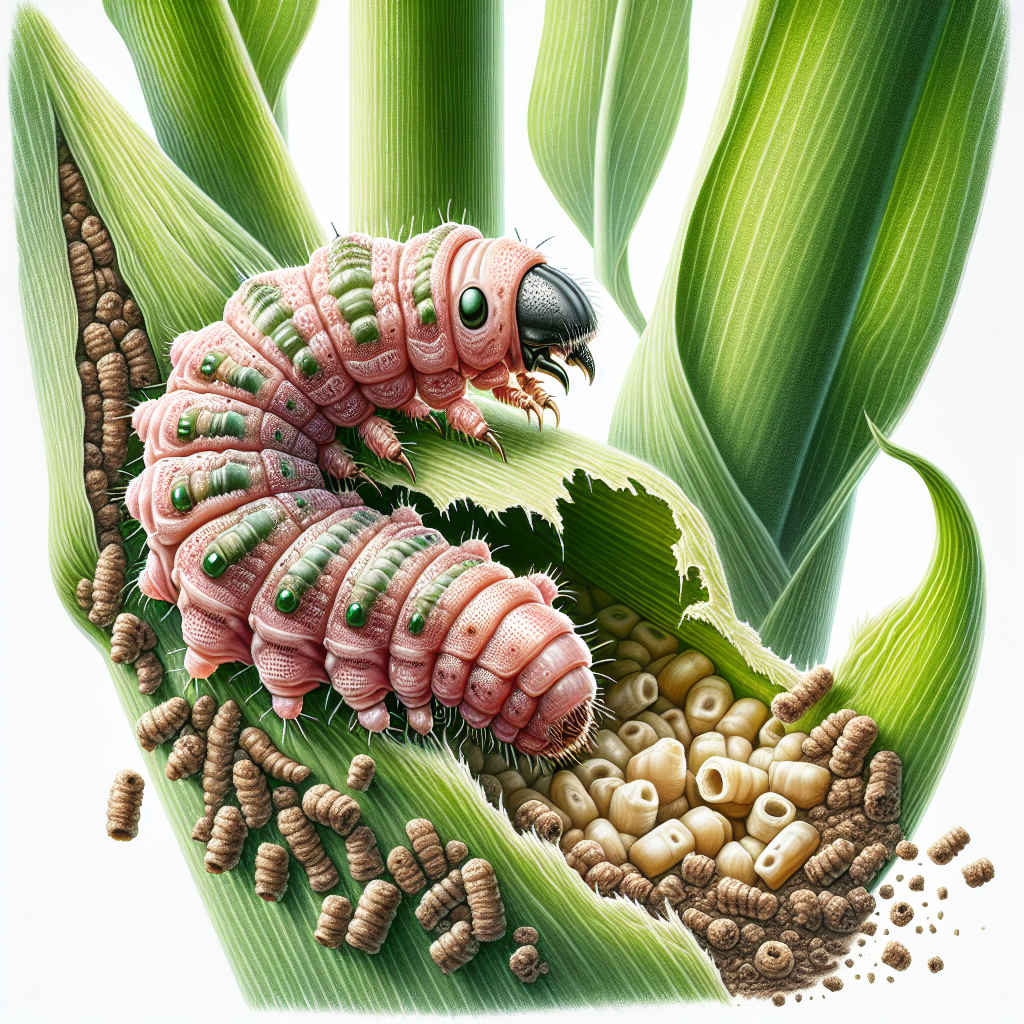
Introduction to European Corn Borer
The European Corn Borer (ECB), scientifically known as Ostrinia nubilalis, stands as one of the most notorious pests in agricultural history, particularly devastating to corn production worldwide. First identified in Europe, this moth species inadvertently hitchhiked to North America around 1917 via shipments of broomcorn, rapidly establishing itself across the United States and Canada. Today, ECB inflicts billions in annual damages by tunneling into plant tissues, weakening stalks, and promoting secondary infections from fungi and bacteria.
Farmers recognize ECB as a multivoltine pest, meaning it can produce multiple generations per season depending on climate—up to four or five in warmer regions. Larvae, the destructive stage, bore into whorls, stalks, ears, and even shanks, disrupting nutrient flow and reducing kernel quality. Beyond corn, it attacks over 300 plant species, including potato, pepper, snap beans, and sorghum. In severe infestations, yield losses can exceed 50% in sweet corn and up to 30% in field corn, making timely diagnosis and integrated pest management (IPM) essential.
This guide provides professional-grade diagnostics, lifecycle insights, organic treatments, and prevention strategies tailored for small to medium-scale farms. By understanding ECB behavior and implementing proactive measures, growers can safeguard harvests effectively. For more on integrated organic strategies, check out this Spring Pest Patrol blog post.
Identifying Symptoms & Damage
Early detection of European Corn Borer is critical, as larvae feed internally, making them hard to spot until damage is evident. Scout fields weekly during peak flight periods, focusing on the upper third of plants where infestations often begin.
Key Symptoms:
- Whorl Stage Damage: Small 'shot-hole' perforations in leaves from young larvae feeding on leaf tissue. Frass (insect poop) appears as sawdust-like pellets at entry points.
- Stalk Boring: Pin-sized holes at leaf axils with tunnels inside stalks, causing brittle plants that lodge easily. Look for girdling near the base in late-season infestations.
- Ear and Tassel Damage: Silky webbing around ears with frass buildup; kernels grazed or tunneled, leading to moldy, unmarketable ears. Tassels may droop with bore holes.
- Secondary Signs: Wilting whorls, broken stalks, fungal rots like corn smut or ear rots entering via ECB tunnels, and reduced photosynthesis from scarred leaves.
Differentiate ECB from similar pests like corn earworm by larva color: ECB larvae are pale pinkish-brown with dark head and spots, while earworms are greenish with stripes. Use pheromone traps to confirm adult presence—males have distinct zigzag flight patterns at dusk. Severely damaged stalks show 'sawdust highways' and vascular discoloration when split open.
In sweet corn, check ears 5-7 days pre-silking; clip and inspect 20 plants per 10 acres. Thresholds: 15-30% whorl damage or 5% ear shanks infested warrants action. Digital scouting apps enhance accuracy for larger fields.
Lifecycle and Progression of European Corn Borer
Understanding the ECB lifecycle enables precise timing of controls. This Lepidopteran pest completes 1-3 generations yearly in northern climates, more in the south.
- Eggs (3-7 days): Females lay 20-30 creamy-white eggs in clusters of 5-30 on undersides of leaves, preferring undersized or drought-stressed plants. Eggs hatch in 3-7 days at 75-85°F.
- Larvae (3-6 weeks): Six instars; young larvae (1st-3rd) mine leaves, creating windowpanes. Older larvae bore into stalks, ears, or tassels, overwintering as 5th instars in plant debris.
- Pupae (10-14 days): Larvae spin silken cocoons in stalks or debris, pupating into reddish-brown cases.
- Adults (1-2 weeks): Mottled beige moths with 1-inch wingspan emerge at night, mating within hours. Females fly upwind to lay eggs 7-10 days post-emergence.
Overwintering occurs in stalks, cobs, or soil; 80-90% survival in mild winters. First generation peaks in late May-June, second in July-August. Degree-day models (base 47°F) predict flights: 340-570 DD for first brood. Monitor with traps: 5-10 moths/trap/week signals egg-laying.
Environmental Triggers & Risk Factors
ECB thrives in temperate zones (USDA 4-9), favoring continental climates with warm summers. Key triggers include:
- Temperature: Optimal 77-86°F for larval development; flights halt below 50°F.
- Humidity & Rainfall: Moderate moisture aids egg survival; drought stresses plants, increasing susceptibility.
- Crop Factors: Late-maturing dent corn varieties overlap with second/third broods. Continuous corn without rotation builds populations.
- Weeds & Volunteers: Common hosts like giant ragweed harbor overwintering larvae.
- Adjacent Crops: Proximity to soybeans or small grains elevates risk via moth dispersal.
No-till fields retain more residue, boosting overwinter survival by 20-30%. Climate change extends generations southward. High nitrogen fields attract egg-laying due to lush whorls. Scout high-risk zones: field edges, low-lying moist areas.
Organic Control & Treatment Plans
Organic management emphasizes IPM: monitor, disrupt, and conserve beneficials. Avoid broad-spectrum sprays to protect predators like Trichogramma wasps.
Cultural Controls:
- Rotate with non-hosts like wheat or clover (2-3 years breaks cycle).
- Destroy residues: fall tillage buries 70% pupae.
- Plant early-maturing varieties; time planting to miss peak flights.
Biological Controls:
- Release Trichogramma brassicae wasps (300k/acre weekly during egg-lay).
- Apply Bacillus thuringiensis (Bt) kurstaki at whorl stage (0.5-1 lb/acre); effective on young larvae.
- Encourage predators: ladybugs, lacewings eat eggs/larvae.
Mechanical/Physical:
- Pheromone traps disrupt mating (delta traps with lures).
- Row covers exclude adults on small plots.
- Hand-remove egg masses/frass early.
Organic Sprays:
- Neem oil or spinosad (OMRI-listed) at 7-10 day intervals post-scout.
- Mineral oil smothers eggs.
Integrated Plan: Scout weekly, treat at 50% whorl infestation or 10% ears clipped. Combine Bt + Trichogramma for 80-90% control.
Preventing European Corn Borer in the Future
Long-term prevention builds resilient systems:
- Varietal Resistance: Choose Bt-corn hybrids (Cry1Ab toxin targets ECB) or Refuge-in-Bag for non-Bt.
- Crop Rotation & Sanitation: Alternate with sorghum or forages; plow-down residues pre-winter.
- Trap Crops: Border plant susceptible sweet corn to concentrate moths.
- Monitoring Tech: Pheromone traps + degree-day apps predict broods.
- Soil Health: Balanced fertility reduces stress; cover crops suppress weeds.
- Perimeter Sprays: Spinosad on edges during flights.
Annual audits: track yields vs. scout data. Resistant varieties + rotation yield 20-40% better returns.
Crops Most Affected by European Corn Borer
ECB primarily targets:
- Corn Varieties: Field, sweet (peaches and cream sweet corn), popcorn—stalk/ear boring causes 10-50% losses.
- Vegetables: Pepper, potato, tomato—fruit/fruit damage.
- Grains/Legumes: Sorghum, soybeans—lodging/foliage.
- Others: Chrysanthemum, hemp.
Corn suffers most; processing sweet corn rejects infested ears. Thresholds vary: fresh market 5%, processing 15%.
(Word count: 1428)