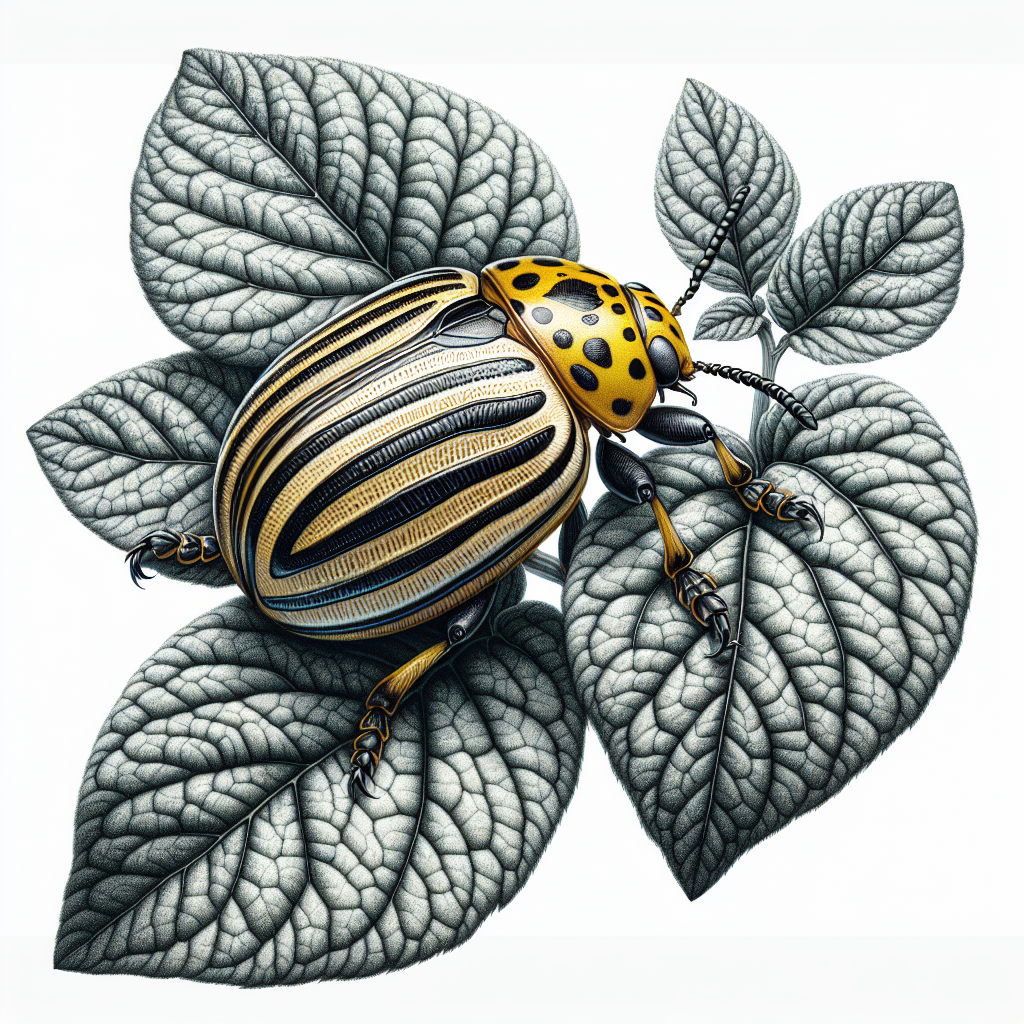
Introduction to Colorado potato beetle
The Colorado potato beetle (Leptinotarsa decemlineata), often called the potato bug, is one of the most destructive pests in potato production. First identified in the 19th century on wild potato plants in Colorado's Rocky Mountains, it quickly became a major threat as potatoes spread commercially. Adults are distinctive with their yellow-orange bodies marked by 10 black stripes, measuring about 1 cm long. Larvae are red with black spots, humpbacked, and voracious feeders.
This beetle inflicts massive damage by skeletonizing leaves, often defoliating plants entirely within weeks. A single female lays up to 800 eggs, and populations explode in favorable conditions, causing 50-100% yield losses if unmanaged. It's notorious for developing resistance to over 50 insecticides, making chemical controls unreliable. Farmers must adopt integrated pest management (IPM) combining cultural, biological, and targeted organic methods. Early detection is key—scout fields weekly from emergence. For more on potato cultivation challenges, see our Spring Pest Patrol: Organic AI Strategies to Shield Your Crops from Common Invaders.
Identifying Symptoms & Damage
Spotting Colorado potato beetle damage early prevents outbreaks. Adults chew irregular holes in leaves, preferring tender foliage. Larvae are worse, scraping leaf undersides, leaving only veins—a classic skeletonized appearance. Severe infestations cause yellowing, wilting, and plant death. Droppings (frass) are orange-red and abundant under plants.
Eggs are bright yellow-orange clusters of 10-30 on leaf undersides. Look for adults overwintering near field edges or under debris. Damage starts on lower leaves, progressing upward. Differentiate from flea beetles (small shot-hole damage) or aphids (curling leaves, honeydew). Defoliation reduces tuber size and number; 25% leaf loss cuts yields by 10-20%, 75% by 80%.
Inspect 10-20 plants per acre in a zigzag pattern. Thresholds: 5 adults/10 plants or 15 small larvae/10 plants warrant action. Use sticky traps or beat sheets for counts. Secondary signs include sooty mold on honeydew-excreting pests, but CPB doesn't produce honeydew.
Lifecycle and Progression of Colorado potato beetle
Understanding the lifecycle is crucial for timing interventions. Adults overwinter 10-30 cm deep in soil, emerging in spring when soil hits 10-15°C (50-60°F), coinciding with potato emergence. They feed, mate, and lay eggs within days. One generation takes 40-60 days; 1-3 per season depending on climate.
Eggs hatch in 4-9 days into larvae (L1-L4 instars over 2-3 weeks). Larvae feed ravenously, peaking at L3-L4. They drop to soil, pupate 15-20 cm deep for 5-10 days, emerging as new adults. Summer adults continue feeding and lay fewer eggs. In fall, they seek hibernation sites.
Diapause allows survival in cold; adults can live 1-2 years. Hot, dry weather speeds development; rain washes eggs off leaves. Multiple generations amplify populations—control first generation to break the cycle. Monitor with pheromone traps for adult flights.
Environmental Triggers & Risk Factors
Colorado potato beetles thrive in warm temperate zones (USDA 3-10). Optimal temps: 20-30°C (68-86°F) for feeding/egg-laying; below 10°C halts activity. Moisture aids egg survival but drowns small larvae. Sandy soils ease pupation; heavy clays hinder.
Risk factors: Monoculture potatoes, especially early varieties like Russet Burbank potato. Nearby infested fields spread via flight (up to 1 km). No-till fields harbor overwintering adults. Volunteer potatoes or nightshade weeds (eggplant, tomato) serve as reservoirs. Drought-stressed plants are more susceptible.
Climate change extends seasons, boosting generations. Poor rotation (potatoes yearly) builds populations. Soil solarization or flooding disrupts pupae. Scout edges first—adults colonize from borders.
Organic Control & Treatment Plans
Organic management emphasizes IPM to avoid resistance. Cultural: Rotate potatoes 3-4 years with non-solanaceous crops like corn or wheat. Use row covers until flowering. Mulch heavily (straw 10-15 cm) to block adults. Hand-pick eggs/larvae weekly into soapy water—effective on small plots.
Biological: Encourage predators like ladybugs, green lacewings, spined soldier bugs. Release Bacillus thuringiensis var. tenebrionis (Bt) at egg hatch (label rates: 0.5-1 kg/ha). Parasitic wasps (Myiopharus doryphorae) target larvae. Neem oil or spinosad sprays (OMRI-listed) at early larval stage; rotate with pyrethrins.
Physical: Vacuum adults with bug vacuums. Edge tillage buries pupae. Kaolin clay (Surround) repels feeding. Threshold-based spraying: Treat only if above thresholds. Foliar sprays evening to spare pollinators. Test soil for nematodes that suppress CPB.
Integrated plan: Scout weekly, rotate, mulch, Bt at L1, hand-pick hotspots, trap crops (early potatoes). Yields improve 30-50% vs. untreated. Avoid broad-spectrum sprays preserving beneficials.
Preventing Colorado potato beetle in the Future
Prevention beats cure. Plant resistant varieties like 'King Harry', 'Defiance', or 'Jacqueline Lee'—lower glycoalkaloids deter feeding. Time planting to miss peak emergence (late varieties after June). Destroy volunteers and nightshades.
Crop rotation: 4-year minimum, include sweet potato or grains. Trap crops: Plant susceptible early varieties to lure beetles, then destroy. Perimeter traps (yellow sticky + pheromone) reduce influx 40%. Cover crops like rye suppress soil pupae.
Sanitation: Till post-harvest to expose pupae to predators/birds. Flame weeding kills early instars. Use reflective mulches disorient adults. Monitor forecasts for emergence. Long-term: Breeders develop Bt-resistant strains, but diversify tactics. Annual planning prevents reinfestation.
Crops Most Affected by Colorado potato beetle
Primarily attacks Solanaceae: potatoes (all varieties), especially Yukon Gold potato, Red Bliss potato. Also tomato, eggplant, bell pepper, chili pepper. Rarely sweet potato. Wild hosts: horse nettle, ground cherry. Potatoes suffer most—global losses $100M+/year. Home gardens hit hard without rotation.