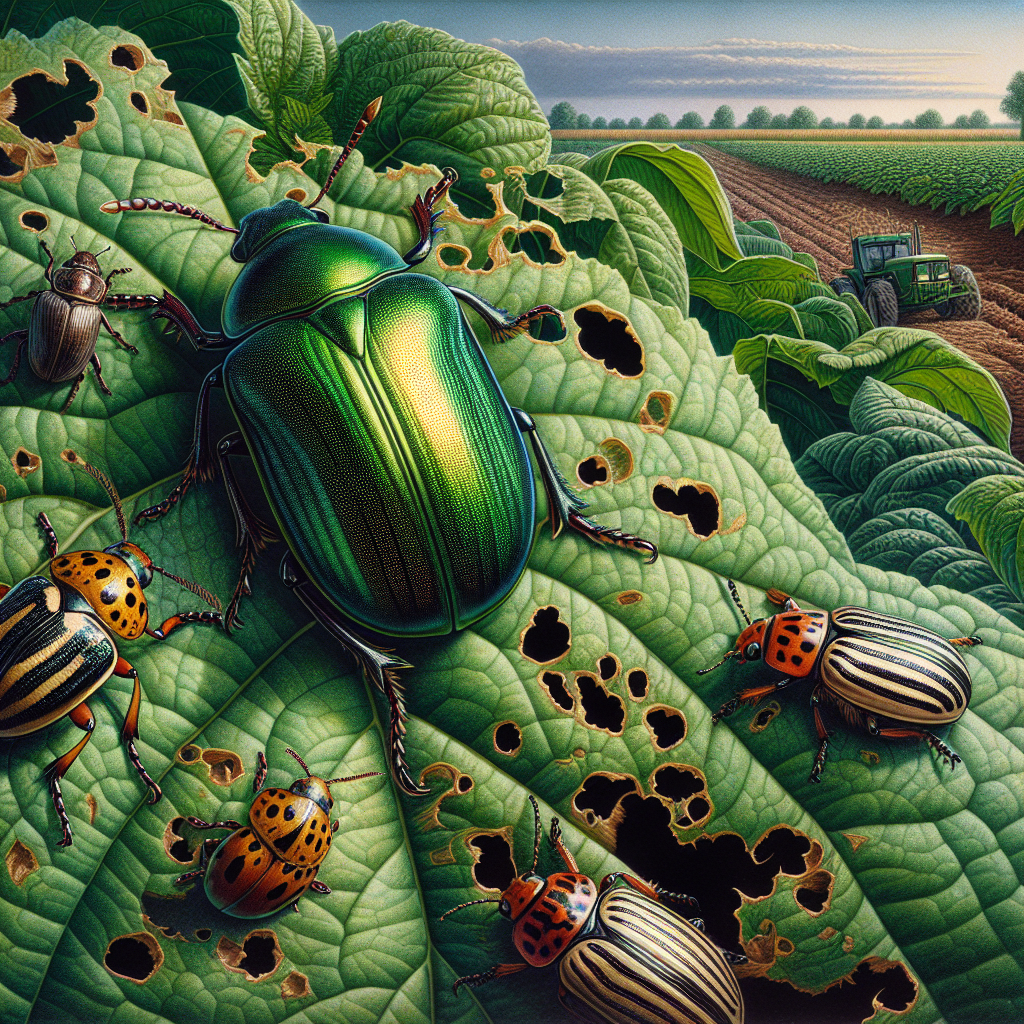
Introduction to Beetles
Beetles (Order: Coleoptera) are among the most prolific and damaging pests in agriculture, representing nearly 40% of all insect species with over 400,000 known types worldwide. These hard-shelled insects, characterized by their forewings modified into protective elytra, inflict billions in crop losses annually through direct feeding on leaves, roots, fruits, and stems, as well as by boring into plant tissues and spreading diseases. In farming systems, beetles target a broad spectrum of crops, from staple grains like corn and wheat to high-value produce such as potato, tomato, and eggplant.
Unlike singular pests, 'beetles' is a broad category including notorious species like the Japanese beetles, Colorado potato beetle, cucumber beetles, flea beetles, and rootworms. Adults chew irregular holes in foliage, while larvae (often called grubs) devour roots underground, leading to wilting, stunted growth, and plant death. Economic impacts are severe: in the U.S. alone, beetle pests cost farmers over $1 billion yearly in control measures and yield reductions. Understanding their biology is crucial for integrated pest management (IPM), which emphasizes monitoring, thresholds, and layered defenses to avoid over-reliance on chemicals. This guide provides diagnostic tools, lifecycle insights, organic strategies, and prevention tactics tailored for small to large-scale growers. For real-world application, check out this Spring Pest Patrol blog post on seasonal defenses.
Identifying Symptoms & Damage
Beetle damage manifests in distinct patterns depending on the species and life stage. Adult beetles typically cause skeletonized leaves with large, irregular holes where only veins remain, as seen in Japanese beetles feeding gregariously on soybeans, grapes, and roses. Flea beetles produce small, shot-hole punctures, especially on young cabbage and eggplant seedlings, often accompanied by wilting from rapid water loss.
Larval damage is subtler but devastating: white, C-shaped grubs (e.g., corn rootworm larvae) feed on roots, causing lodging in corn and sweet potato stands. Boring beetles like the European Corn Borer (technically a moth but often confused; true borers include longhorned beetles) tunnel into stalks, sawdust-like frass at entry points signals activity. Vectoring is critical—striped cucumber beetles transmit bacterial wilt in cucumber and squash, turning vines limp within days.
Diagnostic tips: Shake plants over white paper to dislodge adults; inspect roots for grubs. Differentiate from caterpillars by hard exoskeletons and chewing mouthparts. Secondary signs include sooty mold on honeydew (less common than in aphids) or stippling from flea beetles. Early scouting—weekly from seedling stage—prevents outbreaks. Use magnification for species ID: metallic green Japanese beetles vs. black-spotted Colorado potato beetles on potato.
Lifecycle and Progression of Beetles
Beetles undergo complete metamorphosis: egg, larva, pupa, adult. Most are univoltine (one generation/year), but tropical species like bean beetles have multiple. Eggs are tiny, often laid in soil or leaf clusters—e.g., Colorado potato beetle eggs are yellow-orange clusters on leaf undersides.
Larvae (grubs) are the primary damage phase, lasting weeks to years. Japanese beetle grubs overwinter 4-10 inches deep, pupating in spring soil. Adults emerge synchronously, mating and feeding immediately; females burrow to lay 20-50 eggs per batch. Flea beetles overwinter as adults in leaf litter, invading crops at first warm days (soil >50°F/10°C).
Progression: Eggs hatch in 7-14 days; larvae feed 3-5 instars (3-8 weeks); pupae in soil/cocoons (1-3 weeks); adults live 1-12 months. Monitoring peaks: adult flight (yellow sticky traps), larval soil samples. Disrupt at weak points—e.g., tilling exposes pupae to predators. Lifecycle varies by species; consult flea beetles wiki for brassica specialists.
Environmental Triggers & Risk Factors
Beetles thrive in warm, humid conditions (70-90°F/21-32°C), with outbreaks triggered by mild winters reducing natural die-off. Over-fertilization with nitrogen promotes tender foliage, attracting leaf-feeders like Mexican bean beetle on beans. Monocultures amplify risks—continuous potato fields foster Colorado potato beetle resistance.
Soil moisture extremes favor grubs: drought concentrates roots for feeding; excess water aids egg survival. Weeds like foxtail host flea beetles, bridging to crops. Proximity to wild hosts (e.g., boxelder for cucumber beetles) and poor rotation (>2 years same family) spike infestations. Climate change extends ranges—Japanese beetles now menace northern apple orchards. Risk assessment: Scout weedy margins first; use degree-day models (base 50°F) for emergence predictions.
Organic Control & Treatment Plans
Organic management layers cultural, biological, and mechanical tactics per IPM. Cultural: Rotate crops (3-4 years, avoid host families); use trap crops like nasturtium for flea beetles. Row covers exclude adults during peak oviposition.
Biological: Release predators—ladybugs, parasitic wasps (e.g., for Colorado potato beetle), nematodes (Heterorhabditis bacteriophora) for grubs. Bt kurstaki targets larvae selectively. Mechanical: Hand-pick adults into soapy water; vacuum flea beetles; till post-harvest to expose pupae.
Organic sprays: Neem oil/azadirachtin disrupts feeding/mating (apply dusk, 7-10 day intervals); pyrethrum for knockdown (avoid bees). Kaolin clay barriers deter landing. For cucumber beetles, yellow sticky traps + companion thyme. Thresholds: 20% defoliation adults, 5 grubs/plant larvae. Monitor efficacy; integrate with aphids controls for synergy. See Soil Health Mastery blog for grub-suppressing amendments.
Preventing Beetles in the Future
Prevention beats cure: Start with resistant varieties—e.g., Bt corn for rootworms, hairy-leaf potatoes vs. Colorado beetle. Crop rotation disrupts lifecycles; interplant repellents like garlic or marigold. Maintain soil health with cover crops (clover) to boost predatory nematodes.
Sanitation: Destroy crop residues; weed margins; deep till (if organic-approved). Border sprays target immigrants. Perimeter traps (pheromone for Japanese beetles) intercept flyers. Long-term: Enhance biodiversity—hedgerows with native plants attract birds eating grubs. Scout early (seedling stage); use apps for ID. Annual plans: Pre-season soil tests for grubs, post-harvest rotation logs.
Crops Most Affected by Beetles
Beetles plague diverse crops. Solanaceae (potato, tomato, eggplant) suffer Colorado potato beetle defoliation. Cucurbits (cucumber, squash, pumpkin) face cucumber beetles and vine borers. Grains like corn battle rootworms and borers; soybeans see bean leaf beetles. Brassicas (cabbage, broccoli) host flea beetles; legumes (peas, chickpeas) draw bruchids. Fruits: apple, grapes vs. Japanese beetles; strawberry flea beetles. Field crops (cotton, sorghum) endure boll weevils, stem borers. Prioritize based on region—e.g., Midwest corn rootworms, East Coast Japanese beetles.