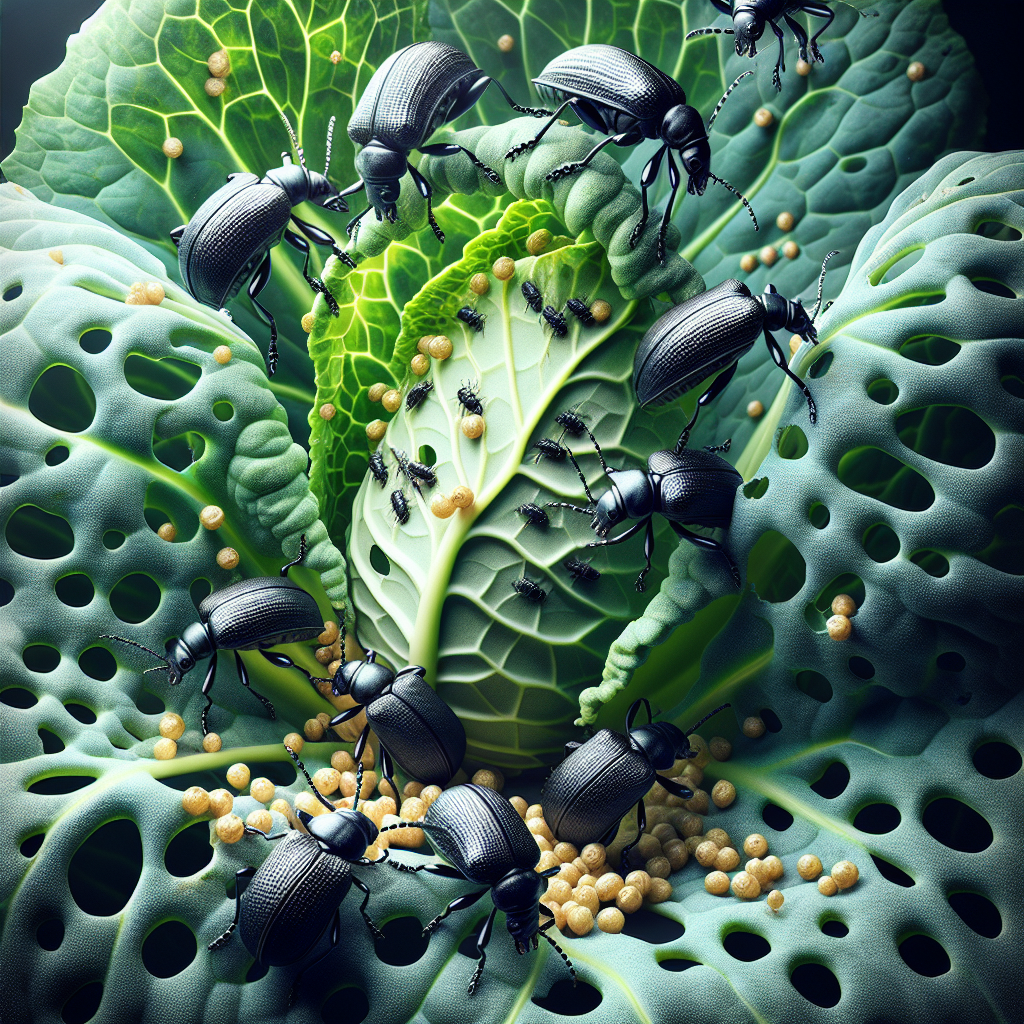
Introduction to flea beetles
Flea beetles (Phyllotreta spp., Epitrix spp., and Psylliodes spp.) are among the most notorious pests in vegetable gardens and small farms, particularly targeting the brassica family and other tender crops. These tiny, metallic or black beetles (2-3 mm long) earned their name from their remarkable ability to leap like fleas when disturbed, allowing them to evade predators and quickly infest new plants. Adults overwinter in soil or debris, emerging in spring to feed voraciously on emerging seedlings, often defoliating entire plantings before they can establish.
Damage is most severe on crops like broccoli, kale, radish, and eggplant, where feeding creates pinpoint holes that weaken plants and open doors to secondary infections such as bacterial leaf spots. In commercial settings, flea beetles can reduce yields by 30-50% if unchecked, making early detection and integrated management essential. This definitive guide draws on entomological research and field-tested agricultural practices to equip growers with diagnostic skills, lifecycle knowledge, and organic strategies for long-term control. Understanding flea beetle biology is key to breaking their cycle and safeguarding your harvests.
Identifying Symptoms & Damage
Flea beetle damage is unmistakable once you're familiar with the signs. Adult feeding produces small, round 'shot holes' (1-2 mm diameter) scattered across leaves, resembling buckshot patterns—hence the name. On young seedlings, this skeletonizes leaves, stunting growth or killing plants outright. Look for shiny, black or bronze beetles jumping away when leaves are shaken.
Larvae, less visible, feed on roots underground, causing wilting and poor vigor, often misdiagnosed as root rots. Secondary symptoms include yellowing edges, wilting during the day, and increased susceptibility to diseases like powdery mildew due to reduced photosynthesis. Inspect undersides of leaves for eggs (small, orange clusters) and monitor for rapid defoliation in cool, damp springs.
To diagnose accurately, use a 10x hand lens: flea beetle frass (tiny black pellets) confirms infestation. Differentiate from similar damage by caterpillars (irregular holes, silk webbing) or slugs (slimy trails, larger ragged edges). Early identification prevents escalation, especially on brassicas where larvae tunnel into stems. Track damage progression with weekly scouts using sticky traps coated in yellow vaseline to capture jumping adults.
Lifecycle and Progression of flea beetles
Flea beetles complete 1-3 generations per year, depending on climate. Adults overwinter in leaf litter, hedgerows, or soil cracks, emerging when soil temperatures hit 10-15°C (50-59°F). They feed immediately on weeds like shepherd's purse before moving to crops, laying 1-4 eggs daily at the base of plants.
Eggs hatch in 5-10 days into slender, white larvae that burrow into soil, feeding on roots for 2-4 weeks. Pupation occurs in soil cocoons, with new adults emerging in 7-10 days to repeat the cycle. Peak activity aligns with seedling emergence: first generation in late spring, second in midsummer. In warmer regions like the southern U.S., a third generation extends pressure into fall.
Lifecycle duration is 30-45 days, but overwintering adults live 8-10 months. Monitor with yellow sticky traps starting at planting; captures >5 beetles/trap/week signal action. Understanding this progression allows timed interventions, such as delaying planting until adults disperse or targeting larvae with soil drenches. Disrupt the cycle by tilling post-harvest to expose pupae to predators.
Environmental Triggers & Risk Factors
Flea beetles thrive in cool (15-24°C/59-75°F), dry springs following mild winters, when weeds provide early food sources. Bare soil and early-planted seedlings are prime targets, as adults fly up to 1 km seeking hosts. Poor soil health, low organic matter, and compacted fields exacerbate root damage from larvae, mimicking damping-off.
Risk spikes near overwintering sites: field edges with debris, grassy margins, or clover patches. Monocultures of brassicas amplify infestations, while drought-stressed plants emit volatiles attracting beetles. Companion crops like mustard (not listed, but related) can act as traps but require management. Climate change extends seasons, increasing generations in northern latitudes. Scout high-risk zones first and use mulches to deter soil emergence.
Organic Control & Treatment Plans
Organic management emphasizes prevention but includes targeted treatments. Cultural Controls: Delay planting 1-2 weeks past peak adult flight (use traps to time). Till soil in fall to kill pupae. Use row covers (lightweight Agribon-AG 19) from emergence until flowering—essential for seedlings. Trap crops like mustard or radish planted 2 weeks early divert beetles.
Biological Controls: Introduce beneficial nematodes (Heterorhabditis bacteriophora) for soil larvae; apply evenings at 50-80 million/m². Parasitic wasps (Microtonus spp.) target adults; plant yarrow or dill to attract. Predatory ground beetles eat eggs—maintain refuges.
Organic Sprays: Neem oil (1-2% solution) or spinosad (OMRI-listed, 0.5 oz/gal) weekly at first signs; rotate to prevent resistance. Pyrethrins for knockdown, but short residual. Homemade: garlic-pepper spray (blend 2 garlic bulbs, 1 tbsp cayenne, 1 qt water; strain, add soap). For severe cases, diatomaceous earth (DE) on dry foliage—reapply after rain. Spring Pest Patrol: Organic AI Strategies to Shield Your Crops from Common Invaders offers tech-enhanced scouting tips.
Integrated Plan: Week 1: Scout/traps. Week 2: Row covers + neem. Monitor larvae with soil cores. Expect 70-90% control with consistency.
Preventing flea beetles in the Future
Long-term prevention builds resilient systems. Rotate brassicas with non-hosts like peas or onions (3-year cycle). Plant resistant varieties: 'Protector' radish, 'Cabbage Green' kale. Mulch heavily (2-4 inches straw) post-emergence to suppress soil adults and retain moisture.
Encourage predators: sow nasturtium borders, interplant thyme. Clean fields thoroughly—flame weeding kills adults. Soil health via cover crops (hairy vetch) boosts plant vigor, deterring feeding. Monitor weather: avoid planting in cool, dry windows. Yellow sticky traps perimeter-wide reduce migrants by 50%. Annual audits prevent reinfestation.
Crops Most Affected by flea beetles
Brassicas top the list: broccoli, cabbage, kale, collards, turnips. Radishes and mustards suffer total seedling loss. Potato (Epitrix spp.) shows tuber damage. Eggplant, tomato, peppers face early-season hits. Corn seedlings vulnerable to corn flea beetles, vectoring Stewart's Wilt. Soybeans, sweet potato, beets also targeted. Focus protection on these high-value crops for maximum ROI.