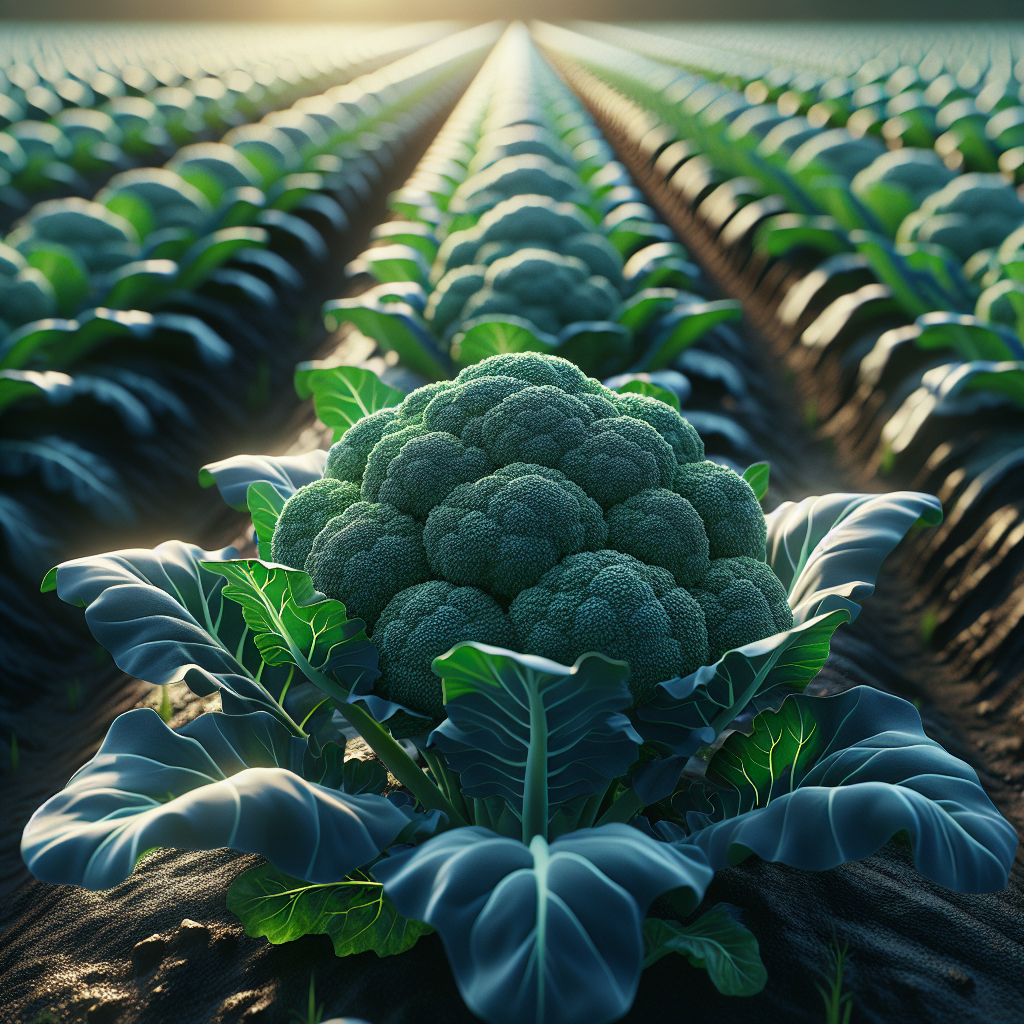
Introduction to Broccoli
A classic member of the cabbage family, broccoli is grown for its immature flower head and thick, edible stem. It originated from Mediterranean brassica selections, with strong historical ties to Italian cultivation, and has since become one of the most important cool-season vegetables in both home gardens and commercial production. Modern broccoli includes heading types that form a single dominant crown and sprouting types that produce multiple smaller side shoots over an extended harvest period.
Broccoli is considered moderately demanding because quality depends heavily on timing, temperature management, and uninterrupted growth. If the crop is stressed by heat, drought, nutrient swings, root damage, or pest pressure, plants may produce loose heads, small crowns, premature flowering, hollow stems, or physiological disorders. When conditions are correct, however, broccoli is highly productive, nutrient-dense, and well suited to succession planting.
For growers planning mixed brassica beds, see our Cauliflower guide. Good site preparation and crop rotation are especially important in broccoli because many pests and diseases are shared across brassicas.
Botanical Profile of Broccoli
Broccoli belongs to the species Brassica oleracea, the same species that includes cabbage, kale, cauliflower, Brussels sprouts, and kohlrabi. The botanical variety italica distinguishes it from other cultivated forms. The part most people call the “head” is actually a compact cluster of undeveloped flower buds borne on a fleshy peduncle. If not harvested on time, the buds elongate and open into small yellow four-petaled flowers typical of the mustard family.
Broccoli is usually grown as an annual, though biologically it is derived from a biennial species. In its full life cycle, it would produce vegetative growth in one season and flower and seed after vernalization. In practical vegetable farming, the crop is harvested before full reproductive maturity.
Plants typically form a waxy blue-green to gray-green canopy with broad leaves and a fibrous but somewhat sensitive root system concentrated in the topsoil. This shallow-to-moderate rooting pattern explains why consistent irrigation and good soil structure matter so much. Compared with cabbage, broccoli is less tolerant of prolonged stress during head initiation. Compared with sprouting broccoli, standard heading broccoli is often more synchronized, making it better suited to market harvests.
Cultivars vary widely in maturity and architecture. Early cultivars may mature in 55 to 70 days from transplant, while main-season and overwintering types can take much longer. Heat-tolerant cultivars exist, but even these do not truly prefer hot weather; they simply resist bead loosening and premature bolting better than standard lines. Cold-hardy sprouting broccoli can survive light freezes and then produce numerous side shoots.
Soil, pH, and Climate Requirements for Broccoli
Broccoli performs best in deep, fertile, well-drained loam or sandy loam rich in organic matter. The ideal soil pH is 6.2 to 7.0, with 6.5 to 6.8 being especially favorable for nutrient availability and reduced clubroot risk. In soils below about pH 6.0, brassicas become more vulnerable to clubroot and may show reduced calcium and boron uptake. If soil is acidic, agricultural lime should be incorporated well in advance of planting, preferably several months earlier.
A professionally managed broccoli field should have high biological activity, moderate cation exchange capacity, and excellent aggregation. Soil compaction is a major hidden yield reducer because it restricts root exploration and causes erratic moisture uptake. Before planting, the top 20 to 30 cm of soil should be friable, not cloddy, and free of standing-water zones. Broccoli is sensitive to waterlogging; roots deprived of oxygen often become tan to brown, stunted, and inefficient, leading to pale foliage and delayed head formation.
Ideal temperature for vegetative growth is roughly 18 to 24°C, while the best head quality is often produced when temperatures remain closer to 15 to 20°C during crown development. Once daytime temperatures consistently rise above 27°C, head quality commonly declines. Hot weather can cause “ricey” heads, in which flower buds become uneven and granular, or loose heads with reduced density. Severe heat stress may also cause premature bolting.
Broccoli is frost tolerant once established. Mature vegetative plants can withstand light frost, and cool weather often improves flavor by slowing growth and preserving head firmness. However, repeated hard freezes can damage developing heads, causing water-soaked tissue and postharvest breakdown.
Broccoli requires steady soil moisture, ideally around 70 to 80% of field capacity through most of the growing cycle. Practically, this means the root zone should remain evenly moist but never saturated. In the field, the top 2 to 3 cm may dry slightly between irrigations, but the soil at 5 to 10 cm depth should feel cool and moist. Inconsistent watering is especially harmful during rapid vegetative growth and head initiation. Drought stress at these stages reduces crown size and promotes bitterness. Overwatering, on the other hand, leads to shallow rooting, yellowing lower leaves, edema-like stress, and greater susceptibility to root disease.
For broader fertility-building strategies, review soil health tips.
Step-by-Step Planting & Propagation
Broccoli is almost always propagated by seed. Direct sowing is possible in mild climates with reliable moisture, but transplanting is the standard professional approach because it improves spacing precision, reduces early weed competition, and shortens field exposure to pests.
Start seeds in trays 4 to 6 weeks before transplanting. Sow 0.5 to 1 cm deep in a sterile, well-drained seed-starting medium. Germination is strongest at 20 to 25°C and usually occurs in 4 to 10 days. Once seedlings emerge, reduce temperatures to approximately 15 to 18°C during the day and slightly cooler at night to prevent elongation. Broccoli seedlings grown too warm and too crowded become leggy, weak-stemmed, and more prone to transplant shock.
Maintain bright light from the moment cotyledons unfold. Seedlings should be fertilized lightly after the first true leaf appears, using a balanced nutrient solution with moderate nitrogen and sufficient calcium. Overfeeding in the nursery creates lush but fragile transplants. The ideal transplant is stocky, dark green, 10 to 15 cm tall, and carries 4 to 6 true leaves.
Harden seedlings 5 to 7 days before transplanting by gradually exposing them to outdoor conditions, slightly reducing water without allowing wilting. This step thickens cuticles and reduces shock.
Transplant timing depends on climate:
- In cool temperate zones, set transplants out in early spring for late spring to early summer harvest, or in mid to late summer for fall harvest.
- In warmer regions, broccoli is best grown from autumn through winter.
- In hot-summer climates, fall production is usually superior to spring production because head formation coincides with cooling weather.
Spacing depends on target head size. Standard heading broccoli is commonly spaced 45 to 60 cm between plants and 60 to 90 cm between rows. Tighter spacing produces smaller but more uniform heads; wider spacing favors larger crowns and stronger side-shoot development. For direct seeding, sow a little heavier and thin to final spacing once seedlings are established.
At transplanting, plant deeply enough to stabilize the stem, generally up to the first true leaves if needed, but do not bury the growing point. Water in immediately to settle soil around roots and eliminate air pockets. If flea beetles or cabbage root flies are common, use row covers from day one.
Care & Maintenance regimes for Broccoli
Broccoli is a high-feeding crop with significant demand for nitrogen, potassium, calcium, sulfur, and boron. A realistic fertility program begins with a soil test. In the absence of a lab recommendation, growers often incorporate well-finished compost plus a balanced preplant fertilizer, then side-dress nitrogen after establishment and again before head formation if needed.
Nitrogen drives canopy growth and ultimately determines head size, but excess nitrogen late in the cycle can produce overly lush foliage, delayed maturity, and softer heads. A useful field cue is leaf color: healthy plants should be a strong blue-green. Pale green lower leaves or slow expansion suggest nitrogen deficiency, while excessively dark, floppy growth may indicate overapplication.
Boron deserves special attention. Even mild boron deficiency can contribute to hollow stem, cracked stems, browning inside the head, and poor bud development. Because the margin between deficiency and excess is narrow, boron should be applied based on soil and tissue testing rather than guesswork.
Mulching is highly beneficial. Organic mulch moderates soil temperature, reduces evaporation, suppresses weeds, and helps prevent soil splash that spreads pathogens. Black plastic mulch can be useful in cool conditions but may overheat soil in warm regions.
Irrigation should be deep and regular rather than shallow and frequent. Most crops need about 25 to 40 mm of water per week, with higher demand on light soils or during windy conditions. During head formation, even short dry periods can significantly reduce quality. Drip irrigation is preferred because it keeps foliage dry and delivers water directly to the root zone. If using overhead irrigation, water early in the day so leaves dry quickly.
Signs of underwatering include dull leaf color, slight midday wilt that does not recover by evening, slowed leaf expansion, and small developing heads. Signs of overwatering include persistently wet surface soil, algae or moss formation, yellowing lower foliage, sour-smelling soil, and roots that appear brown rather than white when examined.
Weed control is most important during the first 4 to 6 weeks after transplanting. Because broccoli develops a broad canopy later, early cultivation and mulching usually provide sufficient suppression. Cultivate shallowly to avoid root pruning.
To encourage side-shoot production after the main head is cut, maintain fertility and moisture rather than abandoning the bed immediately. Many cultivars will produce useful secondary harvests if temperatures remain favorable.
Pests, Diseases & Organic Management
Broccoli shares a wide pest complex with other brassicas. The most frequent insect pests include cabbage worms, imported cabbageworm larvae, cabbage loopers, diamondback moth larvae, flea beetles, aphids, cutworms, cabbage root maggots, and whiteflies in some regions.
Caterpillars are often the most damaging because they feed directly on leaves and contaminate heads. Regular scouting is essential. Check the undersides of leaves for eggs and inspect developing heads for frass. Bacillus thuringiensis var. kurstaki is highly effective when applied against young larvae and rotated responsibly. Spinosad can also work in organic systems, but timing and pollinator safety matter.
flea beetles attack young seedlings, creating many tiny shot holes. Severe infestations can stunt or kill newly set transplants. Floating row covers are among the best early defenses. aphids often colonize the inner leaves and head area, especially in cool dry weather or on overfertilized crops. Strong water sprays, insecticidal soaps, and conservation of beneficial insects help suppress populations.
Major diseases include clubroot, black rot, downy mildew, Alternaria leaf spot, damping-off, wirestem, and bacterial soft rots. clubroot is one of the most serious long-term soil problems for broccoli. It causes swollen, distorted roots, midday wilting despite moist soil, and chronic stunting. Prevention is far more effective than cure: keep soil pH near neutral, improve drainage, and avoid planting brassicas in infected ground for several years.
black rot, caused by Xanthomonas campestris pv. campestris, often begins as yellow V-shaped lesions from leaf margins inward. It is seedborne and splash-dispersed, so start with clean seed, use crop rotation, and avoid overhead irrigation where possible. downy mildew is favored by cool, humid conditions and appears as pale patches with mold growth on leaf undersides.
Organic management depends on integration rather than single-product solutions:
- Rotate broccoli and other brassicas on a 3- to 4-year minimum cycle.
- Use insect netting or row covers early.
- Remove crop residues promptly after harvest.
- Maintain balanced fertility; overly lush plants attract aphids and suffer more soft rot.
- Irrigate the soil, not the foliage.
- Scout weekly, and twice weekly during warm pest-prone periods.
- Destroy heavily infested or diseased plants before problems spread.
Sanitation matters enormously. Decaying brassica residues can harbor pests and diseases that carry over into the next planting.
Harvesting, Curing & Optimal Storage
Broccoli should be harvested when the central head is fully formed, tight, and deep green, but before individual buds begin to loosen or show yellow petal color. This stage is short, especially in warm weather, so fields should be checked frequently once heads start sizing. A market-ready crown is firm, compact, and composed of uniformly small beads.
Use a sharp knife to cut the main head with 10 to 20 cm of stem, depending on market preference. Make the cut at a slight angle to reduce water accumulation on the stump. If side shoots are desired, do not damage the remaining leaves; they fuel regrowth after the main crown is removed.
Harvest during the coolest part of the day, ideally early morning. Field heat is one of the greatest threats to broccoli quality. Heads left warm after cutting rapidly lose firmness, sweetness, and shelf life. Unlike dry-cured crops, broccoli is not cured. Instead, it should be hydrocooled or moved into refrigeration as quickly as possible.
Postharvest, ideal storage temperature is 0 to 1°C with 95 to 100% relative humidity. Under these conditions, broccoli may keep for 10 to 14 days, sometimes slightly longer depending on cultivar and cold-chain quality. At warmer temperatures, yellowing accelerates quickly. Ethylene exposure should also be minimized because it promotes senescence and yellowing. Do not store broccoli near heavy ethylene producers such as ripening apples, bananas, or tomatoes.
Signs of declining storage quality include bead yellowing, limp stems, surface dehydration, strong sulfurous odor, and soft wet breakdown. For best culinary quality, use as soon as possible after harvest.
Companion Planting for Broccoli
Broccoli benefits from companion planting when the goal is pest disruption, space efficiency, and soil management rather than folklore. Strong-smelling herbs such as dill, thyme, sage, and Thai basil may help diversify the planting and attract beneficial insects, though they are not a substitute for direct pest control. Nectar plants nearby can support parasitoid wasps and hoverflies that prey on caterpillars and aphids.
Leafy crops with shallow, quick growth such as lettuce can be interplanted early in wider broccoli spacing, provided airflow remains good. Alliums like onions and garlic are often used in mixed beds because they occupy a different root and canopy niche and can fit well into rotation plans. Avoid crowding companions so heavily that broccoli loses light, airflow, or root access.
The most important companion principle for broccoli is what not to plant nearby or sequentially too often: other brassicas. Repeated clustering of cabbage-family crops increases pest concentration and disease carryover. Brassicas in continuous proximity encourage larger populations of loopers, aphids, flea beetles, and soilborne pathogens. It is often better to separate brassica blocks with unrelated crops and flowering insectary strips.
Good broccoli companionship also includes soil-level allies. Living mulches or cover crop residues can reduce erosion and moderate moisture swings, but they must be managed so they do not compete heavily during early establishment. In production systems, the best companion strategy is one that supports biodiversity while preserving the cool, fertile, evenly moist conditions that broccoli needs for dense, high-quality heads.