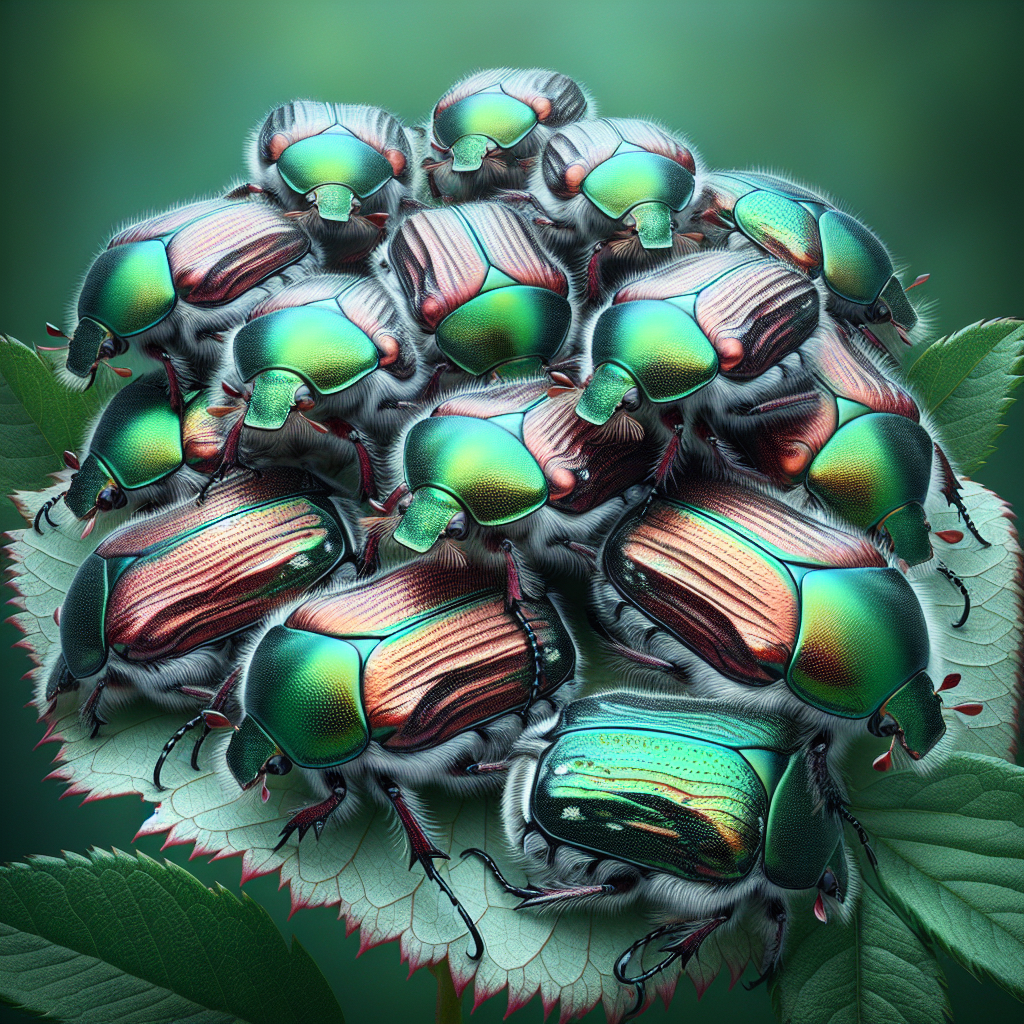
Introduction to Japanese beetles
Japanese beetles, scientifically known as Popillia japonica, are one of the most destructive pests in North American agriculture and ornamental landscapes. Native to Japan, these invasive insects arrived in the United States in the early 1900s via New Jersey and have since spread across the continent, affecting crops from roses to major field varieties like soybeans and corn. Adults are metallic green with copper-brown wing covers, measuring about 1/2 inch long, and they emerge in early summer to feed voraciously in groups, often skeletonizing leaves by eating the tissue between veins.
The economic impact is staggering: Japanese beetles cause millions in losses annually to turf, nurseries, and fruit orchards. Their larvae, called white grubs, feed on grass roots, leading to dead patches in lawns and weakened crop stands. Unlike many pests, both life stages damage plants, making comprehensive management essential. Early detection and integrated strategies can minimize defoliation, which can reach 100% on preferred hosts. This definitive guide equips farmers, horticulturists, and home gardeners with professional-grade diagnostics, organic controls, and prevention tactics to protect yields. Understanding their behavior—adults attracted to over 300 plant species via pheromones and plant volatiles—is key to disrupting their cycles. For small farms, timely intervention preserves profitability, especially in high-value crops like grapes and raspberries.
Identifying Symptoms & Damage
Spotting Japanese beetle damage early is critical for effective control. Adult feeding creates a characteristic 'skeletonized' appearance: leaves with only veins remaining, as beetles chew soft tissue between them. Look for clusters of 5-20 beetles on upper leaves during midday, when they feed most actively. Flowers may show ragged petals or complete removal, while fruits like raspberries or peaches exhibit gouges and scarring.
Grub damage manifests as wilting turf or irregular dead patches, often 1-2 feet wide, where roots are severed. Pull back sod to reveal C-shaped, white larvae up to 1 inch long with brown heads, curled in soil 1-4 inches deep. Secondary signs include bird activity (starlings and robins digging for grubs) and skunk foraging. Differentiate from other pests like cucumber beetles by the metallic sheen and grouped feeding.
On crops, expect 20-50% defoliation in outbreaks, reducing photosynthesis and yields. Monitor with sticky traps or visual scouting from June to August. Severe infestations attract more beetles via aggregation pheromones, exacerbating damage. Use a hand lens to confirm: adults have tufts of white hairs on the rear abdomen. For diagnostics, shake branches over white paper—beetles drop and are easily identified.
Lifecycle and Progression of Japanese beetles
Japanese beetles complete one generation per year, with lifecycle stages tightly linked to seasons. Eggs are laid 2-4 inches deep in moist soil in July, hatching in 1-2 weeks into tiny grubs that feed on organic matter and roots. By fall, mature third-instar grubs (1 inch long) burrow 8-20 inches deep to overwinter.
Spring brings grubs back to surface roots, peaking April-May, causing maximum turf damage before pupating in earthen cells. Adults emerge June-July, lasting 30-45 days. Females lay 40-60 eggs in batches, favoring irrigated lawns and fields. Peak flight coincides with warm days (80°F+), with males patrolling for virgin females via pheromones.
Progression varies by region: northern areas see later emergence than southern. Grubs are most vulnerable in August-September. Understanding this allows timed interventions, like milky spore applications for larvae or neem sprays for adults. Overwinter survival exceeds 50% in mild climates, fueling annual outbreaks.
Environmental Triggers & Risk Factors
Japanese beetles thrive in warm, humid summers with adequate soil moisture for egg-laying. Irrigated turf, golf courses, and fields near woodlands are hotspots, as females prefer sunny, short-grass areas for oviposition. Sandy loam soils retain moisture while allowing burrowing, increasing grub survival.
Risk factors include proximity to infested areas—adults fly up to 5 miles—and monocultures of preferred hosts like linden, rose, or grapes. Drought stress weakens plants, making them more appealing. Poor soil health, high nitrogen fertilizers, and late afternoon watering exacerbate infestations. Climate change extends ranges northward, with earlier emergences noted in recent decades.
High-risk zones: USDA zones 5-9, especially Midwest and Northeast. Companion pests like armyworms compound damage. Mitigation starts with cultural practices reducing these triggers.
Organic Control & Treatment Plans
Organic management emphasizes integrated pest management (IPM), targeting multiple life stages without synthetics. Adults: Hand-pick into soapy water early morning when sluggish (remove 100s daily). Use row covers or fine mesh netting over crops like strawberries. Neem oil or pyrethrin sprays (OMRI-listed) disrupt feeding; apply evenings to spare pollinators. Kaolin clay (Surround) creates a protective film.
Grubs: Milky spore powder (Paenibacillus popilliae) infects larvae, applied once for 10-20 year control. Beneficial nematodes (Heterorhabditis bacteriophora) applied in evening waterings target grubs effectively (80% kill rate). Bacillus thuringiensis galleriae (grubGONE!) is beetle-specific.
Traps: Pheromone traps catch males but avoid near crops—place 30+ feet away to divert. For small farms, Spring Pest Patrol: Organic AI Strategies to Shield Your Crops from Common Invaders details tech-enhanced scouting.
Treatment Plan: Scout weekly; threshold 15% defoliation. Week 1: Handpick + neem. Week 2: Nematodes if grubs present. Rotate methods. Encourage predators: birds, tachinid flies, parasitic wasps via yarrow plantings.
Preventing Japanese beetles in the Future
Prevention outperforms cure. Plant resistant varieties: dogwoods, magnolias, or geraniums (naturally toxic). Avoid susceptible hosts like apple near edges. Maintain vigorous turf via deep, infrequent watering and mowing high to deter egg-laying.
Soil solarization in summer kills eggs/grubs. Introduce milky spore proactively. Mulch with cedar or garlic extracts repels adults. Crop rotation disrupts cycles in fields. For long-term, learn from Why Companion Planting Feels Like Guesswork for Small Farms - And How AI Makes It Foolproof to interplant repellents like garlic or catnip. Monitor with apps; quarantine new plants. In landscapes, diversify to dilute host availability. Consistent IPM reduces populations 70-90% over 3 years.
Crops Most Affected by Japanese beetles
Japanese beetles attack over 300 species, preferring Rosaceae family. Top targets: grapes (defoliation up to 70%), raspberries, strawberries, peaches, apples, cherries, plums. Field crops like soybeans, corn, and potato suffer yield losses. Ornamentals: roses, lindens, birches. Use Beetles (pest) for broader context. Economic hits hardest on nurseries and berries.