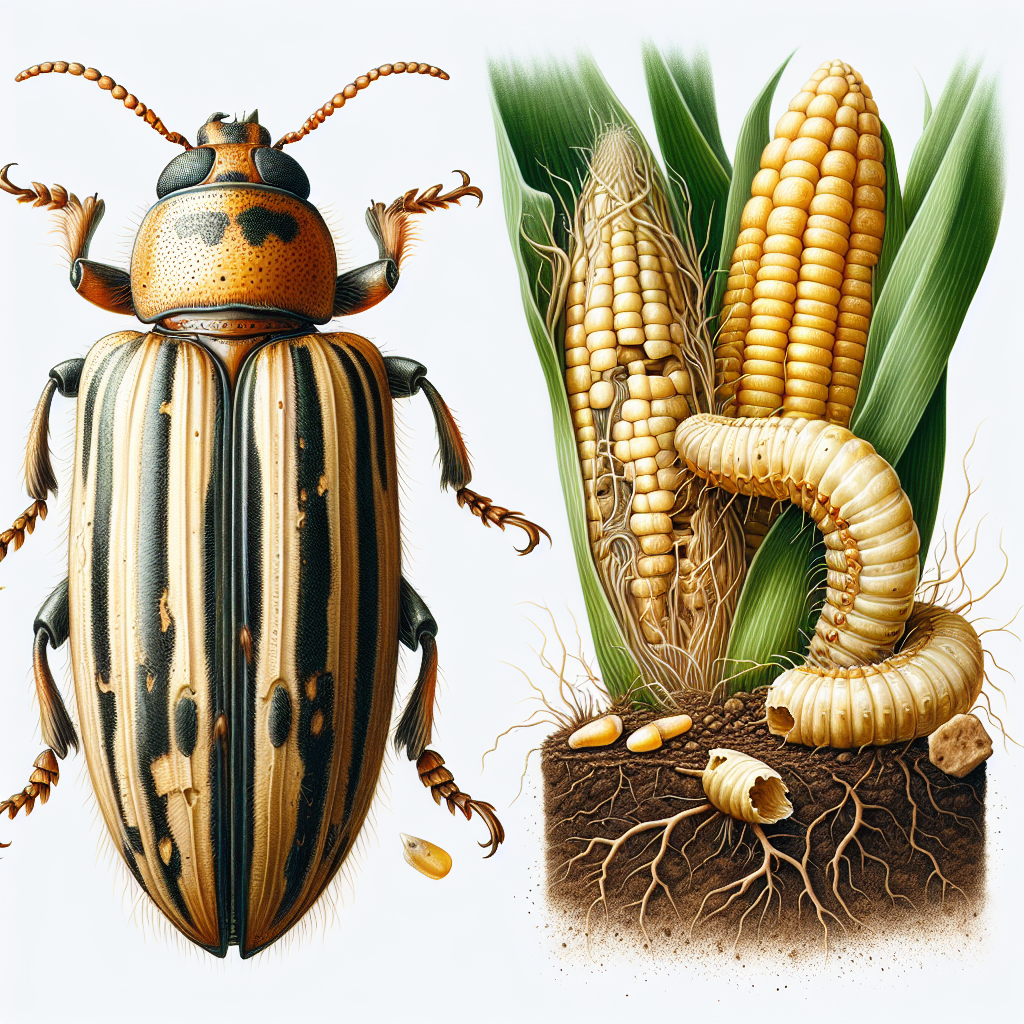
Introduction to corn rootworm
Corn rootworm, often called the 'billion-dollar bug,' represents one of the most economically damaging pests in corn production across the United States and beyond. Belonging to the genus Diabrotica, key species include the western corn rootworm (Diabrotica virgifera virgifera) and northern corn rootworm (Diabrotica barberi). These beetles and their larvae wreak havoc on Dent Corn (Yellow Dent), Sweet Corn (Honey Select), and other maize varieties, leading to billions in annual losses through root damage, plant lodging, and reduced yields.
Farmers face evolving challenges as rootworms develop resistance to traditional controls like insecticides and transgenic Bt corn. This guide provides professional-grade diagnostics, organic management strategies, and prevention tactics optimized for small to large-scale operations. Understanding the pest's biology is crucial for implementing integrated pest management (IPM) that minimizes chemical inputs while maximizing soybeans and corn profitability. Early detection through soil scouting and node injury ratings can prevent catastrophic losses, making vigilance key in high-risk areas like the Corn Belt.
Identifying Symptoms & Damage
Diagnosing corn rootworm infestations requires keen observation at multiple growth stages. Larvae, creamy-white C-shaped grubs up to 1/2 inch long with brown heads and raster patterns on the abdomen, primarily attack roots from V4 to V8 corn stages. Excavate plants and use the Iowa State University node injury scale: 0 = no damage; 3+ nodes pruned indicates economic thresholds.
Above-ground symptoms include plant lodging or 'goose-necking,' where weakened roots cause stalks to lean dramatically, especially during high winds or tasseling. Stunted growth, yellowing lower leaves, and poor nutrient uptake mimic nutrient deficiencies or root rot but reveal chewed roots upon inspection. Adult beetles, 1/4-1/2 inch long with green, striped, or spotted elytra, emerge in July-August, feeding on silks, pollen, and leaves—clipped silks prevent pollination, reducing kernel set by 10-30%.
Secondary signs include silk feeding scars, frass on husks, and increased corn earworm pressure due to disrupted pollination. Differentiate from wireworms (straight-bodied, harder) or European Corn Borer (stem tunneling). Use sticky traps or soil cores for confirmation; populations exceeding 0.25 larvae per plant warrant action. In rotations with potatoes or sorghum, variant biotypes may persist, complicating diagnosis.
Lifecycle and Progression of corn rootworm
Corn rootworm completes one generation per year, with lifecycle tightly synced to corn phenology. Adults overwinter as diapausing eggs laid in soil near corn plants in late summer, hatching in late May to early June when soil temperatures reach 55°F (13°C). Neonates (1st instars) mine root cortex, progressing to 2nd/3rd instars that girdle nodal roots, peaking damage at 2-3 weeks post-hatch.
Pupation occurs in soil chambers 10-14 days later, with adults emerging 1-2 weeks after, beginning egg-lay 7-10 days post-emergence. Western rootworms exhibit extended diapause (25% eggs hatch year 2), thwarting one-year rotations. Northern rootworms prefer silks; Mexican species (southern U.S.) are multivoltine. Flight peaks at dusk; females oviposit 500-1000 eggs in clusters 4-8 inches deep.
Progression varies by species: western dominant in continuous corn west of Mississippi; northern east. Monitor with Pherocon AM traps (yellow sticky) targeting adults >10/field/day. Understanding this cycle informs timing for Fall Armyworm differentiation and BT refuge strategies.
Environmental Triggers & Risk Factors
Corn rootworm thrives in warm, humid Midwest summers with >30 inches annual rainfall and neutral pH soils. Continuous corn (>2 years) spikes risk 10x via egg buildup; no-till conserves eggs by minimizing tillage disruption. Drought-stressed soils exacerbate larval survival as roots concentrate near surface.
High residue covers protect eggs from predators; compacted soils limit root escape. Variant populations in soybeans rotations (soybean lure) evade standard IPM. Climate change extends diapause, pushing emergence into cooler soils. Risk maps from USDA (e.g., >0.5 beetle/trap/day) guide scouting; fields post-flooding see surges due to egg displacement.
Compounding factors include Northern Corn Leaf Blight weakening plants and reduced natural enemies from monoculture. Thresholds: >6 nodes damaged or lodging >10%. Spring Pest Patrol: Organic AI Strategies to Shield Your Crops from Common Invaders highlights predictive tools for early warnings.
Organic Control & Treatment Plans
Organic management emphasizes cultural, biological, and threshold-based tactics. Crop Rotation: 2-3 years with non-hosts like wheat, alfalfa, or cover crops disrupts lifecycle; avoid soybean lure variants.
Biologicals: Entomopathogenic nematodes (Heterorhabditis bacteriophora) applied at V4 (rates 1-2 billion/acre) target larvae in moist soils >60°F. Bacillus thuringiensis (Bt) galleriae strain for adults. Encourage predators: ground beetles, parasitic wasps via reduced tillage and floral borders with marigold.
Cultural: Plant resistant hybrids (e.g., mays-rendezvous traits). Tillage (fall moldboard plow) buries eggs >8 inches. Trap crops: late-planted perimeter corn lures adults. Neem oil or spinosad (OMRI-listed) for silk-feeding adults at 0.5-1 oz/gal, 7-day PHI.
Treatment Plan:
- Scout V3-V6: Dig 20 plants/10 locations.
- If >0.25 larvae/plant, apply nematodes + Bt.
- Adult thresholds (>10/trap): Border sprays.
- Monitor lodging at tassel. Integrate with aphids controls for synergy. Yields recover 20-50% with timely action.
Preventing corn rootworm in the Future
Long-term prevention hinges on diversified IPM. Scout annually using node ratings and traps; rotate fields proactively. Use GMO-free organics? Select conventional hybrids with natural resistance. Soil health via covers (hairy vetch) boosts root vigor, deterring feeding.
Area-wide management: Coordinate with neighbors for synchronous rotation. Precision tech: Drone scouting, soil sampling grids. Refuge strips prevent resistance. Fall soil tests for egg densities (>200/sq ft = high risk). Clean equipment to avoid variant spread. Economic thresholds: $15/acre treatment saves $100+ in losses. Pair with Corn (crop) best practices for resilient systems.
Crops Most Affected by corn rootworm
Primarily corn varieties: field corn, silage, sweet, popcorn (Popcorn (Orville Redenbacher)). Secondary: soybeans (adult feeding, lure crop), peanuts, cucurbits like cucumber. Rare: sorghum, grapes. Continuous corn fields suffer worst; rotations with wheat mitigate. Global spread threatens rice in Europe/Asia analogs.