Introduction to Wasps
Wasps, belonging to the Vespidae family, are often misunderstood insects in agricultural settings. While they play a crucial role as predators of pest insects like aphids and caterpillars, certain species such as yellowjackets (Vespula spp.) and paper wasps (Polistes spp.) can cause significant damage to crops, particularly soft-skinned fruits and vegetables. In farming, wasps are drawn to overripe or damaged produce, where they chew galleries into the flesh to access sugars and proteins, leading to economic losses estimated at 5-15% in susceptible orchards and vineyards.
Understanding wasps is key for sustainable agriculture. They are most problematic during late summer and fall when food sources dwindle, prompting aggressive foraging in fields. This guide equips farmers with professional diagnostic tools, lifecycle insights, and organic management plans to minimize damage without disrupting their beneficial predation. For small farms, timely intervention can preserve harvests while maintaining biodiversity. Learn more about Spring Pest Patrol: Organic AI Strategies to Shield Your Crops from Common Invaders for integrated approaches.
Wasps thrive in warm climates but adapt to various environments, from temperate orchards to tropical groves. Their stings pose risks to workers, and nests near fields amplify foraging pressure. Early detection and non-chemical controls are emphasized for organic certification compliance.
Identifying Symptoms & Damage
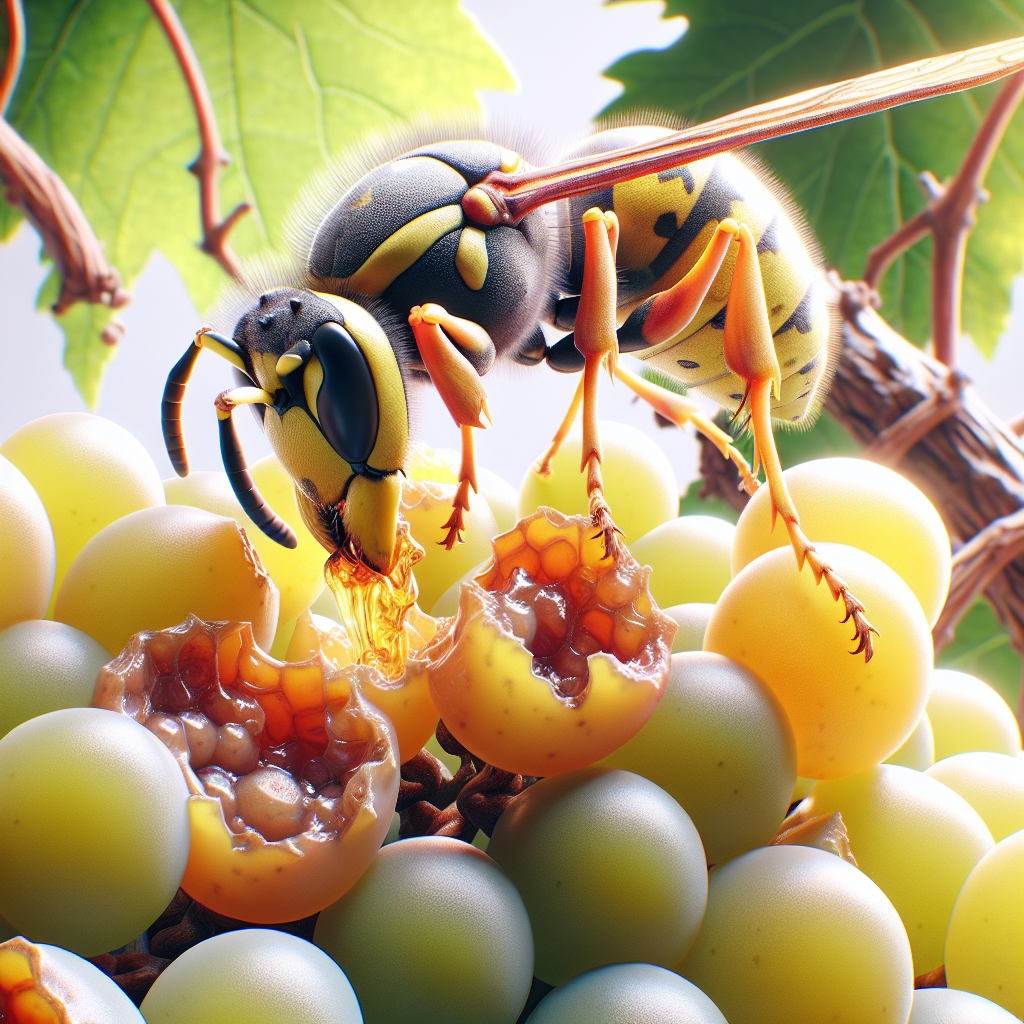
Diagnosing wasp activity requires keen observation of physical damage and behavioral signs. Primary symptoms include ragged, scooped-out holes in fruit skins, often 3-6 mm in diameter, where wasps have chewed into the pulp. Affected fruits like grapes, strawberries, and figs show brown, desiccated interiors with visible wasp saliva trails, accelerating secondary rot from pathogens like Botrytis.
Look for clusters of 5-20 wasps feeding on a single fruit or vine, especially during peak activity from 10 AM to 4 PM. Droplets of regurgitated liquid on leaves or ground indicate feeding sites. Nest proximity—paper-like gray combs in trees, eaves, or soil—signals high infestation risk. Differentiate from other pests: bird pecks leave larger, irregular tears, while birds or fruit flies don't create clean galleries.
Damage progression: Initial feeding scars expand as larvae demand more food, leading to fruit drop and reduced marketability. In severe cases, entire clusters on cherries or peaches are ruined. Monitor using sticky traps baited with protein (e.g., meat) or sweets to quantify populations. Threshold: 1-2 wasps per 10 fruits warrants action.
Lifecycle and Progression of Wasps
Wasps undergo complete metamorphosis: egg, larva, pupa, adult. Queens overwinter in protected sites, emerging in spring (March-May) to build nests and lay 20-30 eggs. Worker larvae feed on masticated insects/prey, pupating into sterile females by June. Colonies peak at 5,000 individuals in late summer, with new queens and males produced in fall.
Agricultural impact escalates post-July as workers forage crops for carbohydrates. Nests last one season, disintegrating in winter. Progression: Spring (low risk, predation focus), Summer (moderate, incidental fruit damage), Fall (high risk, swarm feeding). Multiple generations (1-4 per year) depending on species and climate.
Monitor queens in early spring near apple blossoms. Disruptive weather shortens cycles, concentrating damage. Understanding this timeline allows targeted interventions, like nest removal before peak foraging.
Environmental Triggers & Risk Factors
Wasps proliferate in warm, humid conditions (70-90°F, 50-80% RH), with abundant flowering weeds providing early nectar. Overripe or split fruits from irregular irrigation trigger invasions, as do proximity to garbage or compost piles attracting scouts. Drought-stressed crops produce sweeter sap, increasing appeal.
Risk factors: Monoculture orchards (mango, avocado) without hedgerows; late-season varieties; fields near woodlands harboring queens. Poor sanitation leaves fermenting residues, mimicking wild food sources. High yellowjackets pressure correlates with mild winters allowing queen survival.
Climate change extends active seasons, per studies showing 10-20 day shifts northward. Soil type matters—sandy areas favor ground-nesting species. Assess risk via historical data: fields with prior squash bugs may attract wasps feeding on them.
Organic Control & Treatment Plans
Organic management prioritizes prevention and biological controls. Step 1: Nest Removal. At dusk, vacuum or soap-water drench accessible nests (1:1 dish soap-water in spray bottle). For aerial nests, use long poles with bags. Step 2: Trapping. Deploy protein baits (tuna in water) early season, switching to sweet (jam + vinegar) in fall. Hang 1-2 traps per acre, 5-10 ft high, away from crops to avoid attracting more.
Step 3: Exclusion. Netting over blueberries or raspberries (1/4-inch mesh) from veraison. Row covers for vegetables. Step 4: Repellents. Plant thyme, yarrow, or nasturtium as borders—strong scents deter foraging. Neem oil sprays (2% solution weekly) disrupt feeding without killing pollinators.
Integrated Plan: Scout weekly; treat at 1 wasp/10 plants. Encourage predators like birds via perches. Rotate baits to prevent habituation. For heavy infestations, introduce parasitic wasps (non-target species). Avoid broad-spectrum sprays preserving beneficials. Efficacy: 70-90% reduction with consistent trapping + sanitation.
Preventing Wasps in the Future
Long-term prevention hinges on cultural practices. Harvest promptly, especially watermelon and cantaloupe, removing windfalls daily. Thin clusters to improve air flow, reducing splits. Maintain 4-6 ft hedgerows of repellents like mint or lemongrass.
Sanitize fields post-harvest: disk under residues, cover compost. Early-season nest hunts reduce colony establishment. Mulch with aromatic herbs suppresses ground nesters. Monitor with pheromone traps for species-specific alerts.
Crop rotation and diversity lower appeal—interplant with garlic or onion. Cold-hardy varieties resist chewing. Annual audits of overwintering sites (bark crevices) prevent queen survival. Combined strategies yield 80% lower populations year-over-year.
Crops Most Affected by Wasps
Wasps target sugar-rich, thin-skinned produce. Top victims: Grapes (20-30% loss in vineyards), figs (gallery damage), stone fruits like peaches/plums. Berries (strawberry, blueberry) suffer swarm feeding. Tree fruits: apples, pears, cherries—late varieties worst.
Tropicals: mango, papaya, pineapple. Vegetables: tomato, cucumber, overripe squashes. Vineyards near urban areas face yellowjackets spikes. Soft fruits in Hass Avocado orchards also hit. Mitigation varies by crop—netting for berries, traps for orchards.