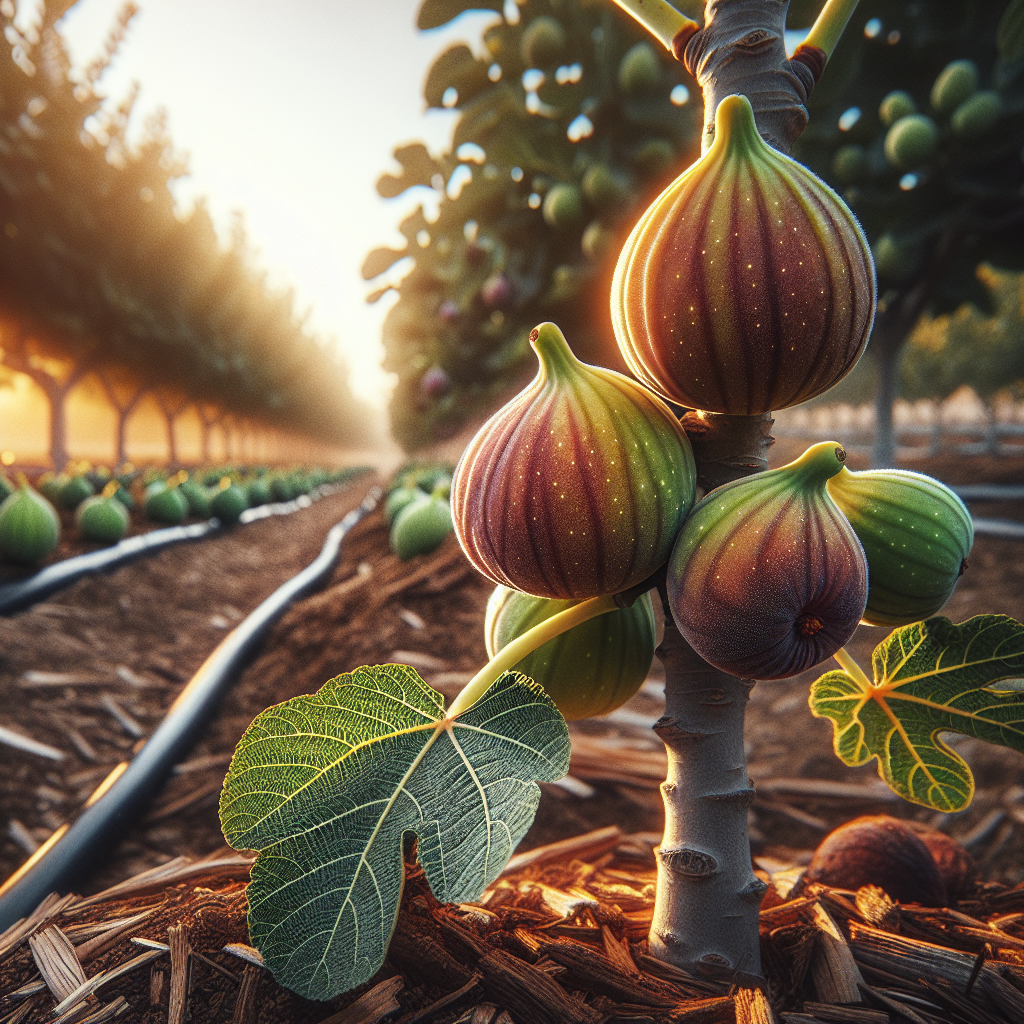
Introduction to Fig
Among the oldest cultivated fruit crops in human history, fig has been grown for thousands of years across the Mediterranean Basin, West Asia, and North Africa, later spreading into Europe, the Americas, and many subtropical regions. It is prized not only for fresh eating but also for drying, preserving, and culinary use in both sweet and savory dishes. For growers, fig offers an unusual combination of resilience and productivity: it tolerates drought better than many fruit trees, fruits on relatively young wood, and can thrive in soils that would challenge more demanding orchard crops.
Modern fig production ranges from backyard trees to commercial orchards producing fresh-market and drying cultivars. The crop is especially attractive to growers seeking a lower-input perennial fruit, though “low input” should never be mistaken for “no management.” Fruit splitting, poor ripening, nematode pressure, bird damage, winter injury, and canopy overcrowding can all reduce yields or quality if ignored. In climates with warm summers and moderate winters, a well-managed fig can provide dependable harvests for decades.
A fig “fruit” is botanically distinctive. What appears to be a fruit is actually a syconium, a fleshy, hollow receptacle lined internally with many tiny flowers and later many tiny true fruits. This unique structure explains the fig’s soft texture, seed-like crunch, and susceptibility to splitting and souring in wet weather. Understanding that physiology helps growers manage irrigation, harvest timing, and disease prevention more precisely.
Botanical Profile of Fig
Ficus carica belongs to the Moraceae family, the same family as mulberry. It is typically a deciduous small tree or large shrub, often reaching 3-10 m tall depending on cultivar, rootstock conditions, climate, pruning style, and irrigation. In unmanaged situations it can become broad, spreading, and multi-stemmed, while trained orchard trees are often kept much smaller for ease of harvest.
Leaves are large, rough-textured, aromatic when crushed, and deeply lobed to varying degrees depending on cultivar. The bark is smooth and gray on younger wood, becoming more textured with age. Latex sap exudes from broken stems, leaves, and immature fruit; this sap can irritate skin and should be handled carefully during pruning or harvesting.
Many commercial and home-garden figs are common-type figs, meaning they set fruit parthenocarpically without pollination. This trait greatly simplifies culture in many regions. Other fig types include Smyrna and San Pedro types, which may require pollination by fig Wasps associated with caprifigs, making them unsuitable for many nontraditional fig regions unless the full pollination ecology is present.
Fruit skin color varies widely by cultivar, from green and yellow to bronze, red-brown, purple, and nearly black. Flesh may be amber, strawberry red, rose, or dark red. Flavor can range from honeyed and mild to richly berry-like. Cultivar choice matters tremendously: some varieties excel for fresh eating, some for drying, some resist splitting better, and some perform better in humid climates.
Figs may produce one or two crops annually depending on cultivar and climate. The breba crop forms on previous season’s wood and ripens early, while the main crop forms on current season’s growth and usually provides the most substantial harvest. In cooler climates, breba production can be useful if the main crop struggles to ripen before frost; in other settings, growers may prefer cultivars selected for a heavy main crop.
For growers interested in comparing orchard habits across fruiting perennials, see our Olive guide, another classic Mediterranean crop with somewhat similar site preferences for drainage and sun exposure.
Soil, pH, and Climate Requirements for Fig
Fig performs best in well-drained soils with moderate fertility. Ideal textures include sandy loam, loam, and gravelly loam, but the tree is adaptable and can grow in clay loam if internal drainage is good and root zones do not remain waterlogged. Persistent saturation is one of the fastest ways to weaken a fig tree. Oxygen-starved roots lead to reduced vigor, yellowing leaves, poor fruit set, and greater susceptibility to root diseases.
The preferred soil pH is generally 6.0-7.8, with an ideal working range of about 6.2-7.5. Figs tolerate mildly alkaline conditions better than many fruit crops, but in strongly alkaline soils above pH 8.0, micronutrient deficiencies such as iron chlorosis may appear. Symptoms include interveinal yellowing on young leaves while veins remain green. In very acidic soils below pH 5.5, growth may be stunted and nutrient imbalances can emerge. Pre-plant soil testing is strongly recommended, especially in commercial production.
Drainage is more important than absolute fertility. A moderately lean, well-aerated site usually outperforms a rich but wet one. If planting in heavier soils, build raised mounds 30-45 cm high and at least 1-1.5 m wide to keep the crown above saturated layers. In regions with seasonal downpours, this one decision often determines long-term success.
Climate suitability is broad but centers on Mediterranean and warm-temperate conditions: hot, dry summers and cool, relatively mild winters. Optimal growing temperatures during active growth are around 20-32°C. Mature dormant trees can tolerate light to moderate winter cold, often surviving down to roughly -10 to -12°C depending on cultivar, wood maturity, site exposure, and duration of freeze. However, fruiting wood and young trees may be damaged at warmer temperatures than the trunk or roots. Late spring frosts can kill emerging shoots and eliminate the main crop on some cultivars.
Heat is essential for flavor concentration. In climates with long, warm summers, figs develop higher sugars, denser texture, and fuller aroma. In cool maritime climates, fruit may remain watery or fail to ripen fully before autumn rains. High humidity and frequent summer rainfall increase the risk of fruit splitting, souring, and fungal issues. For humid regions, choose cultivars known for closed ostioles, firmer skin, and better rain tolerance.
Sun exposure should be full sun, ideally 8 or more hours daily. Insufficient light leads to lanky growth, fewer fruiting shoots, delayed ripening, and lower sugar accumulation. Southern or southwestern exposures near stone walls can improve performance in marginal climates by increasing heat accumulation.
Wind also matters. Strong desiccating winds can shred large leaves, stress young trees, and cause premature fruit drop. Shelterbelts or strategic siting reduce this risk, but avoid enclosed pockets with stagnant humid air, which can encourage disease.
Step-by-Step Planting & Propagation
Start with disease-free, true-to-type plAnts from reputable nurseries or from healthy mother trees if propagating yourself. Dormant bare-root plAnts are ideal in many temperate areas, while container plAnts can be established over a wider window if irrigation is reliable.
For site preparation, remove perennial weeds thoroughly within at least a 1-1.5 m diameter around each planting position. Figs dislike root competition during establishment. Deep tilling is only useful if a hardpan or severe compaction layer exists; otherwise, excessive soil disturbance can worsen structure. Incorporate well-finished compost only if organic matter is very low. Avoid heavy pre-plant nitrogen applications, which can produce overly vegetative growth at the expense of balanced establishment.
Spacing depends on cultivar vigor and training system. Bush forms may be planted 3-4.5 m apart, while standard orchard trees often require 4.5-7 m between trees and 5-7 m between rows. High-density systems are possible with regular pruning, but overcrowding reduces airflow and fruit quality over time.
When planting, dig a hole only as deep as the root system and about twice as wide. Planting too deep is a common mistake. Set the tree so the root flare is at or slightly above final soil level, especially in heavier soils. Backfill with native soil rather than a highly amended mix; this encourages roots to grow outward instead of circling in a pocket of rich material. Water thoroughly after planting to settle soil around roots.
For container-grown figs, tease apart or slice circling roots before planting. Root-bound trees can remain stunted if this step is skipped. After planting, mulch with 5-8 cm of coarse organic mulch such as wood chips or shredded bark, but keep mulch 10-15 cm away from the trunk to prevent rot and rodent damage.
Propagation is straightforward by hardwood cuttings, one of the fig’s great practical advantages. Take pencil-thick dormant cuttings 15-25 cm long from healthy one-year wood in late winter. Each cutting should have several nodes. Place the basal end in a well-drained propagation medium such as coarse sand, perlite-peats blends, or a sterile nursery mix, burying roughly half to two-thirds of the cutting. Maintain evenly moist, not wet, conditions and warmth around 21-24°C if propagating under cover. Rooting is usually reliable.
Layering is another effective method, particularly for preserving favored local selections. Bend a low branch to the soil, wound lightly if desired, bury a section, and keep it moist until roots form. Once well-rooted, sever it from the mother plant and transplant during dormancy.
In colder climates, many growers plant figs where winter protection is easier, including near south-facing walls or in large containers that can be moved to sheltered spaces. If container culture is planned long term, begin with a large, free-draining pot and prune roots periodically every few years.
Care & Maintenance regimes for Fig
During establishment, irrigation should be deep and regular. The goal is moist but aerated soil in the upper 30-45 cm of root zone. In practical terms, newly planted trees often need 10-20 liters once or twice weekly in mild weather, more in hot sandy sites and less in cool clay soils. Do not water by calendar alone. Check soil moisture by hand or probe: soil should feel cool and slightly moist, not slick, sticky, or foul-smelling.
Signs of underwatering include leaf wilting during the morning rather than just afternoon heat, premature leaf yellowing and drop, small hard fruit, fruit drop before ripening, and poor shoot extension. Signs of overwatering include persistently limp leaves despite wet soil, yellowing without edge scorch, sour-smelling soil, blackened feeder roots, soft fruit, and increased splitting. Figs tolerate brief dryness far better than chronic saturation.
Once established, figs are relatively drought tolerant, but fruit quality is best with moderate, even moisture. Severe swings from dry to wet are especially damaging near ripening because fruit rapidly swells and splits. Commercially, regulated but not extreme deficit irrigation is sometimes used after establishment to control excessive vigor, but for most growers the safest approach is consistent deep watering with slight drying between events.
Fertilization should be restrained. Excess nitrogen creates rampant shoot growth, delayed hardening, lower sugar concentration, and greater winter injury risk. In reasonably fertile soils, mature figs may need little to no annual fertilizer. If growth is weak and leaves are pale, apply a modest balanced feeding in early spring, or use compost plus a light organic fruit-tree fertilizer. A practical benchmark: if annual shoot growth is roughly 15-30 cm on mature bearing trees, nutrition is often adequate. More than that may indicate overfeeding or excessive irrigation.
Pruning strategy depends on climate and training form. In colder regions, multi-stem bush forms are often preferred because damaged stems can be renewed from the base. In warmer orchard settings, growers may train to an open center or low scaffold system. The goals are simple: keep the canopy open to light, renew productive wood, control height, and remove dead, crossing, weak, or diseased branches.
Because the main crop often forms on current season’s shoots, light to moderate annual pruning can stimulate productive new growth. However, severe pruning can trigger excessive vegetative response and reduce immediate yields. Remove winter-killed wood in spring once damage is visible. In mature trees, thin crowded interior shoots and shorten overly vigorous water sprouts.
Suckers should be removed unless a bush form is intentionally maintained. Weed control around the root zone is important, especially in the first 2-3 years. Grasses and weeds compete aggressively for moisture and nutrients, reducing establishment speed.
Mulching improves moisture stability and soil structure, but avoid very thick, wet mulch layers in humid climates. If soil organic matter is poor, periodic topdressing and the principles in this soil health article can improve long-term orchard performance.
In regions with winter cold beyond the cultivar’s tolerance, dormant stems may be wrapped, bent and buried, or protected with insulating coverings. Protection must balance insulation with ventilation; trapping excess moisture can promote rot.
Pests, Diseases & Organic Management
Birds are among the most serious fig pests because ripe fruit is soft, fragrant, and highly attractive. Netting remains the most reliable nonchemical control. Install it before fruit softens significantly. Wasps, Ants, and Sap beetles may also invade ripening fruit, especially split or damaged figs.
Root-knot nematodes are a major problem in warm sandy soils. Symptoms include poor vigor, yellowing, reduced leaf size, and low productivity despite adequate care. Preventive management is best: start with clean planting material, improve soil organic matter, avoid infested sites if possible, and use heavy mulching to moderate soil temperature and biology. Interplanting with nematode-suppressive species may help somewhat, but badly infested sandy ground can still limit fig performance.
Common diseases include Rust, Leaf spots, Fruit souring, and Root rots. Fig Rust often appears as yellow spotting on upper leaf surfaces with Rusty pustules below, leading to premature defoliation late in the season. Good sanitation helps: remove heavily infected fallen leaves, improve airflow through pruning, and avoid overhead irrigation where feasible.
Fruit souring usually develops when microorganisms enter through the ostiole or through cracks, especially during humid or rainy conditions. Affected fruit may smell fermented, leak, or collapse. Cultivars with tight ostioles are less vulnerable. Prompt harvest of ripe fruit and removal of damaged fruit reduce spread.
Canker and Dieback can follow winter damage or pruning wounds. Always prune with clean tools and avoid unnecessary cutting during wet weather. Remove dead wood well below visibly affected tissue.
Organic management begins with prevention: correct spacing, sun exposure, steady irrigation, sanitation, and cultivar selection. In many regions, these basic orchard hygiene practices matter more than any spray program. Where foliar disease pressure is recurrent, organically permitted copper or sulfur products may be used cautiously and according to local guidance, but avoid phytotoxic misuse during hot weather.
Regular scouting is essential. Check leaves, fruit necks, shoot tips, and trunk bases every 7-10 days during active growth. Early intervention is easier than rescue treatment once fruit quality collapses.
Harvesting, Curing & Optimal Storage
Figs do not continue to improve significantly after picking, so harvest timing is critical. A mature fig softens noticeably, droops downward at the neck, develops fuller skin color for its cultivar, and may exude a small drop of nectar from the ostiole. The fruit should feel heavy and slightly yielding, not hard or rubbery. Pick too early and sweetness will be underdeveloped; pick too late and fruit may split, sour, or attract pests.
Harvest gently by lifting and twisting or clipping with short stems attached. Wear gloves if latex sap irritates your skin. Pick every 1-3 days during peak season because ripening can accelerate quickly in hot weather.
Fresh figs are highly perishable. At room temperature they may keep only 1-2 days at best, especially if fully ripe. Under refrigeration at 0-2°C with high relative humidity around 90-95%, quality may hold for 5-7 days, sometimes slightly longer for firmer cultivars. Do not stack deeply; bruising causes rapid breakdown.
For drying, harvest fruit at full maturity but before fermentation or insect invasion. Traditional sun drying works best in hot, dry climates with low humidity. Spread fruit on clean racks or screens with good airflow, protect from insects, and bring under cover at night to avoid dew uptake. Mechanical dehydrators provide more reliable results at about 55-60°C until fruit becomes pliable, leathery, and sufficiently low in moisture for safe storage.
Properly dried figs should not feel wet internally, and when pressed they should be flexible rather than brittle. Condition dried figs by holding them loosely packed for several days and checking for uneven moisture. If condensation appears in the container, continue drying. Store dried figs in airtight containers in a cool, dark place; refrigeration or freezing extends shelf life and protects quality.
For commercial fresh sales, harvest in the cool morning, pre-cool quickly, handle minimally, and market fast. Postharvest losses in figs are usually a handling and timing problem more than a field yield problem.
Companion Planting for Fig
Because fig roots can spread widely and compete strongly, companion planting should be strategic rather than crowded. The best companions are usually low-growing, shallow-rooted, beneficial-insect-supporting species that do not demand constant irrigation or heavy nitrogen.
Mediterranean herbs such as thyme, oregano, sage, and lavender are often excellent around established figs in dry climates. They tolerate similar drainage conditions, attract pollinators and natural enemies, and keep the area tidy without creating dense humid growth under the canopy. Avoid placing them directly against the trunk; maintain a clear collar around the tree.
Nitrogen-fixing companions can be useful in moderation, especially in young orchards, but excessive fertility around figs can stimulate too much vegetative growth. Low, manageable legumes used as seasonal covers between rows are often preferable to vigorous perennial nitrogen fixers planted in the tree row.
Flowering insectary plAnts such as alyssum, calendula, yarrow, and dill can help support beneficial insects that suppress orchard pests. In larger systems, diverse alley covers improve soil structure and reduce erosion, especially on slopes.
Avoid thirsty annual vegetables directly beneath mature figs, since the tree’s dense shade and root competition often reduce their performance. Also avoid species that require frequent irrigation near ripening season, as wetting the fig root zone too aggressively can worsen fruit splitting.
Container figs can be underplanted with very restrained companions such as creeping thyme, but the safest practice is often to keep container root zones uncluttered. In the ground, prioritize mulch, airflow, and access for harvest over decorative density.
A successful fig companion strategy supports soil life, beneficial insects, and weed suppression without increasing humidity, root competition, or irrigation demand. That balance is the key.