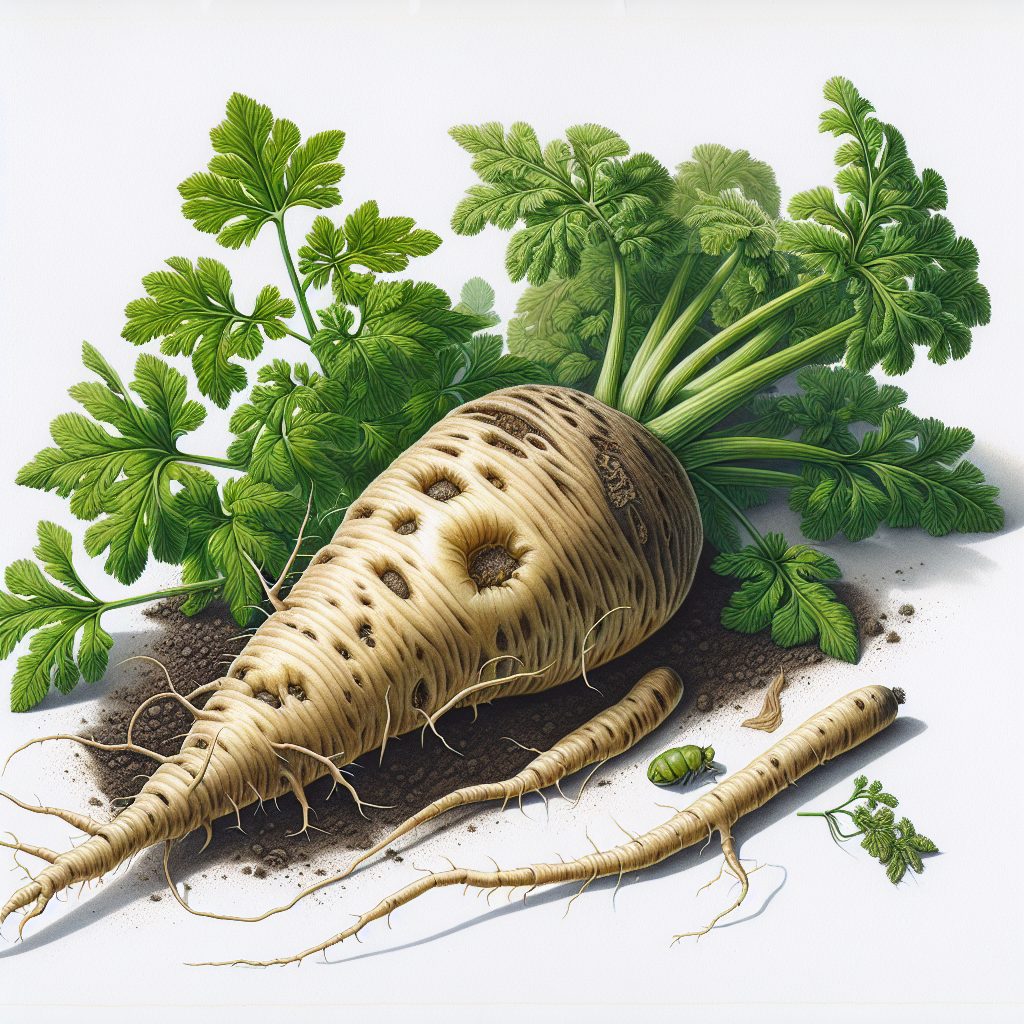
Introduction to parsnip
Parsnip (Pastinaca sativa) is a hardy biennial root crop belonging to the Apiaceae family, closely related to carrot, parsley, and celery. Native to Eurasia, it has become a staple in temperate agriculture worldwide, valued for its long, creamy-white roots that develop a sweet, earthy flavor after exposure to frost. Parsnips thrive in cool climates with well-drained, fertile soils, maturing in 100-120 days from seed. However, as a pest magnet in the vegetable garden, parsnips suffer from a range of issues including root rots, foliar diseases, and insect infestations that can reduce marketable yields by up to 50% if unmanaged.
This comprehensive diagnostic and management guide equips professional growers, small-scale farmers, and home gardeners with practical, evidence-based strategies. Drawing from botanical, entomological, and agricultural expertise, we'll cover symptom identification, lifecycle dynamics, environmental triggers, organic treatments, prevention protocols, and affected crops. For small farms battling these challenges, check out Spring Pest Patrol: Organic AI Strategies to Shield Your Crops from Common Invaders for cutting-edge tools. Early detection and intervention are key to transforming parsnip patches from pest-ridden plots to productive powerhouses.
Identifying Symptoms & Damage
Accurate diagnosis begins with recognizing parsnip-specific symptoms, distinguishing pest damage from diseases or nutritional deficiencies. Foliar issues often appear first: yellowing leaves with brown, necrotic spots signal Alternaria leaf spot, while powdery white coatings indicate powdery mildew. Severe cases show stunted growth and defoliation, reducing photosynthesis and root bulking.
Root damage is the economic killer. Healthy parsnips form smooth, tapered roots 8-12 inches long; infested ones exhibit cankers—sunken, brown lesions at the crown caused by [Itersonilia perplexans](parsnip canker). Internal browning or hollowing points to root-knot nematodes or borers. Surface scarring from carrot rust fly larvae (often cross-infesting parsnips) appears as rusty trails. Mechanical damage from flea beetles creates pinpoint holes on leaves, while aphids cause curled, sticky foliage with sooty mold.
Differentiate from lookalikes: caterpillars leave ragged edges, unlike the shot-hole pattern of beetles. Conduct a root cross-section: vascular discoloration suggests Fusarium wilt; mushy rot indicates Pythium. Scout weekly, using a 10x hand lens for eggs or larvae. Yield impacts: minor leaf damage (<20%) is tolerable, but root lesions >10% render produce unmarketable. Photograph suspect plants for records, aiding long-term IPM tracking.
Lifecycle and Progression of parsnip
Parsnips follow a biennial cycle: year one focuses on vegetative growth (foliage and root), year two on flowering and seed production. Seeds germinate in 14-21 days at 50-75°F soil temps, emerging with feathery, carrot-like leaves. Seedlings are vulnerable to damping-off from Rhizoctonia. Vegetative stage (4-10 weeks) sees rapid root expansion; pests like cutworms sever stems at soil level during this phase.
Mid-season (8-12 weeks), crowns swell, attracting slugs and wireworms that bore into developing roots. Overwintering roots (in zones 4-9) undergo frost-induced sugar conversion, enhancing flavor but inviting canker fungi. Spring regrowth triggers bolting in stressed plants, diverting energy from roots. Pests progress predictably: aphids colonize spring flush, leafminers tunnel mid-summer, nematodes persist year-round in soil.
Disease cycles align: foliar pathogens splash up via rain, overwintering in debris. Root rots advance from crown infections, progressing inward as soil moisture rises. Monitor progression with a phenology calendar: scout seedlings weeks 1-3, roots weeks 10-14, harvest pre-frost. Lifecycle knowledge enables timed interventions, e.g., row covers at emergence thwart flies.
Environmental Triggers & Risk Factors
Parsnips demand loose, pH 6.0-7.0 soils; compaction exacerbates root rots. Cool, wet springs (55-65°F, >1 inch/week rain) favor downy mildew and damping-off, while hot, dry summers (>80°F) stress plants, inviting spider mites. Poor drainage doubles canker incidence, as Itersonilia thrives in waterlogged crowns.
Crop rotation gaps <3 years with potato, tomato, or other Apiaceae build nematode and Verticillium wilt reservoirs. Over-fertilization with nitrogen promotes lush foliage at root expense, diluting defenses. Weed pressure shades seedlings, fostering slugs and snails. Climate shifts amplify risks: milder winters prolong pest survival, e.g., carrot weevils.
Risk assessment: high-risk sites have clay soils, history of root crops, or overhead irrigation. Test soil for nematodes pre-planting; amend with compost for drainage. For hyper-local forecasts, see Why 80% of Small Farms Battle Weather Disasters - And How Hyper-Local AI Forecasts Can Save Your Harvest—no, wait, use the exact one: actually, integrate with pest models.
Organic Control & Treatment Plans
Organic management emphasizes IPM: prevention first, mechanical/cultural next, biologicals, then targeted organics. Immediate diagnostics: Remove and destroy infected plants to curb spread. Foliar pests: Blast aphids and mites with strong water streams; apply neem oil (1-2% solution) weekly, avoiding bloom. Introduce predatory insects like ladybugs or lacewings.
Root pests: Solarize soil pre-planting (6 weeks black plastic in summer kills nematodes). Apply beneficial nematodes (Heterorhabditis bacteriophora) for grubs/wireworms. Diseases: Copper octanoate for bacterial spot (OMRI-approved, 3-5 day intervals). For canker, prune affected crowns pre-harvest, dip tools in 10% bleach.
Soil treatments: Drench with compost tea or Serenade (Bacillus subtilis) for Fusarium. Rotate with clover or grains (3-4 years). Mulch with straw to suppress slugs; iron phosphate baits are safe. Treatment timeline: Week 1: Scout/treat foliage. Week 4: Soil drench. Harvest: Lift carefully, cure 2 weeks at 32°F for frost-sweetening. Monitor efficacy: >80% control targets. Combine with companion marigold plantings to deter nematodes.
Preventing parsnip in the Future
Prevention beats cure: select resistant varieties like 'Hollow Crown' or 'Student'. Direct-seed ½-inch deep, thinning to 4 inches; row covers (Agribon-30) block flies for 4-6 weeks. Maintain 4-year rotation excluding Apiaceae, incorporating brassicas or onion family. Soil prep: till deeply, incorporate 2 inches compost, test/adjust pH.
Sanitation: till under residues post-harvest, flame-weed volunteers. Boost biology: mycorrhizal inoculants enhance drought tolerance, reducing rot susceptibility. Cover crop with hairy vetch overwinter for nitrogen fixation, nematode suppression. Scout grids (1 per 100 sq ft) biweekly; trap crops like mustard divert flea beetles. Long-term: build soil organic matter >5% via no-till and cover cropping. Annual IPM audits ensure sustained yields.
Crops Most Affected by parsnip
Parsnip pests and diseases spillover primarily within Apiaceae: carrot, parsley, celery, fennel. Nematodes plague potato, tomato, eggplant. Foliar pathogens hit lettuce, cabbage, brassicas. Aphids and whiteflies vector to beans, squash. Root rots affect beet, turnip, sweet potato. Rotate broadly to safeguard rotations. Yield losses: carrots 30-40%, celery 50% in shared fields.