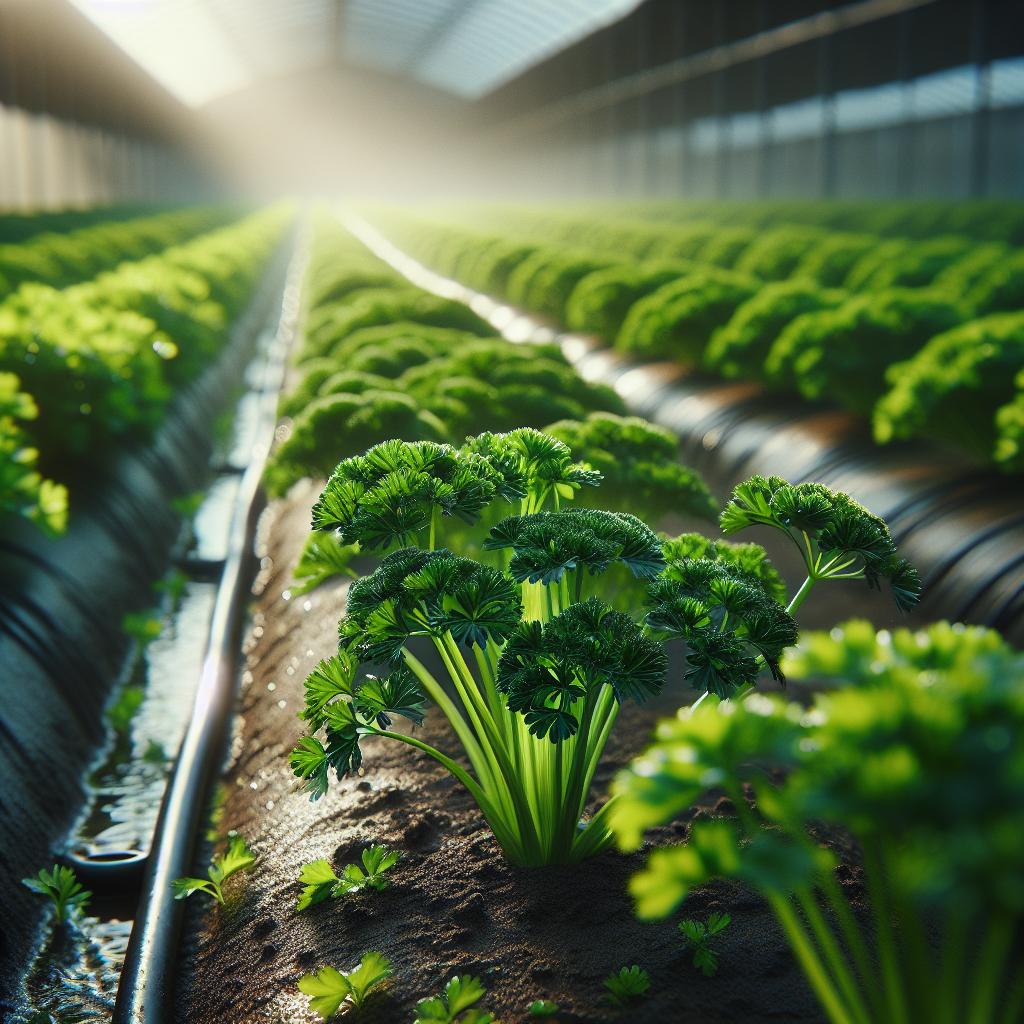
Introduction to Parsley
A foundational culinary herb in Mediterranean, Middle Eastern, European, and North African cuisines, parsley is far more than a garnish. Its clean, green flavor ranges from mildly grassy to deeply aromatic depending on cultivar, soil fertility, leaf age, and season. Gardeners typically grow two main forms: curly leaf parsley, prized for attractive texture and slower wilting after harvest, and flat-leaf or Italian parsley, preferred by many chefs for stronger flavor and easier cleaning and chopping.
Historically, parsley has been cultivated for over two millennia and was associated in classical Greece and Rome with both ritual and culinary uses. Modern production emphasizes uniform germination, tender leaf quality, and repeated cut-and-come-again harvests. Although often treated as a simple herb, parsley can be surprisingly exacting at the seedling stage. Slow, uneven germination and sensitivity to crusted soils or waterlogging are the main reasons growers fail with it. Once established, however, it is dependable, cold-tolerant, and highly productive.
For commercial bunching or kitchen-garden use, parsley is best understood as a crop that prefers steady growth without extremes. Rapid flushes caused by excess nitrogen often produce lush but softer leaves with reduced shelf life, while drought stress causes stringy petioles, strong flavor, and premature yellowing. The key to top-quality parsley is consistency: consistent moisture, consistent fertility, and consistent harvesting.
Botanical Profile of Parsley
Parsley belongs to the Apiaceae family, alongside carrot, celery, dill, fennel, coriander, and parsnip. Botanically it is a biennial, meaning it forms a vegetative rosette in the first season and, after exposure to winter chilling or age-related vernalization, sends up a flowering stalk in the second season. Once bolting begins, leaf quality declines sharply: flavor becomes harsher, petioles toughen, and marketability drops.
Plants form a basal crown from which leaf stalks emerge repeatedly. Leaves are compound and deeply divided, with shape depending on type. Flat-leaf forms generally produce broader, flatter leaflets with stronger aroma, while curly forms have more tightly frilled leaf tissue and a denser visual appearance. Root systems are anchored by a tapering primary root with branching feeder roots concentrated in the upper soil profile, making the crop sensitive to both surface drying and compaction.
Typical height ranges from 20 to 45 cm depending on cultivar, fertility, and harvest method. If left unharvested into its reproductive phase, parsley sends up an umbel inflorescence typical of Apiaceae. Flowers are small, yellow-green, and attractive to beneficial insects including hoverflies and parasitoid wasps. This ecological role matters in mixed gardens, where flowering parsley can support biological pest regulation.
Common cultivar distinctions include:
- Flat-leaf parsley: vigorous, flavorful, generally preferred for cooking and bunching.
- Curly parsley: highly decorative, somewhat more compact, often used for borders, garnishes, and ornamental herb beds.
- Hamburg or turnip-rooted parsley: selected for its edible root rather than foliage, though leaf use is still possible.
Because parsley is in the carrot family, it shares some pests and diseases with Carrot, especially where rotations are tight or crop residues remain in place.
Soil, pH, and Climate Requirements for Parsley
Parsley performs best in deep, friable, humus-rich loam with excellent drainage and strong moisture-holding capacity. The ideal soil texture is a sandy loam to silty loam enriched with finished compost. Heavy clay is not automatically unsuitable, but only if it has been improved with organic matter and shaped into raised beds to avoid perched water around the crown. In compacted ground, roots remain shallow, growth slows, and leaves yellow from oxygen stress even when nutrients are present.
An optimal soil pH is 6.0 to 7.0, with the sweet spot around 6.4 to 6.8. Below pH 5.8, phosphorus availability can decline and micronutrient imbalances may appear. In very alkaline soils above 7.5, iron and manganese uptake may be reduced, leading to interveinal chlorosis on young leaves. A pre-plant soil test is worthwhile for intensive production. Parsley is not a heavy feeder like cabbage or corn, but it responds very clearly to balanced fertility and suffers in depleted soils.
For fertility targets, aim for moderate nitrogen, ample potassium, and good calcium availability. Overly rich nitrogen drives dark green, lush top growth that looks impressive initially but can be softer, more disease-prone, and less concentrated in flavor. A practical baseline is 2.5 to 5 cm of mature compost incorporated into the top 15 to 20 cm of soil before planting. If soils are poor, a balanced organic fertilizer can be added lightly before sowing.
Climatically, parsley is best adapted to temperate and Mediterranean-style conditions. Ideal daytime temperatures range from 15 to 24b0C, with nighttime temperatures of 7 to 15b0C supporting steady leaf production. Seeds germinate best in warm-but-not-hot soil, roughly 18 to 24b0C. Mature plants tolerate light frost and can often overwinter in mild climates under row cover or mulch. Prolonged heat above 30b0C reduces tenderness, accelerates moisture stress, and can predispose older plants to bolting.
In hot regions, parsley benefits from afternoon shade or seasonal timing that avoids peak summer. In cooler regions, full sun is usually preferred. The crop needs at least 4 to 6 hours of direct light daily, but the highest quality midsummer foliage often comes from sites with morning sun and light afternoon protection. Wind exposure should also be moderated, as constant drying winds increase transpiration and create a coarse, stressed plant.
For growers interested in improving long-term bed productivity, general fertility principles from soil health strategies apply especially well to parsley because it depends on stable soil structure and biologically active topsoil.
Step-by-Step Planting & Propagation
Parsley is usually propagated from seed. Division is uncommon and not efficient for production. Because seeds contain compounds that can inhibit rapid water uptake, germination is famously slow and irregular. Under ordinary outdoor conditions, emergence may take 14 to 28 days, sometimes longer in cool soil.
For direct sowing, prepare a finely textured seedbed free of clods and crusting risk. Seeds are small and should be sown shallowly, about 0.5 to 1 cm deep. Deeper sowing increases failure, especially in heavier soils. Space rows 25 to 30 cm apart for hand harvest, or closer in intensive beds if airflow remains adequate. Within rows, thin seedlings to 10 to 20 cm apart depending on the intended harvest style: tighter spacing for baby leaf and repeated clipping, wider spacing for large bunching plants.
To improve germination, many growers pre-soak seed in room-temperature water for 12 to 24 hours, then drain and sow immediately. Do not ferment or over-soak, as oxygen deprivation can damage embryos. Some growers also refrigerate soaked seed briefly before sowing into warm soil, but the main benefit usually comes simply from hydration.
Indoor sowing is often the best route for reliable establishment. Start seeds 6 to 8 weeks before transplanting. Use deep cell trays or modules rather than shallow flats, since parsley develops a distinct primary root early. Sow 2 to 3 seeds per cell, cover lightly, and keep media evenly moist but never saturated. Bottom heat around 21b0C can speed germination. Once seedlings emerge, move them to bright light and cooler air, around 16 to 18b0C, to prevent weak elongation.
Transplant when seedlings have 2 to 3 true leaves and roots hold the plug together. Harden them off for 5 to 7 days before planting outdoors. Set transplants at the same depth they were growing in cells; burying the crown encourages rot. Water them in thoroughly to settle soil around roots.
Successive sowings every 3 to 4 weeks in spring and early autumn maintain continuous harvest. In mild winter climates, sow late summer to early autumn for winter and spring production. In cold climates, sow as soon as the soil can be worked in spring, then again in late summer for autumn leaf production.
Container cultivation is very feasible. Use a pot at least 20 cm deep with strong drainage. A mix containing compost, coir or peat, and coarse mineral material such as perlite or sharp sand works well. Containers dry faster than open ground, so irrigation must be more precise.
Care & Maintenance regimes for Parsley
Parsley needs even moisture from establishment through harvest. The root zone should remain consistently damp but not waterlogged. A useful target is soil that feels like a wrung-out sponge in the top 5 to 10 cm. If the top 2 to 3 cm become bone dry repeatedly, outer leaves begin yellowing, petioles toughen, and regrowth slows after cutting. If soil stays saturated for days, roots lose oxygen and symptoms may mimic nutrient deficiency: pale foliage, drooping despite wet soil, blackened crown tissue, and a sour smell in the bed.
In practical irrigation terms, most garden beds need roughly 2.5 cm of water per week in cool weather and more during heat or in sandy soils. Rather than shallow daily sprinkling, provide deeper irrigation 1 to 2 times weekly, adjusted for rainfall and soil type. Drip irrigation is ideal because it keeps foliage drier and reduces foliar disease pressure. Mulch with fine straw, leaf mold, or compost after seedlings are established to moderate evaporation and suppress weeds, but keep mulch from piling directly against the crown.
Weed control is critical early because parsley germinates slowly and cannot compete with fast annual weeds. Stale seedbed techniques are useful: prepare the bed, irrigate lightly to flush weeds, then remove the first weed wave before sowing. Once plants are established, shallow hoeing or hand weeding is sufficient. Avoid deep cultivation, which can damage feeder roots.
For nutrition, side-dress lightly after the first substantial harvest with compost, vermicompost, fish emulsion, or a balanced organic feed. Signs of nitrogen deficiency include overall pale green color and reduced leaf size. Potassium deficiency can show as marginal scorch on older leaves under drought stress. Excess fertility, especially soluble nitrogen, often creates floppy growth and reduced storage quality.
Regular cutting improves productivity. Harvest outer stems first, leaving the central growing point intact. If whole plants are sheared too low into the crown repeatedly, regrowth weakens and rot risk rises. In market production, maintain plants by removing yellowed leaves, broken petioles, and any early flowering stems immediately.
Temperature management matters. In hot periods, shade cloth of 20 to 30% can keep foliage tender and reduce stress. In cool periods, low tunnels or row covers can extend the season significantly. Parsley can survive light freezes, but repeated freeze-thaw cycles damage leaf texture.
Pests, Diseases & Organic Management
Parsley is generally resilient, but several pests can reduce yield and market quality. Aphids cluster on tender stems and undersides of leaves, distorting new growth and leaving sticky honeydew. Small infestations can be washed off with water or controlled with insecticidal soap applied in the cool part of day. Encouraging beneficial insects is especially useful when plants are allowed to flower nearby or at season's end.
Caterpillars, particularly Swallowtail larvae, may feed on leaves because parsley is a host plant for these butterflies. In small gardens, many growers tolerate some feeding for ecological reasons. Where foliage production is the priority, hand-picking is the simplest solution.
Leafminers may create pale serpentine trails in leaves, reducing appearance though not always affecting vigor. Remove and destroy mined leaves promptly. Floating row cover applied early can prevent egg laying, provided plants are not already infested.
Root-knot nematodes can be a problem in warm soils, especially sandy beds with repeated susceptible crops. Stunting, wilting in heat despite irrigation, and knotted roots are typical signs. Rotation, soil organic matter improvement, solarization in suitable climates, and use of clean transplants are the main defenses.
The most common disease problems are associated with excessive moisture and poor airflow. Crown rot and Root rot, often involving Pythium or Rhizoctonia-like organisms, occur in poorly drained soils or overwatered containers. Plants become dull green, then yellow, then collapse from the base. Prevention is far more effective than rescue: use raised beds, avoid burying crowns, and irrigate only when the root zone begins to dry slightly near the surface.
Septoria leaf spot is a notable parsley disease, producing small angular to round lesions that may darken and coalesce, making bunches unmarketable. It spreads via splashing water, infected seed, and crop residue. Control measures include using clean seed, rotating out of Apiaceae for at least 2 to 3 years, spacing for airflow, drip irrigation, and prompt removal of infected leaves.
Powdery mildew may appear late in the season under humid days and dry leaf surfaces, especially on crowded plantings. Improve spacing and remove old leaves. Sulfur or potassium bicarbonate products may help if used early and according to label guidance.
Organic disease management rests on five pillars: clean seed, drainage, spacing, sanitation, rotation, and irrigation discipline. Avoid harvesting wet foliage whenever possible, because handling wet leaves spreads spores and reduces shelf life.
Harvesting, Curing & Optimal Storage
Parsley is usually ready for first light harvest 70 to 90 days from seed, though baby leaf can be taken earlier and transplants shorten the timeline. Begin once stems are well developed and plants have formed a healthy rosette. The best harvest method is to cut outer stems individually at the base, near but not into the crown. This preserves the central buds and allows continuous regrowth for weeks or months.
For bunching, harvest in the cool morning after dew has dried but before midday heat. Leaves should be crisp, fully expanded, and deeply colored. Avoid harvesting plants that are heat-stressed, drought-stressed, yellowing, or initiating flower stalks. Those conditions reduce both flavor and shelf life.
Parsley does not require curing in the way bulbs or roots do, but it does benefit from field handling discipline. Remove damaged, yellow, or diseased leaves immediately. Shake off excess soil and wash quickly in cold, clean water if needed. Prolonged soaking leaches flavor and encourages blackening. After washing, dry gently but thoroughly using airflow or salad-spinner style centrifugal drying for small batches.
For short-term fresh storage, hold parsley at 0 to 2b0C with very high relative humidity, ideally 95 to 100%. In home conditions, wrap stems loosely in a damp paper towel and place them in a perforated bag in the refrigerator. Another good method is standing bunches upright in a little water and tenting loosely with a bag. Well-handled flat-leaf parsley often stores 1 to 2 weeks; curly forms sometimes hold appearance slightly longer.
For preservation, parsley can be frozen chopped, either loose or in water or oil cubes. Drying is possible but causes significant flavor loss compared with freezing. If drying, use low temperatures and store in airtight, dark containers away from humidity.
If seed saving is desired, leave selected healthy plants to overwinter and flower in their second season, isolating from other parsley types where purity matters. Umbels mature unevenly, so harvest when seeds turn brown and dry them further in a paper bag before cleaning.
Companion Planting for Parsley
Parsley fits well into diversified herb and vegetable systems because it stays relatively compact, tolerates repeated cutting, and attracts beneficial insects when allowed to flower. Good companions are those that either appreciate similar moisture and fertility conditions or benefit from the insectary value of parsley blooms.
Tomato is a classic companion in kitchen gardens. Parsley can occupy edge space below taller tomato canopies where light remains adequate, especially in spring before tomato foliage closes in. The herb's presence can help diversify the planting and support predatory and parasitic insects when some plants are allowed to bloom later.
Onion is another useful partner because both crops prefer fertile, well-drained soil and regular moisture without standing water. Their contrasting root architectures allow efficient bed use, and onions do not heavily shade parsley.
Lettuce pairs well in cool-season plantings. Both crops appreciate steady moisture and moderate fertility, and lettuce can act as a quick interim crop while parsley is still establishing from its naturally slow germination. This is especially effective in intensive beds where timing and spacing are carefully managed.
Asparagus is traditionally mentioned as a companion because parsley can function as a low understory or border planting near established asparagus rows, though competition should be minimized by keeping adequate distance from the asparagus crown zone.
Avoid pairing parsley too tightly with very aggressive, sprawling, or heavily shading crops that monopolize light and airflow. Also avoid repeatedly following parsley after other Apiaceae crops in the same bed, since this compounds disease and pest carryover. In professional systems, the most valuable "companion planting" principle is not folklore but spatial compatibility, beneficial insect support, and smart rotation.