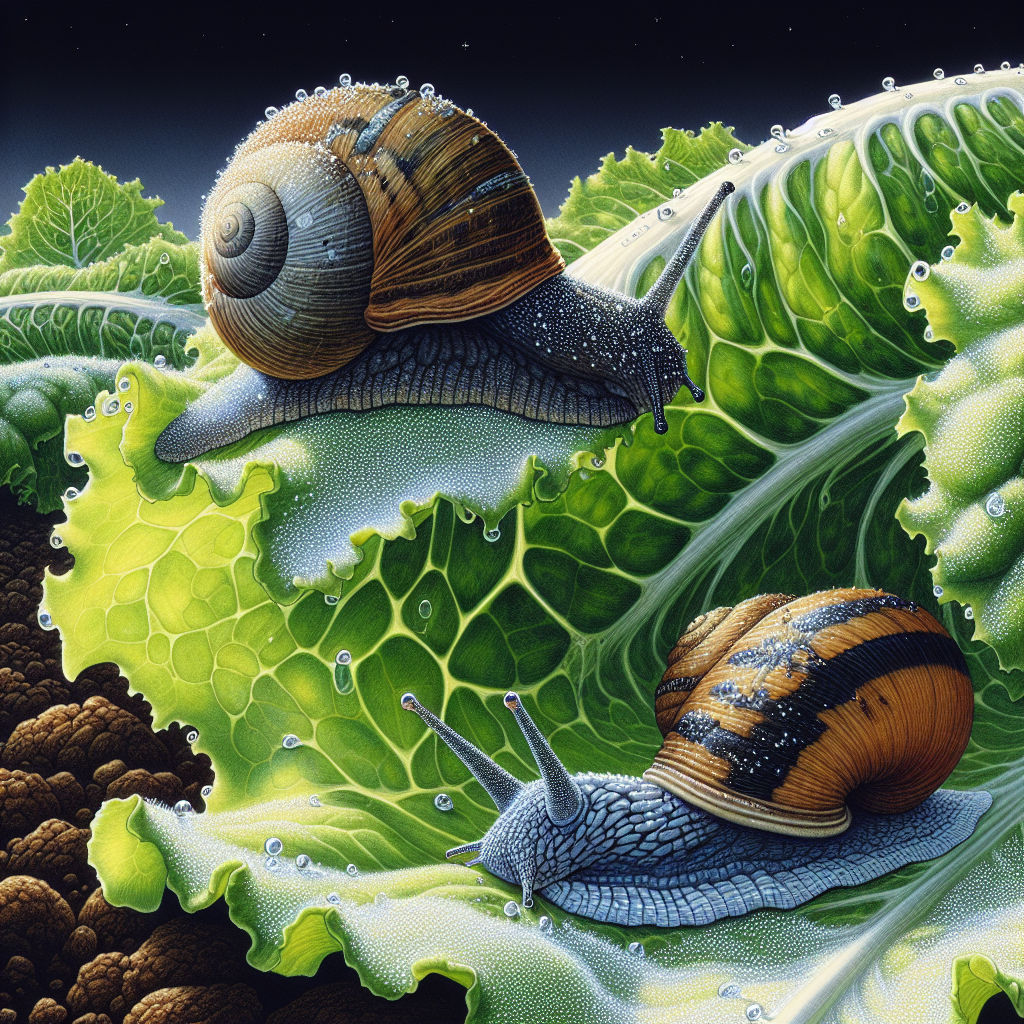
Introduction to Slugs and snails
Slugs and snails rank among the most persistent and damaging pests in agriculture, particularly in temperate, humid climates where they thrive. These soft-bodied mollusks lack a distinct shell (slugs) or have a coiled shell (snails), both feeding nocturnally on tender plant tissues. Farmers lose significant yields annually to these pests, with damage estimates reaching billions in vegetable, strawberry, and nursery crops alone. Their rasping radula mouths scrape away foliage, stems, and even roots, often killing young plants outright.
Understanding slugs and snails is crucial for effective management. They reproduce rapidly, laying hundreds of eggs per season, and can survive harsh conditions by estivating in soil or debris. This guide equips agricultural professionals with diagnostic tools, lifecycle knowledge, and proven organic strategies to minimize losses. By integrating cultural, physical, and biological controls, growers can reduce populations by up to 90% without synthetic chemicals. For more on Spring Pest Patrol: Organic AI Strategies to Shield Your Crops from Common Invaders, explore companion tactics tailored to small farms.
Identifying Symptoms & Damage
Slug and snail damage is unmistakable, featuring irregular, translucent holes with smooth edges, unlike the notched bites of insects like caterpillars or earwigs. Look for silvery mucus trails on leaves, stems, and soil—fresh trails glisten, while dried ones flake off. Seedlings vanish overnight, with cotyledons skeletonized or entirely consumed. On mature plants like lettuce or cabbage, large ragged holes appear, often starting from the outer leaves inward.
Examine damage under low light or at dawn: feeding scars show a scraped, almost polished surface. Fruits like tomato or strawberry exhibit deep gouges or surface scarring, inviting secondary infections such as Botrytis. Seedlings of carrot and radish suffer complete defoliation, while underground, they rasp roots, causing wilting mimicking root rot. Use a flashlight at night to spot the pests actively feeding, their pale undersides contrasting dark foliage. Differentiate from cutworms by the absence of clean stem cuts and presence of slime.
Lifecycle and Progression of Slugs and snails
Slugs and snails undergo complex, hermaphroditic lifecycles tied to moisture. Eggs, laid in clutches of 30-100, are translucent pearl-like clusters buried 1-2 cm in soil or under debris. Hatching in 10-30 days at 15-25°C, juveniles resemble mini-adults, growing rapidly on fungi and decaying matter before shifting to live plants. Maturity occurs in 3-6 months, with lifespans up to 2 years for snails, 1 year for slugs.
Active in cool, wet periods (spring/fall), they estivate in summer droughts, resuming feeding post-rain. Peak damage hits after irrigation or rain, with hermaphrodites cross-fertilizing nightly. Overwinter as eggs or adults in leaf litter. Populations explode in no-till fields or mulch-heavy beds, doubling yearly without intervention. Monitor with traps: beer-filled containers capture 20-50 nightly, indicating infestation thresholds (>5/trap). Lifecycle knowledge enables timed interventions, like egg disruption pre-hatch.
Environmental Triggers & Risk Factors
Moisture is paramount: slugs/snails desiccate quickly, thriving above 80% humidity and below 25°C. Heavy rains, overhead irrigation, and poor drainage spike activity—damage surges 5x post-rain. Dense canopies in broccoli or kale trap humidity, while compacted, organic-rich soils retain moisture ideal for egg-laying.
Risk factors include excessive mulch (>5cm), weeds harboring pests, and nearby wild areas. Cool climates (USDA zones 5-9) favor species like the grey field slug (Deroceras reticulatum). Over-fertilization with nitrogen promotes succulent growth they prefer. Monocultures of susceptible crops amplify spread; intercropping with garlic or onion deters via repellents. Climate change extends active seasons, with warmer winters boosting survival. Assess sites: soggy lowlands or shaded beds signal high risk.
Organic Control & Treatment Plans
Integrated Pest Management (IPM) targets all stages organically. Cultural: Hand-pick at dusk into soapy water (collect 100+/night initially). Till soil pre-planting to expose eggs/burrowed adults to predators/sun. Use drip irrigation to minimize leaf wetness; space plants for airflow.
Physical Barriers: Copper tape/nails around beds deter via mild shock (replace yearly). Diatomaceous earth (DE) or crushed eggshells form abrasive collars—reapply post-rain. Sand or cinders create dry moats. Traps: Shallow beer pans (non-alcoholic works) lure/drown 70% nearby populations; refresh daily. Grapefruit rinds or yeast-sugar-water boards collect for removal.
Biological: Encourage decollate snails (Frankoliidae), which prey on pest eggs/juveniles. Apply nematodes (Phasmarhabditis hermaphrodita) in moist evenings—90% control in 6 weeks. Ducks, chickens, or ground beetles devour them naturally. Baits: Iron phosphate (Sluggo) is OMRI-listed, safe for edibles, killing via ingestion without poisoning non-targets.
Treatment Plan: Week 1: Clear debris, apply barriers/DE. Week 2: Deploy traps/nematodes. Ongoing: Patrol nightly, encourage predators. Rotate with repellents like neem or thai-basil extracts. Expect 80-95% reduction in 4 weeks. Avoid salt, which harms soil.
Preventing Slugs and snails in the Future
Prevention beats cure: elevate beds 30cm for drainage, using coarse sand mixes. Plant late spring post-soil warmup (>15°C), choosing resistant varieties like slug-tolerant potato cultivars. Mulch with sharp pine bark or wool pellets, not organic matter. Companion plant with nasturtium, yarrow, or marigold to repel.
Sanitize: Remove hiding spots weekly; burn or solarize debris. Fencing with 10cm bent wire deters invasion. Monitor with sentinel plants like lettuce seedlings. Long-term, foster biodiversity: beetle banks and bird boxes boost predation. Soil solarization (clear plastic, 4-6 weeks summer) kills 95% eggs. Annual audits via trap counts keep populations below threshold.
Crops Most Affected by Slugs and snails
Slugs and snails target low-growing, soft-tissue crops. Vegetables like lettuce, cabbage, spinach, and brassicas suffer 50-100% seedling loss. Strawberry fruits scar, reducing market value 30%. Seedlings of tomato, cucumber, zucchini, and bean are obliterated.
Roots like carrot, beet, and potato tubers bore internally. Ornamentals, herbs (basil), and nursery stock face total wipeouts. Field crops such as clover and oilseeds see reduced stands. In greenhouses, oyster-mushroom mycelia slime over. Prioritize protection on these; others like garlic naturally resist.