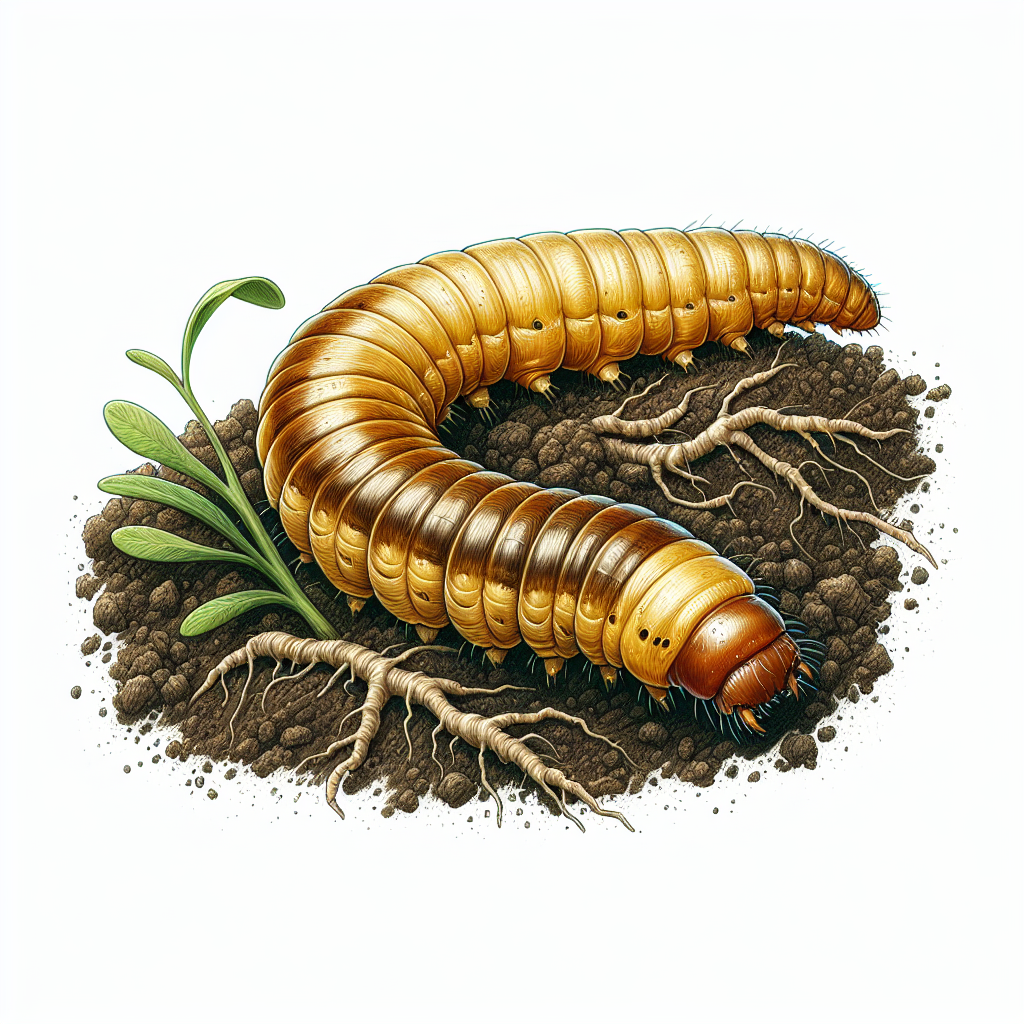
Introduction to Wireworms
Wireworms represent one of the most persistent and challenging soil pests in agriculture, particularly affecting small farms and large-scale operations alike. These slender, wire-like larvae of click beetles (family Elateridae, primarily genera Agriotes, Limonius, and Hypnoidus) can persist in soil for up to 7 years, feeding on germinating seeds, roots, and underground stems. Their name derives from their tough, shiny, golden-brown exoskeletons that resemble pieces of wire, making them difficult to crush or kill mechanically.
Farmers often encounter wireworms in newly established fields or after breaking sod, where populations built up over years in grassland become active crop destroyers. Damage manifests as poor stand establishment, stunted growth, and yield losses up to 50% in severe infestations. Understanding wireworm biology and implementing integrated pest management (IPM) is crucial for sustainable control. This guide provides diagnostic tools, lifecycle insights, and proven organic strategies to manage wireworms effectively, ensuring healthy potato, corn, and wheat crops.
Identifying Symptoms & Damage
Wireworm damage is subtle yet devastating because it occurs below ground, often going unnoticed until crop stands thin dramatically. Key symptoms include:
- Seedling Loss: Freshly planted seeds disappear entirely or fail to germinate, leaving gaps in rows. Wireworms clip seeds at the embryo, consuming cotyledons.
- Root Feeding: Fine roots are pruned, causing wilting, yellowing, and stunting. Plants exhibit 'ragged root syndrome' with sparse, chewed roots.
- Tuber and Bulb Damage: In potato and onion crops, clean, cylindrical holes penetrate tubers, leading to secondary rot infections like root rot.
- Stem Girdling: Young stems are honeycombed or severed just below soil level, mimicking cutworms but distinguished by the absence of surface debris.
To diagnose, dig bait stations: bury halved potatoes or bran mixed with water 6-8 inches deep for 3-7 days, then inspect for wireworms. Populations over 0.5 per bait indicate economic thresholds. Differentiate from root-knot nematodes by wireworms' visible, mobile larvae versus microscopic galls. For more on Spring Pest Patrol: Organic AI Strategies to Shield Your Crops from Common Invaders, explore companion tactics.
Lifecycle and Progression of Wireworms
Wireworms have a prolonged lifecycle of 2-7 years, depending on species and climate, making them notoriously hard to control. Adult click beetles emerge at night in spring, attracted to lights; females lay 200-800 eggs in soil near grass roots during May-June.
- Egg Stage (1-4 weeks): Tiny, white eggs hatch into larvae.
- Larval Stage (2-7 years): 10-13 instars; early instars feed on organic matter and grass roots, later ones attack crops. Larvae grow to 1-2 inches, overwintering 4-12 inches deep.
- Prepupal/Pupal (2-3 weeks): Inactive in earthen cells.
- Adult (2-4 weeks): Brown beetles with curved thorax; non-feeding but capable of 'clicking' to flip upright.
Peak damage occurs 2-4 weeks post-planting when larvae are 0.5-1 inch long and actively foraging. Multiple generations overlap in temperate regions, complicating timing. Monitor with soil sampling in fall or early spring for proactive management.
Environmental Triggers & Risk Factors
Wireworms thrive in cool, moist soils (50-70°F optimal), with populations exploding after prolonged grass or sod cover. Key triggers include:
- Previous Cropping: Fields in pasture/grass for 2+ years harbor high densities; tillage exposes larvae to predators and desiccation.
- Soil Conditions: Heavy, poorly drained clay soils retain moisture; pH 5.5-7.0 ideal. Drought stresses crops, making them more vulnerable.
- Climate: Temperate regions (USDA zones 4-8) see worst infestations; mild winters allow survival.
- Weeds/Volunteers: Grasses like quackgrass sustain larvae.
Risk assessment: Sample 20-40 cores per acre to 12 inches deep. >4 wireworms per square foot signals high risk. Avoid planting susceptible crops like sweet potato in high-risk fields. Learn more in Soil Health Mastery: 5 Proven Strategies for Small Farms to Build Fertile Ground Without Breaking the Bank.
Organic Control & Treatment Plans
Organic management emphasizes cultural disruption, biological augmentation, and monitoring over chemical reliance. Implement a multi-year IPM plan:
- Crop Rotation: Break grass cycles with 2-3 years of non-hosts like cabbage or legumes. Mustard biofumigants suppress populations.
- Tillage: Fall deep plowing (8-12 inches) exposes larvae to birds and drying. Delayed planting reduces feeding window.
- Baiting/Trap Crops: Use bran or potato baits to monitor/attract; till in to starve larvae.
- Biological Controls: Introduce Steinernema carpocapsae nematodes (apply evenings, 50-75°F soil). Encourage predators like ground beetles and birds.
- Organic Amendments: High-carbon mulches (straw) promote fungal antagonists; diatomaceous earth barriers for seedlings.
Treatment Threshold: Treat if >0.25 wireworms per foot of row. For potato, seed piece treatments with organic coatings. Combine with clover green manures to deplete populations. Success rates: 70-90% reduction over 2 years with rotation + bio-controls.
Preventing Wireworms in the Future
Prevention hinges on long-term soil health and farm planning:
- Site Selection: Avoid ex-pasture for root crops; use soil tests pre-planting.
- Cover Cropping: Brassicas (radish) release biofumigants toxic to larvae.
- Monitoring Protocol: Annual bait traps from fall; scout seedlings weekly.
- Resistant Varieties: Choose early-maturing corn hybrids that outgrow damage.
- Sanitation: Destroy crop residues; encourage poultry foraging.
Integrated with Fall Companion Planting Guide: Boost Yields and Soil Health for Small Farms and Gardens, interplant nasturtium as traps. Track via farm logs for 3+ years to confirm suppression below 0.1 per sq ft.
Crops Most Affected by Wireworms
Wireworms target over 40 crops, prioritizing seeds and roots:
| Crop | Damage Type | Severity |
|---|---|---|
| Potato | Tuber riddling | High |
| Corn | Seed/root pruning | High |
| Wheat, Barley | Seedling loss | High |
| Soybeans, Peas | Root feeding | Moderate |
| Sweet Potato, Carrot | Tuber damage | High |
| Onion, Garlic | Bulb hollowing | Moderate |
Grains suffer most in new fields; tubers in minimum-till systems. Diversify rotations to mitigate.