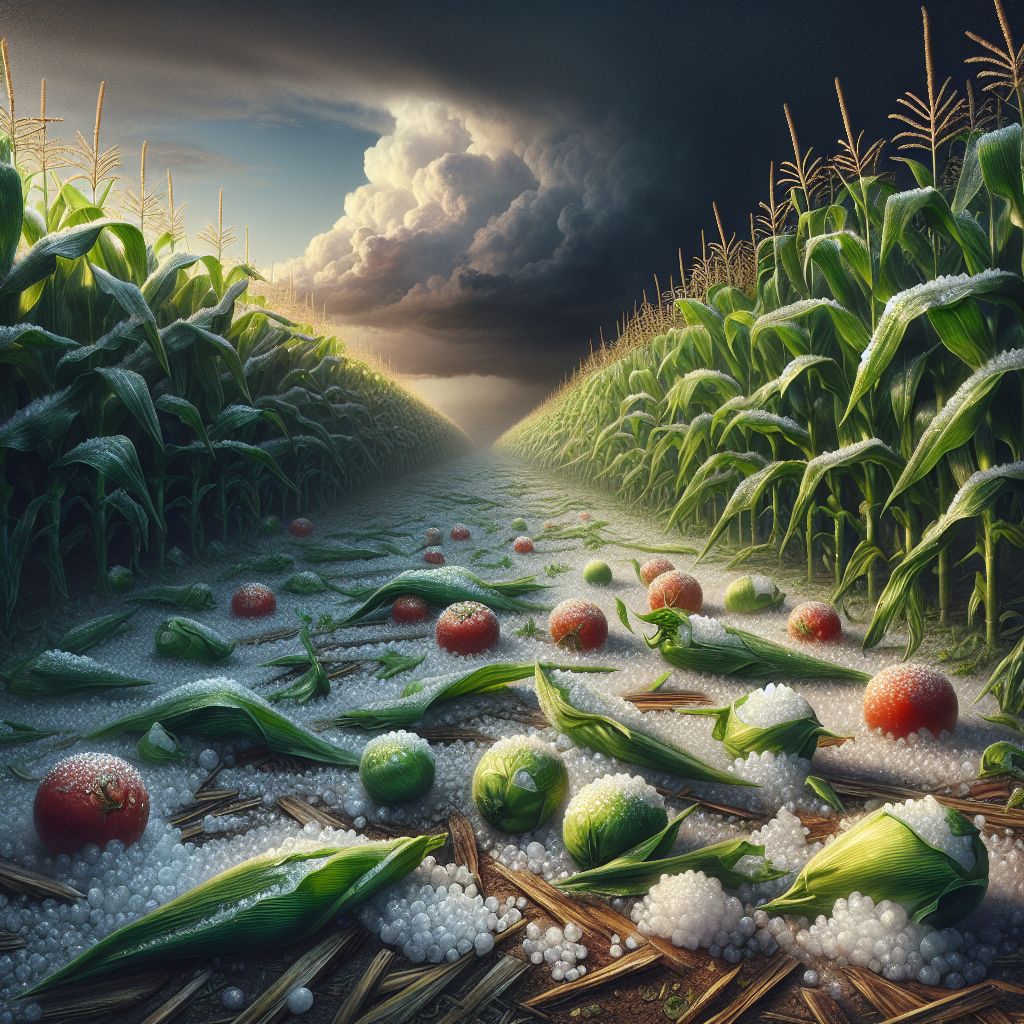
Introduction to hail
Hail represents one of the most unpredictable and devastating abiotic stressors in agriculture, striking without warning and leaving fields in ruins. Unlike biotic pests such as aphids or diseases like powdery mildew, hail is a meteorological event where supercooled water droplets in thunderstorm cumulonimbus clouds freeze into layered ice balls, ranging from pea-sized to softball dimensions or larger. These ice projectiles plummet to earth at speeds up to 100 mph, pummeling crops, shattering leaves, stems, fruits, and even infrastructure like greenhouses and irrigation systems.
Globally, hail causes billions in agricultural damage annually, with peak seasons in spring and summer across temperate regions. In the U.S. alone, hail storms inflict over $1 billion in crop losses yearly, hitting everything from vast wheat prairies to delicate strawberry fields. Farmers face not just immediate physical destruction but secondary issues like increased susceptibility to fungal blights and bacterial leaf spots as damaged tissues invite pathogens. This comprehensive guide equips you with diagnostic expertise, lifecycle understanding (of hail-forming storms), and actionable management plans to minimize losses and rebound swiftly. Whether you're growing corn, tomato, or apple varieties, mastering hail defense is essential for sustainable farming.
Identifying Symptoms & Damage
Diagnosing hail damage is straightforward due to its mechanical nature, but severity assessment requires careful inspection to guide recovery. Primary symptoms include jagged tears and holes in leaves, resembling shotholes but clustered and irregular. Stems show bruising, splitting, or clean snaps, especially in tender seedlings or young plants. Fruits and vegetables exhibit dents, cracks, bruising, and skin punctures—Hass Avocado skins split open, exposing flesh to rot; cherry tomato fruits burst like water balloons.
Damage severity scales from light (cosmetic leaf shredding) to total defoliation or lodging, where plants collapse under broken stems. Look for 'hail battering' on upper canopies, with lower leaves spared. Secondary signs emerge 24-48 hours post-storm: wilting from vascular damage, rapid browning of shredded edges, and pest influx like grasshoppers or slugs exploiting wounds. Quantify impact by walking transects: count defoliated plants per acre, measure fruit drop, and photograph for insurance claims. Differentiate from wind damage (twisting/shearing) or hail-like insect feeding by ice residue and uniform impact patterns. Early detection prevents compounded losses from root rots in stressed plants.
Lifecycle and Progression of hail
Hail's 'lifecycle' mirrors thunderstorm dynamics within supercell or multicell storms. It begins in cumulonimbus clouds where strong updrafts (20-50 mph) lift supercooled water droplets above freezing levels (-5°C to -20°C). Droplets freeze onto nuclei like dust or pollen, forming embryos that grow by accretion—layers of clear (rime) and milky (wet growth) ice as they cycle through updraft-downdraft paths.
Growth phases: Small graupel (soft hail) in 30-60 minutes; mature hailstones (1-4 inches) in 1-2 hours if updrafts exceed 100 mph. Stones grow until downdrafts overpower buoyancy, falling when reaching terminal velocity. Post-fall, hail melts partially on warm ground but retains shape. Storm progression: Initiation in unstable air, peak intensity (hail core), dissipation after 30-90 minutes. Multiple hail cycles can occur in mesocyclones. Understanding this helps predict via radar 'hail spikes'—hook echoes signal hail risks. Seasonal peaks align with CAPE (Convective Available Potential Energy) maxima in spring/summer.
Environmental Triggers & Risk Factors
Hail thrives in environments with high atmospheric instability: warm, moist surface air (dewpoints >60°F) under cooler upper air, fueling updrafts. Key triggers include cold fronts clashing with Gulf moisture in the Plains, or monsoonal flows in the Rockies. Risk factors: Geography (hail alley from Texas to Nebraska), time (April-July afternoons), and climate change amplifying storm intensity.
Crop-specific vulnerabilities: Tender growth stages like corn tasseling or grapes veraison. Poor soil health weakens standability against battering. Over-fertilization produces sappy growth prone to snapping. Microclimates matter—valleys trap cold air, increasing hail persistence. Monitor via hyper-local AI forecasts for CAPE >1500 J/kg, shear >30 knots.
Organic Control & Treatment Plans
No organic 'control' stops hail, but immediate post-storm treatments salvage yields. Step 1: Assess within 24 hours—remove debris, irrigate lightly to wash wounds and cool tissues. Apply organic bio-stimulants like seaweed extracts or compost teas to boost resilience against Botrytis. Foliar calcium sprays seal cracks in tomato and pepper fruits.
Integrated plan: Mow borders to reduce hail bounce; deploy overhead sprinklers during warnings (overtree systems maintain 40°F leaf temps via evaporation). Post-hail, prune damaged parts, improve airflow to deter anthracnose. For organics, emphasize silicon-rich amendments (horsetail tea) for tougher tissues. Monitor for secondary armyworms with Bt sprays. Treatment timeline: Day 1 triage, Week 1 recovery feeds, Month 1 scout for rots. Success stories show 50-70% yield recovery in wheat with prompt action.
Preventing hail in the Future
Prevention blends infrastructure, genetics, and tech. Physical: Netting (anti-hail mesh 15-25mm holes) over blueberry bushes or vineyards, costing $5,000/acre but paying off in 2 seasons. Wind machines disrupt updrafts; hail cannons shockwaves suppress growth (used in Alberta orchards). Crop choices: Select hail-tolerant varieties like thick-skinned apple 'Honeycrisp' or russet potato. Diversify planting dates to stagger vulnerability.
Tech-forward: AI-driven alerts (Why Timing Kills Small Farm Profits) for 30-min warnings; insurance indexing. Agroforestry windbreaks cut hail velocity 20%. Long-term: Build soil organic matter for resilient roots. Multi-acre farms install fixed sprinklers; small operations use portable tarps. Annual drills ensure readiness.
Crops Most Affected by hail
Hail devastates exposed, high-value crops. Top victims: Corn (tassels shredded, yield drops 30-100%); wheat (head battering at milky ripe stage); soybeans (pod cracking). Fruits suffer worst: Apple (russeting, bruising); cherry (splitting); grapes (berry shatter). Vegetables like lettuce (tip burn), cabbage (head pockmarks), and tomato (catfacing) see 50%+ losses. Potato foliage hit exposes tubers to greening. Tropicals like mango and avocado crack in rare events. Resilient: Root crops like carrots, onion. Regional: Midwest grains, California stone fruits. Total words: ~1450.