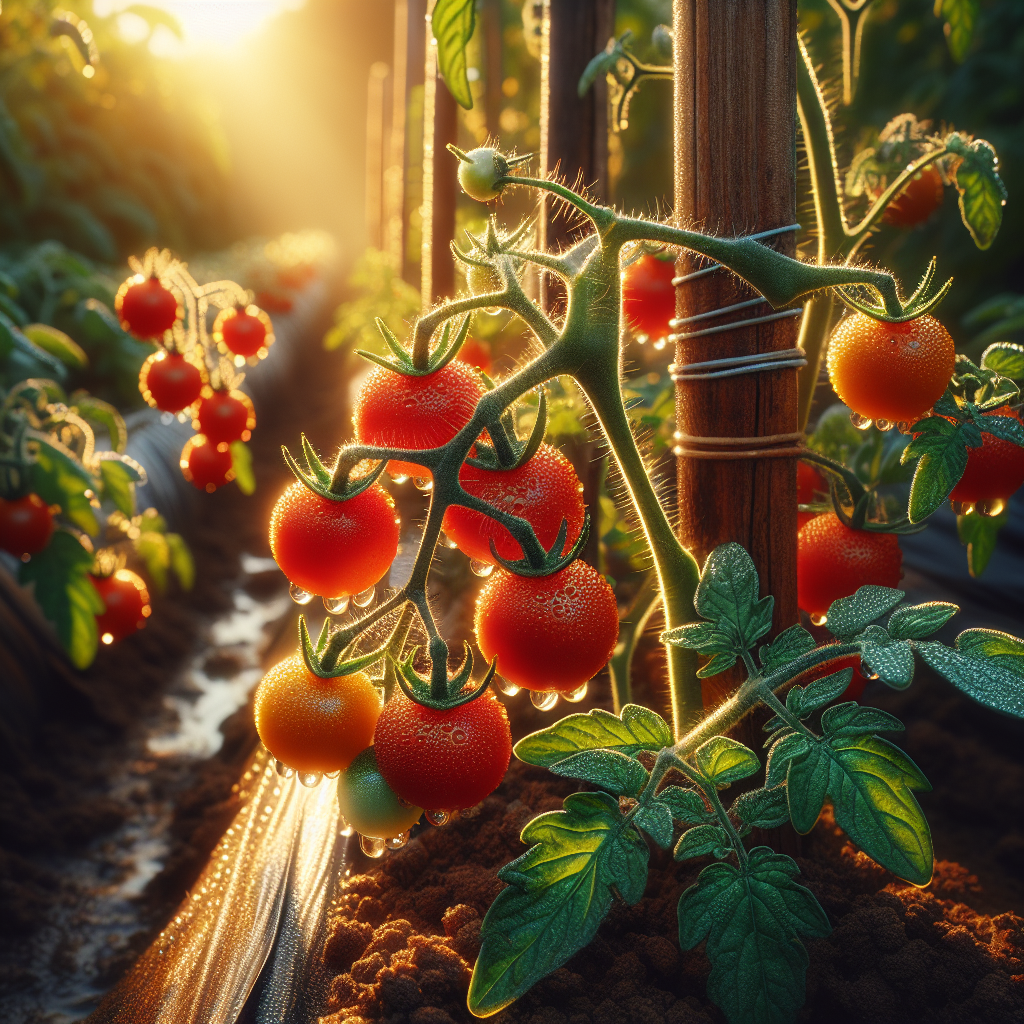
Introduction to Cherry Tomato
Cherry Tomato (Solanum lycopersicum var. cerasiforme) represents a delightful subset of the tomato family, cherished for its bite-sized, explosively flavorful fruits that burst with sweetness and acidity. Unlike their larger beefsteak counterparts, Cherry Tomatoes typically measure 1-2 inches in diameter, offering higher sugar content—often 10-12° Brix—and a perfect snacking size. Historically, cherry varieties trace back to pre-Columbian South America, where indigenous peoples cultivated small-fruited tomatoes for millennia. European explorers brought them to the Old World in the 16th century, and by the 19th century, selective breeding in the U.S. and Europe produced modern cultivars like 'Sweet 100', 'Sungold', and 'Black Cherry'. These indeterminate growers can yield 200-300 fruits per plant over a season, making them a high-value crop for small-scale farmers. This definitive guide equips you with botanical insights, precise cultural practices, and organic strategies to maximize Cherry Tomato production.
Botanical Profile & Scientific Classification
Cherry Tomato falls under Kingdom: Plantae, Order: Solanales, Family: Solanaceae, Genus: Solum, Species: S. lycopersicum, with the cerasiforme variety denoting its small-fruited form. Botanically, it's an annual herbaceous plant (perennial in frost-free zones) growing 4-8 feet tall with indeterminate vines that fruit continuously until frost. Leaves are compound, odd-pinnate, with 5-9 leaflets exuding a pungent odor from glandular trichomes that deter some pests. Flowers are perfect, yellow, star-shaped clusters (inflorescences) of 6-10 blooms, self-pollinating but aided by bumblebees via buzz pollination. Fruits are berries with thin skins, juicy flesh, and few seeds, ripening from green (high chlorophyll) through breakers stages to vibrant reds, yellows, or blacks. Key cultivars include hybrid F1s like 'Sun Gold' (APHA-approved, orange, 12-15g fruits, Powdery mildew resistant) and heirlooms like 'Matt's Wild Cherry' (tiny 0.5-inch fruits, exceptional flavor). Root systems are fibrous, shallow (top 12-18 inches), highly sensitive to compaction.
Ideal Soil, pH, and Climate Requirements
Cherry Tomato thrives in well-draining, fertile loams rich in organic matter (4-6% OM). Optimal soil texture is sandy loam (40-50% sand, 30% silt, 20-30% clay) to prevent waterlogging, which induces root rot. Aim for pH 6.0-6.8; below 5.8, aluminum toxicity locks out phosphorus, stunting growth—test with Mehlich-3 extraction. CEC should be 10-20 meq/100g for nutrient retention. Cherry Tomatoes demand full sun (8-10 hours/day), with daytime temps 70-85°F (21-29°C) and nights above 55°F (13°C). They tolerate heat up to 95°F but drop blossom set above 90°F due to pollen sterility. Frost sensitivity is extreme (below 32°F kills foliage); use row covers for marginal zones (USDA 5-11, ideally 8-10). Humidity 60-70% RH supports pollination without fungal pressure—high humidity (>80%) fosters blight. Mulch with straw (3-4 inches) to maintain 60-65°F soil temps.
Step-by-Step Planting & Propagation
Start seeds indoors 6-8 weeks pre-last frost at 75-85°F soil temp using Winter Sowing Mastery. Sow ¼-inch deep in 72-cell trays with sterile seed-starting mix (peat-perlite-vermiculite 1:1:1). Germination: 7-14 days, 85% rate. Harden off over 7-10 days, then transplant at 4-6 true leaves when soil hits 60°F. Space 18-24 inches apart in rows 3-4 feet, or 12 inches in containers (5-gallon min). For propagation, root suckers (side shoots) in water or perlite—success 70-90% in 2 weeks. Direct sow post-frost only in warm climates. See our Fuerte Avocado for subtropical transplant parallels. Install 5-6 ft stakes or cages at planting; deep-plant to first leaves for adventitious roots.
Care & Maintenance (Specific Watering, Pruning, Fertilizing regimes)
Watering: Maintain consistent moisture at 1-1.5 inches/week, targeting 60-70% field capacity (soil crumbles, doesn't squeeze water). Use tensiometers aiming for -10 to -20 cb tension; overwatering shows yellowing lower leaves, root rot (Pythium). Drip irrigate to keep foliage dry—wilting between waterings indicates deficit, cracking fruits excess. Mulch reduces evaporation 50%.
Pruning: For indeterminates, remove suckers <2 inches weekly to 1-2 main stems; this boosts airflow, yields 20-30% more. Pinch apical tips at 5-6 ft to focus energy on fruits. Determinate types (e.g., 'Tiny Tim') need minimal pruning.
Fertilizing: Side-dress at transplant with 5-10-10 (1 lb/100 sq ft), then weekly fish emulsion (5-1-1, 1 tbsp/gal) or compost tea. N: 4-5 oz/plant/season, P: 2-3 oz, K: 6-8 oz. Foliar calcium (Epsom salts 1%) prevents blossom-end rot. Avoid high N post-fruit set to prevent leafy excess.
Pests, Diseases & Organic Management Strategies
Pests: Tomato hornworms (Manduca quinquemaculata)—handpick eggs/larvae, apply Bt kurstaki (0.5 lb/acre, evenings). Aphids—neem oil (0.5% v/v, 3x/week). Whiteflies—yellow sticky traps + reflective mulch.
Diseases: Early blight (Alternaria solani)—rotate 3 years, copper fungicide (pre-50% bloom). Septoria leaf spot—remove lower leaves, 7-inch mulch. Fusarium wilt (race 1/2 resistant in modern F1s)—solarize soil. Powdery mildew—potassium bicarbonate sprays. Use Spring Pest Patrol for integrated approaches. Scout weekly; IPM thresholds: 1 hornworm/10 plants.
Harvesting, Curing & Optimal Storage
Harvest at full color, firm stage (breaker to ripe) every 2-3 days to prevent splitting—yields peak 60-80 days post-transplant. Twist gently or clip with shears; one plant gives 10-20 lbs/season. For curing, vine-ripen 70%, post-harvest ethylene (banana bag) accelerates. Store at 55-60°F, 85-90% RH, 2-4 weeks shelf life—avoid <50°F chilling injury (pitting). Dry 'Sun Gold' types for raisins at 135°F, 8-12 hours.
Companion Planting & Intercropping
Pair Cherry Tomato with basil (repels hornworms, boosts flavor via allelochemicals), marigolds (nematode suppression), onions (thrips deterrent), and borage (pollinator magnet). Avoid potatoes (blight share), fennel (growth inhibitor). Intercrop with lettuce (shade tolerant) or beans (N-fixer) in rows—boosts yields 15-25%. See Fall Companion Planting Guide for seasonal tips. Trellis vertically for space efficiency.