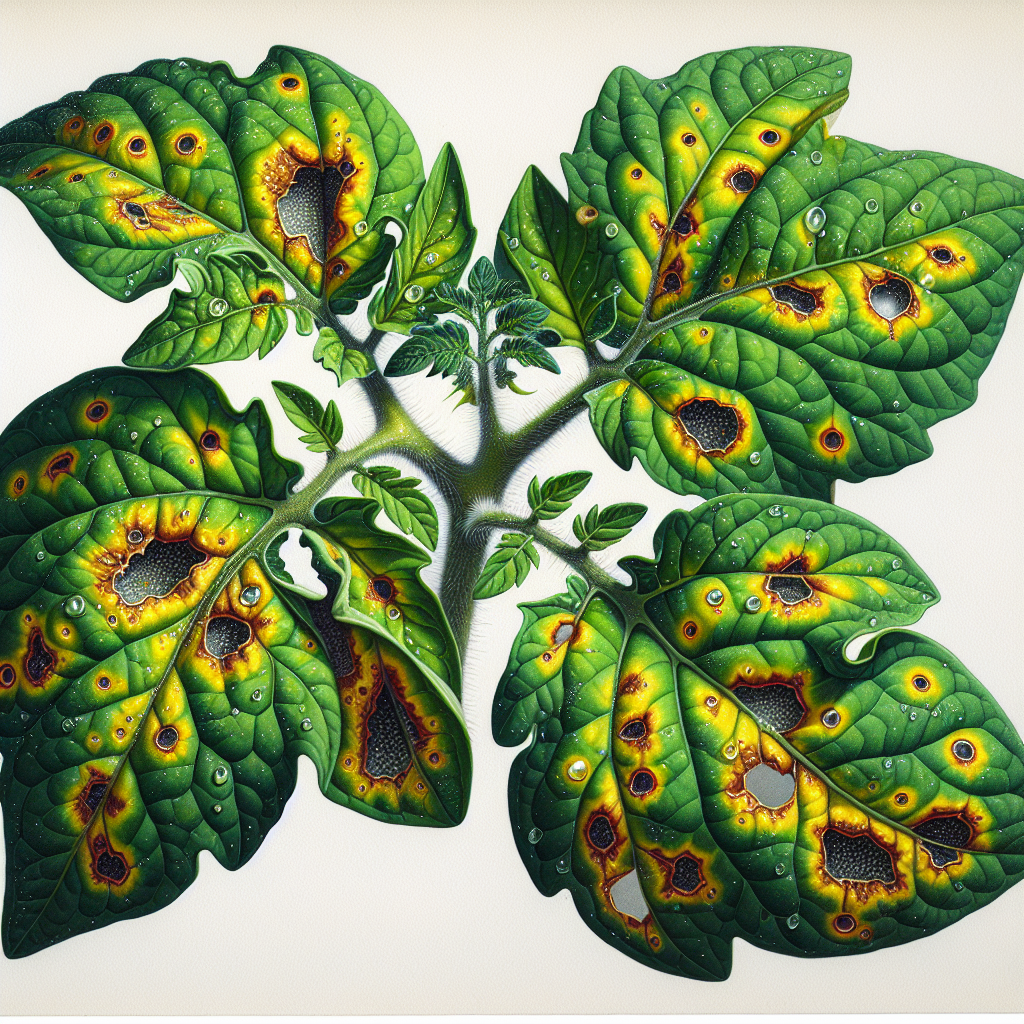
Introduction to Bacterial leaf spots
Bacterial leaf spots represent one of the most common and destructive foliar diseases affecting a wide range of agricultural crops worldwide. Caused primarily by bacterial pathogens in the genera Xanthomonas and Pseudomonas, these diseases manifest as dark, water-soaked lesions on leaves that evolve into necrotic spots with distinctive halos. Unlike fungal leaf spots, bacterial variants thrive in warm, humid conditions and spread rapidly via splashing water, wind-driven rain, or contaminated tools, making them a persistent challenge for farmers and gardeners alike.
The economic impact is significant, with yield losses ranging from 10-50% in severe outbreaks, particularly in high-value crops like vegetables and ornamentals. For instance, tomato and pepper growers often face devastating epidemics during wet summers. This guide provides a comprehensive diagnostic framework, lifecycle analysis, organic management strategies, and prevention tactics tailored for practical agricultural application. Understanding bacterial leaf spots empowers growers to implement timely interventions, minimizing crop damage and ensuring sustainable production. Early detection through symptom scouting and confirmatory tests like bacterial streaming is key to breaking the disease cycle.
Identifying Symptoms & Damage
Accurate diagnosis begins with recognizing hallmark symptoms unique to bacterial leaf spots. Initial signs appear as small, angular, water-soaked spots on the underside of leaves, often 1-3 mm in diameter. These lesions are translucent when held to light and may exude a milky bacterial ooze under high humidity. Within 2-5 days, spots turn dark brown to black, developing yellow halos—especially in Xanthomonas infections—creating a "shot-hole" appearance as centers drop out.
Advanced progression leads to leaf blighting, where entire leaf margins or sectors necrose and curl upward. V-shaped lesions at leaf tips are common in cucumbers and squash. Systemic infections cause wilting, defoliation, and fruit spotting, reducing marketable yield by up to 40%. Differentiate from fungal spots like Septoria leaf spot by the lack of fungal fruiting bodies and positive bacterial streaming test: cut a lesion, suspend in water, and observe milky threads under 10x magnification.
Damage extends beyond aesthetics; spots disrupt photosynthesis, stunting growth and predisposing plants to secondary invaders like aphids. In potato, foliar symptoms correlate with tuber contamination. Scout weekly during wet periods, focusing on lower canopy. Yield impacts are crop-specific: 20-30% in beans, severe in brassicas. Read our detailed blog on Why Misidentifying Plants Costs Small Farms Thousands - And How AI Camera Diagnosis Fixes It Fast for tech-assisted identification tips.
Lifecycle and Progression of Bacterial leaf spots
Bacterial leaf spot pathogens are aerobic, rod-shaped Gram-negative bacteria that survive as epiphytes on plant debris, seeds, or alternate hosts. The lifecycle initiates with bacterial multiplication on wet leaf surfaces, entering through natural openings (stomata, hydathodes) or wounds. Optimal infection occurs at 25-30°C (77-86°F) with leaf wetness >8 hours. Bacteria multiply intracellularly, causing cell plasmolysis and water-soaking within 24-48 hours.
Progression unfolds in phases: incubation (2-5 days), lesion expansion (angular due to vein limitations), necrosis, and sporulation in ooze. Rain splash disperses bacteria up to 8 meters, while wind-rain events propel them kilometers. Latent infections in seeds perpetuate cycles; contaminated transplants introduce pathogens to fields. Overwintering occurs in crop residue, soil, or weeds, resuming activity in spring rains.
Epidemics follow a polycyclic pattern: primary inoculum from debris infects early, secondary cycles amplify via rain splash. Disease gradients show rapid spread downwind. In rice, bacterial leaf blight progresses from tillers to panicles. Management targets lifecycle breaks: residue destruction, seed treatment. For deeper insights, explore our wiki on bacterial leaf diseases.
Environmental Triggers & Risk Factors
Warm, humid climates (20-32°C, RH>85%) are prime triggers, with free water on leaves essential for bacterial motility and entry. Overhead irrigation creates ideal "bacterial highways," splashing inoculum onto foliage. Dense canopies with poor airflow exacerbate epidemics by prolonging leaf wetness. High nitrogen fertilization promotes succulent growth, highly susceptible to infection.
Risk factors include monoculture, susceptible varieties, and contaminated inputs like untreated seeds or transplants. Crop rotation gaps allow carryover from residues of peppers or eggplant. Wind-driven rain during flowering accelerates spread. Soil pH extremes (>7.5 or <5.5) stress plants, increasing vulnerability. In tropics, dual Xanthomonas-Pseudomonas infections compound damage. Monitor with weather stations; avoid irrigation during dew periods. Integrating leaf spot diseases knowledge aids risk assessment.
Organic Control & Treatment Plans
Organic management emphasizes integrated cultural, biological, and minimal chemical tactics. Immediate Actions: Remove and destroy infected leaves/plants (deep bury or burn); disinfect tools with 10% bleach or alcohol. Copper Sprays: Apply OMRI-listed copper octanoate or hydroxide (e.g., 0.5-1% Bordeaux mix) at first symptoms, repeating every 7-10 days (max 4 apps/season). Timing is critical: dawn/dusk to minimize phytotoxicity.
Biologicals: Bacillus subtilis or subtilis QST 713 (Serenade) colonizes leaves, outcompeting pathogens (apply 2-3 gal/acre weekly). Streptomycin is prohibited organically; rely on copper rotation. Sanitation Plan: Seed treatment with hot water (50°C/30 min) or hypochlorite. For outbreaks, rogue 20-30% infected plants to curb inoculum.
Step-by-Step Treatment: 1) Scout/confirm diagnosis. 2) Prune infected parts. 3) Apply copper + biological. 4) Improve airflow. 5) Monitor 7 days. Success rates: 60-80% with early intervention. Avoid overhead watering; use drip. Pair with powdery mildew controls for broad-spectrum protection.
Preventing Bacterial leaf spots in the Future
Prevention hinges on cultural practices reducing inoculum and susceptibility. Select resistant varieties: e.g., 'Mountain Merit' tomato, 'Enterprise' pepper. Practice 2-3 year rotation excluding solanaceae/brassicas. Destroy volunteers and weeds hosting pathogens.
Site selection: well-drained soils, full sun, 1m row spacing for airflow. Drip irrigation + mulching minimizes splash. Fertilize balanced (avoid excess N); calcium strengthens cell walls. Hot-water treat seeds; inspect transplants. Windbreaks curb rain splash. Fall tillage buries residue. Integrated Pest Management (IPM) scouts for early detection. Learn more in our Soil Health Mastery blog. Annual plans yield 90% prevention success.
Crops Most Affected by Bacterial leaf spots
Bacterial leaf spots plague solanaceous crops foremost: tomato (X. campestris pv. vesicatoria), potato, bell pepper, eggplant with angular leaf spot. Brassicas like cabbage, broccoli suffer black rot (X. campestris pv. campestris). Legumes: common blight on beans, halo blight (P. savastanoi pv. phaseolicola). Cucurbits: bacterial spot on cucumber, squash. Grains: bacterial leaf blight on rice, stripe on corn. Others: onion center rot, lettuce marginal leaf spot. Tropicals like mango and banana face variants. Yields drop 25-70%; prioritize IPM in high-risk crops.