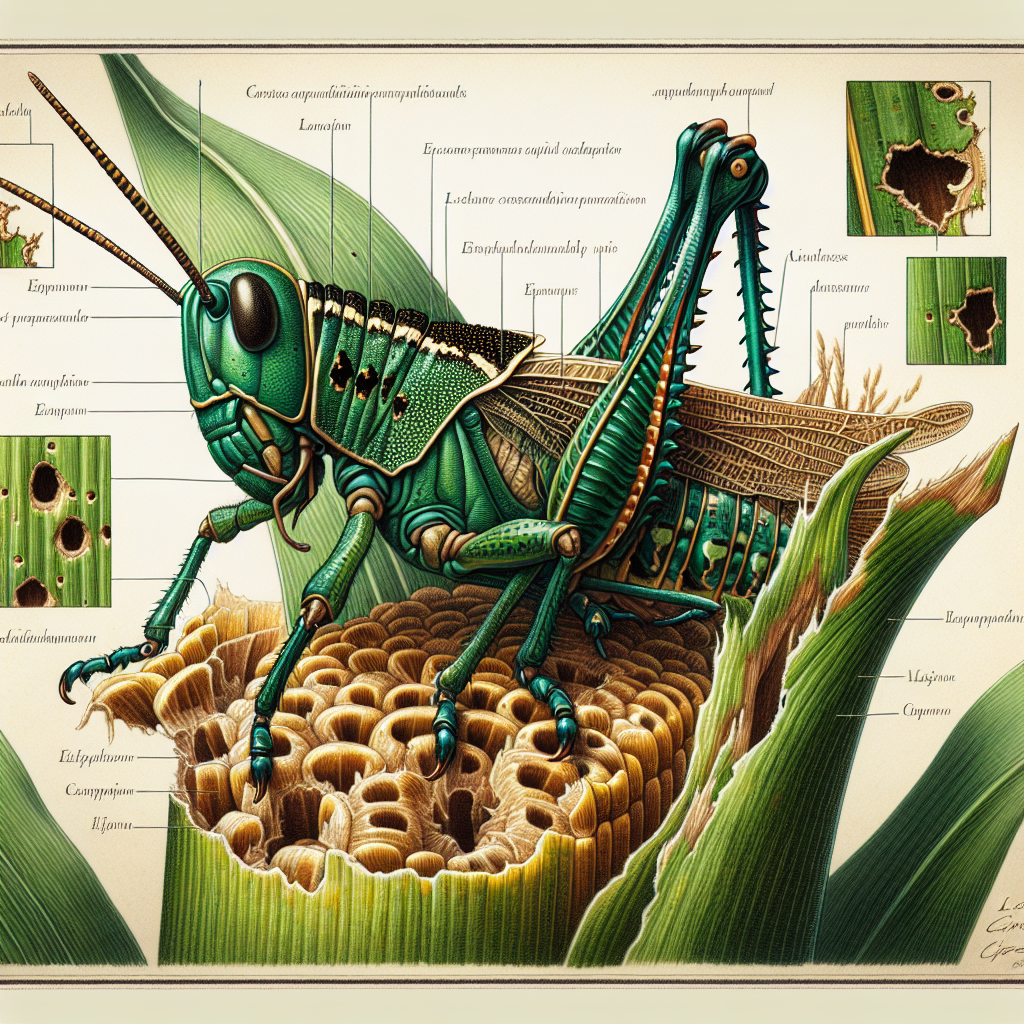
Introduction to grasshoppers
Grasshoppers represent one of the most destructive pests in agricultural systems worldwide, capable of consuming up to their body weight in plant material daily during peak feeding periods. Belonging to the order Orthoptera and primarily the family Acrididae, these insects thrive in warm, dry conditions and can form devastating swarms in outbreak years, wiping out entire fields of corn, wheat, and soybeans. Unlike subtle sap-suckers like aphids, grasshoppers cause immediate, visible defoliation, making them a priority threat for small farms and large operations alike.
Understanding grasshopper biology is crucial for effective management. Over 100 species plague crops, but short-horned varieties like the migratory locust (Locusta migratoria) and differential grasshopper (Melanoplus differentialis) are most notorious. In the U.S., species such as the two-striped grasshopper (Melanoplus bivittatus) dominate the Great Plains, where historical plagues have cost billions. Early intervention is key, as nymphs are more vulnerable than winged adults. This guide equips growers with professional diagnostics, organic treatments, and prevention protocols to safeguard yields. For real-world strategies, check this Spring Pest Patrol blog post.
Identifying Symptoms & Damage
Grasshopper damage is unmistakable: large, irregular holes in leaves, often starting from the margins and progressing inward. Unlike caterpillars, which leave frass (droppings), grasshoppers produce minimal waste and chew cleanly, skeletonizing plants rapidly. Stems show girdling scars, and fruits like tomato or potato tubers exhibit chew marks or complete consumption of seedlings.
Diagnostic Checklist:
- Visual Signs: Clusters of green-to-brown insects (1/4 to 2 inches long) jumping or flying low over fields. Nymphs are smaller, wingless, and band together in 'pods.' Look for reddish spit (tobacco juice) on foliage.
- Plant Indicators: Defoliation >30% signals infestation. Lower leaves hit first, mimicking drought stress or leafhoppers.
- Scouting Method: Walk fields in a W-pattern, counting grasshoppers per square yard. >10 per yard warrants action.
Differentiate from army worms by the absence of marching bands and silk webbing. Severe cases lead to stunted growth, reduced photosynthesis, and secondary invasions by fungal blights. Economic thresholds: 8-14 grasshoppers per square yard in grains; lower for vegetables.
Lifecycle and Progression of grasshoppers
Grasshoppers undergo incomplete metamorphosis: egg, nymph (5-6 instars), adult. One generation per year in temperate zones; multiple in tropics.
- Eggs (Fall): Laid in soil pods (20-150 eggs), 2-4 inches deep, overwintering.
- Nymphs (Spring-Summer): Hatch en masse after warm rains. Wingless for 4-6 weeks, feeding voraciously. Most vulnerable stage.
- Adults (Late Summer): Winged, migratory, reproducing. Live 30-50 days, females deposit 2-3 pods.
Progression accelerates in heat (>85°F/29°C); cold snaps kill nymphs. Banding behavior in nymphs predicts outbreaks. Monitor soil temps (55°F/13°C triggers hatch). Lifecycle aligns with crop growth, peaking damage during vegetative stages of sorghum or rice.
Environmental Triggers & Risk Factors
Outbreaks correlate with drought followed by spring moisture, favoring egg survival and nymph hatch. Bare soil from tillage exposes pods; weedy margins provide breeding sites. Hot, dry summers boost adult populations, while windy conditions aid migration.
Key Risks:
- Weather: Low winter kill + warm April.
- Farming Practices: Reduced tillage, monocultures of wheat or barley.
- Geography: Prairies, steppes; elevations <5,000 ft.
Companion crops like clover reduce risk. Climate change extends ranges, per USDA data showing 20% uptick in U.S. outbreaks.
Organic Control & Treatment Plans
Prioritize IPM: integrate cultural, biological, mechanical controls.
Immediate Actions:
- Nymph Stage (Best Window): Apply Nosema locustae (protozoan biopesticide) or Beauveria bassiana fungus. 70-90% nymph mortality.
- Barriers: Row covers, netting over lettuce or cabbage.
- Trap Crops: Plant sunflowers or buckwheat borders to lure and destroy.
Biologicals: Release nasturtium or chickens/ducks. Parasitic flies (Scelio spp.) target eggs.
Organic Sprays: Neem oil + insecticidal soap (weekly). Pyrethrum for heavy infestals (OMRI-listed).
Treatment Timeline:
| Stage | Method | Efficacy |
|---|---|---|
| Eggs | Tillage | 60% |
| Nymphs | Biopesticides | 85% |
| Adults | Manual removal | 40% |
Rotate with thyme oils. Avoid broad-spectrum to preserve predators like birds.
Preventing grasshoppers in the Future
Cultural Practices:
- Tillage: Shallow fall discing buries pods.
- Crop Rotation: Alternate grains with legumes like peas.
- Border Management: Mow weedy edges; plant repellents (garlic, onion).
Long-Term: Encourage predators (ground beetles, spiders). Use reflective mulches. Scout weekly via sticky traps. For zoning tips, see Why Zoning Your Small Farm Chaos into Profit Zones Feels Impossible. Resistant varieties: Early-maturing corn.
Annual monitoring cuts outbreaks 50%. Integrate with Soil Health Mastery for resilient fields.
Crops Most Affected by grasshoppers
Grasshoppers target 100+ crops, preferring grasses and broadleaves.
Grains: Wheat (20-100% loss), corn, sorghum, rice. Vegetables: Potato, tomato, cucumber, squash. Legumes: Soybeans, chickpeas. Pastures: Alfalfa, clover. Orchards: Apple, peach foliage.
Global losses: $1-2B/year. Seedlings <10cm most vulnerable; pods defoliate fruits. Protect high-value like strawberry with extras.