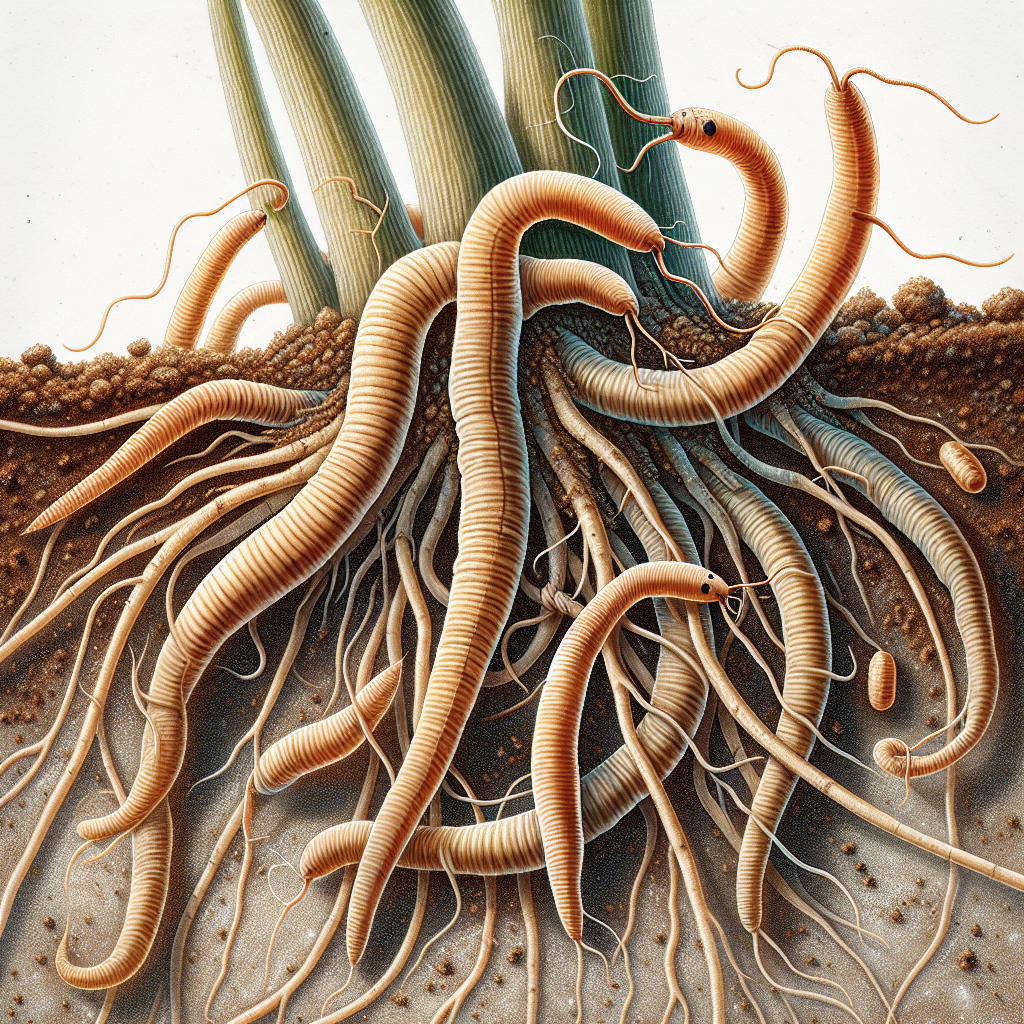
Introduction to dagger nematodes
Dagger nematodes, scientifically known as Xiphinema species, represent one of the most destructive groups of plant-parasitic nematodes in agriculture. These microscopic, worm-like organisms are ectoparasites, meaning they feed externally on plant roots without entering the tissues, unlike endoparasitic nematodes such as root-knot nematodes. With over 50 species worldwide, the most notorious include Xiphinema index, which vectors grapevine fanleaf virus, and Xiphinema americanum, a vector for tomato ringspot virus. Dagger nematodes thrive in coarse-textured soils and can persist for years due to their long lifecycles.
Farmers often overlook dagger nematodes because their damage mimics nutrient deficiencies or drought stress. However, early detection and integrated management can prevent devastating losses, especially in perennial crops. This guide provides professional-grade diagnostics, lifecycle insights, and organic strategies to safeguard your fields. For small farms struggling with pest identification, tools like AI-powered diagnostics can revolutionize accuracy—check out Why Misidentifying Plants Costs Small Farms Thousands - And How AI Camera Diagnosis Fixes It Fast.
Identifying Symptoms & Damage
Dagger nematodes cause distinctive yet subtle damage primarily to root systems. Above-ground symptoms include stunted growth, yellowing leaves (chlorosis), and wilting during dry periods, even with adequate irrigation. Plants may exhibit uneven growth patches in fields, with affected areas showing sparse foliage and reduced vigor. In severe infestations, entire plants collapse, resembling symptoms of root rot or Phytophthora.
Root inspection reveals the hallmark signs: short, stubby roots with lesions, galls, or brown necrotic areas. Unlike root-knot nematodes, dagger nematodes do not produce large galls but create irregular swellings and surface pits where their long stylets pierce root cells. Excavate roots from suspect areas and look for tiny, elongated worms (0.5-2.5 mm long) wriggling on the root surface under a microscope or 10x hand lens. Soil sampling at 15-30 cm depth often confirms populations exceeding 1-5 nematodes per 100 cm³ soil, the economic threshold for many crops.
Secondary effects amplify damage: nematodes vector viruses, leading to mosaic patterns on leaves or deformed fruits. In strawberries, expect runner reduction and poor berry set; in grapes, fanleaf degeneration with brittle spurs. Differentiate from lesion nematodes by the nematodes' position (ectoparasitic) and lack of internal root invasion. Professional diagnosis via lab assays (e.g., sugar flotation extraction) is recommended for confirmation.
Lifecycle and Progression of dagger nematodes
Dagger nematodes have a perennial lifecycle spanning 1-4 years, making them persistent soil inhabitants. Adults are vermiform, 1-2.5 mm long, with a long odontostyle (stylet) up to 150 μm for piercing roots. They reproduce sexually, producing 1-4 eggs per female; juveniles resemble adults but smaller.
Progression begins in spring when soil warms to 10-15°C. Nematodes emerge from diapause, migrate to feeder roots, and feed on cortical cells, injecting saliva that disrupts cell function and facilitates virus transmission. Feeding sites become entry points for pathogens like Fusarium. Females lay eggs near roots; hatching juveniles feed similarly. Peak populations occur mid-summer, declining in fall as nematodes enter dormancy in cooler, drier soils.
Overwintering occurs as adults or fourth-stage juveniles deep in soil (up to 1.5 m). Movement is slow (cm/day), but irrigation spreads them. One generation per year in temperate regions; multiple in tropics. Population dynamics follow a sigmoid curve, exploding after 2-3 years without intervention. Understanding this slow build-up allows timely scouting before economic thresholds.
Environmental Triggers & Risk Factors
Dagger nematodes flourish in sandy, loamy soils with >60% sand, low clay, and pH 5.5-7.0. Warm temperatures (18-27°C optimum) and adequate moisture promote activity; drought stresses hosts, exacerbating damage. High organic matter suppresses populations, while continuous cropping of susceptible hosts builds infestations.
Key risk factors include poor rotation—monocultures of strawberries or grapes amplify risks. Contaminated equipment, flood irrigation, or nursery stock introduces nematodes. Warm, arid regions like California's Central Valley report highest incidences. Compaction reduces aeration, favoring ectoparasites. Co-infestations with plant-parasitic nematodes or Pythium compound issues. Climate change may expand ranges northward as soils warm.
Organic Control & Treatment Plans
Organic management emphasizes cultural, biological, and physical tactics over chemicals. Step 1: Soil Sampling & Mapping. Test fields pre-planting using bioassays or centrifugation extraction; map hotspots.
Step 2: Cultural Controls. Rotate with non-hosts like clover or grains for 2-3 years—reduces populations 70-90%. Solarization (clear plastic, 6-8 weeks summer) heats soil to 45-50°C, killing 80% nematodes. Flooding fields (if feasible) for 4-6 weeks drowns them.
Step 3: Biocontrols. Apply nematophagous fungi like Dactylella oviparasitica or Purpureocillium lilacinum (commercial products: DiTera). Beneficial nematodes (Heterorhabditis bacteriophora) target free-living stages. Mustard biofumigation—plant mustard cover crops, incorporate green manure for isothiocyanates lethal to nematodes.
Step 4: Resistant Varieties & Amendments. Plant certified nematode-free stock; choose tolerant cultivars (e.g., certain strawberry varieties). Add chitin-rich amendments (crab meal) to stimulate predatory microbes. Deep tillage buries nematodes below root zone.
Integrated Plan: Year 1: Solarize + cover crop. Year 2: Rotate + biocontrols. Monitor quarterly. Threshold: <1 nematode/100 cm³ soil. Combine with organic fertility to boost plant resilience. For spring strategies, see Spring Pest Patrol: Organic AI Strategies to Shield Your Crops from Common Invaders—wait, no, that's not from the list. Actually, integrate with soil health practices from Soil Health Mastery: 5 Proven Strategies for Small Farms to Build Fertile Ground Without Breaking the Bank.
Preventing dagger nematodes in the Future
Prevention hinges on exclusion and suppression. Source clean transplants from reputable nurseries; hot-water treat propagation beds. Implement strict sanitation: clean tools, boots, and machinery between fields. Use weed barriers to block weed hosts like dandelion.
Long-term: Diversify rotations with grasses (wheat, corn) poor hosts. Maintain soil health via cover crops, compost, and no-till to foster antagonists. Scout annually; use bait plants (e.g., tomato seedlings) for early detection. Drip irrigation minimizes spread versus overhead. For new fields, pre-plant fumigation alternatives like allyl isothiocyanate amendments. Monitor via smartphone apps for nematode models. Build biodiversity: interplant marigolds (marigold) as trap crops.
Crops Most Affected by dagger nematodes
Dagger nematodes impact over 400 species, hitting perennials hardest. High susceptibility: Strawberry (yield losses 20-50%, virus transmission), grapes (fanleaf degeneration), stone fruits like cherry, peach, plum. Moderate: Avocado (avocado), apple, pear, raspberry, blueberry, potato, tomato.
Vegetables: Eggplant, bell pepper, onion, carrot. Field crops: Soybeans, corn. Tolerants include cereals, brassicas. In tropics, banana, mango. Regional hotspots: California strawberries, Pacific Northwest berries. Select resistant varieties where available.