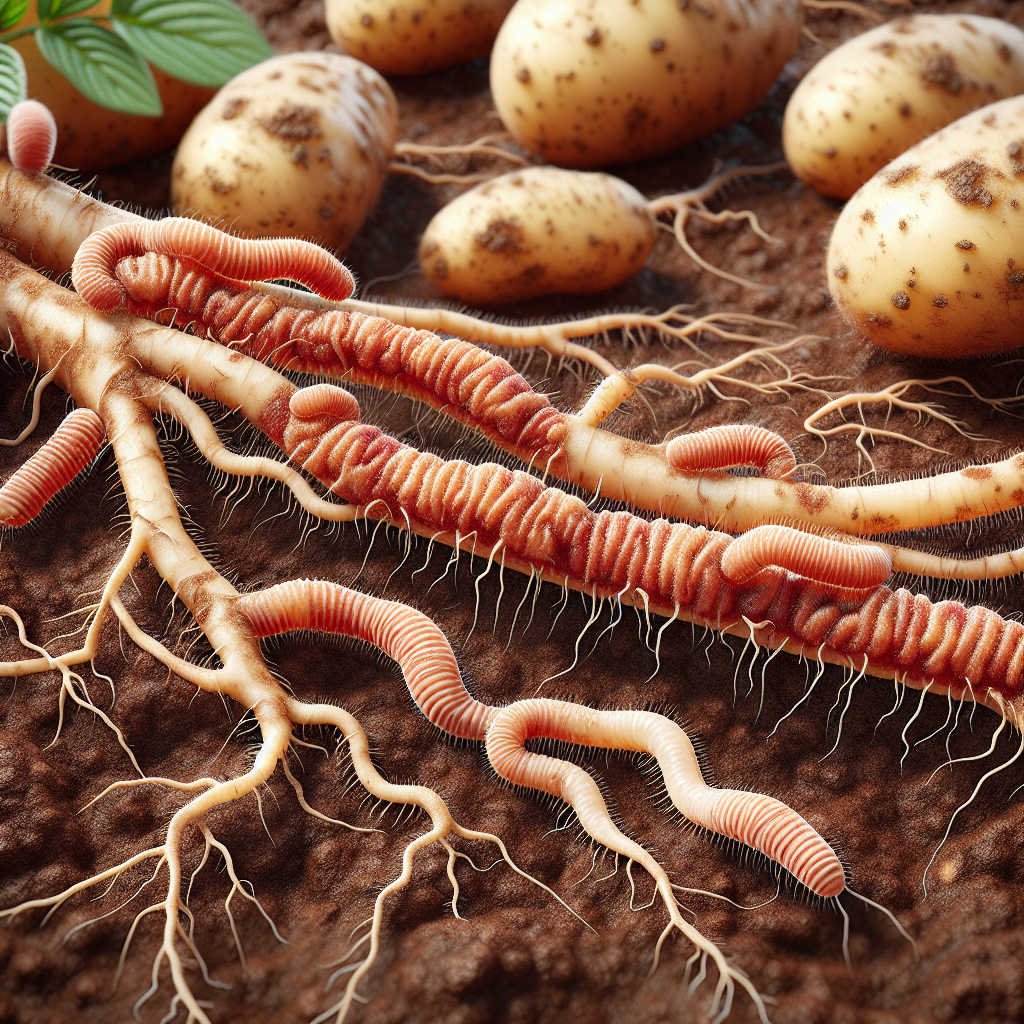
Introduction to Lesion nematodes
Lesion nematodes, scientifically known as Pratylenchus spp., represent one of the most widespread and destructive groups of plant-parasitic nematodes affecting global agriculture. These microscopic, worm-like organisms are migratory endoparasites, meaning they actively move within root tissues, feeding on cortical cells and causing extensive cell death. Unlike sedentary nematodes such as root-knot nematodes, lesion nematodes do not form galls but instead produce elongated, reddish-brown lesions on roots that can lead to secondary infections by bacteria and fungi.
Over 70 species of Pratylenchus have been identified, with P. penetrans, P. vulnus, P. coffeae, and P. brachyurus being the most economically important. They thrive in a variety of soil types and climates, making them a persistent threat to both field and horticultural crops. Annual global crop losses due to lesion nematodes are estimated in the billions of dollars, particularly in high-value crops like potato, corn, and soybeans. Understanding their biology and implementing targeted management is crucial for sustainable farming. This definitive guide covers identification, lifecycle, risk factors, organic controls, prevention, and affected crops to empower growers with professional-grade strategies.
Identifying Symptoms & Damage
Diagnosing lesion nematode infestations requires keen observation of both above-ground and below-ground symptoms, as early foliar signs can mimic nutrient deficiencies or drought stress. The hallmark sign is root damage: dig up affected plants to reveal dark, necrotic lesions on the root cortex. These lesions start as small, reddish-brown spots that elongate and coalesce, often girdling the root and leading to root tip decay. Severely infested roots appear stubby, brittle, and blackened, with reduced lateral root development.
Above-ground symptoms include stunting, yellowing of lower leaves (chlorosis), and wilting during dry periods, even when soil moisture is adequate. Plants may exhibit uneven growth across the field, with patches of poor vigor. In tomato and carrot, tubers or fruits may show internal necrosis or cracking due to impaired water and nutrient uptake. Yield reductions can reach 50% or more in moderate to heavy infestations.
To confirm, submit soil and root samples to a nematology lab for extraction and quantification. Bioassays using susceptible indicator plants like tomato seedlings can also detect low populations. Differentiate from other issues: unlike root rot, lesion damage is linear and lesion-specific; chemical tests for pathogens like Fusarium or Rhizoctonia help rule out fungal co-infections, which often exacerbate nematode damage.
Lifecycle and Progression of Lesion nematodes
Lesion nematodes have a complex lifecycle adapted for soil persistence and host invasion. Adults are 0.5-0.8 mm long, vermiform (worm-shaped), with females slightly larger and more numerous. All life stages—eggs, juveniles (J1-J4), and adults—are migratory and infective. A single female lays 20-30 eggs in root tissue or soil; eggs hatch in 5-10 days at 25°C (77°F), producing J1 juveniles that molt four times to adults in 20-45 days, depending on temperature and host availability.
Nematodes enter roots near the tip via stylet penetration, migrating intercellularly while feeding on cytoplasm. They excrete enzymes that kill cells, forming lesions. Unlike cyst or root-knot nematodes, they do not establish permanent feeding sites. Reproduction is amphimictic (males and females required), but parthenogenesis occurs in some species. Populations peak in summer with soil temperatures of 20-30°C (68-86°F).
Overwintering occurs as adults and juveniles in soil or plant debris, with survival up to 2-3 years in dry conditions. A single generation per crop cycle is common, but multiple generations occur in perennials. High populations (>500/kg soil) indicate damaging levels. Learn more about plant-parasitic nematodes for broader context.
Environmental Triggers & Risk Factors
Lesion nematodes flourish in warm, moist soils with pH 5.0-7.0 and adequate organic matter, which protects them from desiccation. Sandy loam soils facilitate movement, while heavy clays limit migration but retain populations. Warm-season crops in temperate regions see peak damage during summer droughts, as injured roots fail to absorb water.
Key risk factors include continuous monocropping of susceptible hosts, poor rotation, and contaminated equipment or irrigation water. Compaction and over-tillage disrupt natural antagonists. Co-infestations with Pythium or Phytophthora amplify damage via the "nematode-fungal complex." High nitrogen levels promote lush roots attractive to nematodes. Climate change, with rising temperatures, expands their range northward. For small farms, check out this Spring Pest Patrol blog post for seasonal insights.
Organic Control & Treatment Plans
Organic management relies on integrated strategies avoiding synthetic nematicides. Cultural Controls: Rotate with non-hosts like clover or grains for 2-3 years; P. penetrans declines 70% after corn rotation. Use cover crops like marigold (marigold) or sudangrass, which release biofumigants toxic to nematodes.
Biological Controls: Apply beneficial nematodes like Heterorhabditis bacteriophora or fungi such as Pochonia chlamydosporia. Purpurea mustard seed meal (3-6 tons/ha) suppresses populations via glucosinolates. Compost teas with Trichoderma spp. enhance root health.
Physical Methods: Solarization—cover moist soil with clear plastic for 4-6 weeks in summer—kills 80-90% of nematodes in top 20 cm. Hot water treatment (55°C for 5 min) for propagules. Biochar amendments improve soil structure and nematode trapping.
Treatment Plan: 1) Sample soil pre-planting; if >200/kg, solarize or amend. 2) Plant resistant varieties (e.g., Nemacheck potato). 3) Apply seed treatments with DLDS (1,2-decanediol). 4) Monitor with bait plants. 5) Foliar biostimulants boost plant vigor. Expect 50-80% reduction with multi-tactic IPM.
Preventing Lesion nematodes in the Future
Prevention is the cornerstone of long-term control. Start with clean, nematode-free seed, transplants, and equipment—sanitize tools with 10% bleach. Implement 3-year rotations: nematode host → grass crop → brassica cover. Use resistant cultivars where available, like 'Superior' for potato or 'Nematac' for turf.
Enhance soil biology with mycorrhizal inoculants and organic matter (>4%) to foster antagonists. Avoid deep tillage; no-till preserves predators. Test irrigation water and use drip systems to minimize splashing. Quarantine new fields and rogue infested plants. Annual soil sampling (fall) tracks population trends. For high-risk sites, pre-plant fumigation with organic alternatives like mustard green manures. Sustainable practices reduce recurrence by 90% over time.
Crops Most Affected by Lesion nematodes
Lesion nematodes attack over 400 plant species, but certain crops suffer most. Root and tuber crops like potato, sweet potato, carrot, and radish show severe yield losses up to 50%, with lesions causing forkiness and rot susceptibility. Cereals including corn, wheat, rice, and sorghum experience stalk lodging and ear rot.
Legumes such as soybeans, chickpeas, peanuts, and peas face pod deformation and reduced nodulation. Fruit crops like strawberry, avocado, banana, and pineapple suffer stunting and fruit drop. Vegetables including tomato, eggplant, onion, and garlic show toppling and bacterial co-infections. Perennials like coffee, turfgrasses, and tree fruits (P. vulnus in stone fruits) have long-term decline. Thresholds vary: >1,000/kg for corn, >5,000/kg for potato.