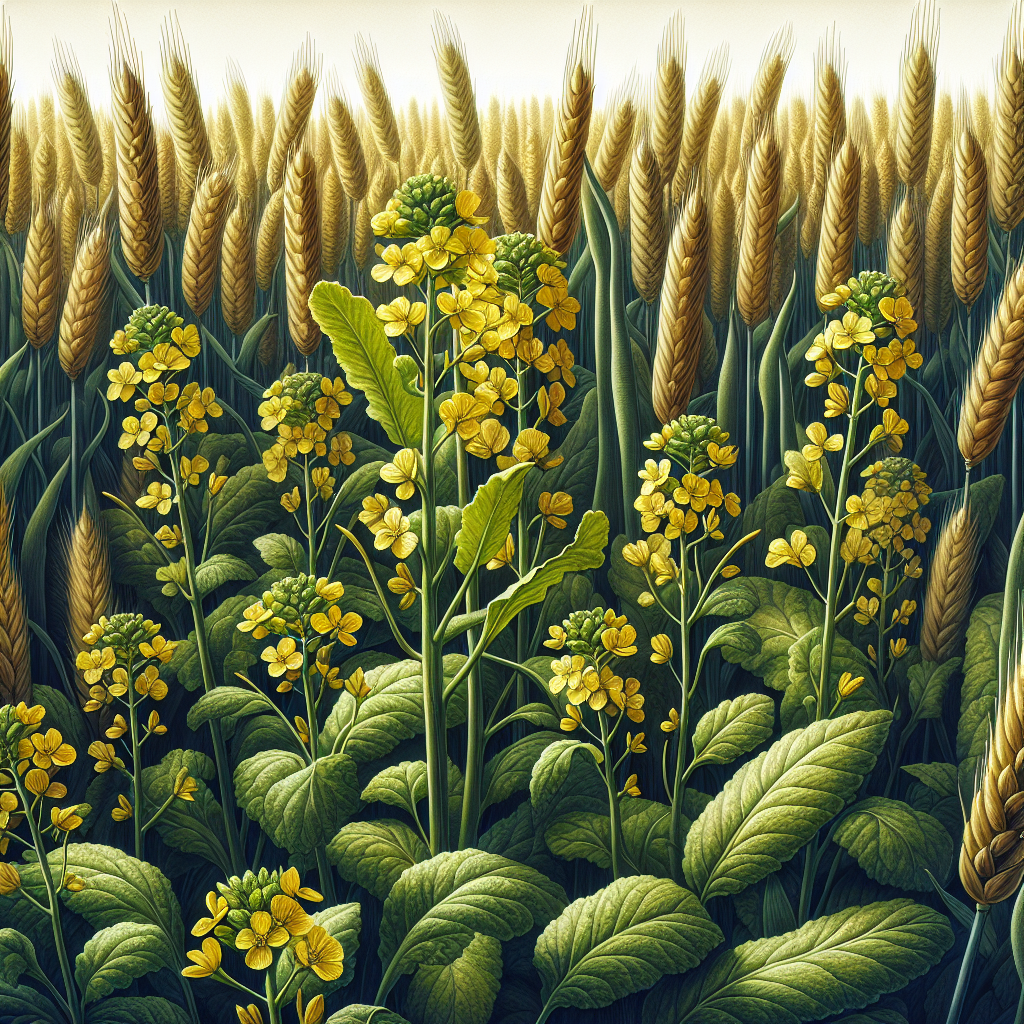
Introduction to mustard
Mustard weeds, belonging to the Brassica genus, represent one of the most persistent and problematic broadleaf invaders in modern agriculture. These fast-growing plants, often referred to simply as 'mustard,' include species like wild mustard (Brassica nigra), field mustard (Brassica rapa), and brown mustard (Brassica juncea). Native to Eurasia but now cosmopolitan, they thrive in disturbed soils and can produce thousands of seeds per plant, ensuring long-term soil seedbanks that perpetuate infestations for years.
Farmers encounter mustard in diverse settings—from grain fields to vegetable gardens—where it outcompetes crops by rapid vegetative growth and allelopathic chemical suppression of neighboring plants. Yield reductions of 20-60% are common in heavily infested wheat and corn fields, with even higher losses in specialty crops like rapeseed. Beyond direct competition, mustard serves as an alternate host for pests like aphids and diseases such as Alternaria, amplifying farm-wide risks. Effective management hinges on understanding its biology and integrating timely interventions. For small farms struggling with weed pressure, check out this blog on Spring Pest Patrol for broader organic strategies.
This definitive guide equips growers with diagnostic tools, lifecycle knowledge, and proven organic controls to reclaim fields from mustard dominance, optimizing yields sustainably.
Identifying Symptoms & Damage
Diagnosing mustard infestations early is critical, as these weeds mimic crop seedlings in brassica rotations. Look for the following hallmarks:
Seedling Stage: Cotyledons are heart-shaped with a glossy green hue, followed by first true leaves that are deeply lobed with toothed margins. Stems are erect, often hairy, and exude a pungent mustard odor when crushed—a key differentiator from crops like cabbage.
Vegetative Growth: Plants reach 1-6 feet tall, with alternate, lanceolate leaves clasping the stem. Lower leaves are larger and more dissected, while upper ones are simpler. Yellow flowers form dense clusters (racemes), each with four petals in a cross shape, blooming from spring to fall.
Damage Patterns: Mustard competes vigorously, stunting crop growth through shading and nutrient theft. In potato fields, it reduces tuber size by 15-30%; in grains, it causes lodging and harvest contamination. Seeds shatter easily, contaminating harvests and persisting in soil for 5-10+ years. Siliques (seed pods) are slender, 0.5-1 inch long, turning brown and splitting to disperse 10-20 seeds each.
Secondary Issues: Dense stands harbor flea beetles and cabbage worms, spreading to crops. Allelopathy from glucosinolate breakdown inhibits nearby seed germination, worsening bare patches.
Scout fields weekly from emergence (cool springs), using quadrats to quantify density: >5 plants/m² demands action. Differentiate from tame mustard crops by wild types' hairiness and seedpod angle (erect vs. spreading).
Lifecycle and Progression of mustard
Mustard exhibits a flexible annual or winter annual lifecycle, adapting to climates from temperate to subtropical. Understanding progression enables targeted timing:
Seed Dormancy/Germination (Fall-Winter/Spring): Seeds viable 5-50 years, germinating at 41-86°F soil temps, preferring moist, no-till soils. 80% emergence within 7-10 days.
Seedling/Rosette (2-6 weeks): Rapid root growth; rosette forms overwinter in mild areas.
Bolting/Flowering (Spring, 4-8 weeks post-germination): Elongates 1-2 feet/week in 50-70°F, flowering when 6-12 leaves present.
Seed Set (4-6 weeks post-flower): 2,000-10,000 seeds/plant; pods mature 3-4 weeks, shattering pre-harvest.
One lifecycle per year in most regions, but multiple flushes in irrigated fields. Overwintering rosettes bolt early spring, outpacing crops. Seedbank replenishes 10-20% annually without control, exploding under poor tillage.
Environmental Triggers & Risk Factors
Mustard proliferates under specific conditions:
Soil/Climatem: Neutral-alkaline, fertile loams; pH 6.0-8.0. Cool, moist springs (50-65°F) trigger mass germination; drought-tolerant once established.
Agronomic Practices: Reduced tillage preserves seedbank; wide-row crops like soybeans allow invasion. Crop rotations lacking brassica breaks (>2 years recommended) exacerbate.
Proximity Risks: Wind-dispersed pollen/seeds from roadsides, fencelines, or canola fields. Over-fertilization (high N) boosts growth.
Climate Change: Warmer winters increase overwintering, extending range northward.
Risk mapping: High in continuous grains, low in clean-tilled orchards. Monitor forecasts; this blog on weather disasters aids prediction.
Organic Control & Treatment Plans
Organic management integrates cultural, mechanical, and biological tactics for 90%+ suppression:
Cultural: Rotate with non-hosts like onion or corn (2-3 years). Cover crops (clover) smother seedlings. Flame weeding at rosette stage kills 70-90%.
Mechanical: Mow pre-bolt to prevent seed set; repeat every 2 weeks. Tillage buries seeds >2 inches deep. Hand-pull small patches (<1 acre).
Biological: Encourage predators like ground beetles. Mulch heavily (6 inches straw) suppresses germination. Biofumigants (mustard green manures) paradoxically deplete soil seedbanks via bioassays.
Treatment Timeline:
- Pre-emergence: Soil solarization (4-6 weeks summer).
- Early post: Hoeing/ cultivator at 2-4 leaf.
- Flowering: Mow/flame.
- Post-harvest: Disk seeds.
Integrated plans reduce populations 80% year 1, near-zero by year 3. Avoid contamination in brassicas.
Preventing mustard in the Future
Long-term prevention builds resilient systems:
Seed-Free Inputs: Clean equipment/seeds; test hay/manure.
Crop Rotation: 3+ years non-brassicas; include smother crops.
Soil Health: Healthy soils outcompete weeds; add OM, balance fertility.
Monitoring: Weekly scouts; thresholds: 1-2 plants/10m².
Barriers: Buffer strips with competitive grasses.
Zero-tolerance in seed crops. Track via apps for precision.
Crops Most Affected by mustard
Mustard hits row crops hardest:
Global impacts: Millions in losses annually. Protect high-value strawberry beds aggressively.