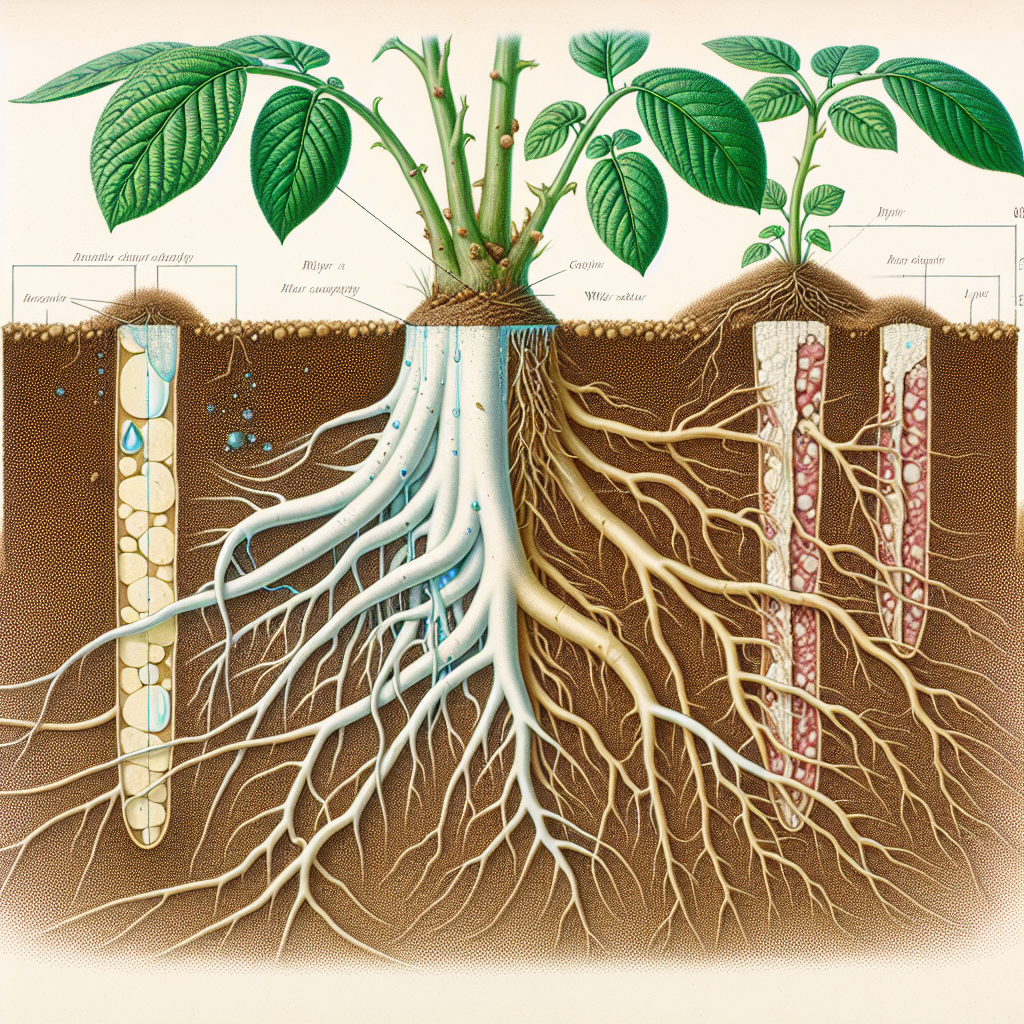
Introduction to Root decay
Root decay represents one of the most critical challenges in modern agriculture, silently undermining crop productivity by attacking the very foundation of plant health—the root system. This disease, often caused by a complex of soil-borne pathogens including Phytophthora, Pythium, Rhizoctonia, and Fusarium species, thrives in saturated soils where oxygen is scarce. Unlike foliar diseases that are visible from afar, root decay operates below ground, making it insidious and difficult to detect until significant damage has occurred.
Farmers worldwide lose billions annually to root decay, with symptoms mimicking drought stress even in wet conditions. Understanding its pathology is essential for sustainable farming. This guide provides professional-grade diagnostic tools, lifecycle insights, organic management strategies, and prevention tactics optimized for small to medium-scale operations. By mastering these techniques, growers can protect high-value crops like potato, carrot, tomato, and avocado from this pervasive threat. For more on integrated farm optimization, check this insightful Soil Health Mastery blog post.
The economic impact is staggering: in root-heavy crops, yields can drop by 50-100% in severe outbreaks. Early intervention through soil management and biological controls can reverse this trend, turning vulnerable fields into resilient ecosystems. This comprehensive resource draws from decades of botanical and entomological research to deliver actionable advice.
Identifying Symptoms & Damage
Diagnosing root decay requires a keen eye for subtle above-ground cues combined with direct root inspection. Initial symptoms include uniform wilting of foliage, often mistaken for underwatering, despite adequate or excessive irrigation. Leaves may yellow starting from the lower canopy, progressing upward as roots fail to deliver water and nutrients.
Stunted growth is a hallmark: plants appear dwarfed, with reduced vigor and sparse lateral branching. In advanced stages, stems soften at the base, and a foul, rotting odor emanates from the soil upon digging. Roots exhibit dark, mushy discoloration—healthy roots are firm and white—often with a water-soaked appearance. Lesions may girdle the root crown, leading to collar rot symptoms like cankers.
Damage patterns vary by crop. In sweet potato, tubers develop internal black rot; onion bulbs soften and collapse; ginger rhizomes shred into fibrous decay. Secondary infections by root-knot nematodes or root mealybugs exacerbate damage, creating entry points. To confirm, slice roots longitudinally: decayed tissue separates easily, unlike healthy parenchyma.
Conduct a simple field test: gently tug seedlings—if roots snap or pull free with soil attached, decay is likely. Use a trowel for soil cores to assess saturation. Lab diagnosis via culturing on selective media identifies pathogens like Phytophthora, which produces white, cottony mycelium. Differentiate from root rot complexes by noting the absence of mycorrhizal disruption. Prompt identification prevents spread via contaminated tools or water runoff.
Lifecycle and Progression of Root decay
Root decay pathogens exhibit a polycyclic lifecycle, persisting as oospores, sclerotia, or mycelium in soil for years. Infection begins with zoospores (in water molds like Pythium) or hyphae (in fungi like Rhizoctonia) penetrating root tips or wounds during wet periods. Optimal temperatures range from 20-30°C (68-86°F), with high soil moisture (>60% field capacity) essential for sporulation.
Primary infection occurs at the root elongation zone, where thin-walled cells are vulnerable. Pathogens produce enzymes (cellulases, pectinases) that dissolve cell walls, creating cavities filled with mycelium. Progression involves radial spread, girdling vascular tissues and blocking xylem. Plants experience acute wilt as transpiration exceeds uptake.
Secondary cycles amplify via splashing rain or irrigation, infecting nearby plants. In perennials like avocado, decay advances to the trunk, causing crown rot. Overwintering structures ensure recurrence; for instance, Phytophthora oospores survive 5+ years. Disease severity peaks in warm, wet springs, declining in dry summers. Understanding this cycle informs timing of interventions, such as pre-plant soil solarization to kill propagules.
Environmental Triggers & Risk Factors
Root decay flourishes under specific conditions: compacted, poorly drained soils with pH 5.5-6.5 favor pathogen activity. Over-irrigation creates anaerobic zones, reducing beneficial aerobes like Trichoderma. High organic matter without aeration traps moisture, while clay-heavy soils retain water.
Crop rotation lapses heighten risk; continuous solanaceous crops like tomato and potato build inoculum. Acidic soils from overuse of ammonium fertilizers suppress root health. Warm nights (>18°C) with daytime rain trigger sporangia release. Weed hosts like nightshades harbor pathogens.
Risk factors include mechanical injury from tillage, introducing entry points. Contaminated transplants or tools spread mycelium. Climate change exacerbates issues with erratic rains. For detailed prevention tied to soil strategies, refer to the Phytophthora wiki page. Assess your field with percolation tests: if water sits >24 hours, amend immediately.
Organic Control & Treatment Plans
Organic management emphasizes cultural, biological, and physical tactics. First, improve drainage: raised beds (30-45 cm high) for carrot and beet; tile drains for fields. Solarize soil pre-planting—clear plastic for 4-6 weeks kills 80-90% propagules via heat (>45°C).
Biologicals shine: Trichoderma harzianum (e.g., RootShield) colonizes roots, outcompeting pathogens. Apply as seed drench (10g/kg seed) or soil mix (5-10 kg/ha). Bacillus subtilis (Serenade) produces antibiotics; foliar + drench at 3-5 L/ha. Mycorrhizal inoculants enhance resilience in cassava.
Remove infected plants promptly, avoiding composting. Mulch with coarse organics (straw, 5-10 cm) to moderate moisture. Companion planting with marigold or thyme suppresses nematodes. Hydrogen peroxide drenches (3% solution, 1:10 dilution) oxygenate soil acutely. For outbreaks, aerated compost teas (ACT) with molasses boost antagonists.
Integrated plans: monitor with bait tests (float radish seeds in soil slurry for Pythium). Rotate to brassicas or grains for 2-3 years. Test efficacy: healthy roots should resist tugging post-treatment. These methods yield 70-90% control without synthetics.
Preventing Root decay in the Future
Prevention trumps cure through proactive soil stewardship. Start with resistant varieties: russet burbank potato for Phytophthora tolerance. Optimize planting: space for air flow, avoid low spots. Use certified disease-free seed; hot-water treat rhizomes (49°C, 30 min) for ginger.
Soil amendments: incorporate lime to pH 6.5-7.0; gypsum for sodic clays. Biofumigants like mustard cover crops release isothiocyanates upon incorporation. Cover crops (clover) improve structure, suppressing pathogens. Sanitize tools with 10% bleach.
Irrigate precisely: drip systems minimize foliage wetting; schedule based on tensiometers (<30 kPa). Long-term, foster microbiomes with vermicompost (2-5 t/ha). Annual audits—dig 10 random roots/acre—track progress. These habits reduce incidence by 80%, ensuring bountiful harvests.
Crops Most Affected by Root decay
Root decay plagues diverse crops, especially those with fibrous or taproot systems. Solanaceae like tomato, potato, and eggplant suffer heavily due to shallow roots. Root vegetables—carrot, beet, radish—fork and hollow out.
Tropicals including avocado, mango, banana, ginger, and cassava face devastation in humid zones. Legumes (soybeans, chickpeas) nodulate poorly. Perennials like strawberry and asparagus decline over seasons. Grains (corn) show seedling losses. Prioritize vigilance in these for sustained yields.