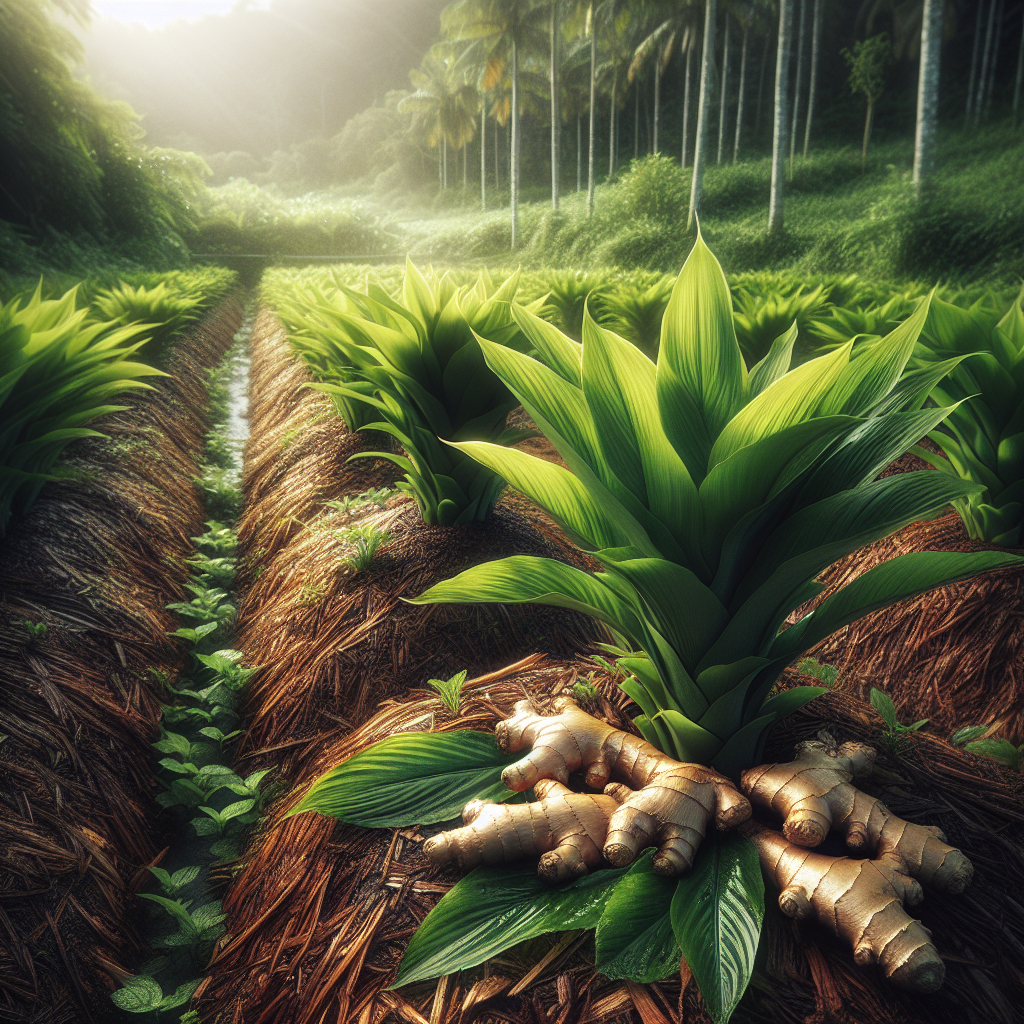
Introduction to Ginger
Aromatic, pungent, and botanically fascinating, ginger is one of the world’s oldest cultivated spice crops and remains essential in both subsistence gardens and commercial tropical agriculture. The harvested portion is not a true root but a branched rhizome: a modified underground stem that stores energy, produces shoots from visible buds or “eyes,” and expands laterally through the growing season. This growth habit explains much of ginger agronomy: it needs loose soil for rhizome enlargement, consistent moisture without saturation, and protection from cold because the plant evolved in humid tropical environments.
Ginger has been cultivated for millennia across South and Southeast Asia and spread early through Arab, Roman, African, and later European trade networks. Its long agricultural history has produced many landraces and market types, selected for fiber content, essential oil composition, pungency, rhizome size, skin color, and suitability for fresh use, drying, candying, extraction, or seed stock. Fresh “green ginger” is harvested young for tender, juicy rhizomes with delicate flavor, while mature ginger develops stronger aroma, firmer texture, and better storage life.
For growers, ginger sits at an interesting point between vegetable and spice production. It can be managed intensively in raised beds, under partial shade, in high-rainfall field systems, or in containers and protected culture. Like Turmeric, it belongs to the Zingiberaceae family and shares a preference for warmth, high organic matter, and friable soils. However, ginger is generally more sensitive to standing water around the rhizome zone, especially during sprouting and late maturation.
High-quality ginger production depends less on dramatic interventions and more on precision in fundamentals: healthy planting rhizomes, disease-free soil, excellent drainage, steady nutrition, and thick organic mulches that mimic the forest-edge conditions in which the plant performs best. Where these factors are optimized, ginger can be exceptionally productive and profitable, whether grown for household consumption, farmers markets, seed rhizomes, or specialty spice sales.
Botanical Profile of Ginger
Ginger is a perennial monocot grown commercially as an annual or short-duration perennial for its rhizome. Taxonomically, it belongs to the family Zingiberaceae, which also includes turmeric, cardamom, galangal, and several ornamental gingers. The plant rarely sets useful seed in cultivation, so it is propagated vegetatively through rhizome sections containing viable buds.
The visible aboveground “stems” are pseudostems formed by tightly rolled leaf sheaths. These upright shoots typically reach 60 to 120 cm in many cultivated types, though height varies by cultivar, fertility, and shade level. Leaves are narrow, lanceolate, alternating, and arranged in two ranks, giving the plant a clean vertical architecture. When actively growing, healthy foliage is medium to deep green with no yellow striping, water-soaked lesions, or marginal necrosis.
Beneath the soil surface, the rhizome grows horizontally and forms swollen segments called “fingers.” Commercial value is strongly influenced by finger number, thickness, smoothness, skin finish, fiber level, and internal color. Young rhizomes are pale, thin-skinned, and highly succulent. Mature rhizomes become more fibrous and pungent as structural tissues and secondary metabolites accumulate.
Flowering in cultivated ginger is variable and often uncommon in production systems focused on rhizome yield. When present, inflorescences arise separately or from basal shoots depending on type and conditions, but flowers have limited significance for propagation. More important are bud viability, rhizome health, and freedom from latent bacterial and fungal infection.
Cultivars and local strains differ substantially. Some are preferred for fresh market because they produce plump, low-fiber rhizomes with mild heat. Others are selected for dry ginger production, where higher fiber and stronger oleoresin or essential oil concentration may be acceptable or even desirable. In tropical production belts, farmers often maintain named local clones adapted to rainfall pattern, soil type, and market demand. When choosing planting stock, prioritize varieties known for resistance or tolerance to Rhizome rot, high tiller production, uniform rhizome development, and good postharvest keeping quality.
Soil, pH, and Climate Requirements for Ginger
Ginger performs best in deep, loose, humus-rich, well-drained loam or sandy loam with abundant organic matter and excellent aeration in the upper 20 to 30 cm of soil. Heavy clay is risky unless raised beds, drainage channels, and organic amendments are used aggressively. Poorly structured soil restricts rhizome expansion, increases misshapen fingers, and creates anaerobic zones that favor Soft rot pathogens.
The ideal soil pH is generally 5.5 to 6.5, though ginger can tolerate slightly broader conditions if fertility and drainage are good. Below pH 5.0, nutrient availability becomes less balanced, and aluminum or manganese toxicity may interfere with root and rhizome health. Above pH 7.0, micronutrient lockout becomes more likely, particularly iron and zinc. If soil is too acidic, use agricultural lime several weeks to months before planting. If alkaline, build organic matter and consider sulfur-based acidification only after a soil test.
Organic matter is not optional for top-tier ginger production. A target of 3% to 5% soil organic matter or higher in garden systems improves water-holding capacity while preserving porosity. Well-decomposed compost, leaf mold, aged farmyard manure, and composted crop residues are particularly valuable. Avoid fresh manure immediately before planting because it can stimulate excessive microbial heating, attract pests, and increase disease pressure if incompletely decomposed.
Climate requirements are distinctly tropical to subtropical. Ginger grows best at 22 to 30°C, with vigorous sprouting commonly beginning once soil temperatures remain above about 20°C. Growth slows markedly below 18°C, and chilling injury can occur well above freezing if exposure is prolonged. Frost is typically fatal to foliage and may damage rhizomes in the soil. In temperate regions, ginger must be grown during the warm season, in protected tunnels, or in containers moved under cover.
Humidity is beneficial, but stagnant, perpetually wet conditions are not. The crop thrives in areas with moderate to high rainfall, roughly 1200 to 2500 mm annually, provided drainage is excellent and rain is not concentrated into prolonged waterlogging events. In lower-rainfall zones, irrigation must maintain consistent moisture. Soil should feel evenly moist at 5 to 10 cm depth, never powder-dry and never sticky or sour-smelling. A useful field test is to squeeze a handful of soil from the root zone: it should hold together lightly, then crumble with a touch, rather than smear into a wet ribbon.
Ginger tolerates light shade and often benefits from 20% to 40% filtered shade in very hot climates, especially where afternoon sun is intense and humidity is moderate. Excessive shade, however, can reduce carbohydrate accumulation and rhizome bulking. In open-field production, moderate light with mulched soil often gives the best yield-quality balance. For growers interested in broader strategies for building resilient growing media and long-term fertility, see soil health tips.
Step-by-Step Planting & Propagation
Start with certified disease-free seed rhizomes whenever possible. This is one of the most important decisions in ginger production because Bacterial wilt, Fusarium, Pythium, and Nematodes are commonly introduced through infected planting material. Choose firm, plump rhizomes with intact skin, no shriveling, no sour odor, no soft areas, and multiple clearly visible buds. Each planting piece should ideally weigh 20 to 40 g and carry at least one strong bud, though two to three buds per piece often improve stand establishment.
Before cutting, sanitize knives or secateurs with alcohol or a disinfectant solution between batches. Cut large rhizomes into seed pieces and allow the cut surfaces to air-dry and suberize for 24 to 48 hours in a shaded, airy location. Some growers dust the cut surfaces with wood ash, Trichoderma-based bioprotectants, or finely sieved compost to reduce infection risk, though cleanliness and drying are more important than any coating.
Prepare beds 20 to 30 cm high if rainfall is heavy or soil drainage is marginal. Beds 1 to 1.2 m wide are practical for hand management. Incorporate well-rotted compost into the topsoil before planting. In field systems, many growers form shallow furrows on raised ridges so rhizomes sit in loose soil but are protected from direct runoff.
Plant when warm conditions are reliably established. In tropical monsoon systems, this often means early rainy season once soil has moisture but before extreme saturation. In subtropical or temperate systems, plant in late spring when nights are warm and soil temperatures are consistently above 20°C.
Place seed pieces 5 to 8 cm deep, bud facing upward or sideways, with spacing adjusted to market goals. For home gardens or intensive specialty production, 20 to 30 cm between plants and 30 to 40 cm between rows is common. In larger systems, 25 to 30 cm within rows and 40 to 60 cm between rows allows easier earthing up, weeding, and airflow. Closer spacing may increase total yield per area but can reduce rhizome size and increase humidity-related disease pressure.
After planting, cover lightly with friable soil and apply a mulch layer 5 to 10 cm thick using straw, chopped leaves, dried grass, or other clean organic material. Mulch is especially valuable because it buffers temperature, reduces crusting, limits weeds, and keeps the rhizome zone evenly moist. Sprouting may take 2 to 6 weeks depending on temperature, rhizome dormancy, and cultivar.
In cooler climates, pre-sprouting is highly effective. Place seed rhizomes in trays of barely moist coco coir, compost, or peat-free substrate at 24 to 28°C with high humidity but good ventilation. Once buds swell and short shoots appear, transplant carefully into final beds or large containers. This can shorten the field cycle and improve uniformity.
Container growing is very feasible if depth and width are sufficient. Use broad containers at least 30 cm deep, filled with a coarse, organic-rich, free-draining medium. Plant fewer pieces than you might expect; crowding sharply reduces rhizome development.
Care & Maintenance regimes for Ginger
Water management is the central skill in ginger cultivation. The crop needs consistent moisture from sprouting through active vegetative growth and rhizome bulking, but the root-rhizome zone must remain oxygenated. A practical target is to keep the upper 15 cm of soil uniformly moist, roughly around 60% to 80% of field capacity in agricultural terms. In simpler terms, the soil should feel cool and damp every day under mulch, but free water should never pool around the crowns. If leaves begin curling inward during the hottest part of the day and remain limp into evening, the crop is likely under-watered. If lower leaves yellow, pseudostems look soft, or the soil smells fermented, overwatering is likely.
Young plantings require lighter, more frequent irrigation because roots are still shallow. Once the stand is established, deeper watering at wider intervals is better than daily surface sprinkling. Drip irrigation is ideal because it maintains even moisture without wetting foliage unnecessarily. In sandy soils, this may mean watering every 2 to 3 days in hot weather. In loams with heavy mulch, watering may be needed only every 4 to 7 days, depending on rainfall and evapotranspiration.
Nutrition should be steady rather than excessive. Ginger responds well to balanced fertility, particularly nitrogen early for canopy establishment and potassium later for rhizome development, firmness, and aroma. A productive organic base program often includes compost before planting, then side-dressings of vermicompost, composted manure, oilseed meals, or liquid feeds at 30- to 45-day intervals. If using mineral fertilizers, avoid large single doses of nitrogen, which can create lush, weak top growth and reduce rhizome quality.
A common professional approach is to divide total nutrition into three phases: establishment, canopy expansion, and rhizome bulking. During establishment, focus on phosphorus availability and moderate nitrogen to support root activity and sprouting. During canopy expansion, maintain enough nitrogen for leaf area and tiller formation. During rhizome bulking, emphasize potassium and adequate magnesium to support carbohydrate movement, stress tolerance, and rhizome density.
Mulching should be renewed as the season progresses. Keep 5 to 8 cm of clean mulch around plants, but do not bury emerging shoots too heavily. Earthing up, or pulling loose soil toward the base of plants once they are established, helps cover developing rhizomes, prevents greening and cracking, and encourages better finger formation.
Weed control is crucial in the first 8 to 12 weeks, when ginger is slow to fully canopy over. Hand weeding is safest because shallow cultivation can injure feeder roots and rhizomes. Once mulch and foliage close the surface, weed pressure usually declines.
If growing under strong tropical sun, temporary shade netting or interplanting with light-canopy species can reduce leaf scorch and heat stress, especially in areas with low humidity and hot dry winds. However, maintain airflow. Dense, enclosed shade with persistently wet leaves invites foliar disease.
Watch plant development closely. A vigorous stand will produce successive shoots, gradually thicker pseudostems, and expanding clumps. Pale leaves can indicate nitrogen deficiency, iron lockout, waterlogging, or root disease, so diagnosis should include soil moisture and root inspection rather than fertilizer alone.
Pests, Diseases & Organic Management
The most serious problems in ginger are usually below ground. Rhizome rot, Soft rot, Bacterial wilt, Fusarium yellows, and Nematode damage can devastate plantings before symptoms are obvious. Prevention is far more effective than rescue.
Soft rot, commonly associated with Pythium species, is especially destructive in warm, waterlogged soils. Early signs include yellowing and collapse of central leaves, foul-smelling soft rhizomes, and water-soaked tissues near the crown. Bacterial wilt can produce rapid wilting, vascular browning, and ooze from cut stems or rhizomes. Fusarium often causes gradual yellowing, stunting, and dry rot symptoms. In all cases, infected clumps should be removed immediately with surrounding soil and destroyed, not composted.
Organic disease management begins with clean seed stock, 3- to 4-year crop rotation away from ginger and related hosts, raised beds, drainage channels, and avoidance of infested fields. Biological inoculants such as Trichoderma spp. may help suppress soilborne pathogens when integrated with sanitation and organic matter management. Solarization can reduce pathogen load in small plots before planting. Never save seed rhizomes from suspicious or weak plants.
Common insect pests include Shoot borers, Aphids, Scales, Thrips, White grubs, and Rhizome-feeding larvae depending on region. Shoot borer attack may show as dead central shoots, frass near bore holes, and stunted tillers. Remove and destroy infested shoots promptly. Sticky traps can help monitor flying pests in protected systems. Neem-based products, insecticidal soaps, Beauveria bassiana, and spinosad may be useful depending on local regulations and pest identity.
Nematodes are often underestimated. Root-knot Nematodes and lesion Nematodes can cause poor vigor, galled or damaged roots, and increased susceptibility to secondary rots. Crop rotation with non-hosts, organic amendments, marigold integration in some systems, and biofumigant cover crops can help reduce pressure.
Leaf spot diseases appear as brown or necrotic lesions, sometimes with yellow halos, especially where humidity is high and airflow poor. Remove heavily affected foliage, avoid overhead irrigation late in the day, and maintain spacing that allows rapid drying after rain.
A practical integrated organic program includes: starting with clean rhizomes, pre-plant bed sanitation, generous but mature compost, thick mulch, moderate irrigation, regular scouting, immediate rogueing of diseased clumps, and postharvest destruction of infected residues. The crop should be inspected weekly and after every extended rainy spell, since many severe infections become visible only after saturated soil periods.
Harvesting, Curing & Optimal Storage
Harvest timing depends on intended use. Young ginger for fresh culinary use can be dug as early as 4 to 6 months after planting, when rhizomes are tender, lightly skinned, and less fibrous. This “green ginger” is excellent for pickling, candying, fresh juice, and delicate cooking, but it stores poorly because the skin is thin and easily damaged.
For mature ginger, wait about 8 to 10 months, sometimes longer depending on cultivar and climate, until the foliage begins yellowing and naturally senescing. At this stage, rhizomes have developed stronger aroma, higher dry matter, and better keeping quality. Reduce irrigation 1 to 2 weeks before harvest if soil conditions allow. This helps firm the rhizomes and reduces harvesting damage in wet soils.
Lift plants carefully with a digging fork or broadfork rather than pulling by the stems alone. Rhizomes bruise easily, and wounds increase storage losses. Shake off loose soil, trim tops, and separate marketable rhizomes from seed stock candidates. Seed rhizomes should come only from vigorous, disease-free plants with true-to-type characteristics.
Wash gently if selling fresh, but do not scrub aggressively; skin abrasions shorten shelf life. For immediate fresh market, clean rhizomes can be air-dried in shade until surface moisture disappears. For longer storage, cure ginger in a warm, shaded, well-ventilated space for several days so minor wounds dry and suberize. Direct sun should be avoided because it causes shriveling and can degrade quality.
Ideal storage depends on whether the product is fresh market, seed stock, or dried spice. Fresh mature ginger stores best at about 12 to 14°C with relative humidity around 65% to 75%. Colder conditions can cause chilling injury, pitting, and internal breakdown, while overly dry air accelerates shriveling. For seed rhizomes, store in cool, well-ventilated conditions with moderate humidity and inspect regularly for rot. Some growers pack rhizomes in dry sand, sawdust, or coir to buffer humidity and reduce desiccation.
For dried ginger production, rhizomes are cleaned, sometimes peeled depending on market standard, sliced or left whole, and dried at low to moderate temperatures until moisture content is low enough for safe storage, generally below about 10%. Proper drying preserves aroma while preventing mold growth.
Companion Planting for Ginger
Ginger benefits most from companions that improve microclimate, reduce weed pressure, stabilize soil moisture, or provide light filtered shade without aggressive root competition. In tropical gardens and diversified farms, it is often grown beneath widely spaced fruit trees, along the edges of banana circles, or in agroforestry-style beds where dappled light protects foliage from harsh afternoon sun. Light-canopy species such as Banana can be particularly compatible in humid climates if spacing is generous and water competition is managed.
Good herbaceous companions include legumes with restrained growth habits, such as bush beans or low, non-smothering cover crops, provided they do not overcrowd the bed. Nitrogen-fixing species can modestly support system fertility, but they should never create heavy shade or trap excessive humidity around the ginger canopy. Marigolds are sometimes used at bed edges as part of a broader Nematode-management strategy, though they are not a cure-all.
Avoid planting ginger next to highly invasive, heavy-feeding, or water-demanding species that produce dense root mats. Large cucurbits, rampant sweet potato vines, and aggressively spreading grasses can reduce airflow, complicate harvesting, and compete for nutrients in the same shallow root zone.
Companion design should also consider disease ecology. Ginger does best when neighboring plants do not prolong leaf wetness or create stagnant air near the base. A mixed planting with modest vertical layering, strong mulching, and accessible paths is usually superior to dense intercropping. The best companions are those that preserve a warm, moist, but aerated rhizosphere while allowing regular inspection for pests and disease.