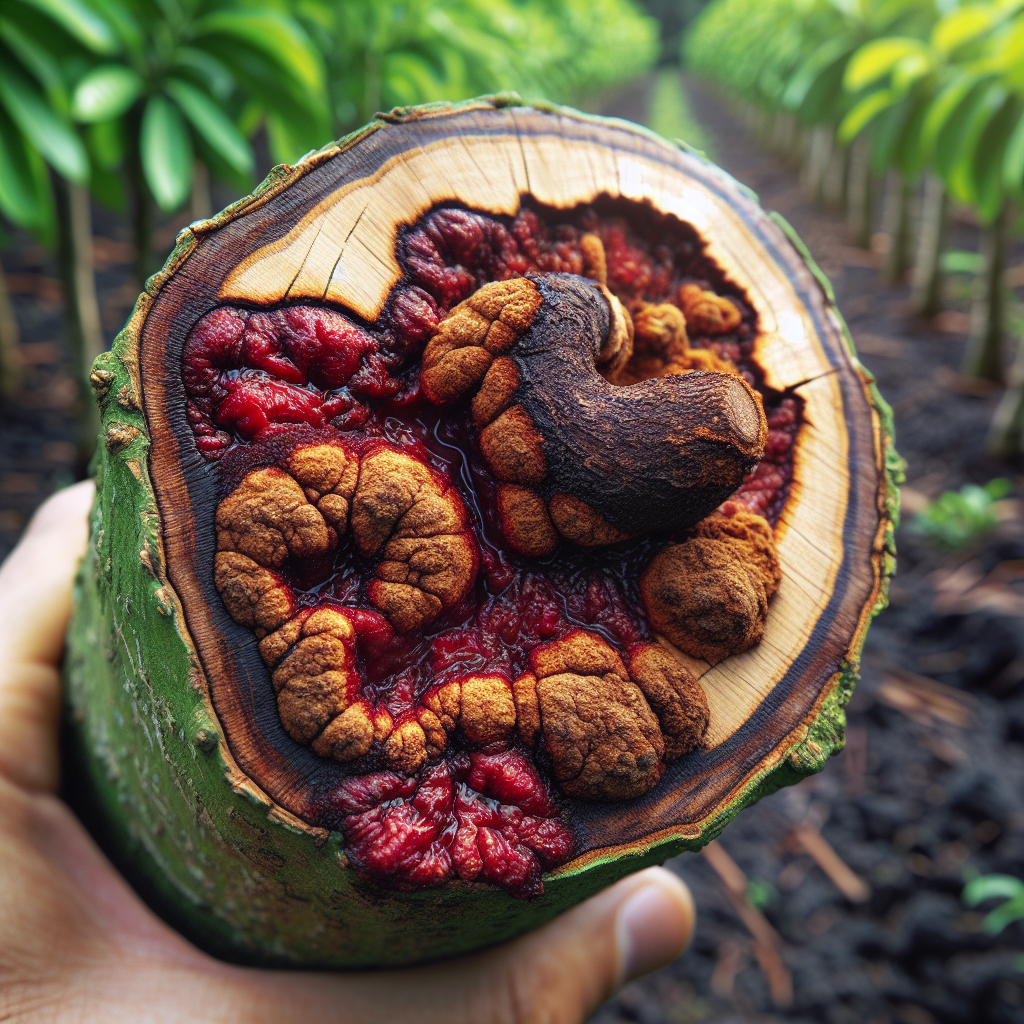
Introduction to Collar rot
Collar rot, also known as crown rot or trunk canker rot, is one of the most destructive diseases affecting agricultural crops worldwide, particularly in warm, humid climates. This soilborne fungal infection targets the collar region—the critical junction where the stem meets the roots—causing tissue death that girdles the plant, blocking water and nutrient transport. Primarily caused by oomycete pathogens in the genus Phytophthora, such as Phytophthora parasitica, P. palmivora, and P. cinnamomi, collar rot can wipe out entire plantings if not managed proactively.
Farmers and gardeners often first notice collar rot during prolonged rainy periods or after heavy irrigation, when symptoms appear suddenly. The disease is especially problematic in orchards, nurseries, and high-value vegetable fields, leading to significant economic losses. Unlike foliar diseases, collar rot operates belowground or at soil level, making it insidious and hard to spot until advanced stages. Understanding its biology is crucial for effective control, as chemical options are limited and resistance is building in some pathogen strains.
This guide provides professional-grade diagnostic criteria, lifecycle insights, organic management strategies, and prevention tactics tailored for small farms and commercial operations. By integrating cultural practices with vigilant monitoring, growers can minimize collar rot's impact and protect yields. For hyper-local insights on disease pressure, check out this Soil Health Mastery blog post to optimize your farm's foundation against pathogens like Phytophthora.
Identifying Symptoms & Damage
Accurate diagnosis starts with recognizing collar rot's hallmark signs, which distinguish it from drought stress, rodent damage, or other rots like root rot. The primary symptom is a dark, water-soaked lesion at the soil line on the lower stem or collar, often with a reddish-brown to black discoloration. As the infection progresses, the bark sloughs off in irregular patches, revealing sunken, necrotic wood underneath. A foul, fermented odor may emanate from advanced lesions, especially in warm weather.
Above ground, affected plants exhibit rapid wilting of foliage, starting with younger leaves, even under adequate soil moisture—this is due to vascular girdling. Leaves may turn yellow, then brown and droop, mimicking wilt diseases like Fusarium wilt. In fruit trees such as avocado or citrus, branches die back progressively, and gum or sap may ooze from the lesion. Seedlings and young transplants show stunted growth, basal rot, and toppling at the soil line, similar to damping-off.
To confirm, gently scrape back bark at soil level: healthy tissue is firm and white-green; infected tissue is soft, discolored, and may harbor white mycelium or sporangia under humid conditions. Cross-sections reveal brown vascular discoloration extending into roots. Yield impacts are severe—up to 50-100% loss in orchards, with surviving trees stunted and prone to secondary invasions by borers or slugs. Differentiate from mechanical injury by the lesion's irregular margins and absence of callus formation.
Lifecycle and Progression of Collar rot
Phytophthora species driving collar rot are not true fungi but oomycetes with a complex lifecycle favoring moist environments. The pathogen survives in soil as thick-walled oospores or chlamydospores for years, even in dry conditions. Upon soil saturation, zoospores—motile, swimming spores—are released from sporangia, infecting roots and collar tissue through wounds or natural openings.
Primary infection occurs at the soil line, where fluctuating water levels create ideal microclimates. Lesions expand girdle-wise, killing cambium and phloem within weeks. Infected plants release secondary zoospores during rain, splashing to nearby stems or spreading via irrigation runoff. Optimal temperatures (25-30°C/77-86°F) accelerate sporulation, with cycles repeating every 48-72 hours in wet weather.
Progression varies by host: in annuals like tomatoes, death follows within days; perennials like mango may linger for months, serving as reservoirs. Overwintering structures ensure recurrence, exacerbated by poor sanitation. Understanding this splash-dispersal and soil persistence underscores prevention's importance over curative measures.
Environmental Triggers & Risk Factors
Collar rot epidemics hinge on environmental cues: prolonged soil moisture above field capacity (>20% volumetric water) for 48+ hours triggers zoospore release. Heavy clay soils, low-lying fields, and over-irrigation are prime enablers, as waterlogging deprives roots of oxygen, stressing plants and activating dormant pathogens. High temperatures (above 25°C) compound risks, as do neutral-alkaline soils (pH >7) that favor Phytophthora.
Cultural factors amplify vulnerability: deep planting buries the collar below soil, inviting infection; mulch piled against trunks retains moisture; wounded plants from cultivation or root-knot nematodes provide entry points. Susceptible varieties, excessive nitrogen fertilization (promoting succulent growth), and monoculture intensify outbreaks. Flooded fields post-rain or in flood-prone tropics see 80% incidence spikes. Climate change, with erratic monsoons, heightens risks in regions like Southeast Asia and Florida.
Organic Control & Treatment Plans
Organic management emphasizes exclusion and cultural suppression, as no curative sprays fully eradicate established infections. Start with affected plant removal: excavate 30-50 cm radius around the base, bag debris, and burn or solarize to kill soil inoculum. Avoid replanting in infested spots for 3-5 years.
Soil solarization—covering moist soil with clear plastic for 4-6 weeks in summer—kills 70-90% of Phytophthora via heat (above 45°C). Amend with organic matter like composted manure to boost biocontrol microbes antagonistic to oomycetes. Apply beneficial Trichoderma or Bacillus subtilis drenches (e.g., 10^9 CFU/L) every 14 days during peak risk, enhancing root health.
Phosphonate treatments (potassium phosphite at 2-4 mL/L foliar/soil drench) boost plant defenses systemically without fungicidal action—apply preventively. Copper-based organics (fixed copper hydroxide) as trunk paints or basal sprays offer partial protection but rotate to prevent resistance. Improve drainage with raised beds (20-30 cm high) and gravel mulches keeping soil line dry. For Hass Avocado, prune low branches and paint trunks white to reflect heat. Monitor weekly, using bait tests (e.g., pear bait in soil samples) for early detection. Integrated plans reduce incidence by 60-80%.
Preventing Collar rot in the Future
Prevention trumps cure: select resistant rootstocks (e.g., Dusa for avocado, Cleopatra for citrus) and certified disease-free transplants. Plant shallow, ensuring bud union 5-10 cm above soil; hill up mounds in flood-prone areas. Optimize irrigation—drip systems over overhead—to minimize wetting. Test soil drainage pre-planting: dig holes, fill with water; >24-hour retention signals high risk—mitigate with tile drains or gypsum.
Maintain 10-15 cm trunk clearance from mulch/soil; use coarse gravel mulches. Rotate crops, avoiding Phytophthora hosts for 3+ years. Boost soil biology with cover crops like mustard (biofumigant) or clover. Scout routinely, especially post-rain, and quarantine suspects. Long-term, breed for resistance and use AI-driven forecasts for irrigation timing—see Why Timing Kills Small Farm Profits for tech integration. These IPM pillars sustain healthy plantings.
Crops Most Affected by Collar rot
Collar rot strikes a wide host range, but certain high-value crops suffer most. Fruit trees top the list: avocado (especially young grafts), citrus (orange, lemon), mango, and peach face 20-50% losses in wet tropics. Vegetables like tomato, eggplant, bell pepper, and cucurbits (cucumber) succumb rapidly in nurseries. Ornamentals (e.g., rhododendron) and nuts (almond) also vulnerable. In grains, rare but hits seedlings of corn. Regional hotspots: Florida avocado groves, Indian mango orchards. Tailor strategies to your crops for resilience.