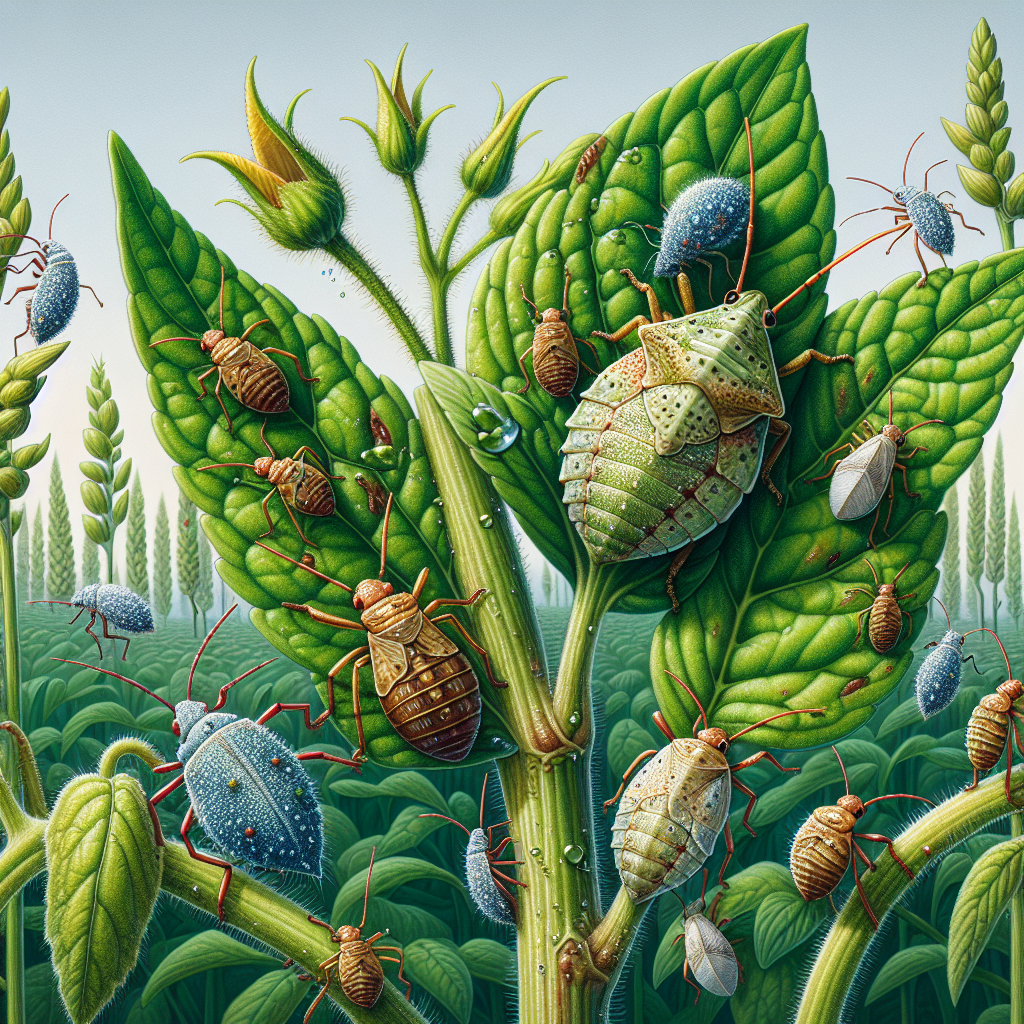
Introduction to piercing-sucking bugs
Piercing-sucking bugs represent one of the most pervasive pest groups in agriculture, encompassing orders like Hemiptera, including both heteropterans (true bugs such as stink bugs and leaf-footed bugs) and homopterans (like aphids, whiteflies, and leafhoppers). These insects use stylet mouthparts to pierce plant cell walls and suck nutrient-rich sap directly from phloem and xylem tissues. This feeding strategy not only deprives plants of essential fluids but also injects toxic saliva that disrupts plant physiology, causing cellular damage, wilting, and honeydew excretion that fosters sooty mold growth.
Globally, piercing-sucking bugs inflict billions in crop losses annually, affecting over 80% of commercial crops. They are particularly notorious for vectoring devastating plant viruses, such as those transmitted by whiteflies or aphids. In warm, humid climates, populations explode, making early detection and integrated pest management (IPM) essential for growers. This guide provides professional-grade diagnostics, lifecycle insights, organic controls, and prevention strategies to safeguard yields.
Identifying Symptoms & Damage
Diagnosing piercing-sucking bug infestations requires keen observation of both direct and indirect damage. Primary symptoms include stippling—tiny white or yellow spots on leaves from chlorophyll loss at feeding sites. Leaves curl, crinkle, or cup upward as plants respond to sap loss and toxin injection. Severe infestations cause yellowing (chlorosis), wilting, stunted growth, and premature leaf drop.
Inspect undersides of leaves, stems, and new growth for clusters of bugs. Aphids appear as soft-bodied, pear-shaped insects in green, black, or pink hues; whiteflies as tiny, moth-like flyers rising in clouds when disturbed. Stink bugs and plant bugs are shield-shaped with piercing beaks. Honeydew, a sticky residue, coats leaves, attracting ants and promoting sooty mold—a black fungal growth that blocks photosynthesis.
Fruit damage manifests as deformed, scarred, or aborted pods and seeds. In tomatoes or soybeans, expect cat-facing (misshapen fruit) or seed shriveling. Differentiate from chewing pests by the absence of holes; sucking damage is characterized by discoloration and distortion without tissue removal. Use a 10x hand lens to confirm stylet punctures and monitor for secondary issues like powdery mildew thriving on honeydew.
Lifecycle and Progression of piercing-sucking bugs
Piercing-sucking bugs exhibit diverse lifecycles, typically hemimetabolous (incomplete metamorphosis) with egg, nymph, and adult stages. Eggs are laid in clusters on leaf undersides or stems—barrel-shaped for aphids, crescent for stink bugs. Nymphs emerge within 3-10 days, resembling wingless adults, and undergo 4-6 molts over 2-6 weeks, depending on species and temperature.
Adults, often winged, live 1-3 months, with females producing 100-500 offspring. Aphids alternate parthenogenetic (asexual) reproduction in summer with sexual forms in fall, enabling rapid population booms. Stink bugs overwinter as adults in crop debris. Progression accelerates in temperatures of 75-85°F (24-29°C), with peaks during vegetative and reproductive crop stages.
Understanding progression aids timing interventions: target nymphs for highest mortality. Multiple generations (4-10 per season) mean continuous scouting from seedling to harvest. For example, leafhoppers vector phytoplasma diseases during nymphal feeding, while adults disperse to new fields.
Environmental Triggers & Risk Factors
Warm, humid conditions (above 70°F/21°C with 60%+ RH) trigger explosive outbreaks, as do drought-stressed crops with elevated amino acids in sap. Dense planting and excessive nitrogen fertilizers boost tender growth, attracting bugs. Weeds like pigweed host stink bugs, serving as reservoirs.
Monocultures amplify risks; crop rotation disrupts lifecycles. Poor airflow in greenhouses fosters whitefly proliferation. Migratory species exploit wind currents, invading from adjacent fields. Climate change extends growing seasons, increasing generational overlaps. Scout border rows first, as bugs colonize edges.
Organic Control & Treatment Plans
Organic management prioritizes IPM: prevention, monitoring, and layered controls. Start with cultural tactics—remove weeds, space plants for airflow, and use reflective mulches to deter whiteflies. Introduce biological agents: ladybugs, lacewings, and parasitic wasps devour aphids and whiteflies. For squash bugs, apply neem oil (azadirachtin 0.5%) at dusk to nymphs, targeting 70-90% mortality.
Insecticidal soaps (potassium salts of fatty acids, 1-2%) suffocate soft-bodied pests; apply weekly, covering undersides, up to harvest. Horticultural oils smother all stages at 1-2% dilution. Pyrethrins provide knockdown but spare predators if timed post-predator release. For severe lygus bugs, spinosad (organic-approved) disrupts feeding.
Treatment plan: 1) Scout twice weekly with sticky traps. 2) Prune infested tips. 3) Release predators (e.g., 1,500 ladybugs/acre). 4) Apply soaps/oils at thresholds (10% infested leaves). 5) Monitor 7-10 days post-treatment. Rotate modes to prevent resistance. Check Spring Pest Patrol: Organic AI Strategies to Shield Your Crops from Common Invaders for tech-enhanced scouting.
Preventing piercing-sucking bugs in the Future
Prevention hinges on farm hygiene and resilience. Plant resistant varieties, like aphid-tolerant tomato cultivars. Use row covers (lightweight mesh) until flowering ends, blocking access. Intercrop with trap crops like marigolds or nasturtium to lure bugs away.
Encourage biodiversity via hedgerows with flowering plants supporting predators. Mulch with straw to suppress weeds hosting bugs. Time planting to avoid peak flights—consult local extension for phenology models. Post-harvest, destroy residues and till to expose pupae to predators. Monitor with yellow sticky traps (10/acre) and pheromone lures for stink bugs. Long-term, soil health via cover crops reduces stress susceptibility. See Soil Health Mastery: 5 Proven Strategies for Small Farms to Build Fertile Ground Without Breaking the Bank for foundational prevention.
Crops Most Affected by piercing-sucking bugs
Piercing-sucking bugs ravage a wide spectrum, hitting fruits, vegetables, grains, and legumes hardest. Solanaceous crops like tomato, eggplant, and bell pepper suffer whitefly-transmitted viruses and fruit deformation. Cucurbits including cucumber, squash, and pumpkin host squash bugs and aphids, causing vine wilt.
Legumes such as soybeans, peas, and chickpeas face pod-sucking damage from stink bugs, reducing seed quality. Citrus (orange, lemon) battle psyllids and leafhoppers vectoring greening disease. Grains like rice, corn, and wheat endure planthoppers causing hopperburn. Tree crops—mango, avocado, apple—experience fruit drop from mirids and coreids. Cotton and sugarcane yield losses exceed 30% from boll bugs and aphids.