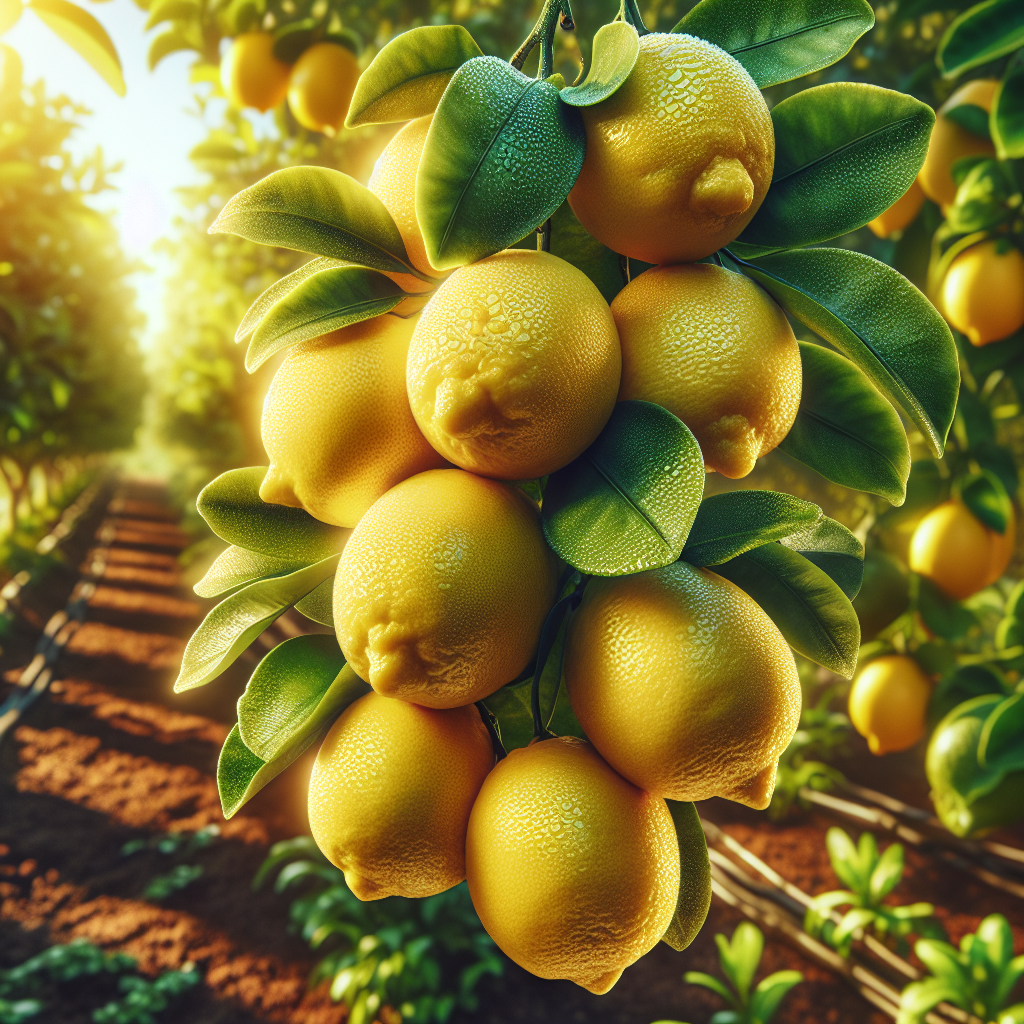
Introduction to Lemon
Lemons (Citrus limon) have been a cornerstone of culinary, medicinal, and ornamental gardening for centuries, originating from their wild ancestors in the Himalayan foothills and spreading via ancient trade routes to the Mediterranean by the 10th century. Today, they symbolize freshness and vitality, with global production exceeding 20 million tons annually, led by countries like India, China, and Brazil. This guide delves into the nuances of growing lemons, from selecting cultivars like the ever-popular Eureka (seedless, high-yield) or Lisbon (thorny, disease-resistant) to achieving bumper harvests in diverse settings, including containers for cooler climates.
Botanical Profile of Lemon
Lemons belong to the Rutaceae family, a hybrid likely from citron (Citrus medica) and bitter orange (Citrus aurantium), with Citrus limon as the accepted species. These evergreen trees grow 10-20 feet tall in orchards but can be dwarfed to 6-10 feet via grafting onto rootstocks like Flying Dragon for container culture. Leaves are glossy, lance-shaped, 2-4 inches long, emitting a pungent aroma when crushed due to essential oils. Flowers are fragrant, white-purple tinged, 1-inch wide, self-fertile with perfect flowers containing both stamens and pistils, blooming year-round in ideal conditions. Fruits are ovoid, 2-4 inches, with thick, textured yellow rind rich in limonene and pithy albedo; juicy pulp segments number 8-12, acidic (pH 2-3) from citric acid (5-8% content). Botanically a hesperidium berry, lemons exhibit alternate bearing—heavy crops one year, lighter the next—requiring pruning to balance. Cultivars vary: Meyer (hybrid with mandarin, sweeter, cold-hardy to 20°F), Ponderosa (large, thick-skinned), and variegated Pink Lemonade for ornamental appeal.
Soil, pH, and Climate Requirements for Lemon
Lemons demand well-draining, loamy soil with 20-30% organic matter to prevent root rot, a common killer in heavy clays. Aim for sandy loam with particle sizes allowing 1-2 inches/hour percolation; test with a percolation jar—water should drain fully in 1 hour. pH should be 5.5-6.5; below 5.5 causes iron deficiency (yellow young leaves), above 7.0 induces zinc lockout (small, mottled leaves). Amend with dolomite lime for acidity correction or sulfur for alkalinity, retesting every 6 months. Climate-wise, lemons flourish in USDA zones 9-11 (subtropical/tropical), preferring 70-85°F daytime, never below 55°F for extended periods—prolonged cold below 28°F kills buds. They tolerate short droughts but excel with 40-50 inches annual rainfall, evenly distributed; humidity 50-70% prevents blossom-end drop. Full sun (8+ hours) is non-negotiable for fruit coloration and sugar development. In marginal climates, use microclimates or Hass Avocado frost blankets. Wind protection is vital—gusts over 20 mph shred leaves, reducing photosynthesis by 30%.
Step-by-Step Planting & Propagation
Start with certified disease-free nursery stock or propagate via cuttings/grafting for true-to-type plants. Step 1: Site Selection—Choose south-facing, elevated spots with windbreaks. Step 2: Soil Prep—Dig 3x3-foot holes, mix 50% native soil, 30% compost, 20% perlite/pumice; avoid fresh manure (nitrogen burn). Step 3: Planting—For bare-root (dormant winter), soak roots 2 hours, plant bud union 6-12 inches above soil; potted trees anytime spring-fall, tease roots. Space 12-15 feet apart for standards, 8-10 for dwarfs. Step 4: Initial Watering—Saturate to 2 feet deep, mulch 4-inch layer (not touching trunk) with bark chips. Propagation: Air-layer branches (June-July) by girdling, wrapping sphagnum moss/hormone, rooting in 6-8 weeks. Seedlings (from seedless hybrids via pollen) take 10-15 years to fruit, inferior quality. Graft onto trifoliate orange rootstock for cold tolerance. Plant post-frost in spring; survival rate jumps 40% with mycorrhizal inoculants.
Care & Maintenance regimes for Lemon
Water deeply weekly (1-2 inches) to moisten top 2 feet—use a soil probe; aim for 60-70% field capacity (damp, not soggy). Signs of overwatering: yellowing lower leaves, mushy roots, fungal gnats; underwatering: wilting, leaf curl, fruit drop. Fertilize quarterly with citrus-specific 8-3-9 NPK + micronutrients (Fe, Zn, Mn, B, Mg)—deficiencies show as chlorosis. Prune annually post-harvest: thin canopy for light penetration (remove 20% dead/crossing branches), tip young shoots for bushiness. Thin heavy fruit sets to 6-8 inches apart for larger lemons. Irrigate via drip (1-2 gal/hour/tree) to cut evaporation 50%. Support young trees with stakes against wind. For containers (15-25 gal), repot every 2-3 years, fertilize monthly. Off-season, protect from frost with lights/covers. See Soil Health Mastery for amendments. Mature trees yield 200-500 lbs/year after 3-5 years.
Pests, Diseases & Organic Management
Pests: Citrus leafminer (larvae tunnel leaves)—neem oil weekly, reflective mulch. Aphids (honeydew, sooty mold)—ladybugs, insecticidal soap (1% solution). Scale (bumps on bark)—hort oil dormant spray. Asian citrus psyllid (HLB vector)—remove weeds, spinosad. Diseases: Root rot (Phytophthora)—improve drainage, phosphonate drenches. Citrus greening (HLB)—no cure, rogue infected (asymmetric mottling, bitter fruit). Canker (bacterial lesions)—copper sprays preventatively. Alternaria brown spot—avoid overhead water. Organic IPM: Monitor weekly with sticky traps, encourage predators (lacewings), rotate copper/ Bacillus thuringiensis. Botrytis gray mold in wet—prune airflow. Early detection via leaf inspection saves 70% losses.
Harvesting, Curing & Optimal Storage
Harvest when rind turns 75% yellow, thumb-test yields (slightly soft)—Eureka peaks winter-spring, year-round in tropics. Twist-pull ripe fruit; clippers for clusters avoid bark tears. Yields peak at 200+ lemons/tree. Cure by holding at 55-60°F, 85% humidity 1-2 weeks—thickens rind, boosts flavor volatiles. Store at 50°F, 90% RH up to 3 months (fridge crisper); room temp 1-2 weeks. Freeze juice/ zest; process into marmalade. Post-harvest, prune to stimulate next bloom. Commercial: ethylene degreening rooms mimic ripening.
Companion Planting for Lemon
Pair lemons with marigolds (nematode repulsion), nasturtiums (aphid traps), and comfrey (nutrient accumulator). Avoid Tomato (shared diseases) or figs (root competition). Basil enhances flavor via allelopathy, borage attracts pollinators. Underplant with clover for nitrogen fixation, mulch benefits. Spacing prevents allelopathic juglone from walnuts. Benefits: 20-30% pest reduction, improved soil.