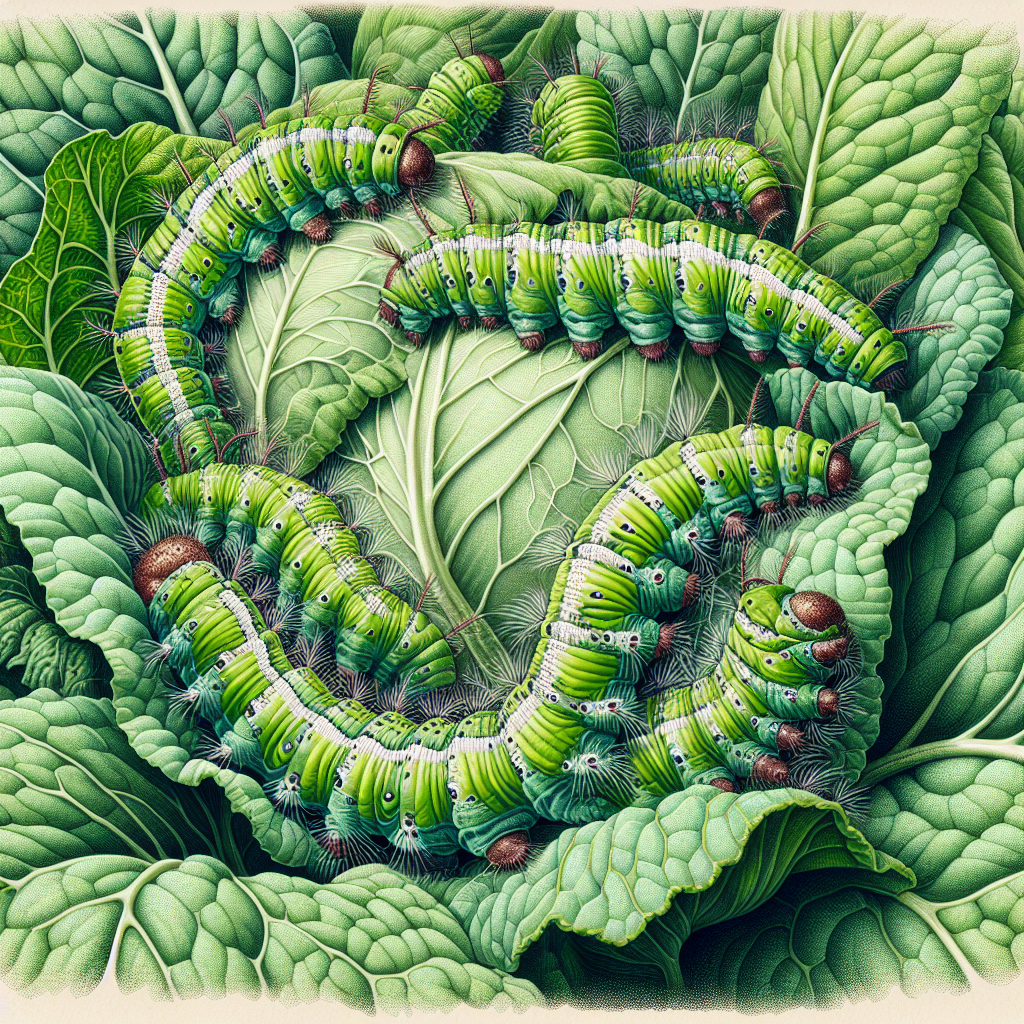
Introduction to Foliage-Feeding Caterpillars
Foliage-feeding caterpillars represent one of the most widespread and damaging pest groups in agriculture, encompassing larvae from numerous caterpillar pests species within the order Lepidoptera. These voracious eaters target leafy vegetation across a broad spectrum of crops, from vegetables like cabbage and tomato to fruits such as apple and field staples including corn and soybeans. Unlike borers or root feeders, these caterpillars skeletonize or completely strip foliage, reducing photosynthesis and stunting plant growth. In severe infestations, they can defoliate entire fields, leading to yield losses of 20-80% depending on crop and timing.
As a professional botanist and entomologist, I've observed that early detection is crucial since these pests multiply rapidly in favorable conditions. Their impact extends beyond direct feeding; frass (droppings) can promote fungal diseases like sooty mold, and damaged leaves become entry points for pathogens such as Alternaria. This guide provides definitive diagnostic tools, lifecycle insights, organic management plans, and prevention tactics optimized for small to medium-scale farms. For real-world application, check out Spring Pest Patrol: Organic AI Strategies to Shield Your Crops from Common Invaders for cutting-edge monitoring tips.
Understanding foliage-feeders empowers growers to intervene before economic thresholds are crossed. Common culprits include armyworms (armyworms), loopers, and webworms (webworms), each with subtle differences in behavior and damage patterns. Proactive scouting and integrated pest management (IPM) form the backbone of sustainable control, minimizing reliance on synthetic chemicals while preserving beneficial insects like parasitoids and predators.
Identifying Symptoms & Damage
Diagnosing foliage-feeding caterpillar damage starts with visual cues on leaves. Primary symptoms include large, irregular holes chewed between veins, leaving a skeletonized appearance—distinguishing them from leafminers that create serpentine tunnels or flea beetles causing pinpoint shots. Fresh damage shows clean-cut edges with moist green tissue; older wounds dry to brown, crisp margins. Look for silken webs or mats in heavy infestations, especially from species like fall webworms.
Frass, resembling black pepper or fine sawdust, accumulates on leaves, stems, or soil below—a telltale sign. Caterpillars themselves are often 1-2 inches long, green to brown, with distinct markings: some have stripes (e.g., cabbage looper), others spots or hairs (hairy caterpillars). Nocturnal feeders hide by day under leaves or in crop residue. Secondary signs include sooty mold on honeydew-excreting associates or wilting from severe defoliation.
Differentiate from similar pests: cutworms sever stems at soil level, while slugs leave irregular, slime-tracked holes. Use a hand lens to spot eggs (yellowish clusters on leaf undersides) or pupae (brown chrysalids in soil). Thresholds vary: 1-2 caterpillars per 10 plants for vegetables, 15-20% defoliation for orchards. Regular scouting with beat sheets—shaking plants over white cloth—quantifies populations accurately. Early ID prevents escalation, as larvae double in size daily during peak feeding.
Lifecycle and Progression of Foliage-Feeding Caterpillars
Foliage-feeders complete metamorphosis in 2-6 weeks, depending on species and temperature. Adults are moths (1-2 inch wingspan, nocturnal) laying 100-1000 eggs in clusters on leaf undersides. Eggs hatch in 3-5 days into tiny larvae that mine leaves initially, then feed openly.
Larval stage (3-7 instars) lasts 10-21 days, with peak defoliation in later instars when individuals reach 1-2.5 inches. They descend to pupate in soil or debris, emerging as moths in 7-14 days. Multiple generations (2-5 per season) occur in warm climates, syncing with crop growth. Overwinter as pupae or diapause larvae in mild regions.
Progression accelerates above 70°F (21°C); cool weather (<50°F) halts development. Monitor for first flights using pheromone traps. Understanding this cycle targets interventions: egg scouting pre-hatch, Bt sprays on young larvae, and tillage post-pupation to expose pupae to predators.
Environmental Triggers & Risk Factors
Warm, humid conditions (75-85°F, 70%+ RH) trigger outbreaks, favoring egg-lay and larval survival. Mild winters allow overwintering, while drought-stressed plants emit volatiles attracting moths. Monocultures exceed economic thresholds faster; weed hosts like clover (clover) harbor populations.
Risk spikes near alternate hosts (cabbage to broccoli) or migration paths. Poor sanitation leaves pupae; excessive nitrogen lush foliage invites feeding. Nearby grassy fields source armyworm moths. Climate change extends seasons, increasing generations. Mitigate with diverse rotations and resistant varieties.
Organic Control & Treatment Plans
IPM prioritizes organics. Biological: Bacillus thuringiensis (Bt) kurstaki targets larvae <1/2 inch, applied evenings (4-8 oz/acre). Parasitoids (Trichogramma wasps) and predators (ladybugs, birds) thrive sans broad-spectrum sprays.
Cultural: Hand-pick large larvae; destroy egg masses. Row covers exclude adults. Reflective mulches deter landing.
Botanicals: Neem oil/azadirachtin disrupts molting (1-2% solution weekly). Pyrethrins/spinosad for knockdown, rotated to prevent resistance.
Treatment Plan: Scout twice weekly. Bt at first eggs/young larvae; neem if >1/2 inch. Tillage exposes pupae. Threshold: 10% plants infested. For cabbage worms, pair with yellow sticky traps. Efficacy: 80-95% with timely use.
Preventing Foliage-Feeding Caterpillars in the Future
Prevention beats cure. Rotate crops (non-hosts like onion after brassicas). Plant trap crops (e.g., nasturtium (nasturtium)). Encourage natives: yarrow (yarrow), dill for predators.
Timing: Early planting evades peaks. Destroy volunteers/residue. Cover crops suppress pupae. Resistant varieties (e.g., Bt corn hybrids). Pheromone traps for monitoring. Sanitation: deep plow or solarize soil. Long-term: diverse landscapes reduce migration. Annual plans cut incidence 70%.
Crops Most Affected by Foliage-Feeding Caterpillars
Vegetables: Cabbage, broccoli, tomato, lettuce—loopers, armyworms devastate. Fruits: Apple, grapes, peach—leafrollers, tent caterpillars. Fields: Corn (corn earworm), soybeans (velvetbean caterpillar), cotton. Others: potato, rice, sugarcane. Economic hits: $1-4B globally yearly. Tailor strategies per crop.