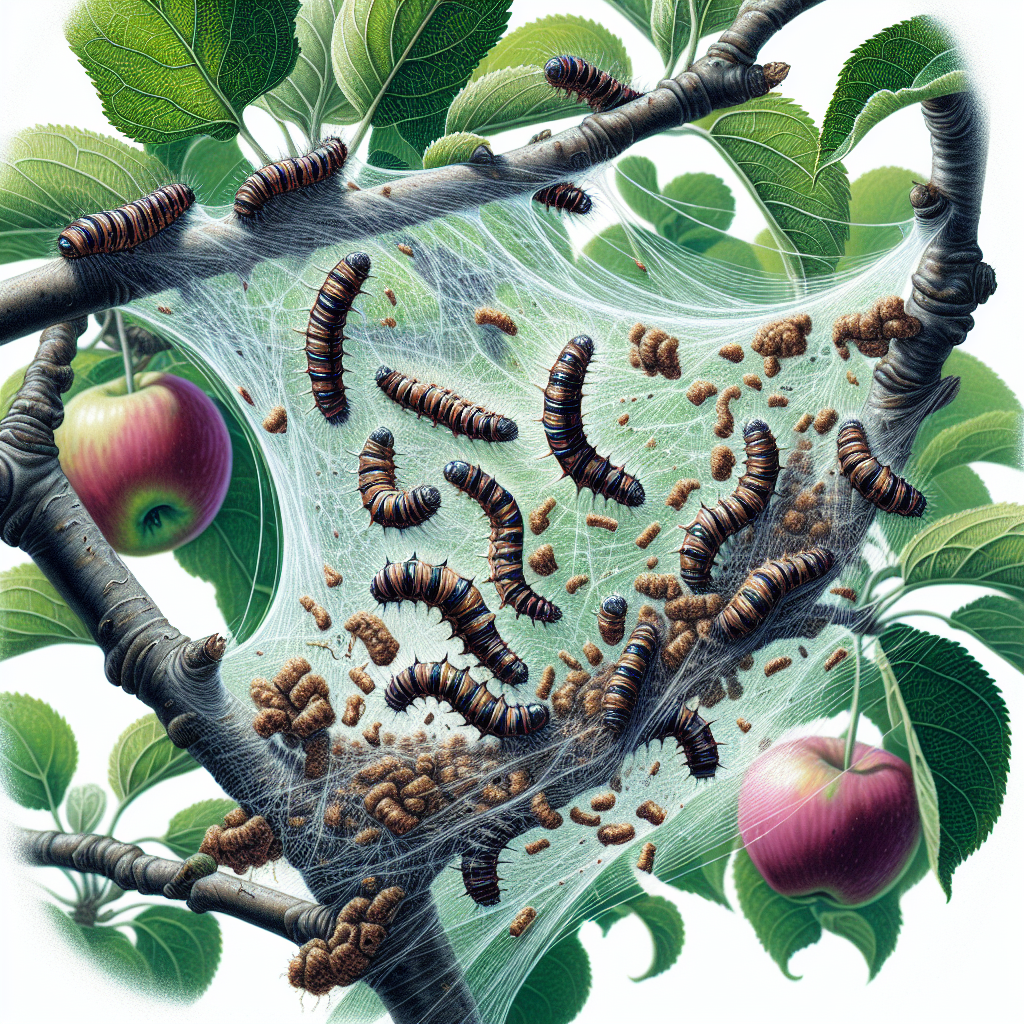
Introduction to webworms
Webworms, often recognized by their characteristic silken tents or webs enveloping foliage, represent a group of moth larvae notorious in agricultural and ornamental landscapes. Primarily associated with species like the fall webworm (Hyphantria cunea) and various tent caterpillars (e.g., Malacosoma americanum), these pests thrive across North America, Europe, and parts of Asia. While they pose minimal threat to mature, healthy trees, heavy infestations can defoliate young saplings, fruit orchards, and nut groves, impacting yields and aesthetics. This definitive guide equips farmers, orchardists, and gardeners with professional diagnostic tools, lifecycle insights, and proven organic management strategies to combat webworms effectively. Understanding their biology is key to timing interventions, preventing outbreaks, and minimizing crop losses in affected areas like apple and pecan orchards.
Fall webworms, the most widespread, emerge in late summer to fall, constructing expansive webs at branch tips. Eastern tent caterpillars appear earlier in spring, weaving tents in crotches of branches. Both share similar damage profiles but differ in timing and web placement, making identification crucial for tailored control. In agricultural settings, webworms can reduce photosynthetic capacity, leading to weakened trees more susceptible to secondary stressors like powdery mildew or drought. Proactive scouting and integrated pest management (IPM) form the cornerstone of defense, ensuring sustainable production without reliance on synthetic chemicals. For small farms, early detection via regular patrols can save thousands in potential losses, as highlighted in our Spring Pest Patrol blog.
Identifying Symptoms & Damage
Diagnosing webworm infestations begins with spotting their hallmark silken webs, which distinguish them from similar pests like caterpillars or leafrollers. Fall webworm webs envelop entire clusters of leaves at branch ends, appearing loose and dirty compared to the compact, house-like tents of spring species. Inside these structures, colonies of 100-1,000 dark-striped larvae feed voraciously on enclosed foliage, leaving skeletonized leaves and dark fecal pellets (frass) dangling below.
Early symptoms include branch-tip wilting and webbing starting small (golf ball-sized) before expanding to basketball proportions over weeks. Defoliated branches show stripped twigs with only midribs remaining, and severe cases lead to tree-wide browning. Differentiate from bagworms (solitary bags) or spider mite webbing (fine, dusty). On crops like cherry trees, look for webs near fruit clusters, potentially contaminating harvest. Secondary signs: bird predation on webs, sooty mold on honeydew from attendant ants, or increased vulnerability to borers.
Damage quantification: Larvae consume 1-2 square meters of leaf area per colony. In orchards, 20-30% defoliation reduces fruit size by 10-15%; complete defoliation on young trees stunts growth. Scout weekly from bud break (spring species) or midsummer (fall), using a pole pruner to check upper branches. Photograph suspicious webs for confirmation—dark larvae with long hairs confirm webworms versus smooth-bodied loopers.
Lifecycle and Progression of webworms
Webworms undergo complete metamorphosis: egg, larva, pupa, adult moth. Spring tent caterpillars overwinter as eggs in egg masses (1,000-3,000 per cluster) on twigs, hatching at bud break (April-May). Larvae (1-2 inches, black with blue stripes) build tents, feed 4-6 weeks, then crawl to form cocoons under bark or debris. Adults emerge June-July, lay eggs for second generation.
Fall webworms overwinter as pupae in leaf litter or cocoons. Moths (white, 1-1.5 inch wingspan) lay eggs July-August on leaf undersides. Larvae hatch in 10-14 days, construct webs, feed 4-8 weeks into fall. One to three generations annually, depending on climate—southern regions see more. Pupation occurs in cocoons on trunks or ground; adults mate immediately.
Progression peaks with larval dispersal: mature worms wander 100+ feet seeking pupation sites, spreading infestations. Temperature drives timing: 50°F triggers egg hatch, 70-85°F optimal feeding. Monitor degree-days (base 50°F) for predictions: 300-500 DD for spring hatch, 1,500+ for fall. Lifecycle knowledge enables precise IPM timing, targeting young larvae when most vulnerable.
Environmental Triggers & Risk Factors
Webworms flourish in stressed environments. Key triggers: mild winters (reduced pupal mortality), late spring frosts killing predators, drought-stressed trees (elevated volatiles attract moths). Over-fertilization with nitrogen boosts tender foliage, prime larval food. Monoculture orchards like pecan or walnut amplify outbreaks via lack of diversity.
Risk factors include proximity to wild hosts (hickory, walnut, persimmon), poor sanitation (unremoved leaf litter harbors pupae), and insecticide overuse disrupting natural enemies like birds, wasps, and Bacillus thuringiensis-susceptible predators. High humidity favors egg survival; windy conditions disperse adults. Climate change extends generations northward. Scout high-risk sites: orchard edges, young transplants, trees near woods. Soil pH extremes (>7.5 or <5.5) weaken hosts indirectly.
Organic Control & Treatment Plans
Organic management prioritizes prevention but employs layered tactics for active infestations. Cultural: Prune and destroy webs before larvae mature (hand removal for <6ft trees, pole pruner for taller). Burn or bag debris—do not compost. Encourage predators via birdhouses, bat boxes.
Biological: Apply Bacillus thuringiensis (Bt) kurstaki weekly to young larvae (<1/2 inch)—highly selective, safe for beneficials. Nucleopolyhedrovirus (NPV) sprays target late instars. Release trichogramma wasps for egg parasitism.
Mechanical: High-pressure water blasts webs (early stage), vacuum devices for small trees. Systemic oils like neem disrupt molting.
Treatment Plan: 1) Scout weekly. 2) At first web, apply Bt + insecticidal soap. 3) Reapply after rain. 4) Monitor 2 weeks. Threshold: 1 web/10 trees. Integrate with companion planting marigold to repel moths. Avoid broad-spectrum sprays preserving Tachinid flies, primary parasitoids.
Preventing webworms in the Future
Long-term prevention builds resilience. Plant diverse species, avoiding susceptible monocultures—interplant with repellents like garlic or herbs. Maintain tree vigor: mulch, irrigate deeply, balance NPK (avoid excess N). Sanitation: Rake leaf litter fall-spring, destroy egg masses (shiny brown bands on twigs).
Encourage biodiversity: Preserve native plants hosting predators, install owl boxes. Timing: Delay nitrogen until post-hatch. Resistant varieties: Crabapples over sweet apple. Monitor with pheromone traps for adult flights. Rotate tactics yearly preventing resistance. Annual IPM audits track progress, integrating tools like weather-based alerts for hatch windows.
Crops Most Affected by webworms
Webworms primarily target deciduous trees, but agricultural impacts hit fruit, nut, and ornamental crops. Top affected: Apple (all varieties, webs reduce fruit set), Cherry (Bing, Rainier—fruit spotting), Pear (Bartlett severe defoliation), Peach (young orchards devastated). Nut crops: Pecan, Walnut, Almond—yield drops 15-25%. Shade trees like maple, oak suffer aesthetically.
Ornamentals: Flowering crabapple, hawthorn. Rare on conifers, grapes minimally. In corn, sporadic late-season defoliation. Small farms: Prioritize young transplants. Economic threshold varies: 10% defoliation in fruit/nuts warrants action.