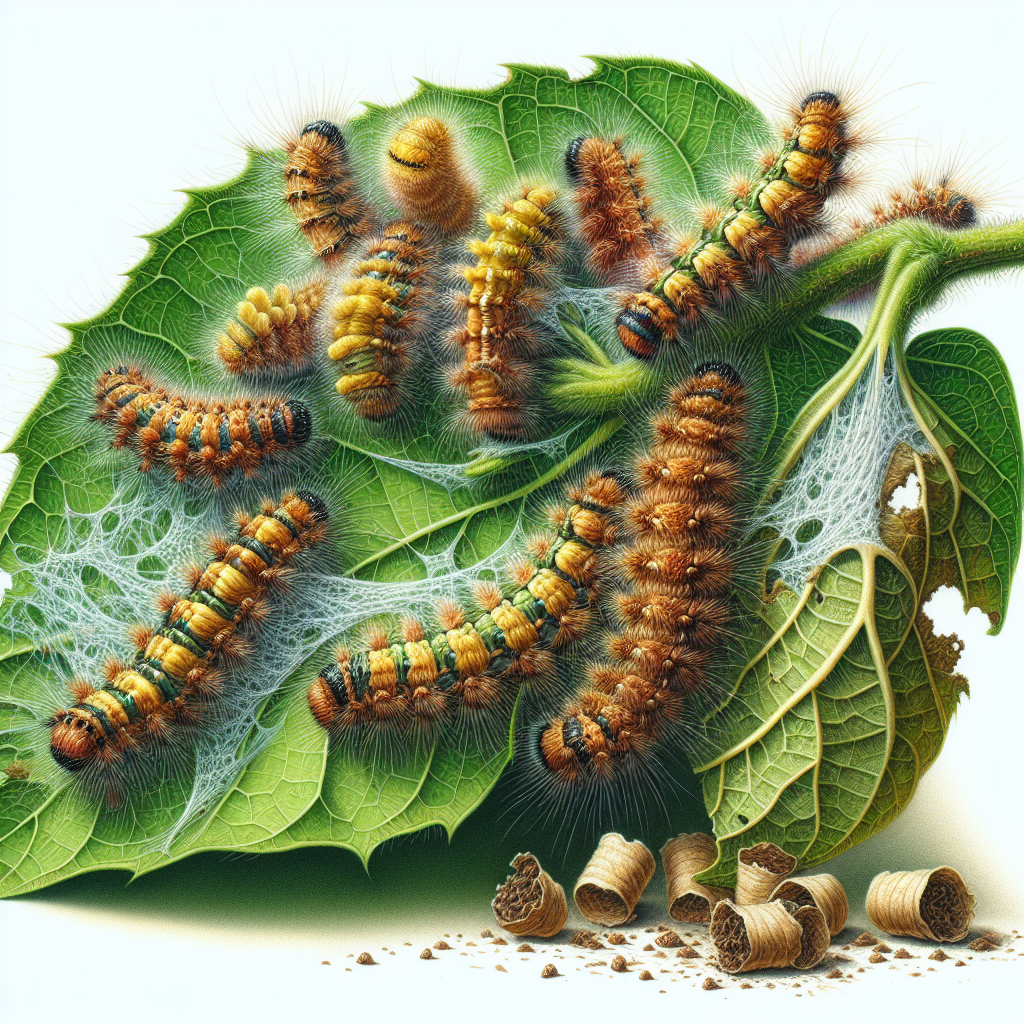
Introduction to hairy caterpillars
Hairy caterpillars represent a diverse group of lepidopteran larvae from families like Lasiocampidae (tent caterpillars), Erebidae (woolly bears), and Lymantridae (tussock moths). These pests are characterized by dense coverings of hair-like setae, which serve as both defense mechanisms and irritants to predators and humans. In agriculture, hairy caterpillars are major defoliators, capable of stripping entire fields in short periods, leading to yield losses of up to 50-80% in severe infestations.
Found worldwide in temperate and tropical regions, these caterpillars thrive in warm, humid conditions, often migrating in groups during outbreaks. Species such as the caterpillar pests or leaf-feeding caterpillars share similar traits, but hairy variants are distinguished by their urticating hairs that can cause dermatitis upon contact. Farmers must prioritize identification and integrated pest management (IPM) to protect crops like vegetables, fruits, and ornamentals. This guide provides diagnostic tools, lifecycle insights, and proven organic strategies for control. For more on companion planting tactics against such invaders, check this Spring Pest Patrol: Organic AI Strategies to Shield Your Crops from Common Invaders.
Economic impacts are profound: in cotton fields, hairy caterpillars can reduce lint yields by 30%, while in mango orchards, they defoliate terminals, delaying fruit set. Early intervention is key, as mature larvae pupate quickly, evading controls. Understanding their biology empowers growers to disrupt cycles effectively.
Identifying Symptoms & Damage
Hairy caterpillars leave unmistakable signs on infested plants. Primary damage manifests as skeletonized leaves, where only veins remain after feeding. Larvae chew irregular holes, often starting from leaf edges and progressing inward. Severe cases result in complete defoliation, with branches bearing only bare stems and frass (droppings) pellets accumulating below.
Visual identification includes clusters of 1-5 cm long, fuzzy caterpillars in colors from brown, black, to yellow, adorned with long, stiff hairs or tufts (pencils). Unlike smooth cutworms, hairy types are highly visible, often webbing leaves together for shelter. Secondary symptoms include silk tents on branches (tent caterpillar species) or gregarious feeding trails.
Crop-specific damage varies: on cabbage, heads are bored into, causing rot; on tomato, fruits gain entry wounds inviting Botrytis. Hairs contaminate produce, rendering it unmarketable. Inspect undersides of leaves and crotches at dawn or dusk when larvae are active. Use a hand lens to confirm setae, distinguishing from less harmful armyworms.
Economic thresholds: 2-5 larvae per 10 leaves warrant action. Associated issues include sooty mold from honeydew (if ants farm them) and increased vulnerability to powdery mildew due to reduced canopy. Prompt diagnosis prevents escalation.
Lifecycle and Progression of hairy caterpillars
Hairy caterpillars undergo complete metamorphosis: egg, larva, pupa, adult moth. Females lay 100-500 eggs in clusters on host foliage, covered in scales for protection. Eggs hatch in 7-14 days into tiny larvae that feed gregariously.
Larval stage (3-6 weeks) has 5-7 instars, molting as they grow. Early instars rasp leaf surfaces; later ones devour entirely. Distinct bands on woolly bears indicate overwintering preparedness. Pupation occurs in soil, leaf litter, or cocoons spun with hairs, lasting 10-21 days. Adults are drab moths, nocturnal, with short lifespans focused on reproduction.
Multiple generations (2-4/year) occur in tropics; temperate areas see one, with diapause. Progression accelerates in heat (>25°C), slowing in cool weather. Monitoring egg masses and small larvae disrupts early. Natural enemies like birds, parasitic wasps, and slugs and snails (ironically predators here) regulate populations.
Environmental Triggers & Risk Factors
Warm temperatures (24-32°C) and humidity (>70%) trigger egg hatch and rapid development. Drought stress weakens plants, exuding volatiles attracting moths. Over-fertilization with nitrogen promotes lush foliage, prime food source.
Monocultures like corn or soybeans amplify outbreaks via lack of diversity. Nearby wild hosts (e.g., oaks, willows) serve reservoirs. Wind disperses early instars; irrigation splashes eggs. Poor sanitation leaves pupae in debris.
Climate change extends seasons, increasing generations. Risk peaks post-monsoon in Asia/Africa, spring in temperate zones. Companion plants like marigold deter via repellents.
Organic Control & Treatment Plans
IPM prioritizes organics. Cultural: Handpick clusters into soapy water; prune tents, destroy. Till soil exposes pupae to predators.
Biological: Bacillus thuringiensis (Bt) kurstaki targets larvae within 48 hours, safe for beneficials. Release Trichogramma wasps for eggs. Neem oil (azadirachtin) disrupts molting; apply evenings, 3x/week.
Physical: Row covers exclude adults. Sticky traps capture moths. High-pressure water blasts dislodge larvae.
Treatment Plan: Scout weekly. Threshold: 10% foliage loss. Week 1: Bt + neem. Week 2: Reapply if needed, add spinosad. Monitor 2 weeks post. Rotate modes to prevent resistance. For caterpillars broadly, see wiki resources.
Success rates: 80-95% with timely Bt. Avoid broad-spectrum sprays killing predators.
Preventing hairy caterpillars in the Future
Crop rotation disrupts cycles; interplant repellents like thyme, garlic. Mulch suppresses soil pupae. Encourage predators: bird boxes, yarrow nectar strips.
Sanitation: Remove weeds, debris. Reflective mulches confuse moths. Timing: Plant early-maturing varieties outpacing larvae. Monitor with pheromone traps.
Long-term: Diverse polycultures reduce risk 50%. Soil health via cover crops like hairy vetch boosts resilience. Annual planning prevents recurrence.
Crops Most Affected by hairy caterpillars
Hairy caterpillars plague broadleaf crops. Top targets: cotton (boll damage), mango (terminal defoliation), cabbage (head mining), tomato (fruit scarring), corn (whorl feeding).
Fruits: apple, grapes, banana. Vegetables: okra, squash. Field crops: sorghum, sugarcane. Ornamentals too. In Hass Avocado groves, they web young flushes. Protect vulnerable Roma Tomato with vigilant scouting.