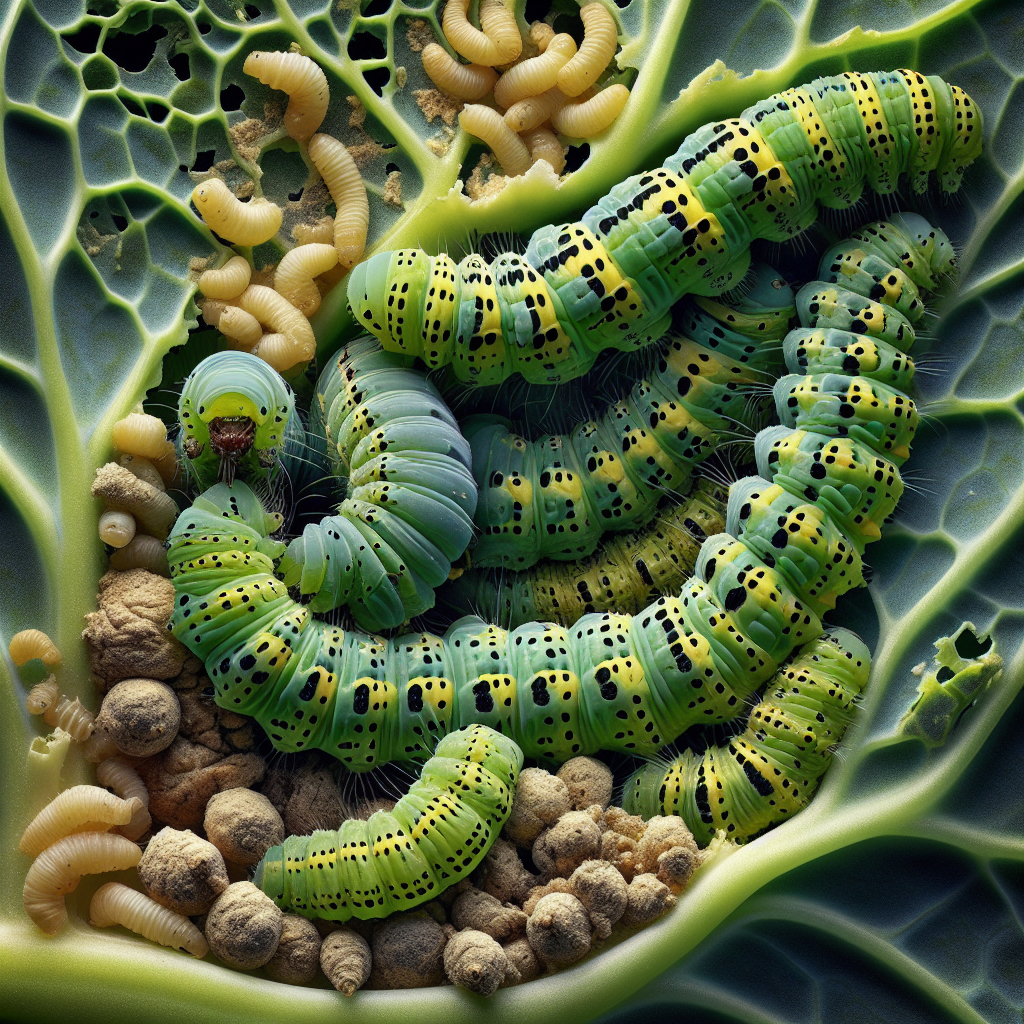
Introduction to cabbage worms
Cabbage worms, primarily the larvae of the imported cabbageworm (Pieris rapae), represent one of the most persistent pests in vegetable gardens worldwide. These velvety green caterpillars with faint yellow stripes target plants in the Brassicaceae family, munching through foliage with voracious appetites that can strip crops bare in days. Native to Europe, they were introduced to North America in the 1860s and have since become a staple headache for growers of cabbage, broccoli, cauliflower, kale, and related greens.
Recognizing cabbage worms early is crucial, as their damage escalates rapidly during warm seasons. Adult butterflies—small, white moths with black spots—lay clusters of yellow eggs on leaf undersides, hatching into larvae that feed for 2-3 weeks before pupating. Without intervention, multiple generations per season can devastate yields, making integrated pest management (IPM) essential. This definitive guide draws from entomological research and field-tested agricultural practices to equip you with diagnostic tools, lifecycle knowledge, and proven organic strategies. Whether managing a backyard plot or commercial brassica fields, understanding cabbage worms empowers sustainable control, minimizing losses while preserving beneficial insects. For small farms, timely action can safeguard up to 90% of potential harvest. Learn more about Spring Pest Patrol: Organic AI Strategies to Shield Your Crops from Common Invaders for tech-enhanced monitoring tips.
Identifying Symptoms & Damage
Spotting cabbage worm activity starts with visual cues on affected plants. The most telltale sign is irregular holes in leaves, often starting from the outer edges and progressing inward. Larvae skeletonize foliage, leaving behind a lacy network of veins coated in dark green frass (droppings)—small, granular pellets resembling bird shot. Heavily infested plants show stunted growth, with heads failing to form properly; in severe cases, entire leaves disappear, exposing tender hearts to sunscald.
Examine leaf undersides for pale yellow egg clusters (20-100 eggs) or the worms themselves: 1-1.5 inches long, green with a faint yellow dorsal stripe and black spots. Unlike cabbage loopers, which arch their bodies, cabbage worms move smoothly. Secondary signs include wilting, yellowing leaves, and sooty mold from honeydew if ants farm the pests. Differentiate from imported cabbage white larvae or diamondback moth larvae, which are smaller and less velvety.
Damage peaks in spring and fall, with economic thresholds at 1-2 larvae per plant for commercial crops. Scout weekly by tapping plants over white paper—falling worms confirm infestation. Early detection prevents yield losses of 50-100% in untreated brassicas. Use a hand lens for eggs; damage on young transplants signals immediate action.
Lifecycle and Progression of cabbage worms
Understanding the cabbage worm lifecycle is key to timing interventions. Adults emerge in spring, coinciding with brassica flowering. Females lay eggs singly or in small groups on leaf undersides, hatching in 4-7 days into tiny larvae. These first instars feed minimally before molting five times over 15-25 days, growing from 0.1 to 1.2 inches.
Mature larvae pupate on leaves or stems, forming green or brown chrysalids with a silk girdle. Pupal stage lasts 10-14 days in summer, longer in cooler weather. There are 3-6 generations annually, depending on climate—more in southern regions. Overwintering occurs as pupae on debris, explaining spring outbreaks.
Progression ties to temperature: optimal at 70-80°F (21-27°C), with development slowing below 50°F (10°C). Eggs hatch faster in humidity >70%. Monitor with pheromone traps for adults; peak larval activity follows 7-10 days post-peak flight. This knowledge enables predictive scouting, disrupting the cycle before egg-laying surges.
Environmental Triggers & Risk Factors
Cabbage worms thrive in mild, humid conditions, with adults active from 50-95°F (10-35°C). Warm springs trigger early generations, while mild falls extend late-season pressure. High humidity (>60%) favors egg survival and larval growth, exacerbated by dense plantings reducing airflow.
Risk factors include nearby wild brassicas like mustard weeds, serving as reservoirs. Over-fertilization with nitrogen promotes lush foliage, attracting egg-laying. Monoculture fields amplify infestations; lack of diversity invites unchecked populations. Proximity to unsprayed neighbor gardens spreads moths via wind. Soil rich in organic matter indirectly boosts pests by supporting healthy host plants.
Climate change extends seasons, increasing generations. Drought stress weakens plants, making them susceptible. Scout high-risk zones: field edges, windward sides. Mitigate by diversifying rotations and hedging with non-hosts like tomato or onion.
Organic Control & Treatment Plans
Organic management emphasizes prevention and biological controls. Bt (Bacillus thuringiensis) kurstaki is gold-standard: apply evenings to young larvae (1st-3rd instar) for 90-95% efficacy. Mix 1-2 tsp/gallon, reapply after rain, targeting undersides. Safe for bees/predators.
Manual removal works for small plots: handpick worms/frass daily into soapy water. Row covers (lightweight Agribon-AG) exclude adults pre-bloom, removing at head formation. Companion planting with thyme, yarrow, or nasturtium repels via volatiles; interplant dill/fennel for parasitic wasps.
Biologicals: Release Trichogramma wasps (egg parasitoids) at 50,000/acre weekly. Encourage predators like ladybugs, lacewings, and birds with habitat. Neem oil or spinosad disrupts feeding/molting; rotate to prevent resistance. Diatomaceous earth around bases deters crawlers.
Treatment plan: Scout twice weekly. At 0.5 larvae/plant, apply Bt + row covers. Severe: combine with releases. Monitor 7 days post-treatment. Success rates exceed 85% with IPM, outperforming synthetics without residues.
Preventing cabbage worms in the Future
Long-term prevention hinges on cultural practices. Crop rotation: Avoid brassicas in same spot for 2-3 years, breaking pupal dormancy. Sanitation: Destroy crop residue post-harvest; till lightly to expose pupae to predators/weather. Trap crops: Plant perimeter mustard/perennial kale to lure moths away.
Resistant varieties: Choose hybrids like 'Cabbage Green Cup' or 'Beltsville' with waxy leaves deterring feeding. Timing: Plant early spring/fall to miss peak flights; use transplants hardened off. Mulching with straw suppresses soil-emerging pests.
Habitat management: Plant hedgerows with flowers for beneficials (Cotesia glomerata wasps parasitize 70% larvae). Avoid broad-spectrum sprays. Monitor with yellow sticky traps. Integrated over seasons, prevention reduces outbreaks by 80%, ensuring bountiful harvests.
Crops Most Affected by cabbage worms
Cabbage worms specialize in Brassicaceae, hitting hardest on commercial staples. Cabbage suffers head contamination; broccoli and cauliflower lose florets/beads. Kale shows skeletonized leaves; Brussels sprouts (related) face bud damage. Collards, kohlrabi, and mustards also vulnerable.
Secondary hosts include radish, turnip, arugula, and horseradish. Wild mustards amplify spread. Non-crucifers like nasturtium occasionally attacked. Economic impact: $20-50M annual U.S. losses. Protect high-value crops first.