Introduction to elm
Elm leaf beetles (Pyrrhocoris apterus) represent one of the most damaging pests to elm trees worldwide, particularly in temperate regions where elms are common in landscapes, parks, and urban forestry. Native to Europe but now established across North America, Australia, and parts of Asia, these beetles feed voraciously on elm foliage, leading to skeletonization of leaves and tree defoliation. While elms (Apple) and other hardwoods can tolerate minor damage, repeated infestations weaken trees, making them susceptible to secondary issues like aphids or powdery mildew. This definitive guide equips agricultural experts, arborists, and small farm operators with professional-grade diagnostics, lifecycle understanding, and organic management plans to safeguard elm resources. Effective control hinges on timely intervention, as unchecked populations can reduce tree vigor by up to 80% in a single season. For small farms integrating elms as windbreaks or timber crops, proactive strategies outlined here can preserve yields and long-term productivity. Read our comprehensive blog on Spring Pest Patrol: Organic AI Strategies to Shield Your Crops from Common Invaders for tech-enhanced monitoring tips.
Identifying Symptoms & Damage
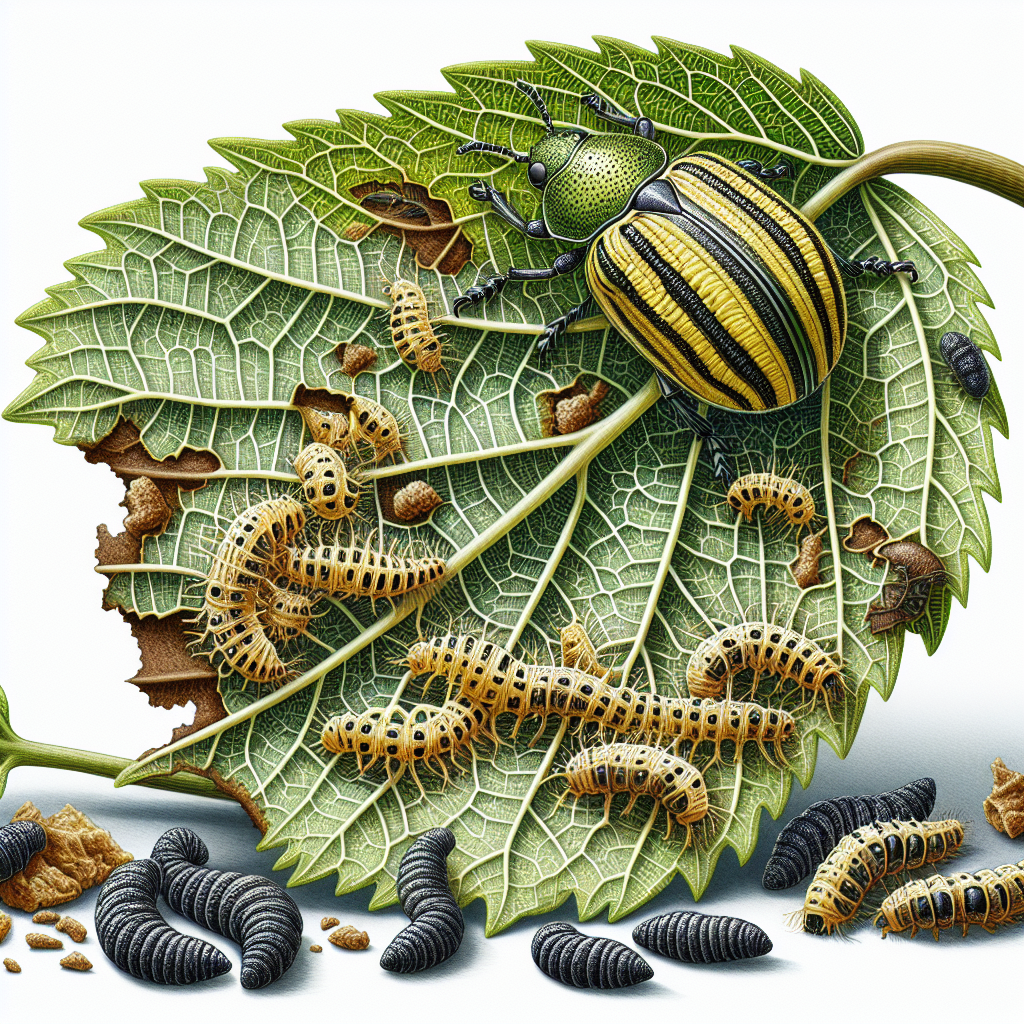
Early identification of elm leaf beetle damage is crucial for effective management. Adult beetles are yellow-green with black stripes and measure 1/4 to 1/3 inch long, while larvae are dark gray to black slugs up to 1/2 inch with two black stripes. Look for skeletonized leaves where only veins remain, often starting on lower branches in late spring. Severe feeding causes leaves to turn brown and drop prematurely, leading to full defoliation by midsummer. Fecal pellets (frass) appear as small black dots under trees, and webbing may enclose larval feeding areas. Differentiate from caterpillars by the beetle larvae's distinct tubercles and lack of prolegs. On young elms or stressed trees near wheat fields, damage manifests as branch dieback and reduced growth. Inspect trees weekly from April to September, using a beating tray to dislodge insects onto a white sheet for counting—over 50 larvae per branch signals high risk. Secondary symptoms include sooty mold from honeydew if ants farm the beetles, further stressing trees. Accurate diagnosis prevents misapplication of controls meant for spider mites or leafminers.
Lifecycle and Progression of elm
Understanding the elm leaf beetle lifecycle enables targeted interventions. Adults overwinter in bark crevices, leaf litter, or nearby structures, emerging in spring (April-May) when elms leaf out. Females lay yellow egg clusters (up to 800 per female) on leaf undersides, hatching in 7-10 days into larvae. Larvae pass through three instars over 2-3 weeks, feeding gregariously and skeletonizing leaves before dropping to pupate in soil or bark. New adults emerge in 1-2 weeks, feeding briefly before seeking mates. There are 1-3 generations per year depending on climate, with peak damage in June-July. In warmer areas, a partial fourth generation occurs in fall. Progression accelerates in hot, dry conditions, with larvae migrating downward in 'marching bands' before pupation. Monitor with pheromone traps from March to catch early adults. Lifecycle aligns with elm flush, making spring scouting essential. Compared to Japanese beetles, elm leaf beetles have shorter adult longevity (4-6 weeks) but higher larval impact.
Environmental Triggers & Risk Factors
Elm leaf beetle outbreaks are triggered by specific environmental cues. Warm springs (above 50°F) prompt early adult emergence, while drought stress weakens elms, increasing susceptibility. High humidity favors egg hatch and larval survival, but dry summers drive adults to buildings for overwintering. Urban plantings near corn or soybeans fields face higher risk due to shared pollinators and wind dispersal. Poor soil drainage exacerbates root stress, mimicking root rot symptoms. Over-fertilization with nitrogen boosts tender foliage, attracting egg-laying females. Proximity to overwintering sites like woodpiles or sheds amplifies local populations. Climate change extends generations in northern latitudes, per USDA studies showing 20% range expansion since 1990. Risk factors include monoculture elm plantings without diversity like maples or oaks, and reduced natural predators from pesticide overuse in adjacent potato farms. Assess site risk with a 1-10 scale: score 7+ if trees are isolated, stressed, and near human structures.
Organic Control & Treatment Plans
Organic management of elm leaf beetles emphasizes integrated pest management (IPM) for sustainable results. Cultural Controls: Rake and destroy leaf litter in fall to eliminate pupae; mulch trunks to 4-6 feet to deter oviposition. Plant diverse understories with marigold or nasturtium to disrupt host-finding. Biological Controls: Introduce predatory beetles like Carabus nemoralis or parasitic wasps (Tetrastichus spp.), applied at 1,000 per acre. Encourage birds with nest boxes—bluebirds consume 50% of larvae. Organic Sprays: Apply neem oil (0.5-2%) at egg hatch (spinosad for larvae, BTK for young instars), targeting undersides weekly for 3 applications. Horticultural oils smother overwintering adults in February. Physical Barriers: Wrap trunks with burlap or Tanglefoot bands in May to trap migrating larvae. For severe cases, hand-pick egg clusters before hatch. Rotate treatments to prevent resistance, monitoring efficacy with branch samples. A treatment plan: Scout weekly; treat at 20 eggs/leaf; reapply after rain. Yields on protected elms recover 60-80% foliage retention. Avoid broad-spectrum sprays to preserve ladybugs and parasitoids. For small farms, this IPM yields ROI comparable to synthetics without residues.
Preventing elm in the Future
Long-term prevention focuses on resilience-building. Select resistant elm hybrids like 'Valley Forge' or 'Princeton' over susceptible American elms. Space plantings 40-50 feet apart with intercropped clover for soil health and predator habitat. Maintain tree vigor via deep watering (1 inch/week) and balanced fertilization (N-P-K 10-10-10 annually). Install overwintering traps (cardboard bands) by September, removing and destroying contents monthly. Promote biodiversity with companion yarrow attracting Tachinid flies. Annual fall cleanup reduces pupal banks by 90%. Monitor with AI apps for early alerts, integrating weather data for spray timing. Prune deadwood in winter to eliminate harborage. For urban farms near lettuce or cabbage, buffer zones with repellents like garlic sprays deter dispersal. Resistant rootstocks and mycorrhizal inoculants enhance stress tolerance. Community programs for synchronized trapping cut regional populations 40% in trials. Track progress with pre-season counts; aim for <5% defoliation threshold.
Crops Most Affected by elm
Elm leaf beetles primarily target Ulmus species, devastating American elm (Ulmus americana), slippery elm (U. rubra), and Siberian elm (U. pumila) in landscapes and forestry. Urban street trees suffer 70% defoliation, impacting shade and aesthetics. In agroforestry, elms as windbreaks near squash or pumpkin fields face spillover damage. English elm (U. minor) in Europe sees secondary attacks on pear or cherry if populations explode. Rare host shifts occur to Zelkova or Planera in mixed orchards with peach or plum. Timber elms lose 30% growth annually without controls, affecting walnut interplants. Small farms with hedgerows near grapes or strawberry risk larval drop contaminating produce. Priority protection for high-value landscape elms; tolerant species minimize economic loss in diversified systems.