Introduction to Ants
Ants (family Formicidae) represent one of the most widespread and challenging pests in agriculture, affecting farms, orchards, and gardens globally. With over 12,000 known species, only a fraction are significant agricultural threats, including fire ants (Solenopsis invicta), Argentine ants (Linepithema humile), carpenter ants (Camponotus spp.), and pavement ants (Tetramorium spp.). While often overlooked as minor nuisances, ants inflict substantial economic damage estimated at billions annually through direct feeding and, more critically, mutualistic relationships with honeydew-producing pests.
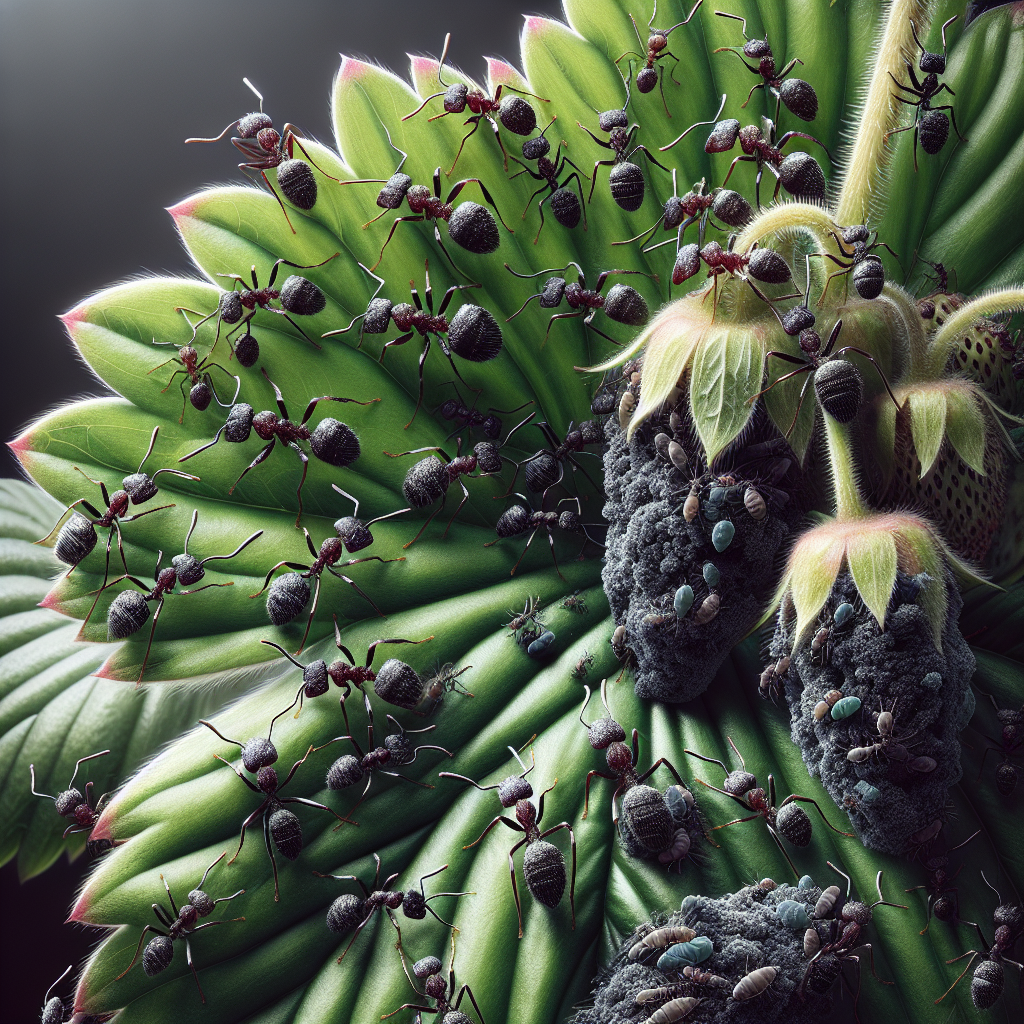
In agricultural settings, ants do not typically consume large quantities of plant material like beetles or caterpillars. Instead, they act as 'farmers,' tending mealybugs, aphids, and whiteflies by protecting them from predators and parasitoids, thereby boosting these pests' populations exponentially. This symbiosis leads to widespread honeydew excretion, fostering sooty mold growth that clogs stomata and reduces photosynthesis. For small-scale farmers growing high-value crops like Strawberry or Citrus, ant infestations can devastate yields. Early detection and integrated management are essential, as ants' complex social structures make eradication difficult without holistic approaches. This guide provides professional-grade diagnostics, organic treatments, and prevention strategies optimized for sustainable farming. For more on organic pest strategies, see Spring Pest Patrol: Organic AI Strategies to Shield Your Crops from Common Invaders.
Identifying Symptoms & Damage
Diagnosing ant-related damage requires distinguishing direct from indirect effects. Direct damage manifests as:
- Seed and Seedling Loss: Ants harvest seeds for food, leading to patchy germination in crops like Corn and Wheat. Look for disturbed soil around planting rows and missing seedlings.
- Root and Tuber Gnawing: Soil-dwelling ants like leafcutter ants (Atta spp.) sever roots, causing wilting and stunted growth in Potato, Carrot, and Onion.
- Fruit Scarring: Foraging ants chew into ripening fruits of Tomato, Strawberry, and Grapes, creating entry points for pathogens like Botrytis.
Indirect damage is far more pervasive:
- Honeydew and Sooty Mold: Trails of ants leading to aphid clusters on stems and undersides of leaves. Shiny, black sooty mold covers foliage, impairing light capture.
- Increased Pest Populations: Explosive outbreaks of aphids, mealybugs, or scale on new growth, often with ants aggressively defending them.
- Structural Damage: Carpenter ants tunnel into woody stems of young trees like Apple or Avocado, weakening vascular tissues.
Visual scouts reveal ant trails at dawn/dusk, nests under rocks or mulch, and winged reproductives during swarming. Use sticky traps or pitfall traps to quantify activity. Differentiate from termites (even waist, no wings in reproductives) or other soil insects like Wireworms.
Lifecycle and Progression of Ants
Ants exhibit complete metamorphosis with egg, larva, pupa, and adult stages, but their eusocial colony structure drives progression. Queens lay 100-800 eggs daily post-mating flight (spring/summer). Eggs hatch in 7-14 days into legless larvae fed regurgitated food by workers. Pupae (2-3 weeks) emerge as wingless workers (3-10mm), foraging and tending brood.
Colonies mature in 1-3 months, expanding via budding or nuptial flights. Fire ants form supercolonies with millions; Argentine ants create massive networks spanning acres. Progression accelerates in warm, moist conditions: optimal 75-90°F (24-32°C), slowing below 50°F (10°C). Multiple queens (polygyny) in invasive species like Argentine ants ensure rapid rebound post-disturbance.
Seasonal patterns: Foraging peaks in warm seasons; dormancy in winter. Crop damage intensifies during flowering/fruiting when ants seek sweets, coinciding with aphid peaks. Understanding this allows timed interventions targeting reproductives or brood.
Environmental Triggers & Risk Factors
Ants thrive in disturbed, resource-rich environments. Key triggers include:
- Soil Conditions: Loose, sandy soils with >10% organic matter favor nesting. Overwatering creates moist microhabitats.
- Climate: Warm, humid regions (USDA zones 8-11) see chronic issues; irrigation mimics tropics elsewhere.
- Crop Residues: Mulch, compost piles, and decaying matter provide harborage. Proximity to wild areas imports invasive species.
- Pest Synergies: High aphid/mealybug pressure from nitrogen-rich fertilizers attracts ants.
- Farm Practices: Tillage exposes nests; bare soil invites colonization. Over-mulching in Strawberry beds exacerbates issues.
Risk spikes post-floods, droughts (ants seek moisture/food), or nearby construction. Monitor fields adjacent to Citrus groves, known ant reservoirs.
Organic Control & Treatment Plans
Organic management prioritizes disruption over eradication, targeting colonies holistically. Step 1: Scout and Map – Identify trails/nests with peanut butter baits.
Cultural Controls:
- Diatomaceous earth (DE) or cinnamon barriers around plants.
- Disrupt nests by drenching with boiling water (20-30% kill rate) or solarization (clear plastic over soil, 4-6 weeks).
Biological Controls:
- Introduce parasites like phorid flies (Pseudacteon spp.) for fire ants.
- Encourage ground beetles, spiders via cover crops like Clover.
Organic Baits (Most Effective):
- Borax Baits: 1 tsp borax + 1 cup sugar + 1/2 cup warm water. Ants share with queen (75-90% colony kill in 1-2 weeks). Place near trails, not plants.
- Diatomaceous/Spinosad Mix: For direct contact.
- Fipronil alternatives like spinosad baits for severe cases (OMRI-listed).
Treatment Timeline:
| Week | Action |
|---|---|
| 1 | Bait placement, trail disruption |
| 2-3 | Monitor, re-bait weak colonies |
| 4+ | Biological releases, evaluate |
Rotate baits to prevent resistance. Avoid sprays killing beneficials. For aphid-tending ants, treat honeydew sources first with neem oil.
Preventing Ants in the Future
Prevention builds resilient systems:
- Sanitation: Remove debris, weeds; till minimally to preserve predators.
- Barriers: Tanglefoot bands on trees; fluon-lined pots.
- Crop Rotation: Alternate with ant-repellent plants like Garlic, Thyme, marigolds.
- Mulch Management: Use inorganic mulches; avoid thick organics.
- Irrigation: Drip systems minimize soil moisture.
- Companion Planting: Nasturtium, onions deter foraging.
- Monitoring: Weekly pitfall traps; threshold: 10 ants/m².
Long-term: Plant diversity fosters natural enemies. See soil health tips in Soil Health Mastery: 5 Proven Strategies for Small Farms to Build Fertile Ground Without Breaking the Bank. Integrated plans reduce recurrence by 80-90%.
Crops Most Affected by Ants
Ants impact diverse crops, worst in sweets and those hosting honeydew pests:
- Fruits: Strawberry (fruit scarring, aphids), Citrus (mealybugs), Grapes (sooty mold).
- Vegetables: Tomato, Potato (roots), Corn (seeds).
- Tree Crops: Avocado, Mango (scale protection).
- Grains/Legumes: Rice, Soybeans (seed loss).
Yield losses: 20-50% in untreated Strawberry; 15-30% in Citrus. Prioritize high-value perennials.