Introduction to maple
Maple trees, belonging to the genus Acer with over 100 species worldwide, are notorious in agricultural contexts as invasive woody perennials that infiltrate crop fields, orchards, and pastures. Native to temperate regions of North America, Europe, and Asia, species like red maple (Acer rubrum), sugar maple (Acer saccharum), Norway maple (Acer platanoides), and silver maple (Acer saccharinum) spread rapidly via wind-dispersed seeds and root suckers, outcompeting valuable crops for water, nutrients, and sunlight. In farming areas, maples reduce productivity by shading understory plants, harboring pests such as aphids and scale insects, and complicating machinery operations with dense thickets. This definitive guide equips farmers with professional diagnostics, lifecycle insights, organic management plans, and prevention tactics to reclaim fields from maple invasion. For small farms battling woody invasives, check out this Spring Pest Patrol: Organic AI Strategies to Shield Your Crops from Common Invaders for integrated approaches.
While maples provide aesthetic value in landscapes, their aggressive growth in agroecosystems—often introduced via landscaping escapees or contaminated seed—poses severe economic threats. Annual losses from maple competition can exceed 20-30% in yield for row crops and orchards, with roots extending up to 50 feet from trunks to steal soil moisture. Early intervention is critical, as mature trees become nearly impossible to eradicate without heavy equipment. This guide draws from entomological, botanical, and agronomic expertise to deliver actionable, SEO-optimized strategies for maple management.
Identifying Symptoms & Damage
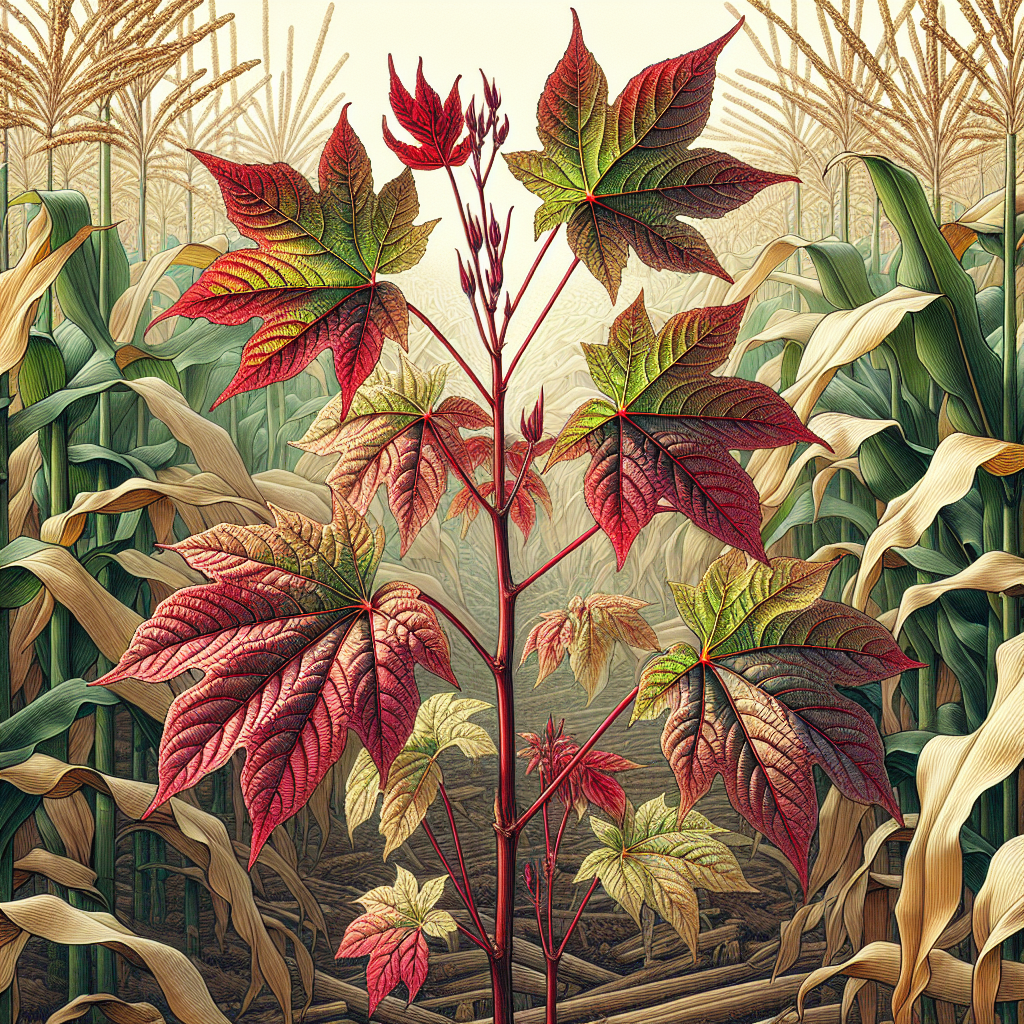
Diagnosing maple infestation starts with recognizing telltale signs of encroachment. Young maple seedlings emerge as small, opposite-leafed shoots with lobed, palmate leaves (3-5 lobes per leaf, toothed margins) in spring, often in dense clusters from seed germination. Look for reddish stems on red maples or grayish bark on silver maples amid crop rows. As they mature, symptoms include stunted crop growth due to shading—maples develop broad canopies up to 50 feet wide—yellowing leaves on affected corn or soybeans from nutrient competition, and reduced soil moisture leading to wilting during dry spells.
Damage manifests as root competition: maple roots form dense mats that deplete nitrogen and phosphorus, causing 15-25% yield drops in wheat fields. Seedlings host secondary pests like mites and whiteflies, spreading to crops. Mechanical issues arise from saplings tangling in harvesters, while mature trees drop helicopter seeds (samaras) that clog irrigation ditches. Inspect for girdling roots around crop trunks, especially in young orchards like apple groves, leading to tree decline. Use a soil probe to detect maple root density; over 10 roots per cubic foot signals severe infestation. Differentiate from similar invasives like Ailanthus by maple's opposite branching and milky sap absence.
Visual scouting in early spring reveals cotyledons, while fall shows brilliant red-orange foliage contrasting green fields. Economic thresholds: remove maples if covering >5% of field area. Document with photos for IPM records.
Lifecycle and Progression of maple
Maples exhibit a classic woody perennial lifecycle adapted for rapid invasion. Germination occurs in spring after cold stratification (30-90 days at 34-41°F), with seeds viable for 2-5 years. Seedlings grow 1-3 feet in year one, developing taproots and fibrous laterals. Vegetative growth peaks in years 2-5, with suckers from roots spreading clonally up to 20 feet annually in moist soils. Flowering starts at 10-15 years, producing abundant samaras in spring (April-May in North America), dispersed by wind up to 300 feet.
Juvenile phase (1-10 years) focuses on establishment; saplings tolerate shade but explode in canopy gaps. Maturity (15+ years) brings 40-60 foot heights, with annual seed production of 1,000-10,000 samaras per tree. Overwintering occurs as dormant buds and roots, resuming growth post-frost. Progression accelerates in disturbed soils post-tillage, with full invasion cycles completing in 5-20 years depending on species—silver maple fastest, sugar slowest. Multiple generations overlap via suckers, making eradication multi-year. Monitor phenology: bud break (March), leaf-out (April), seed drop (May-June), senescence (October).
Environmental Triggers & Risk Factors
Maple thrives in USDA zones 3-9, preferring well-drained loams (pH 5.5-7.5) but invading clays and sands. Triggers include soil disturbance from tillage, exposing seedbanks; edge effects near woodlots where 80% of invasions originate; and excess moisture from poor drainage or irrigation runoff. Climate shifts—warmer winters and wet springs—boost germination by 40%. Risk factors: proximity to ornamentals (Norway maple escapes), contaminated hay/manure, and neglect in fencerows. High-nitrogen fields from legume rotations (clover) favor juvenile growth. Drought-stressed crops suffer most, as maples access deep water. Overgrazing compacts soil, aiding root sprouts. Assess risk via edge-to-interior gradients; fields <100m from maples face 50% higher infestation.
Organic Control & Treatment Plans
Organic management emphasizes integrated mechanical, cultural, and biological tactics. Immediate Removal: For seedlings (<2 years), hand-pull post-rain when soil is soft; mulch stumps with cardboard + 6-inch woodchips to block regrowth. **Mowing/Cutting**: Mow saplings 3x/year at 4-6 inches; repeat cuts stress roots, depleting reserves after 2-3 years. Use brush hogs for thickets. **Girdling**: For trees >4 inches DBH, cut 2-inch deep ring at base in late summer; cover with black plastic 2 years. Mulching/Smothering: Solarize with clear plastic (6+ months summer) or tarp thickets. Biological: Encourage competitors like thyme or yarrow as groundcovers; goats browse young shoots effectively (4-6/week). Herbicidal Alternatives (OMRI-listed): Apply vinegar (20% acetic) or clove oil to cuts, though less effective on roots. Treatment plans: Year 1: Scout/cut 100%; Year 2: Monitor suckers/mulch; Year 3+: Spot-treat. Monitor efficacy with quadrat sampling (1m² plots). Combine with Soil Health Mastery: 5 Proven Strategies for Small Farms to Build Fertile Ground Without Breaking the Bank for resilient fields. Success rates: 85-95% with persistence.
Preventing maple in the Future
Prevention hinges on barriers and hygiene. Install 3-4 foot geotextile fabric fences along woodlot edges, buried 12 inches. Scout/mow fencerows biweekly spring-fall. Use certified weed-free seed/manure; sanitize equipment. Promote dense cover crops (peas) to shade seedlings. Rotate tillage to bury seeds deep. Long-term: Plant allelopathic species like nasturtium borders. Monitor with annual walks; eradicate at <1% cover. Restore with natives post-clearance to fill niches.
Crops Most Affected by maple
Maple invades orchards (apple, peach, cherry) via shading/girdling; row crops (corn, soybeans, wheat) suffer nutrient theft; pastures lose forage to thickets. Ornamentals and berries (strawberry, blueberry) face 30% yield loss from competition.