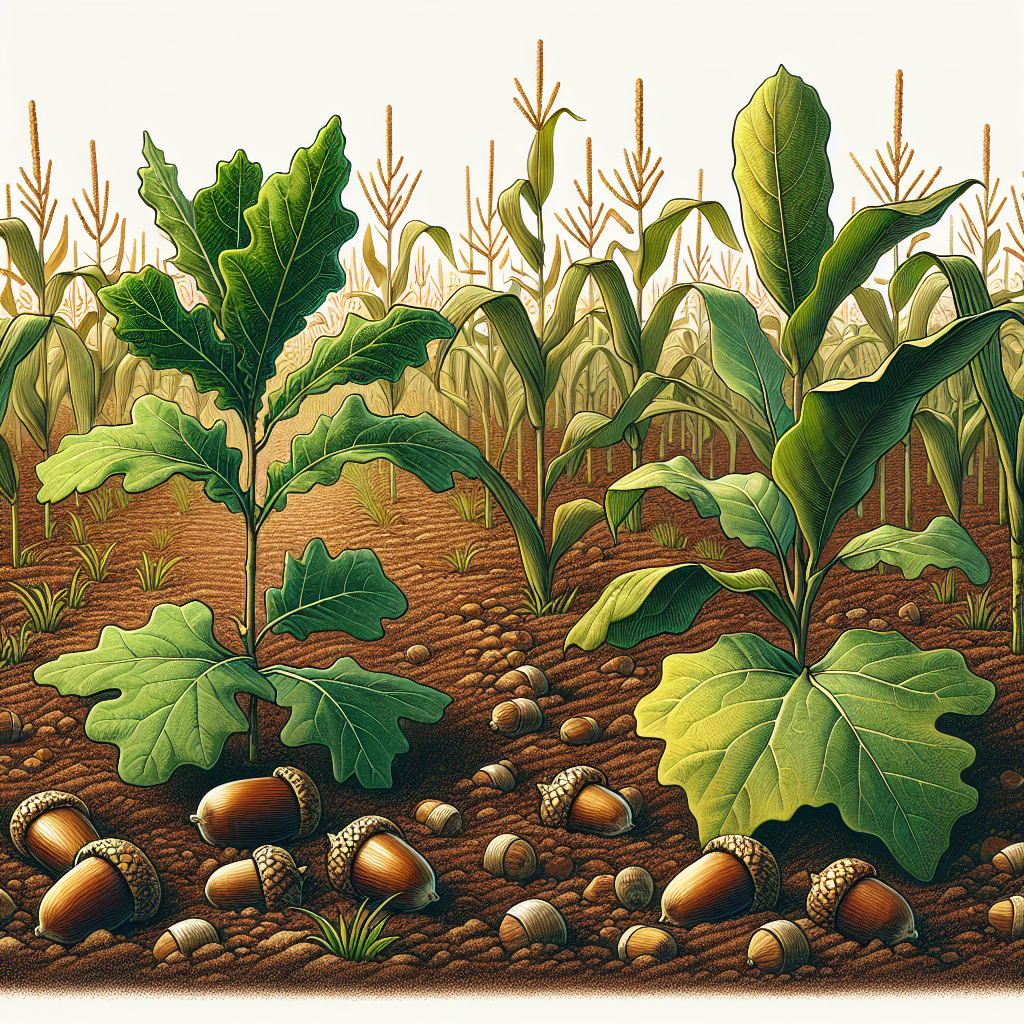
Introduction to oak
Oak trees, belonging to the genus Quercus with over 600 species worldwide, are majestic hardwoods native to temperate and subtropical regions. While valued for timber, wildlife habitat, and shade in natural settings, oaks become problematic agricultural pests when they invade farmlands. Their extensive root systems and dense canopies outcompete crops for essential resources, leading to significant yield losses. In agricultural contexts, oak seedlings and saplings establish rapidly in disturbed soils, forming thickets that suppress crop growth. This comprehensive guide equips farmers with professional diagnostics, lifecycle insights, and organic management plans to mitigate oak infestations effectively. Understanding oak as a competitive woody perennial is key to maintaining farm profitability, especially in regions like North America, Europe, and parts of Asia where species like apple and walnut orchards are prevalent.
Oaks thrive in a wide range of soils but prefer well-drained loams, making them common invaders in row crop fields post-tillage. Their acorns serve as a prolific seed source, with a single mature tree producing thousands annually. Early intervention is critical, as mature oaks are nearly impossible to eradicate organically without heavy machinery. This guide draws from entomological, botanical, and agronomic expertise to deliver actionable strategies, optimized for small to medium farms facing oak encroachment.
Identifying Symptoms & Damage
Diagnosing oak invasion requires keen observation of both above- and below-ground indicators. Early symptoms include clusters of oak seedlings (1-6 inches tall) with lobed leaves emerging in crop rows or field edges, often mistaken for weeds. As they mature, oaks develop thick, leathery leaves that cast heavy shade, causing crop stunting—evident as yellowing foliage and reduced tillering in grains like wheat or corn.
Root competition manifests as wilting during dry spells, even with adequate irrigation, due to oak's deep taproots (up to 10-20 feet) siphoning moisture. Physical damage includes gouged furrows from oak roots interfering with tillage, leading to uneven planting depths. In orchards, oak shade reduces fruit set by 20-40%, with visible signs like smaller peach fruits or sparse grape clusters.
Advanced damage features oak saplings (over 3 feet) forming barriers that hinder machinery access, increasing fuel costs by 15-25%. Acorn drop contaminates harvests, attracting rodents and squirrels, which further damage crops. Differentiate oaks from similar invaders like sumac by their alternate, lobed leaves and acorn production. Scout fields weekly during spring germination for best results. For visual diagnostics, refer to our Spring Pest Patrol for AI-assisted identification tips.
Soil tests reveal nutrient imbalances, with oaks depleting nitrogen and phosphorus. Cross-sections of uprooted seedlings show extensive lateral roots crowding crop roots. Yield mapping shows 10-30% losses in infested zones. Prompt identification prevents escalation, saving thousands in lost revenue.
Lifecycle and Progression of oak
Oak's lifecycle spans decades but critical agricultural impact occurs in the first 5-10 years. Acorns mature in fall, dropping from October to December, with viability lasting 1-2 years in soil. Germination peaks in spring (March-May) under moist, disturbed conditions, producing cotyledons that photosynthesize immediately.
Seedlings grow 1-2 feet in year one, developing taproots. By year 3-5, saplings reach 6-10 feet, branching profusely. Sexual maturity arrives at 20-50 years, perpetuating infestations via massive acorn crops (up to 10,000 per tree). Dormant buds enable resprouting after cutting, complicating control.
Progression in crops: Year 1 seedlings compete subtly; year 3 saplings shade 5-10 sq ft; mature trees dominate 500+ sq ft. Seasonal peaks: Spring flush risks crop smothering; summer shade reduces photosynthesis; fall acorns spread via birds and gravity. Overwintering acorns fuel next cycles. Understanding this perennial progression informs timed interventions, targeting seedlings before lignification.
Environmental Triggers & Risk Factors
Oak invasions surge under specific triggers. Soil disturbance from tillage exposes acorns to light, boosting germination by 80%. Drought stress weakens crops, amplifying oak competition. Proximity to woodlots (<100 yards) increases propagule pressure, with wind dispersing acorns up to 200 feet.
Poor field margins—unmowed fencerows—harbor seed sources. Overgrazing or crop residue burning creates ideal bare soil. Climate shifts, like milder winters, extend viability. Nutrient-rich fields (high NPK) favor rapid juvenile growth. Risk mapping: High-risk zones include field edges, low spots, and abandoned pastures. Companion pests like aphids on oaks vector viruses to crops. Mitigation starts with trigger awareness.
Organic Control & Treatment Plans
Organic management emphasizes prevention and mechanical/ biological tactics. Seedling Stage (0-2 ft): Hand-pull or hoe weekly, ensuring taproot removal. Mow at 4-6 inches biweekly to exhaust reserves. Mulch crop rows with 4-inch cardboard/woodchips to suppress germination.
Sapling Stage (2-10 ft): Cut at ground level with loppers, immediately painting stumps with 20% vinegar solution or boiling water. Repeat cuts prevent resprouting. Girdling (removing bark ring) starves roots. For dense thickets, repeated mowing (10x/year) over 2-3 years depletes carbohydrates.
Biological Aids: Encourage goats/sheep grazing (4-6 weeks rotations) or chickens for acorn consumption. Introduce competition via aggressive covers like clover or buckwheat. Solarization (clear plastic 6 weeks summer) kills buried acorns.
Integrated Plan: 1) Scout/map weekly. 2) Edge barriers (mowed 10-ft strips). 3) Mechanical removal priority. 4) Monitor resprouts. Success rates: 90% for seedlings, 70% saplings with persistence. Avoid chemicals for organic certification. Scale via volunteer crews or community programs.
Preventing oak in the Future
Long-term prevention builds resilient systems. Maintain 20-ft mowed buffers around fields, disked annually. Plant competitive windbreaks with deep-rooted perennials. Acorn traps (tarps under source trees) reduce soil seedbanks by 60%. Crop rotation with smother crops like rye suppresses seedlings.
Soil health via no-till minimizes disturbance. Monitor via grid scouting, acting on first seedlings. Eradicate source trees humanely (basal flaring cuts). Educate neighbors for landscape-wide control. Annual audits track progress. Combine with Soil Health Mastery for holistic prevention.
Crops Most Affected by oak
Oaks devastate open-field and orchard crops. Grains: Corn (shade/root competition cuts yields 25%); wheat (seedling smothering). Row crops: Soybeans, potato suffer moisture theft. Orchards: Apple, peach, almond lose via shade/light interception. Berries: Strawberry, blueberry edged out. Vegetables: Tomato, cucumber stunted. Pastures decline 40%. Prioritize high-value perennials.