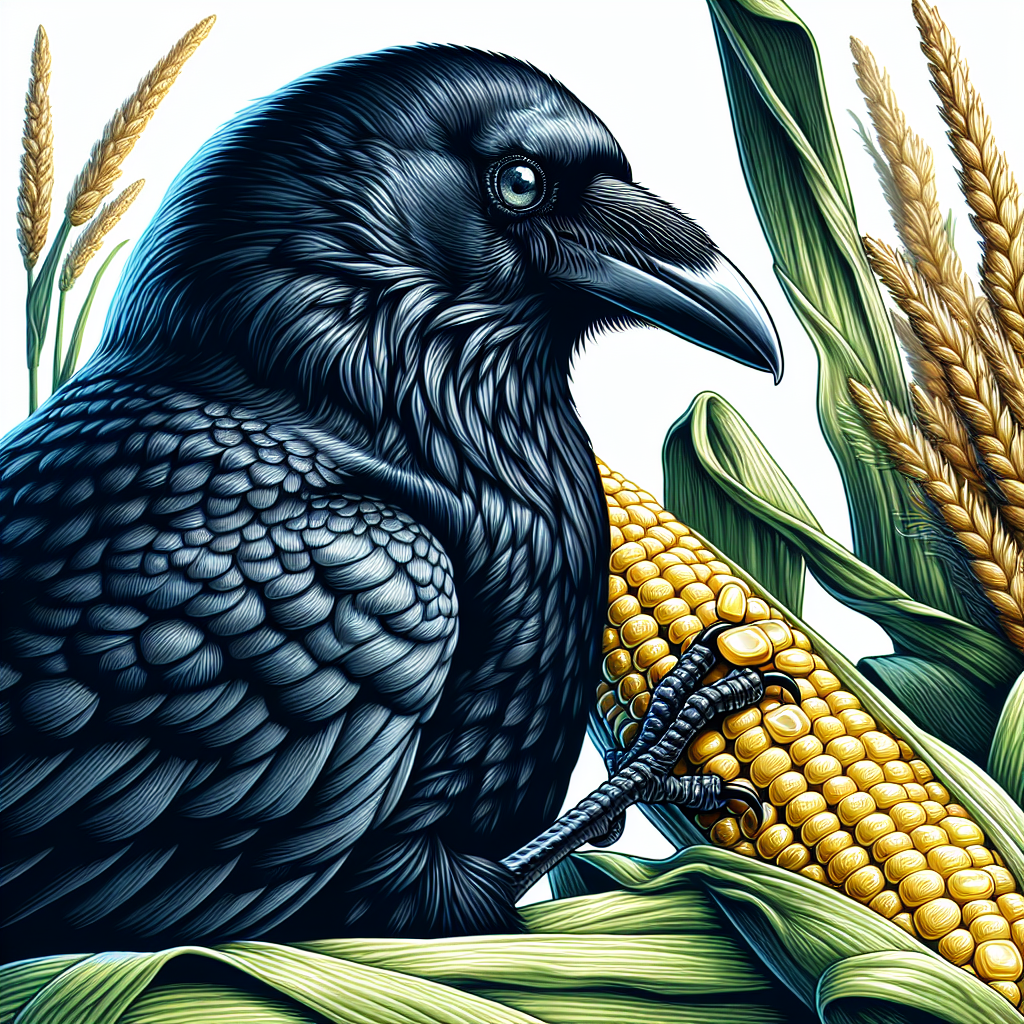
Introduction to Crows
Crows (Corvus spp.), particularly the Carrion Crow (Corvus corone) in Europe and the American Crow (Corvus brachyrhynchos) in North America, rank among the most problematic avian pests in agriculture. These large, black birds with wingspans up to 1.5 meters possess remarkable intelligence, tool-using abilities, and social behaviors that enable them to raid crops efficiently. Farmers worldwide report losses from crows pecking into ripening grains, fruits, and vegetables, often causing 10-30% yield reductions in vulnerable fields. Unlike insect pests like aphids or armyworms, crows operate in flocks, amplifying damage through coordinated foraging. Understanding their behavior is crucial for developing effective, humane management plans that comply with wildlife protection laws. This comprehensive guide equips agricultural professionals with diagnostic tools, lifecycle knowledge, and organic strategies to mitigate crow infestations while promoting sustainable farming. For small farms struggling with pest timing, check out Why Timing Kills Small Farm Profits - And How AI Task Scheduling Saves Your Harvests.
Crows thrive in diverse habitats, from open farmlands to urban edges, drawn by abundant food sources. Their adaptability makes them persistent threats, but targeted interventions can reduce depredation. Early detection and prevention form the cornerstone of control, preventing escalation into flock invasions that devastate corn, wheat, and orchards.
Identifying Symptoms & Damage
Spotting crow damage early prevents widespread losses. Key symptoms include scattered peck marks on seeds and seedlings, with husks torn open and kernels missing. In grain fields like rice or sorghum, look for bare patches where ears are stripped, leaving dangling stems. Fruits such as cherry, grapes, and apple show deep beak punctures, leading to rot from exposed flesh—often mistaken for anthracnose or birds damage.
Physical signs: Fresh droppings (white with dark spots) under roosts, feathers on ground, and alarm calls (harsh 'caw' sounds) during raids. Seedlings exhibit uprooting or nibbling at cotyledons, similar to cutworms but with aerial droppings nearby. In sweet corn, ears pulled open with kernels gouged out. Quantify damage by scouting 10-meter transects: >5% affected plants signals action. Differentiate from squirrels by beak-sized holes (1-2 cm) versus gnaw marks. Nighttime raids leave dewy residues absent in rodent damage. Use trail cameras for confirmation, capturing flock sizes and patterns.
Economic impact: A single flock of 50 crows can consume 5-10 kg of grain daily, equating to $500+ losses per hectare in high-value crops. Secondary issues include disease vectoring via droppings, spreading fusarium spores on grains.
Lifecycle and Progression of Crows
Crows are long-lived (up to 20 years), with breeding from March-May in temperate zones. Females lay 3-6 green-speckled eggs in stick nests high in trees or utility poles. Chicks fledge in 4-5 weeks, joining family groups that forage year-round. Progression: Eggs hatch in 18 days; juveniles disperse locally, forming flocks by fall. Peak crop damage occurs July-October during ripening and post-harvest scavenging.
Annual cycle: Winter roosts aggregate thousands, raiding stubble. Spring nesting reduces activity as pairs defend territories. Summer fledglings increase flock pressure on grains. Intelligence allows learned avoidance of deterrents, requiring rotation. Migration patterns vary; sedentary populations in mild climates pose constant threats, while northern flocks invade southward. Monitor via eBird data for local influxes. Lifecycle knowledge informs timing: Target pre-breeding dispersal with habitat mods.
Environmental Triggers & Risk Factors
Crows exploit open fields with poor cover, especially near roosts or water. Triggers: Ripening grains attract within 5 km; drought concentrates foraging. Risk factors include monocultures like corn or wheat, lacking clover borders. Proximity to urban refuse boosts populations. Weather: Winds >15 km/h deter but fog enables stealth raids. Soil exposure post-tillage invites probing. High-risk zones: Flat, >10 ha fields with <20% vegetative buffer. Companion pests like grasshoppers draw initial scouts. Climate change extends ranges, intensifying pressures in new areas.
Organic Control & Treatment Plans
Humane, organic methods prioritize deterrence over lethal control, aligning with regulations. Visual scares: Deploy reflective tapes, Mylar balloons, and predator decoys (owls/hawks) rotated weekly to counter habituation. Auditory: Propane cannons (1-3 blasts/hour) or electronic callers mimicking predators. Effectiveness: 60-80% initial reduction, sustained with variation.
Physical barriers: Netting over grapes, blueberry bushes (mesh <2 cm); row covers for seedlings. Overhead wires (1-2 m spacing) prevent perching. Habitat modification: Plant dense hedgerows of thai-basil or yarrow as buffers; maintain 10 m weed-free zones to reduce landing.
Cultural: Early planting staggers maturity; husk-bound varieties resist pecking. Lasers or drones patrol at dawn/dusk. Biological: Encourage raptors via perches; falcons reduce flocks 70%. Trapping (ladders) for relocation where permitted. Integrated plan: Layer 3+ methods, monitor weekly. For AI-enhanced pest ID, see Spring Pest Patrol: Organic AI Strategies to Shield Your Crops from Common Invaders. Cost-benefit: $50/ha netting yields 20% ROI in fruits.
Preventing Crows in the Future
Long-term prevention builds resilient systems. Perimeter plantings of tall sorghum or sunflowers deter entry. Crop rotation with non-hosts like potato disrupts patterns. Roost dispersal: Lights/tape at dusk. Community coordination: Shared cannons across farms. Tech: AI-monitored cameras trigger alerts. Biodiversity: Intercrop with marigold attracts beneficials. Scout pre-ripening; apply preemptive scares. Annual audits adjust strategies. Success metrics: <2% damage via grid counts. Legal: Check permits for pyrotechnics.
Crops Most Affected by Crows
Crows target high-energy foods. Cereals: Corn (ears stripped), wheat (grains pulled), rice (panicles eaten). Fruits: Cherry, apple, grapes, strawberry—pecked ripe berries. Nuts: almond, pecan cracked open. Vegetables: sweet potato tubers dug, pumpkin gouged. Field crops: soybeans, peanuts pods. Losses peak in dragon fruit (flesh torn), mango orchards. Small farms vulnerable; diversify to mitigate.