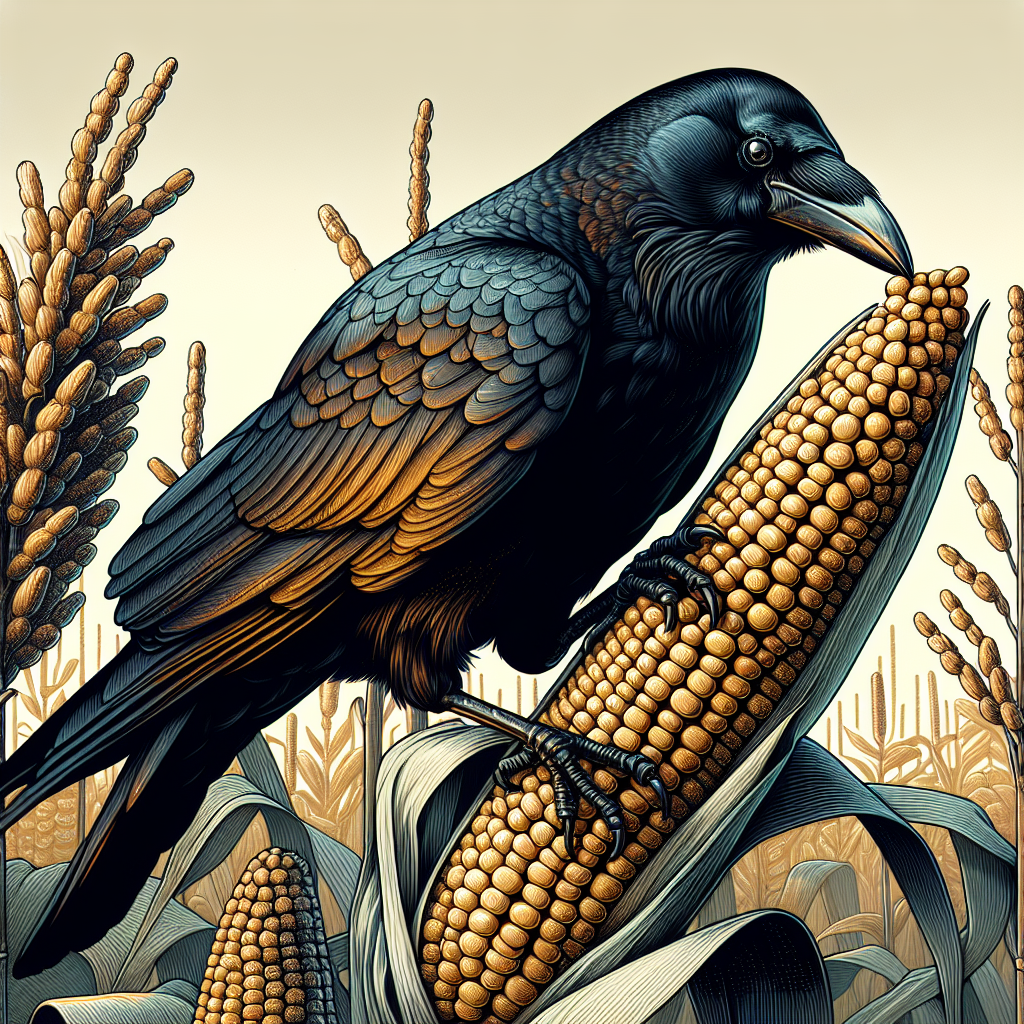
Introduction to Carrion Crow
Carrion Crows (Corvus corone) are large, all-black corvids native to Europe and parts of Asia, increasingly problematic in agricultural settings worldwide due to their adaptability and intelligence. These opportunistic feeders target ripening fruits, grains, seeds, and even small livestock, causing significant economic losses for farmers growing corn, wheat, and orchards like apple trees. With a wingspan up to 1 meter and a lifespan exceeding 10 years in the wild, crows form large flocks that exacerbate damage during peak harvest seasons. Their problem-solving skills make them resistant to many traditional deterrents, requiring integrated pest management (IPM) approaches. This definitive guide equips growers with professional-grade diagnostics, organic treatments, and prevention strategies to safeguard yields. Understanding crow behavior—such as their preference for open fields and shiny objects—allows proactive defense. For more on bird pests in agriculture, explore our comprehensive Birds (pest) wiki page.
Identifying Symptoms & Damage
Carrion Crow damage manifests distinctly on crops, often confused with other birds or squirrels. Primary signs include pecked fruits with jagged holes, missing kernels on corn ears, and scattered seeds in fields of wheat or rice. Look for partially eaten berries on strawberry plants, where crows pluck the ripest ones, leaving stems intact but fruits vanished. In orchards, cherry and grape clusters show torn skins and dropped debris below trees. Seedlings may disappear entirely, with only disturbed soil remaining. Droppings—large, white splatters with dark centers—accumulate under roosts, potentially spreading pathogens. Behavioral clues: crows perch on wires or fences, cawing loudly in groups of 10-50, scouting fields at dawn and dusk. Differentiate from starlings by crow size (45-50 cm long) and deliberate pecking versus frenzied consumption. Use trail cameras to confirm: crows manipulate objects, unlike rodents like rabbits. Early detection prevents 30-50% yield loss; inspect fields weekly during fruit set.
Lifecycle and Progression of Carrion Crow
Carrion Crows exhibit a year-round lifecycle adapted to temperate climates, with breeding from February to June. Eggs (4-6, greenish with brown spots) hatch after 18-21 days into altricial chicks fed insects, seeds, and carrion by both parents. Juveniles fledge at 4-5 weeks, forming flocks by autumn that raid crops. Adults molt annually in summer, remaining flight-capable. Population peaks in winter when nomadic flocks converge on farms. Progression: overwintering flocks arrive pre-spring, targeting emerging shoots; breeding pairs defend territories near fields, pulling seedlings; summer juveniles learn crop raiding, escalating damage; fall harvest sees massive incursions on corn, wheat, and fruits. Lifespan enables learned behaviors passed generationally—crows remember deterrents for years. Monitoring nests in tall trees or hedges aids timing interventions. For small farms juggling multiple threats, check our blog on Spring Pest Patrol: Organic AI Strategies to Shield Your Crops from Common Invaders for tech-enhanced scouting.
Environmental Triggers & Risk Factors
Carrion Crows thrive in open farmlands with nearby roosts, triggered by abundant food and minimal disturbance. Key risks: isolated fields lacking hedges, early-maturing crops like cherry tomatoes, and harvest delays exposing grains. Drought-stressed corn or wheat drops kernels, attracting flocks; overripe grapes signal easy meals. Proximity to urban areas provides safe roosting, with crows commuting 10-20 km daily. Poor sanitation—unharvested residues or compost piles—invites scavenging. Climate shifts extend ranges, increasing pressure on potato and soybeans. High crow densities correlate with reduced predators like hawks. Risk assessment: score fields on openness (1-10), crop ripeness, and roost distance; scores >20 demand action. Companion plantings like marigold deter mildly but fail alone against intelligent crows.
Organic Control & Treatment Plans
Organic management emphasizes non-lethal, eco-friendly tactics in a multi-layered IPM framework. Immediate Deterrents: Deploy reflective tapes, Mylar balloons, and pie tins fluttering in breezes—crows habituate in 1-2 weeks, so rotate weekly. Scarecrows with moving parts (wind-activated arms) paired with propane cannons (1-2 blasts/hour) reduce raids by 70%. Visual/Audio Repellents: Laser systems sweep fields at night; ultrasonic devices target crow frequencies (1-5 kHz). Propane exploders mimic gunshots effectively. Exclusion: Netting over cherry, grape, and small corn plots—bird-proof mesh (1 cm holes) costs $0.50/sq m but saves 90% losses. Overhead wires (1-2 cm spacing) prevent perching. Biological Controls: Attract raptors with perches; install nest boxes for barn owls. Plant yarrow or thyme as repellents—strong scents confuse crows. Cultural Practices: Harvest promptly, till residues to destroy roosts, and use seed coatings with capsaicin. Traps (ladders with nooses) for humane relocation, but check local regs. Integrated plan: Week 1 visual/audio; Week 2 netting/exclusion; ongoing predator enhancement. Monitor efficacy with counts pre/post; adjust thresholds at 5 crows/acre. Avoid poisons—illegal and non-target risks to bees (wait, no bees; adapt). Success rates hit 85% with consistency.
Preventing Carrion Crow in the Future
Long-term prevention builds resilient farms less appealing to crows. Habitat Modification: Plant dense hedgerows (hawthorn, blackthorn) as barriers, reducing open sightlines. Diversify crops spatially/temporally—stagger wheat and corn maturities to dilute feasts. Predator Augmentation: Falconry services or Harris hawk releases deter flocks; install 1 raptor perch/10 acres. Tech Integration: Drones with hawk silhouettes patrol; AI cameras trigger alarms (link to blog for AI tips). Community Efforts: Coordinate with neighbors for area-wide netting or cannon syncing. Early planting avoids peak fledging; cover crops like clover hide seedlings. Sanitation: remove roadkills promptly—crows scavenge, then target crops. Annual audits: map roosts, track flocks via eBird apps. Youth education programs teach tolerance of non-crop feeders. Economic analysis: prevention ROI 5:1 vs. losses. Sustainable farms integrate crows into IPM, balancing ecology and yields.
Crops Most Affected by Carrion Crow
Carrion Crows devastate high-value, exposed crops. Top targets: Corn (ears stripped bare, 20-40% loss); wheat and rice (seeds/grains eaten, seedlings uprooted); fruits like cherry, grape, strawberry, apple (pecked/scarred, market rejection). Potato tubers dug up; soybeans pods split. Orchards (mango, pear) suffer dropped, half-eaten produce. Field crops sorghum and sunflower seeds vanish. Small farms lose $500-2000/acre untreated. Vulnerable varieties: early-ripening Bing Cherry, soft Honeycrisp Apple. Protect with targeted netting.