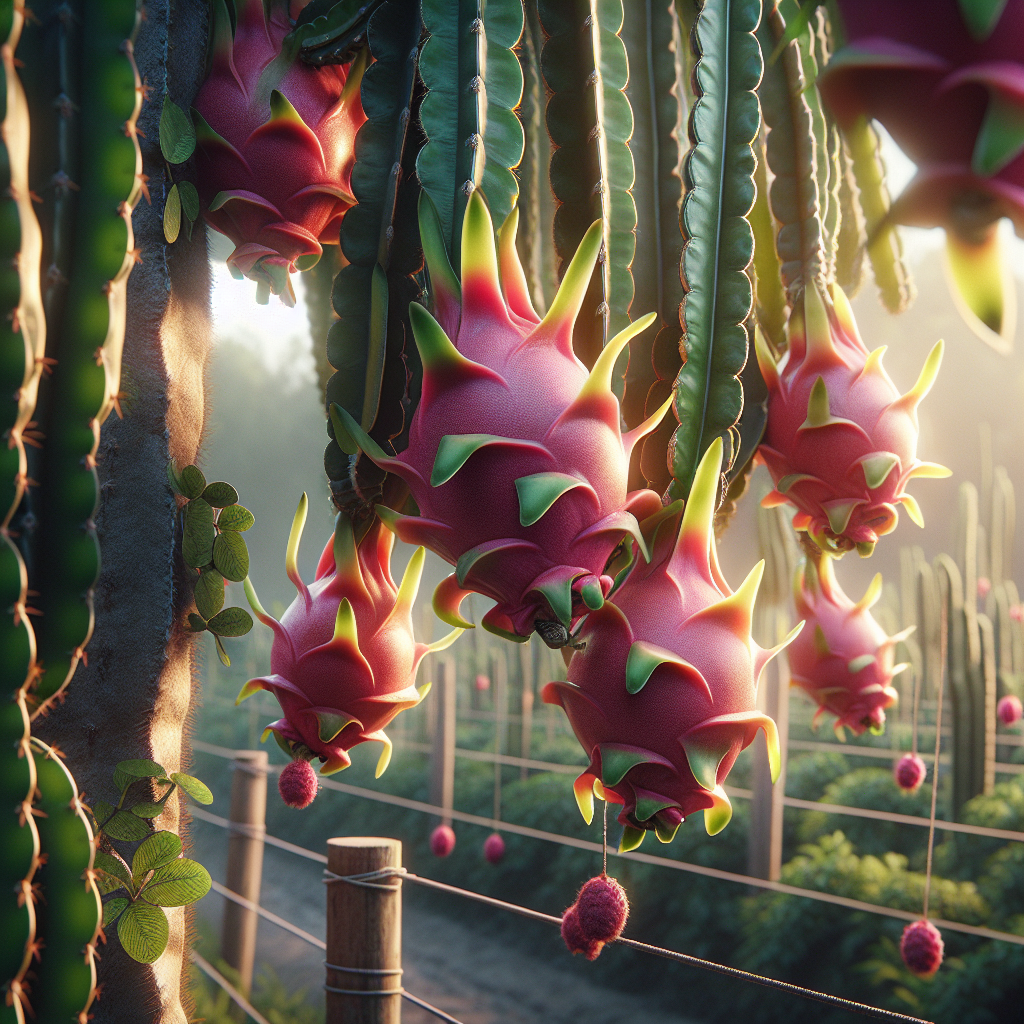
## Introduction to Dragon Fruit
Dragon Fruit, also called pitaya or pitahaya, is one of the most visually distinctive fruit crops in warm-climate agriculture. Its brightly colored skin, white or red flesh, and black edible seeds have made it a premium fruit in fresh markets, while the plant itself offers strong productivity when managed properly. Despite its cactus identity, Dragon Fruit is not a low-input crop in commercial or serious home production. It behaves more like a tropical climbing perennial that happens to be succulent: it needs drainage, yes, but it also needs nutrition, structural support, and well-timed irrigation to produce large, high-quality fruit.
Native to the Americas and widely commercialized in Vietnam, Thailand, Israel, Nicaragua, Colombia, Mexico, and other subtropical to tropical regions, Dragon Fruit has transitioned from specialty novelty to serious orchard crop. Modern growers value it for relatively fast bearing, long productive life, multiple harvest flushes in warm climates, and strong returns where quality fruit can be marketed fresh. For a broader overview, see Dragon Fruit.
One of the biggest mistakes new growers make is assuming all Dragon Fruit types behave the same. They do not. White-fleshed, red-fleshed, and yellow-skinned types differ in sweetness, vigor, thorniness, pollination behavior, and climate adaptation. Some cultivars are self-fertile; others need cross-pollination for good fruit set. Some tolerate heat well but crack under uneven irrigation. Others fruit heavily only when pruning and trellis architecture are excellent. A definitive Dragon Fruit growing program must therefore combine botany, local climate adaptation, and cultivar-specific management.
## Botanical Profile & Scientific Classification
Dragon Fruit belongs to the cactus family, Cactaceae. The most widely grown commercial species include:
- Selenicereus undatus (formerly Hylocereus undatus): white flesh, pink-red skin; the most widely cultivated type in many markets
- Selenicereus costaricensis or related red-fleshed types sold under former Hylocereus names: red skin, red or magenta flesh, often higher antioxidant content
- Selenicereus megalanthus: yellow skin with white flesh, typically sweeter, smaller fruit, and often more spines on immature structures
Scientific classification
- Kingdom: Plantae
- Clade: Angiosperms
- Clade: Eudicots
- Order: Caryophyllales
- Family: Cactaceae
- Genus: Selenicereus
- Species: Selenicereus undatus (most common commercial reference for Dragon Fruit)
Dragon Fruit is an epiphytic or hemiepiphytic climbing cactus in nature. That matters agronomically. Unlike desert cacti adapted to mineral wastelands, this plant evolved to climb trees and access filtered light, moving air, periodic rainfall, and organic matter accumulation. Its stems are triangular, fleshy, photosynthetic cladodes with areoles along the margins that generate roots, branches, flowers, and spines. Aerial roots allow stems to cling to support structures.
The flowers are among the largest in fruit crops: fragrant, white, nocturnal, and typically opening for a single night. Pollination often occurs via moths, bats, or hand pollination in managed plantings. Flowering is commonly triggered by warm temperatures, mature stem growth, and daylength interactions, though local climate strongly modifies timing. Fruit development usually takes about 30 to 50 days after successful pollination, depending on species, cultivar, and temperature.
A mature Dragon Fruit planting is not simply a cactus patch. It is a vertical fruiting system. The highest yields come from a well-managed crown where stems drape over a top support ring or crossbar, producing flowers and fruit on pendulous, mature segments with good light exposure.
## Ideal Soil, pH, and Climate Requirements
Dragon Fruit needs a rare combination: excellent drainage plus consistent root-zone moisture. The plant is very intolerant of waterlogging but performs poorly when repeatedly drought-stressed during active vegetative growth, flowering, or fruit swell.
Soil texture and structure for Dragon Fruit
Best soils are:
- Sandy loam
- Loam
- Volcanic loam
- Gravelly but organic-matter-enriched soils
- Raised beds in heavier soils
Avoid:
- Tight clay with standing water after rain
- Compacted subsoil layers that prevent root respiration
- Saline soils without leaching capacity
Ideal soil should drain within hours, not days, after irrigation or rainfall. If you dig a planting hole and water stands in it the next day, the site is unsuitable unless mounded or heavily amended with structural drainage improvements. Dragon Fruit roots need oxygen. Persistent saturation encourages stem rot, root decline, and opportunistic fungal and bacterial infection.
pH range for Dragon Fruit
Ideal pH is 5.5 to 6.8, with acceptable performance often from 5.0 to 7.5 if nutrition is managed carefully. In alkaline soils above pH 7.5, iron, manganese, and zinc deficiencies become more common, often showing as interveinal chlorosis on younger growth. In strongly acidic soils below pH 5.0, root performance and nutrient balance may suffer, especially where aluminum toxicity is present.
Organic matter
Dragon Fruit benefits from moderate organic matter, generally 2.5% to 5% in field soils. Too little organic matter reduces moisture buffering and microbial activity. Too much undecomposed organic material packed against the crown can hold water and increase disease risk. Apply compost as a surface mulch band rather than burying large amounts directly around the stem base.
For broader fertility principles, see soil health tips.
Climate requirements for Dragon Fruit
Dragon Fruit prefers:
- Mean temperatures of 18-30°C (64-86°F)
- Strong warmth during active growth
- Low frost exposure
- Moderate humidity with airflow
- Full sun to light filtered sun, depending on region
Optimal commercial performance is often seen in subtropical and tropical climates with a pronounced warm season. Mature plants can tolerate short heat spikes above 35°C (95°F), but stems may sunburn and flower abortion may increase if irrigation is inconsistent or radiant heat is extreme. In very hot inland deserts, light afternoon shade or whitewashing exposed trellis areas may reduce sunscald.
Cold is a major limiting factor. Light, brief chilling may only scar tissue, but frost can kill stem tips, destroy flowers, or collapse whole plants. Damage can begin around 0°C (32°F), especially on young or hydrated tissue. Commercial Dragon Fruit should be protected from frost with site selection, windbreaks, thermal buffering, or protected cultivation.
Light requirements for Dragon Fruit
Dragon Fruit generally fruits best in 6-8+ hours of sun, but sun intensity matters. In coastal tropics, full sun is excellent. In arid interiors, intense afternoon sun can bleach or burn stems, especially young cuttings. The best balance is bright exposure with good airflow and root-zone moisture stability.
## Step-by-Step Planting & Propagation
Dragon Fruit is propagated most reliably from cuttings, though seed propagation is used for breeding and selection.
Propagating Dragon Fruit from cuttings
- Select healthy mother stems: Choose mature, disease-free segments 30-45 cm (12-18 in) long. Older, firm segments root and establish better than soft, overly juvenile growth.
- Make clean cuts: Use sanitized pruners. A slanted cut at the basal end helps identify orientation.
- Cure the cuttings: Let the cut end dry and callus in a shaded, ventilated place for 5-10 days. This is critical. Planting fresh, wet cuttings increases rot risk.
- Optional rooting dip: A biological fungicide or rooting hormone can help, but many growers root successfully without either.
- Plant shallowly: Insert only the basal 5-8 cm (2-3 in) into a free-draining medium. Deep planting invites stem rot.
- Stabilize upright growth: Tie the cutting to a temporary stake.
- Water lightly at first: Keep medium slightly moist, not wet, until roots emerge. Initial irrigation should moisten the rooting zone but never saturate it continuously.
Propagating Dragon Fruit from seed
Seed-grown plants are variable and slower to bear, often taking several years longer than cuttings. Seed propagation is useful for breeding novel cultivars or rootstock experimentation, but not for uniform orchard establishment.
Field planting layout for Dragon Fruit
Most Dragon Fruit systems rely on posts with a top support. Common spacing:
- Home garden: 2-3 m between posts
- Commercial systems: about 2.5-3 m between rows and 2-3 m within rows, depending on machinery and vigor
A common design is one concrete or durable treated post per planting station, with 3-4 cuttings per post. At the top, a tire, ring, or crossarm allows stems to drape downward, which encourages flowering on mature hanging growth.
Planting steps for Dragon Fruit
- Prepare a raised mound or elevated planting zone if drainage is anything less than excellent.
- Incorporate well-finished compost into the upper soil layer, not as a soggy backfill pocket.
- Install the trellis before planting; retrofitting damages roots later.
- Plant cuttings 10-15 cm away from the post, angled slightly inward.
- Tie stems loosely with soft ties.
- Mulch lightly, keeping mulch a few centimeters away from the stem base.
- Irrigate enough to settle soil without creating anaerobic conditions.
Young Dragon Fruit plants should be trained to a single main stem until they reach the top of the post. Remove side shoots during this phase so energy goes into vertical establishment.
## Care & Maintenance (Specific Watering, Pruning, Fertilizing regimes)
Watering Dragon Fruit correctly
Dragon Fruit needs even moisture with rapid drainage. The top few centimeters of soil may dry between irrigations, but the active root zone should not cycle between swamp and severe drought.
Practical watering targets
- Newly planted cuttings: water lightly 1-2 times per week in warm weather, depending on soil and evaporation
- Establishing plants: aim for soil that feels slightly moist at 10-15 cm depth, never sour-smelling or sticky-saturated
- Mature fruiting plants: deep irrigation when the upper 3-5 cm are dry, then allow partial drying before the next event
In sandy soils, this may mean watering every 2-4 days in hot weather. In loams, every 5-8 days may suffice. During cool or rainy periods, irrigation may be minimal.
Signs of overwatering in Dragon Fruit
- Yellowing stems with soft texture
- Stem translucency or water-soaked patches
- Rot beginning at base or branch crotches
- Flower drop despite lush vegetative growth
- Sour odor from the root zone
Signs of underwatering in Dragon Fruit
- Shriveling or rib contraction on stems
- Poor bud development
- Fruit undersized or misshapen
- Fruit splitting after sudden rewatering
- Reduced flushes of new growth
The most critical watering periods are:
- Post-transplant establishment
- Pre-flowering and flowering
- Fruit set and fruit enlargement
Reduce irrigation slightly during cool, cloudy weather to avoid disease pressure, but do not impose severe drought on actively fruiting plants.
Fertilizing Dragon Fruit
Dragon Fruit responds well to modest but regular feeding. Excess nitrogen causes lush, weak, disease-prone stems and delayed flowering.
General nutrient strategy
- Year 1: emphasize balanced growth and root establishment
- Year 2 onward: moderate nitrogen, steady potassium, adequate calcium and magnesium, plus micronutrients
A practical program per plant per year, split into 4-8 applications:
- Young plants: low-dose balanced fertilizer such as 10-10-10 or equivalent organic regimen
- Mature plants: lower nitrogen relative to potassium during flowering and fruiting, such as 8-4-12 or similar nutrient ratio based on local recommendations
Nutrient priorities for Dragon Fruit
- Nitrogen (N): supports stem growth; too much reduces reproductive balance
- Phosphorus (P): important for roots and flowering, though often overapplied unnecessarily
- Potassium (K): essential for fruit size, sugar movement, plant resilience
- Calcium (Ca): strengthens tissues, supports fruit quality
- Magnesium (Mg): needed for chlorophyll and photosynthetic function
- Iron, zinc, manganese, boron: critical in high-pH or heavily irrigated soils
Use composted manure cautiously. It should be well-aged and applied in modest amounts as a surface dressing. Fresh manure is risky because of salt, pathogens, and stem-burn potential.
Pruning Dragon Fruit
Pruning is one of the most important yield practices in Dragon Fruit.
Structural pruning
- Train 1 main stem upward per cutting
- Remove low, weak, tangled side branches until the plant reaches the top support
- At the support top, allow branching to form the crown
Maintenance pruning
- Remove diseased, damaged, sunburned, or overcrowded stems
- Thin dense interior growth to improve airflow and light penetration
- Retain healthy pendulous mature stems, which are often the most productive
- Prevent excessive stem length from dragging on the ground
A neglected Dragon Fruit canopy becomes a heavy, tangled mass with poor air circulation, lower pollination efficiency, more mealybugs, and smaller fruit. Productive crowns are open enough that you can visually inspect stems and developing fruit.
Pollination management for Dragon Fruit
Some cultivars are self-fertile, but many produce better fruit with cross-pollination. If fruit set is erratic despite heavy blooming, pollination may be the bottleneck. Hand pollination at night or very early morning, using fresh pollen from a compatible cultivar, can dramatically improve set and fruit size.
## Pests, Diseases & Organic Management Strategies
Dragon Fruit is relatively resilient compared with many fruit crops, but disease pressure rises sharply when drainage is poor, canopies are dense, or stems are physically injured.
Common pests of Dragon Fruit
- Mealybugs: cluster in areoles, branch crotches, and fruit surfaces; they weaken plants and encourage sooty mold via honeydew
- Scale insects: sap feeders that reduce vigor
- Ants: often protect mealybugs and scales
- Aphids and thrips: sometimes attack flowers or tender growth
- Fruit flies: may attack damaged or overripe fruit in some regions
- Snails and slugs: feed on tender young stems and fruit skin
Organic pest management for Dragon Fruit
- Maintain an open canopy and weed-free base
- Control ants to reduce mealybug protection
- Use strong water sprays on early infestations where practical
- Apply insecticidal soap or horticultural oil carefully during cool periods, avoiding open flowers and extreme heat
- Encourage beneficial insects with flowering border plants
- Remove heavily infested stems rather than trying to rescue every segment
Common diseases of Dragon Fruit
- Stem rot: often linked to fungal or bacterial infection following excess moisture or wounds
- Anthracnose and other fruit/stem spots: more common in humid, crowded plantings
- Root rot: associated with poor drainage and chronic overirrigation
- Bacterial soft rot: can spread rapidly in hot, wet conditions
Organic disease management for Dragon Fruit
- Plant in excellent drainage.
- Sanitize pruning tools between plants.
- Prune during dry weather where possible.
- Remove infected stems well below visible lesions.
- Improve airflow and reduce overhead irrigation.
- Apply copper or approved biological fungicides preventively only when justified by local disease pressure and label guidance.
- Avoid excess nitrogen, which creates tender susceptible growth.
Sunburned tissue is often misdiagnosed as disease. Sunburn usually appears on exposed stem surfaces as bleached, corky, or tan areas after extreme heat or sudden full-sun exposure. It becomes a disease problem secondarily if pathogens enter damaged tissue.
## Harvesting, Curing & Optimal Storage
Dragon Fruit should be harvested at full color development but before over-softening. Unlike some climacteric fruits, it does not dramatically improve after picking if taken too early.
Harvest indicators for Dragon Fruit
- Skin has developed full cultivar color
- Wing-like bracts begin to slightly wither or lose intense green freshness
- Fruit develops a light, even waxy sheen
- Size has stabilized
- Fruit yields slightly to gentle pressure but is not soft
Harvest is usually 30-50 days after flowering, depending on type and conditions. Yellow Dragon Fruit often takes longer than many red-skinned types.
How to harvest Dragon Fruit
Use sanitized pruners or a sharp knife. Cut with a short stem stub attached rather than twisting aggressively, which can tear skin and shorten shelf life. Handle carefully; abrasions reduce market quality.
Curing and postharvest handling for Dragon Fruit
Dragon Fruit does not require curing in the same way as onions or sweet potatoes, but it does benefit from:
- Gentle cleaning and drying
- Sorting by size and skin quality
- Rapid removal of field heat
- Protection from direct sun after harvest
Avoid washing unless needed for market, and if washed, dry thoroughly before packing. Surface moisture encourages decay.
Storage conditions for Dragon Fruit
- Short-term room storage: a few days in cool indoor conditions
- Best storage: 7-10°C (45-50°F) with moderate humidity, often around 85-90% RH
- Avoid near-freezing temperatures, which can cause chilling injury depending on cultivar
Well-handled fruit may store for 2-3 weeks, though flavor is generally best when consumed relatively fresh. Red-fleshed types often command higher fresh-market appeal but may show bruising more readily.
## Companion Planting & Intercropping
Dragon Fruit is usually grown on posts with significant open alley space in the early years, making it suitable for strategic intercropping. The main rule is to avoid companions that create excessive shade, compete aggressively for water, or increase humidity around the crown.
Good companion options for Dragon Fruit
- Low-growing legumes for nitrogen cycling and weed suppression
- Shallow-rooted herbs in dry-edge systems
- Managed flowering plants to support pollinators and beneficial insects
- Short-duration vegetables between rows during establishment years where irrigation can be zoned separately
Useful companion traits include:
- Non-climbing habit
- Modest water demand
- Easy removal if competition increases
- Attraction of pollinators without becoming pest reservoirs
Examples may include basil-type herbs, marigold strips, cowpea as a managed cover, or low biomass legumes. In dry climates, maintain enough distance that intercrops do not trap humidity against Dragon Fruit stems or force overirrigation.
Intercropping cautions for Dragon Fruit
Avoid:
- Tall cereals that shade trellises
- Vining crops that climb posts and crowd canopies
- Heavy feeders that require frequent irrigation
- Plants known to host persistent mealybug or ant problems in your area
Groundcover strategy under Dragon Fruit
A managed living mulch or light organic mulch can stabilize soil temperature and reduce splashing of pathogens. However, keep a clean, dry collar around each plant base. Mulch piled directly against Dragon Fruit stems is a common cause of rot.
In commercial orchards, the most effective system is often a clean strip around posts with vegetated row middles. This balances airflow, access, erosion control, and beneficial insect habitat.
Dragon Fruit rewards precision. The crop is forgiving of brief dryness but not of chronic root suffocation; tolerant of heat but not always of reflective scorch; vigorous in growth but highly dependent on trellis and pruning discipline for top yields. Growers who treat Dragon Fruit as a structured fruiting cactus rather than an ornamental succulent typically achieve the best production, fruit size, and orchard longevity.