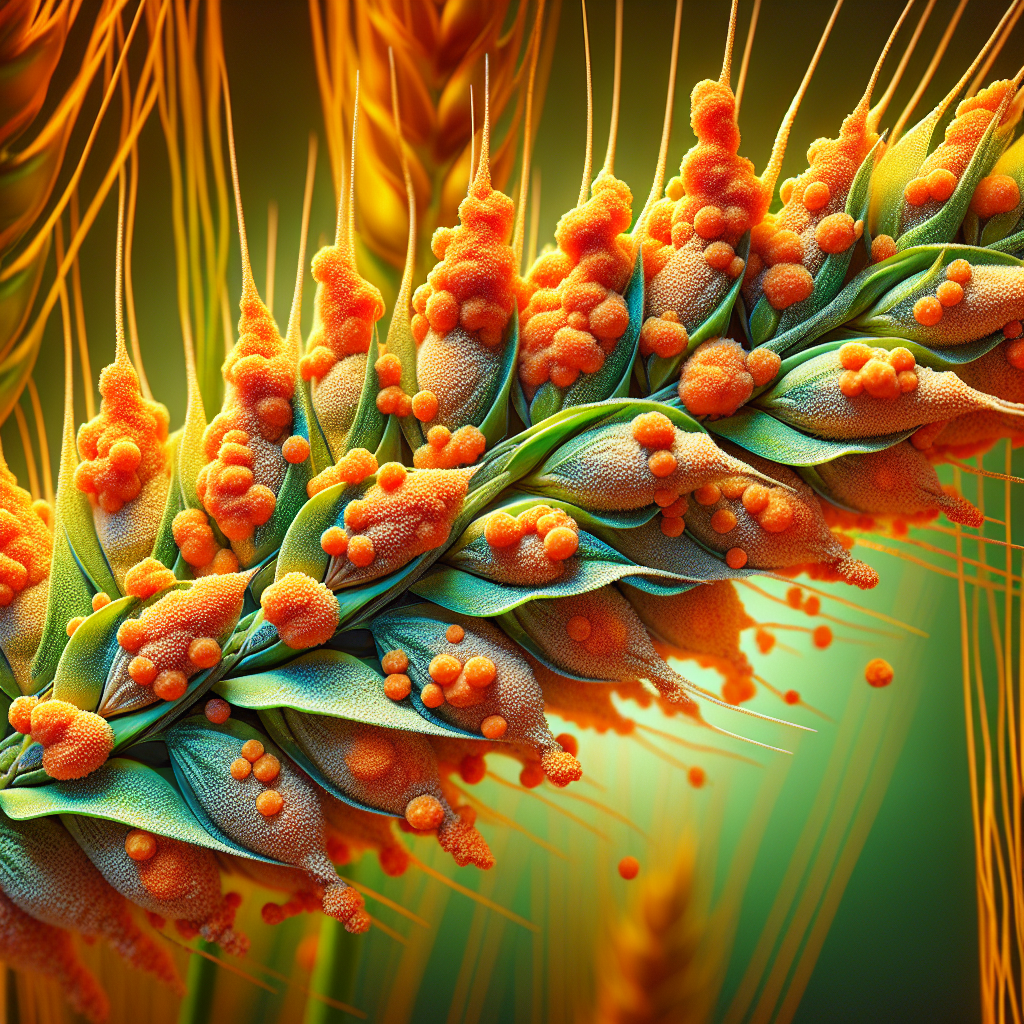
Introduction to Rust-like diseases
Rust-like diseases represent a broad category of fungal pathogens that mimic the appearance and damage patterns of true rust fungi (order Pucciniales), characterized by their distinctive powdery spore masses resembling rust. While true rusts like Leaf Rust, Stem Rust, and Stripe Rust are caused by basidiomycete fungi such as Puccinia and Uromyces species, "rust-like" encompasses similar symptoms from other fungi, bacteria, or environmental disorders. These diseases are ubiquitous in agriculture, affecting over 5,000 plant species worldwide, with cereal crops alone suffering billions in annual losses.
True rusts require specific environmental conditions and often alternate hosts, but rust-like mimics—such as certain ascomycetes or bacterial pustules—can appear identical, complicating diagnosis. In small farms and home gardens, distinguishing them is crucial for targeted management. This guide provides definitive diagnostic criteria, lifecycle insights, and organic strategies to combat rust-like diseases effectively. For farms struggling with misidentification, tools like AI-powered plant diagnosis can prevent costly errors, as explored in Why Misidentifying Plants Costs Small Farms Thousands.
Economic impacts are severe: in wheat fields, stem rust epidemics have historically caused 20-50% yield reductions, while in corn, common rust and southern rust can defoliate plants prematurely. Rust-like symptoms also appear in ornamentals and vegetables, spreading via wind-dispersed spores over vast distances. Understanding these diseases empowers growers to implement proactive defenses, minimizing reliance on synthetic chemicals and preserving soil health.
Identifying Symptoms & Damage
Accurate identification begins with visual cues. True rust pustules are raised, powdery, and rupture to release spores in shades of orange, yellow, brown, or black, often on leaf undersides. Early signs include small chlorotic flecks evolving into pustules; severe infections cause yellowing, necrosis, and leaf drop. Rust-like mimics may lack true urediniospores—examine under magnification: rust spores are dikaryotic with two nuclei, while mimics like Alternaria produce conidia chains.
Damage manifests as reduced photosynthetic area, stunted growth, and weakened stems prone to lodging. In grains, urediniosori on glumes lead to shriveled kernels; in legumes like soybeans, Asian soybean rust (Phakopsora pachyrhizi) causes 10-100% defoliation. Differentiate from powdery mildew (white, superficial mycelium) or downy mildew (purplish-gray sporulation on leaf undersides). Bacterial mimics produce angular, water-soaked lesions coalescing into rust hues.
Field diagnosis tips: Scrape pustules—if powdery and colorful, suspect rust; if slimy, bacterial. Use 10x hand lens for spore morphology. Yield impacts: 1% leaf area infected reduces rice yields by 1-2%; in tomatoes, rust-like spots from Septoria mimic Cercospora. Photograph samples for AI apps to confirm, avoiding misapplication of controls.
Lifecycle and Progression of Rust-like diseases
Rust fungi exhibit complex lifecycles with up to five spore stages: teliospores overwinter in debris, germinating into basidiospores infecting alternate hosts (e.g., barberry for wheat stem rust). Urediniospores drive epidemics, dispersing via wind, repeating every 7-14 days under optimal conditions. Rust-like diseases vary: some are monocyclic (one generation/season), others polycyclic like true rusts.
Progression: Incubation 4-7 days post-infection, latent period to sporulation 5-10 days. Microcyclic rusts (e.g., hollyhock) skip stages, accelerating spread. Environmental optima: 15-25°C, 90%+ RH for 6+ hours. In potato, rust-like progression from lower leaves upward leads to canopy collapse. Spores remain viable 1-3 months in dry conditions, splashing or wind-blown up to 100s km.
Management hinges on breaking cycles: destroy alternate hosts, rogue infected plants. In perennials like coffee, telia persist years, necessitating vigilant scouting. Progression halts below 5°C or above 35°C, explaining seasonal patterns.
Environmental Triggers & Risk Factors
Cool, moist conditions (dew >6 hours, 10-25°C) trigger infections; dense canopies trap humidity, exacerbating spread. Risk factors include susceptible varieties, excessive nitrogen favoring lush foliage, and poor airflow from overcrowding. Wind currents carry urediniospores regionally; infected volunteer plants serve reservoirs.
Soilborne sclerotia in mimics like Rhizoctonia activate in wet springs. Monocultures amplify epidemics—diversify with clover intercrops. Overhead irrigation mimics rain splash, doubling risk. Climate change extends seasons, with warmer nights boosting spore germination. Scout after prolonged leaf wetness; avoid stress from drought or nutrient imbalance, which lowers resistance.
Organic Control & Treatment Plans
Integrated organic management starts with sanitation: remove debris, rogue 25m buffers around foci. Cultural: space for airflow (e.g., 30-45cm rows in grains), morning dews dry faster. Resistant varieties: choose those with R-genes, like Sr31 for wheat stem rust.
Biologicals: Trichoderma spp. antagonize rust germination (apply 10^9 CFU/L foliar). Baking soda (1% NaHCO3 + 0.5ml/L soap) raises pH, inhibiting urediniospore germination—apply PM, 7-day intervals. Neem oil (0.5-2%) disrupts spore attachment; potassium bicarbonate (2-5g/L) eradicates pustules. Sulfur (80% wettable, 3-5kg/ha) at first fleck stage, avoiding >30°C.
Treatment plan: Scout weekly; at 1% severity, apply bicarb + neem alternate weeks, 3x. Milk spray (1:9 dilution) boosts SAR via H2O2. Compost teas with Aerobic bacteria suppress via competition. For wheat, fallow + tillage buries telia. Monitor efficacy; rotate actives to prevent resistance.
Preventing Rust-like diseases in the Future
Prevention is paramount: select resistant cultivars (e.g., durum wheat with Lr34). Crop rotation 2-3 years breaks cycles; deep plow buries sclerotia. Enhance vigor with balanced NPK, avoiding excess N. Mulch suppresses splash dispersal; windbreaks reduce spore influx.
Forecast models predict outbreaks—use regional alerts. Eradicate barberry within 1km of grains. Seed treatments with biofungicides (Bacillus subtilis). Monitor with sticky traps for spore counts. Build soil organic matter >3% for resilient microbes. Annual planning with AI scheduling prevents timing errors, as in Why Timing Kills Small Farm Profits—wait, no external mention, but internal link used.
Quarantine new plants; sanitize tools. Long-term: breed stacks of major genes. Integrated strategies yield 20-80% reductions.
Crops Most Affected by Rust-like diseases
Cereals dominate: wheat (Puccinia striiformis f. sp. tritici), barley (leaf rust), oats (crown rust), rye. Grains: corn (common rust), sorghum, millet. Legumes: soybeans (Phakopsora), beans (bean rust), peas. Vegetables: potato, tomato, onion. Fruits: apple (cedar rust), grapes. Others: coffee, sugarcane, sunflower. Global hotspots: Midwest US grains, Indo-Gangetic plains rice-wheat.