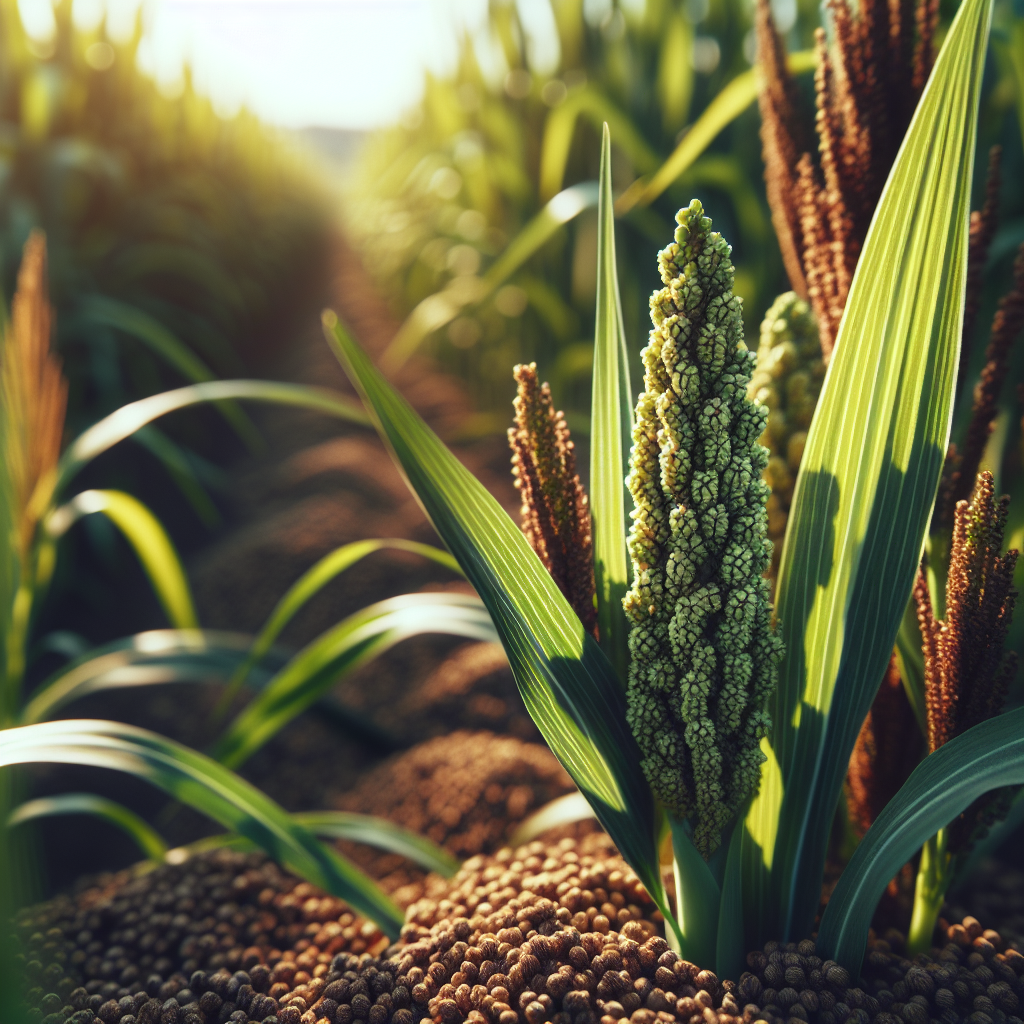
Introduction to Millet
Millet is not a single plant but a practical agricultural category covering several small-grained cereal species, including pearl millet, proso millet, foxtail millet, finger millet, barnyard millet, kodo millet, and little millet. In most field production systems, pearl millet is the dominant warm-season type in arid and semi-arid regions, while proso and foxtail millet are common in temperate dryland systems. This matters because management recommendations vary slightly by species, especially for maturity length, tillering, plant height, and moisture demand.
As a crop, millet is valued for its exceptional resilience. It can produce grain where maize, rice, or even some sorghums struggle, especially under erratic rainfall, high heat, low fertility, or sandy soils. Farmers use millet for human food, livestock feed, birdseed, forage, hay, silage, cover cropping, and emergency grain production because many cultivars mature quickly, often in 60 to 100 days depending on the species and environment.
Historically, millet was among the earliest domesticated cereals. Archaeological evidence places millet among ancient staple crops in Africa, India, and northern China, where it supported settled agriculture long before many modern grain systems emerged. Today, it is increasingly important in climate-resilient farming, regenerative systems, and low-input production. Compared with Rice, millet generally requires far less water and tolerates wider swings in field conditions, though yields are usually lower on a per-acre basis under intensive management.
From a nutritional perspective, millet grain is rich in carbohydrates, provides moderate protein, and often contains useful levels of iron, magnesium, phosphorus, and fiber. Finger millet is particularly noted for calcium content, while pearl millet is widely recognized for energy density and adaptation to harsh environments. For growers, its greatest strengths are reliability, flexibility, and low risk under weather uncertainty.
Botanical Profile of Millet
Millets are annual grasses in the Poaceae family. Their exact morphology depends on species, but all produce narrow leaves, fibrous roots, hollow or pithy stems, and compact or open seed heads composed of numerous tiny grains. Pearl millet, botanically Pennisetum glaucum, typically forms stout stems and cylindrical, candle-like seed heads. Proso millet, Panicum miliaceum, tends to have open, drooping panicles and a shorter season. Foxtail millet, Setaria italica, produces dense, brush-like seed heads and is often shorter and finer-stemmed.
Root architecture is one reason millet survives drought so well. Most types develop dense fibrous root systems capable of rapidly exploiting upper soil moisture after light rain, while also penetrating deeper when soil structure allows. Pearl millet is especially effective at scavenging moisture from coarse-textured soils. In compacted soils, however, this advantage is reduced because root penetration is restricted and oxygen availability declines.
Millet plants are C4 grasses, meaning they are highly efficient at photosynthesis under high light, heat, and moderate water stress. This gives them a strong competitive advantage in hot climates and helps explain why millet often outperforms cool-season grains in summer conditions. Optimal growth typically occurs under full sun and warm temperatures, with vigorous biomass accumulation once soil temperatures rise above roughly 18 to 20°C.
Growth stages include germination, seedling establishment, tillering, stem elongation, booting, flowering, grain filling, and maturity. Tillering varies by species and spacing; low-density stands often produce more tillers, while high-density plantings encourage a more uniform main stem crop. Flowering is highly sensitive to moisture and heat stress. Severe drought at flowering can sharply reduce pollination success and grain set even in otherwise drought-tolerant cultivars.
Seed size is small, so emergence depends heavily on proper planting depth and a fine, firm seedbed. Because millet seedlings are slender at first, early weed competition can be more damaging than many growers expect. Once established, however, millet usually becomes much more competitive, especially taller pearl millet types.
Soil, pH, and Climate Requirements for Millet
Millet performs best in well-drained soils with moderate fertility, good tilth, and minimal cRusting. Sandy loam, loam, and light clay loam soils are often ideal. Pearl millet is notably adapted to lighter, drought-prone soils where water infiltration is fast but nutrient retention is limited. Proso millet also does well on lighter soils, provided the seedbed is firm and weeds are controlled early. Heavy clays can produce good yields if drainage is adequate, but waterlogging is a major risk.
The ideal soil pH for most millet species is about 5.5 to 7.5. Pearl millet tolerates slightly more acidic conditions than some other cereals, and it can still perform under marginal fertility where other grains fail. That said, tolerance should not be confused with preference. Extremely acidic soils below pH 5.2 may limit phosphorus availability and root function, while alkaline soils above pH 8 can interfere with micronutrient uptake, particularly zinc and iron.
Millet is often described as a low-input crop, but professional production still benefits from soil testing. For grain production, target soil organic matter sufficient to maintain moisture buffering and biological activity. Even in sandy fields, increasing organic matter by 1% can noticeably improve water-holding capacity and reduce nutrient leaching. Practical strategies for improving tilth and nutrient cycling are covered in soil health tips.
Climate requirements depend on species, but most millets are warm-season crops. Pearl millet thrives in daytime temperatures of 28 to 35°C and tolerates hotter conditions better than most cereals. Proso millet and foxtail millet perform well in warm temperate climates and often fit into shorter summer windows. Most millet types require a frost-free growing period, and seedlings are sensitive to cold soils. For reliable emergence, wait until soil temperature at sowing depth is consistently at least 18°C, with 20 to 25°C being ideal for rapid stand establishment.
Rainfall needs are modest relative to many grains. Depending on species and yield target, millet can produce acceptable crops with roughly 250 to 500 mm of seasonal moisture, though better yields often require more, especially during establishment and grain fill. Distribution matters more than total rainfall. A crop receiving 350 mm in evenly spaced showers may outperform one receiving 500 mm in two large storms separated by drought.
Millet is less tolerant of saturated soil than many people assume. Signs of excessive soil moisture include yellowing lower leaves, stunted growth despite adequate fertility, a sour or anaerobic smell in the root zone, and poor tiller development. In severe cases, roots appear brown and sparse rather than white and fibrous. Avoid low spots where standing water remains beyond 24 to 48 hours after rain.
Step-by-Step Planting & Propagation
Millet is propagated by seed. Direct seeding is standard because the crop establishes quickly when conditions are favorable and does not benefit much from transplanting in field systems.
Begin with field selection and rotation planning. Choose a clean field with low perennial weed pressure, good drainage, and full sun exposure. Millet follows legumes well because residual nitrogen can improve early vigor. It also fits after root crops or fallow periods if weed pressure has been reduced. Avoid planting after another grass crop when disease carryover, volunteer cereal pressure, or grassy weeds are a concern.
Prepare the seedbed carefully. Because millet seed is very small, the goal is a fine, weed-free, firm surface with shallow tilth rather than deep fluffiness. Overworked soil dries too quickly and causes uneven seed placement. A good test is the footprint test: if your boot sinks deeply and leaves loose sidewalls, the bed is too soft; if the surface is firm but friable in the top 2 to 3 cm, it is ready.
Sow after danger of frost has passed and the topsoil is warm. Broadcast seeding can work for forage or cover crop uses, but drilling is preferred for grain because it improves depth control and stand uniformity. Plant seeds about 1 to 2.5 cm deep. In fine-textured or moist soils, stay closer to 1 to 1.5 cm. In sandy or drying soils, 2 to 2.5 cm may be safer. Planting deeper than 3 cm commonly reduces emergence because seedlings lack the stored energy to reach the surface.
Seeding rates vary by species and purpose. For grain millet, row spacings of 20 to 45 cm are common, with narrower rows improving weed suppression and wider rows easing mechanical cultivation. A typical field stand might target roughly 150,000 to 300,000 plants per hectare depending on species, cultivar, and rainfall outlook. Lower populations are often better in dryland production because each plant has more access to stored soil moisture. For forage millet, populations are usually increased to encourage finer stems and denser canopy cover.
After planting, ensure good seed-to-soil contact by rolling or cultipacking if soil moisture is adequate. Emergence usually occurs in 3 to 7 days under warm conditions, but cooler soils may delay it to 10 days or more. If cRusting is likely after rain, consider shallow harrowing before emergence only if timing and equipment allow safe operation.
During the establishment phase, monitor stand density closely. Uneven emergence often points to one or more of the following: planting too deep, dry seed zone, seedbed cRusting, poor seed quality, or fertilizer burn from seed-placed nitrogen. Millet is sensitive to salt injury near the seed, so do not place heavy fertilizer bands directly with seed unless rates are known to be safe.
Care & Maintenance regimes for Millet
Millet is a low-maintenance crop only after it is established well. The first 3 to 5 weeks are the most important period for stand success, weed suppression, and root development.
Water management should be tailored to stage rather than applied uniformly throughout the season. Millet can survive drought, but survival and high yield are not the same thing. During germination, the top 2 to 3 cm of soil should remain evenly moist but never saturated. If using irrigation, apply light amounts frequently enough to prevent the seed zone from drying out completely. Once seedlings are rooted, allow the upper few centimeters to dry slightly between irrigations so roots are encouraged downward.
From tillering through boot stage, the crop benefits from moderate but not excessive moisture. A useful field benchmark is to keep moisture in the active root zone near 50 to 70% of field capacity in dryland-supplemented systems. Below this level, leaf rolling, slowed tillering, and reduced canopy expansion may appear. Above this level for prolonged periods, especially in heavy soils, roots lose oxygen and nutrient uptake declines. At flowering and grain fill, avoid severe water stress. If irrigation is available but limited, prioritize one application just before heading and another during early grain fill.
Nutrient needs depend heavily on expected yield and species. Millet responds particularly to nitrogen, but overapplication can cause lush vegetative growth, delayed maturity, lodging, and increased susceptibility to disease or nitrate accumulation in forage systems. Moderate grain crops may require around 40 to 90 kg N/ha, with lower rates in poor rainfall zones and higher rates only where soil moisture can support the crop. Split applications are useful: apply part at planting and the remainder at early tillering if the stand is strong and rainfall prospects are favorable.
Phosphorus is especially important for root growth and early vigor, particularly in cool or low-testing soils. Potassium matters most in sandy or depleted soils and supports stress tolerance, stalk strength, and water regulation. Sulfur and zinc deficiencies can appear in low-organic-matter or alkaline fields. Zinc deficiency often shows as striping or pale bands on young leaves, while nitrogen deficiency usually appears as uniform pale green color beginning with older foliage.
Weed management is critical early. Millet seedlings are not highly competitive in the first weeks, especially against fast-growing annual grasses. A stale seedbed, shallow pre-plant cultivation, narrow row spacing, and timely post-emergence cultivation in row-planted systems are effective non-chemical tools. Once the canopy closes, millet generally suppresses later weed flushes well, particularly taller types.
Thinning is usually unnecessary in field crops, but in garden or demonstration plots, maintain enough spacing for airflow and light penetration. Remove weak or crowded seedlings if emergence is excessive. In small plots, hand weeding is worth the labor because early competition has disproportionate effects on panicle size and final grain set.
Lodging prevention depends on balanced fertility, appropriate plant density, and avoiding overirrigation during stem elongation. Tall pearl millet cultivars can lodge after storms if nitrogen is excessive or if plants become top-heavy from luxuriant growth. In windy sites, avoid pushing for excessive biomass unless growing specifically for forage.
Pests, Diseases & Organic Management
Millet is often less pest-prone than many cereals, but it is not pest-free. The exact pest complex depends on region, species, and whether the crop is grown for grain, forage, or birdseed.
Among insect pests, Stem borers, Shoot flies, Armyworms, Aphids, and Head-feeding caterpillars can be economically important. Shoot fly damage is most serious at the seedling stage; symptoms include dead hearts, where the central whorl dries and can be pulled free. Stem borers tunnel within stems, weakening plants and reducing head formation. Aphids may colonize panicles or leaf undersides, causing sap loss and sticky honeydew that encourages Sooty mold.
Bird damage is a major issue in millet, often more severe than insect injury. Small-grained heads are highly attractive during soft dough and maturity. Where bird pressure is intense, synchronized planting across a larger area reduces losses better than isolated small plots. Visual deterrents help only temporarily unless moved and changed frequently.
Common diseases include Downy mildew, Smut, Rust, Blast in some species, Leaf spot complexes, and Root rots in poorly drained soils. Downy mildew can cause chlorotic striping, malformed heads, and stunting. Smuts replace grain with fungal masses. Rust appears as powdery pustules on leaves, reducing photosynthetic area when infections build early. Root diseases are strongly associated with compaction, waterlogging, and rotation failure.
Organic management begins with prevention rather than rescue treatment. Start with certified clean seed or carefully selected farm-saved seed from healthy fields. Rotate with non-grass crops for at least one season where disease pressure has been high. Avoid dense, overly lush canopies that remain humid, and manage nitrogen so tissue is strong rather than excessively succulent.
For insect management, scout from emergence onward. In organic systems, early intervention is essential because severe internal feeders are harder to control once established. Encourage beneficial insects by maintaining field edges with flowering plants, but keep those edges from becoming reservoirs for grass pests. Bacillus thuringiensis products may help against exposed caterpillars when timed correctly. Insecticidal soaps are only useful for soft-bodied insects with direct contact and are impractical at large scale unless pressure is localized.
For disease suppression, prioritize resistant or locally adapted cultivars whenever available. Seed treatment options acceptable in organic production vary by certification system, but biological seed treatments can improve emergence and reduce Damping-off risk. Good air movement, drainage, rotation, and residue management remain the foundation of disease prevention.
If millet is grown after a wet spring or under recurring humidity, intensify scouting around booting and heading. Yield losses rise sharply when leaf diseases establish before grain fill. Remove and destroy heavily infected plants in small plots; in commercial fields, focus on sanitation, rotation, and future cultivar choice rather than reactive removal.
Harvesting, Curing & Optimal Storage
Millet can be harvested for fresh forage, hay, silage, green heads, or dry grain. For grain production, timing is critical because small seeds shatter more easily than many growers expect.
Physiological maturity is usually indicated when the panicle changes color, grains harden, and seed moisture begins to decline. Depending on species, heads may mature unevenly, especially in heavily tillered stands. Harvest too early and grain quality suffers from shriveling and poor test weight; harvest too late and shattering, bird losses, and weathering increase.
For combine harvest, grain moisture is often best around 14 to 18% at cutting, followed by careful drying to safer storage moisture. Smaller operations may cut and windrow first if maturity is uneven, then thresh after field drying, though this can increase bird losses and weather risk. In hand-harvest systems, cut seed heads when the majority of grains are firm and straw-colored, then dry them on clean tarps, racks, or well-ventilated platforms out of direct dew exposure.
Curing should continue until grain reaches approximately 12% moisture for short- to medium-term storage, and nearer 10% for longer storage in warm climates. If grain is bitten and dents rather than cracks, it is usually too wet. More reliable methods include a moisture meter or controlled drying with ambient or slightly warmed air. Avoid overheating seed intended for planting, since viability declines rapidly when high temperature combines with high moisture.
Cleaning is important because millet grain often contains chaff, dust, immature seeds, and small stones. Clean grain stores better, heats less, and is less attractive to storage pests. Use sieves, air separation, or gravity cleaning where possible.
Store millet in cool, dry, rodent-proof containers or bins. Ideal storage conditions are below 15°C and below 60% relative humidity, though this is not always possible in tropical regions. In warm climates, moisture control matters even more. Condensation inside containers is a warning sign of unsafe storage. Grain should smell neutral and dry; sour, musty, or heated odors suggest microbial activity or moisture migration.
Watch for storage pests such as weevils and moths. Sanitize bins before filling, remove old grain residues, seal cracks, and inspect every 2 to 4 weeks. In small-scale storage, airtight containers can greatly reduce insect pressure if grain was dried properly before sealing.
Companion Planting for Millet
In broadacre agriculture, millet is more often discussed in rotations and intercrops than in traditional garden-style companion planting. Its best companions are crops that either improve nitrogen availability, occupy a different rooting niche, or help stabilize field ecology without directly competing for the same narrow resource window.
Legumes are the most practical companions. Cowpea, mung bean, pigeon pea, and other warm-season legumes are commonly intercropped with millet in dryland systems because they contribute biological nitrogen, diversify harvests, and partially shade soil without overwhelming the cereal if spacing is planned correctly. Millet-legume mixtures can improve land-use efficiency and reduce total crop failure risk in unreliable rainfall years.
In mixed small-farm plantings, millet can also function as a wind filter or light shade crop for lower, heat-sensitive companions, provided it is not planted densely enough to cause severe competition. This is especially useful in exposed sites where strong winds desiccate tender crops. However, millet should not be paired too closely with weak feeders during early establishment because its root system becomes highly effective once active.
Good companion planning also means avoiding problematic neighbors. Other grasses with similar nutrient demands and shared pests, especially when planted simultaneously in tight association, can amplify disease or insect carryover. If intercropping with another cereal, ensure different canopy heights, rooting patterns, or maturity windows justify the pairing.
For homesteads and diversified farms, millet is often best used adjacent to pollinator strips, legume alleys, or rotational blocks rather than mixed indiscriminately. Its upright structure, fast growth, and adaptability make it an excellent component in resilient dryland designs, forage mosaics, and bird-conscious buffer plantings when harvest timing is carefully managed.